
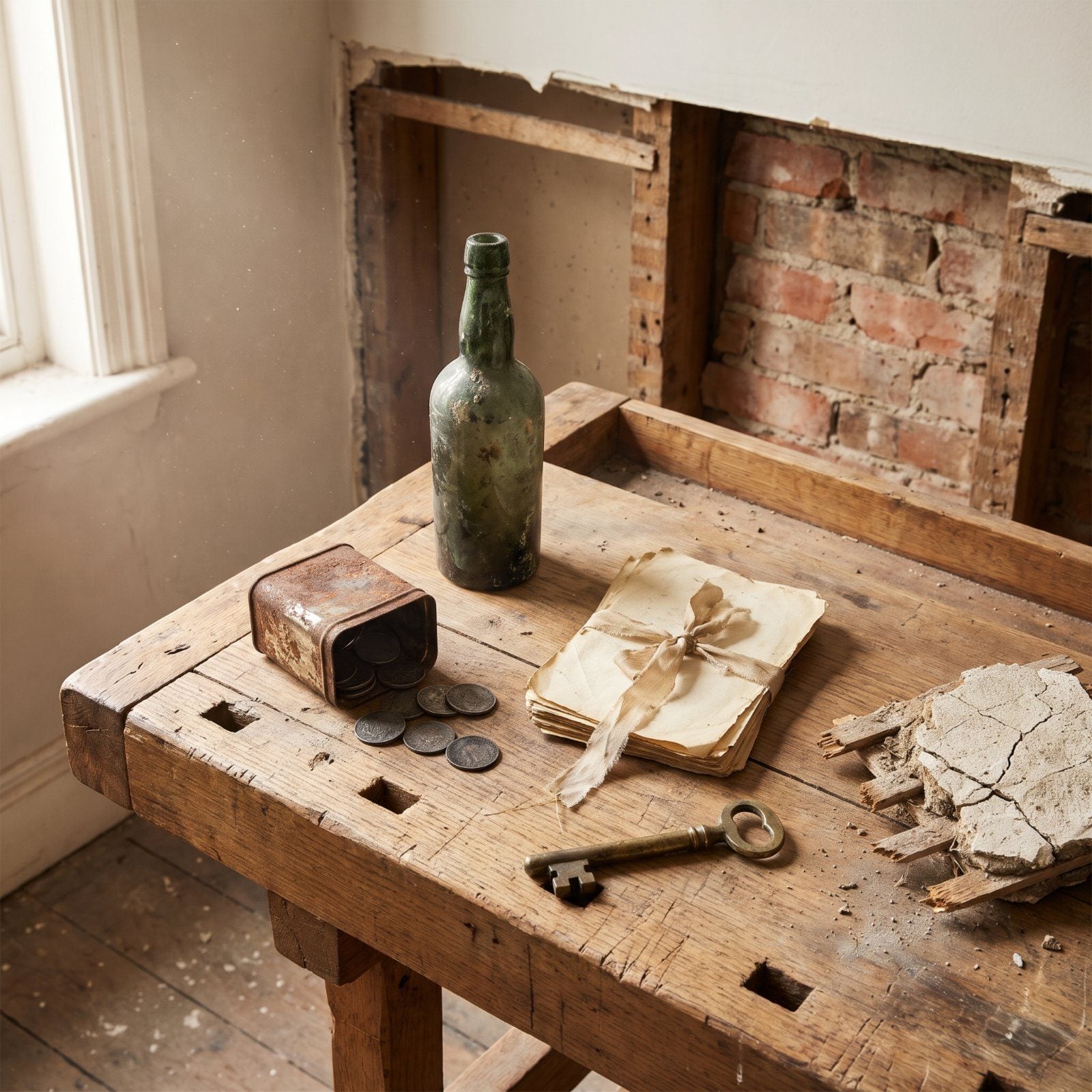
A crowbar bites into lath, plaster dust lifts off the wall in a sheet, and something that was never meant to be seen again stares back. That’s the moment every renovator secretly waits for. Most walls hold nothing but horsehair plaster and the odd dead mouse. But not all of them. People pulling apart old houses have uncovered sealed bottles meant to trap evil, letters written by the dead, coins hoarded against a bank nobody trusted, and once, something that had to be handled by a bomb squad. The house was keeping secrets. Here are the kinds of things it has given up.
Please note that some of the images in this article were created with the assistance of AI.
43. A Secret Staircase Sealed Behind Plaster
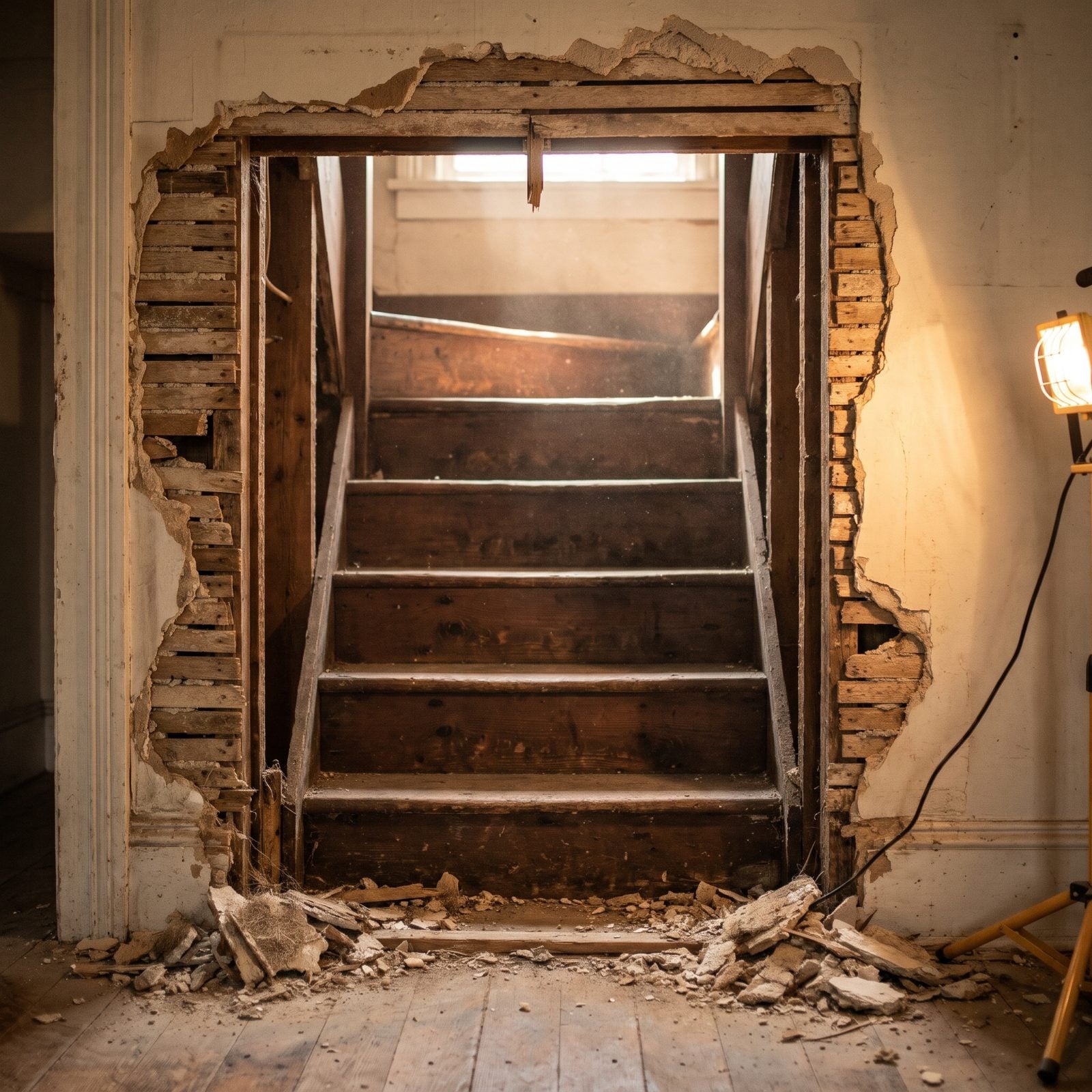
You knock on a wall expecting a solid thud and get a hollow boom instead. That hollow is how most of these turn up. Renovators across New England and the English countryside have opened plastered-over cavities to find entire staircases bricked or lathed shut — usually when a house got carved into smaller units, or a back stair was ruled a fire hazard and simply sealed instead of ripped out.
The eerie part isn’t the stair itself. It’s that someone chose to hide it rather than tear it out. Cheaper to wall over than demolish, probably. Still, you feel it.
42. A Locked Safe Built Into the Masonry
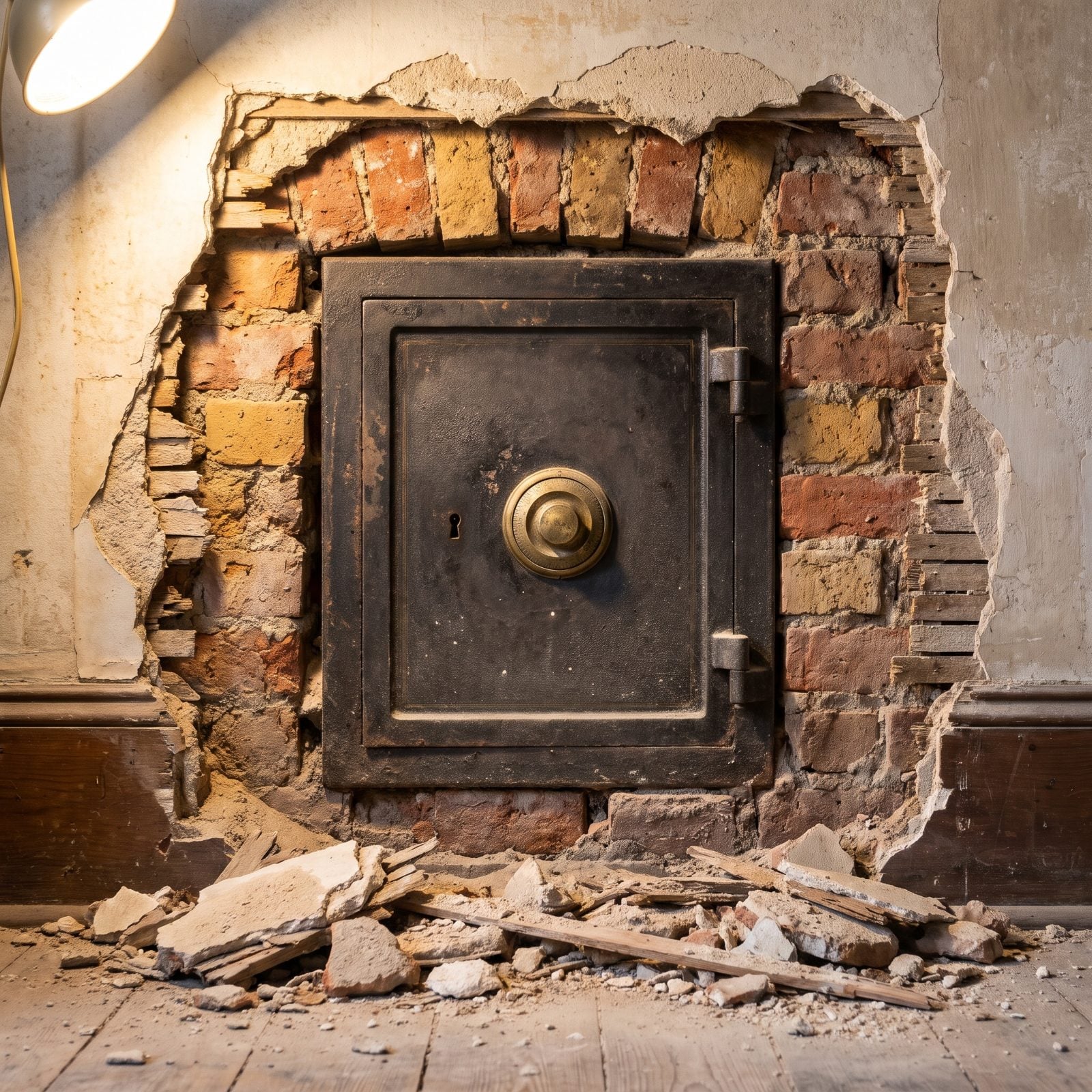
Everyone hopes for the one full of gold. Most are empty. Built-in wall safes turn up constantly in old homes, tucked behind paneling, mirrors, or a patch of fresh plaster that never quite matched the surrounding wall. Early 1900s builders put them in finer houses as a matter of course, and the original owners took the contents with them when they moved on.
Found one locked? Don’t go at it with a drill. The combination is sometimes written on the back of a nearby door, taped under a drawer, or filed away with the house deed. A locksmith who works vintage safes can usually open it without wrecking a thing. Patience pays better than a crowbar.
41. A Bundle of Wartime Love Letters Tied With Ribbon
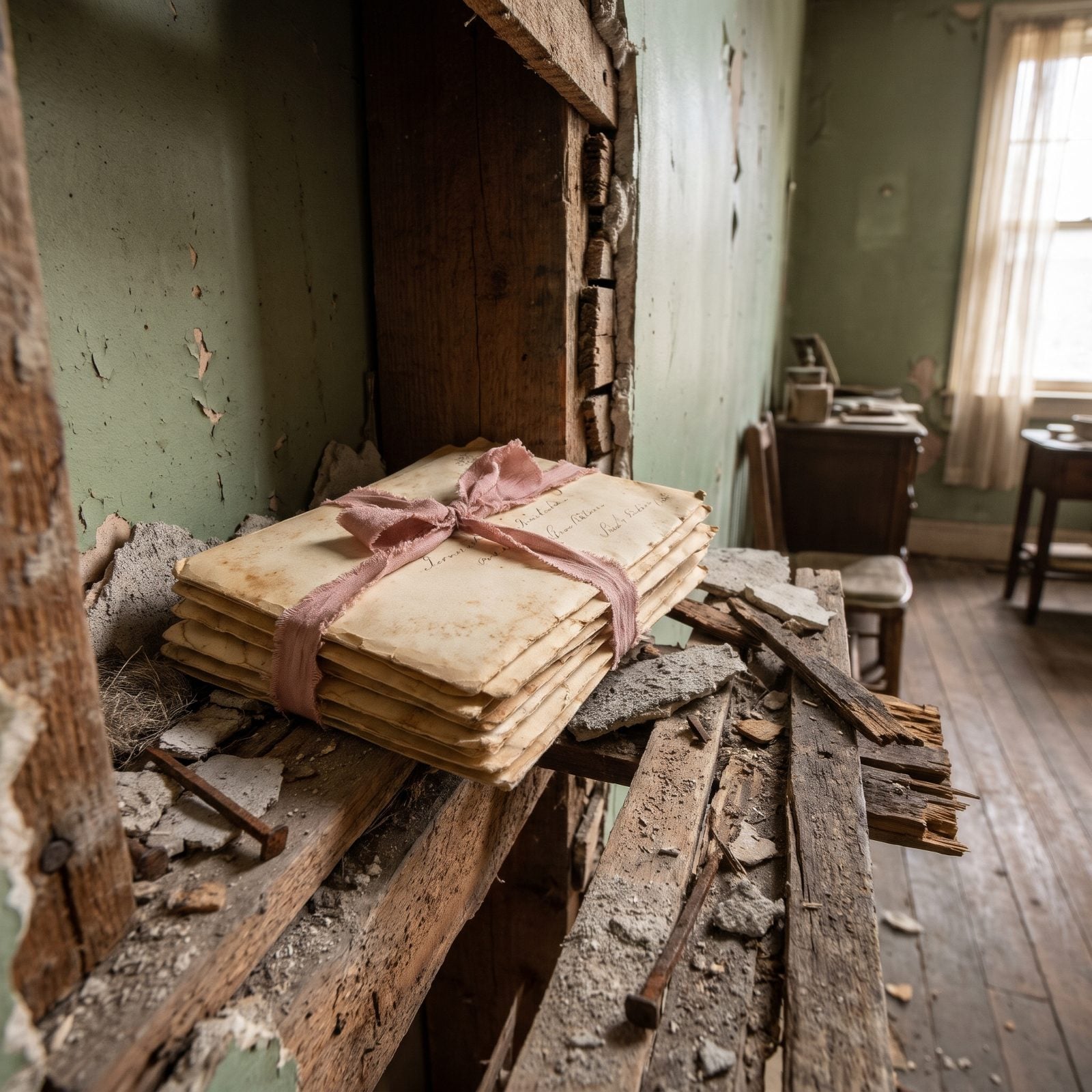
Someone hid these on purpose. That’s what gets you.
Bundles of letters — often from the First or Second World War — turn up behind walls and under floorboards, tied with ribbon or string by a person who couldn’t bear to burn them but didn’t want them found either. Some are love letters. Some are from sons who never came home. The paper survives surprisingly well in a dry cavity, sealed off from light and fingers.
Find a stash and your first instinct will be to peel the brittle pages apart. Hold off. Store them flat in acid-free sleeves and let a local historical society help you read the postmarks. The names on the envelopes can sometimes be traced to living descendants, and handing these back is one of the better things a renovation ever does.
40. A Sealed Witch Bottle Filled With Protective Charms
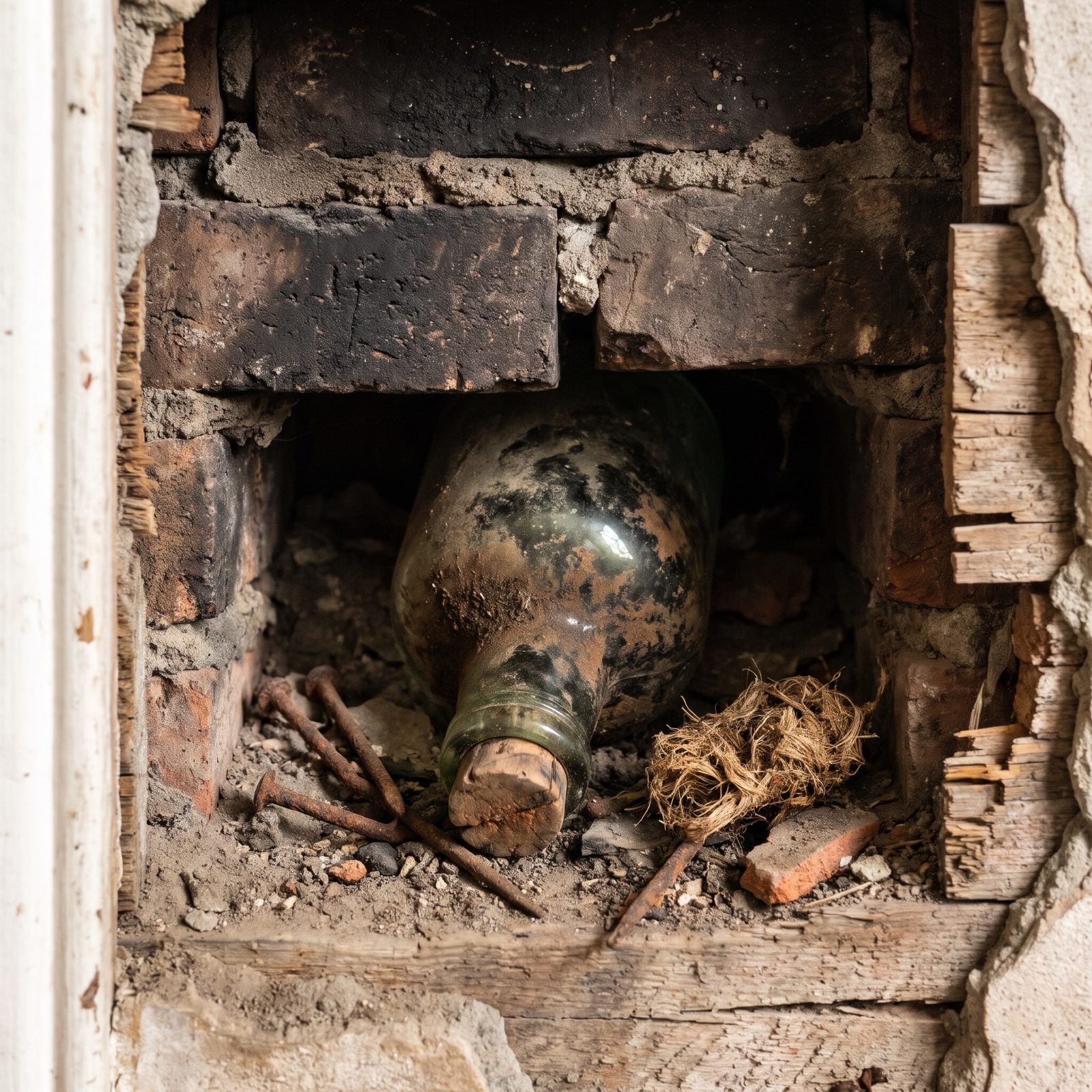
People used to bury bottled magic in their walls, and they meant it. Witch bottles were a genuine folk practice in England and colonial America from roughly the 1600s onward: small vessels packed with bent iron pins, nails, human hair, and often urine, then sealed and buried near a hearth, threshold, or chimney. The whole idea was to trap or deflect a curse before it reached the family inside.
Hundreds have been documented, and museums treat them as serious objects. If one turns up intact and still sealed, leave it closed — archaeologists want the contents undisturbed, and that sealed interior is the entire reason the thing matters.
39. A Mummified Cat Placed Between the Timbers
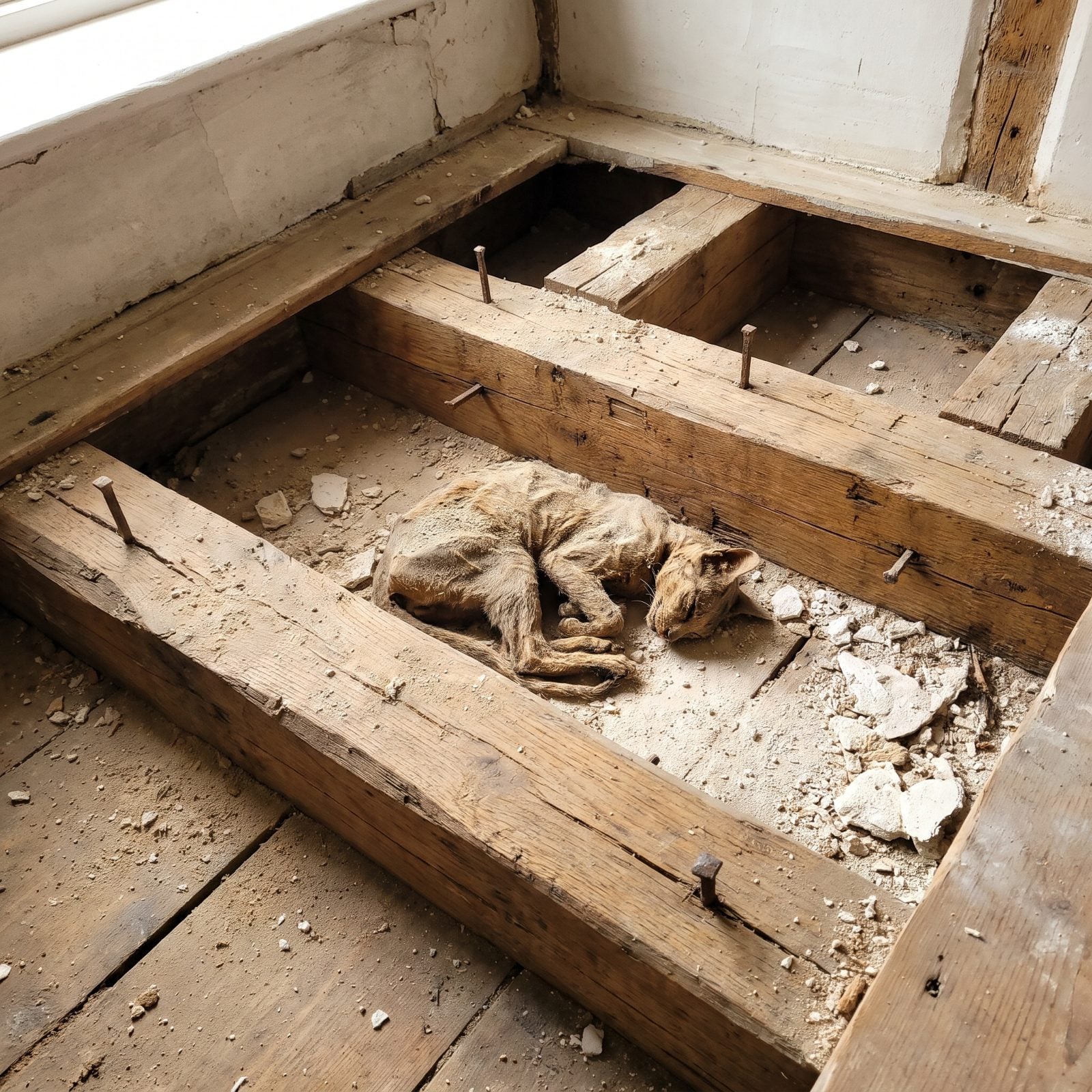
This one unsettles people, and fair enough. Dried, mummified cats turn up walled into timber-framed houses across Britain and parts of the US, where the still, dry air of a sealed cavity keeps them intact for centuries. For a long time folks assumed the poor animals got trapped. The pattern says otherwise.
Many were put there on purpose, posed as if mid-pounce, set in place as a charm against mice, misfortune, or evil. The custom was common enough that museums keep examples on hand. Find one and you’re not looking at an accident — you’re looking at a superstition made physical, left in the bones of the house.
38. A Hoard of Coins Spilling From a Rusted Tin
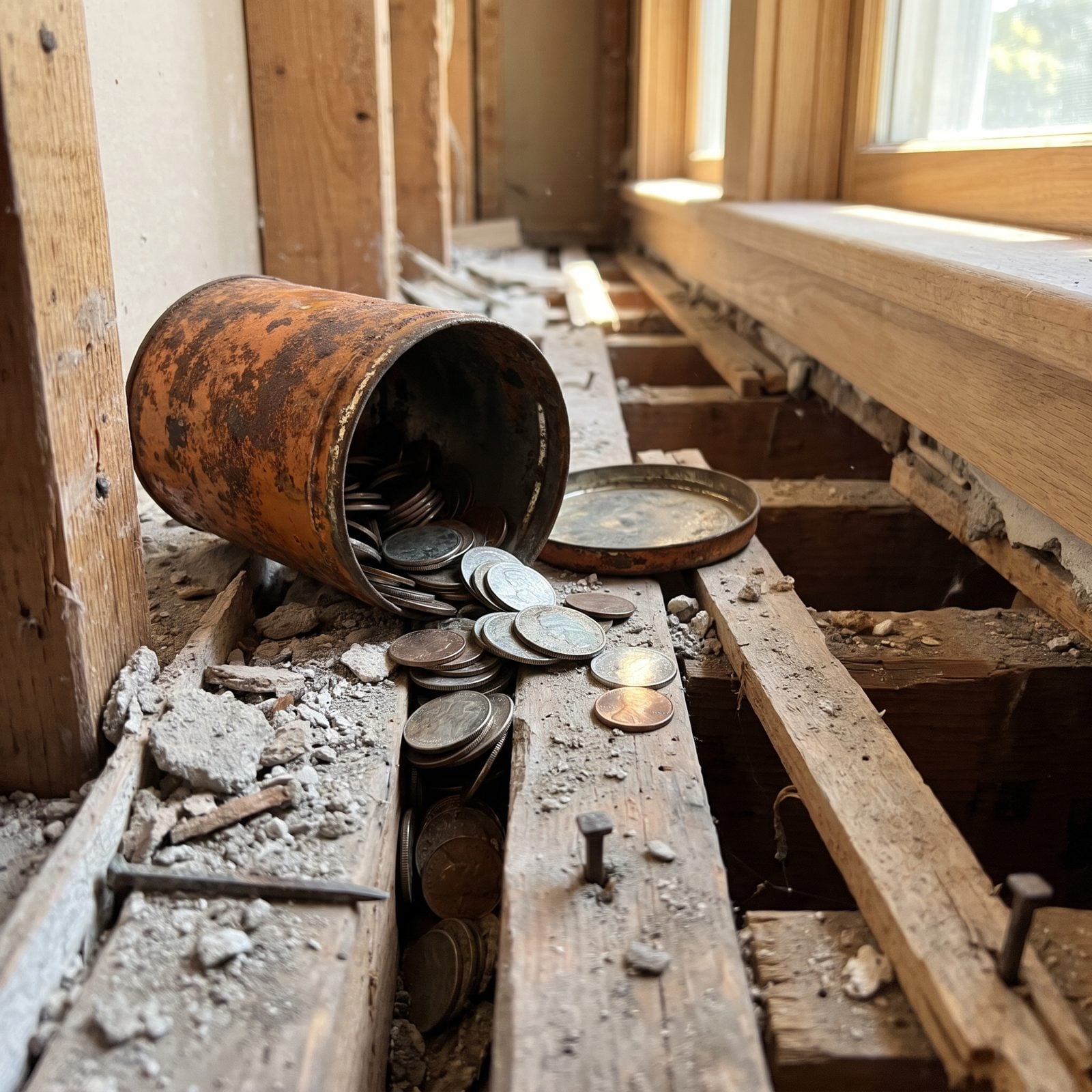
Here’s the find everyone actually dreams about. Coin hoards stuffed into tins, jars, or cloth bags turn up in walls, chimneys, and under hearthstones, usually hidden by someone who didn’t trust banks. The Great Depression produced plenty of these in American homes, while older European houses yield hoards going back centuries.
Before you spend a cent, stop. The value is often in the coins as collectibles, not their face value, and cleaning them can slash what they’re worth overnight. A silver dollar scrubbed bright is worth far less than the same coin left tarnished.
37. An Unexploded Wartime Grenade
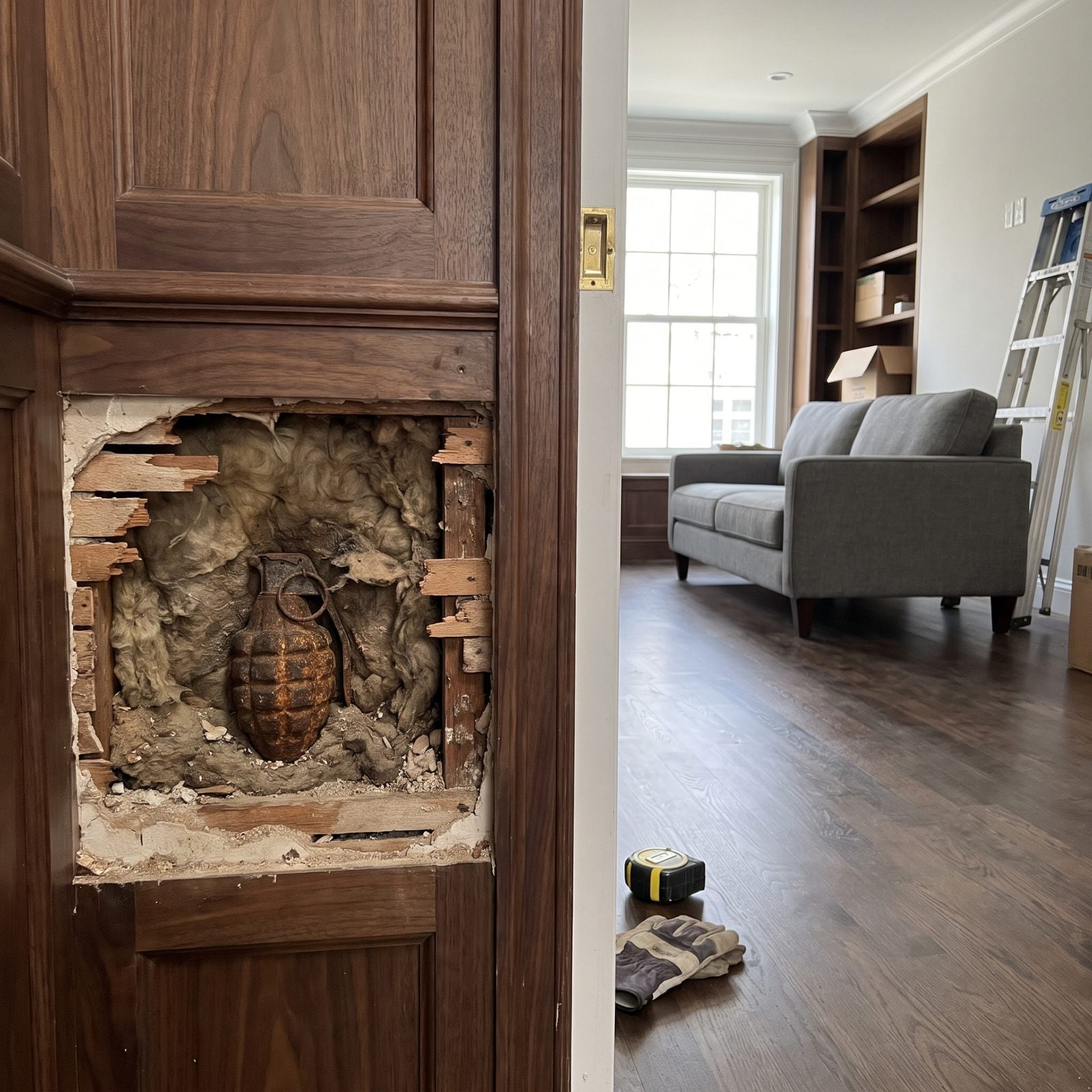
Veterans brought souvenirs home. Sometimes live ones.
Renovators pulling apart walls and attics have genuinely uncovered old grenades, shells, and even mortar rounds, tucked away by a soldier who never quite got around to deactivating the keepsake. Bomb squads in the US and UK answer calls like this more often than you’d think, often from home renovations and estate clearances.
Don’t pick it up for a better look. Don’t put it in the car to drive to the police station. Clear the area, keep people back, and call the authorities. A century-old grenade can still hold unstable explosive, and the fuse mechanism doesn’t care how old it is.
36. A Loaded Antique Revolver Wrapped in Cloth
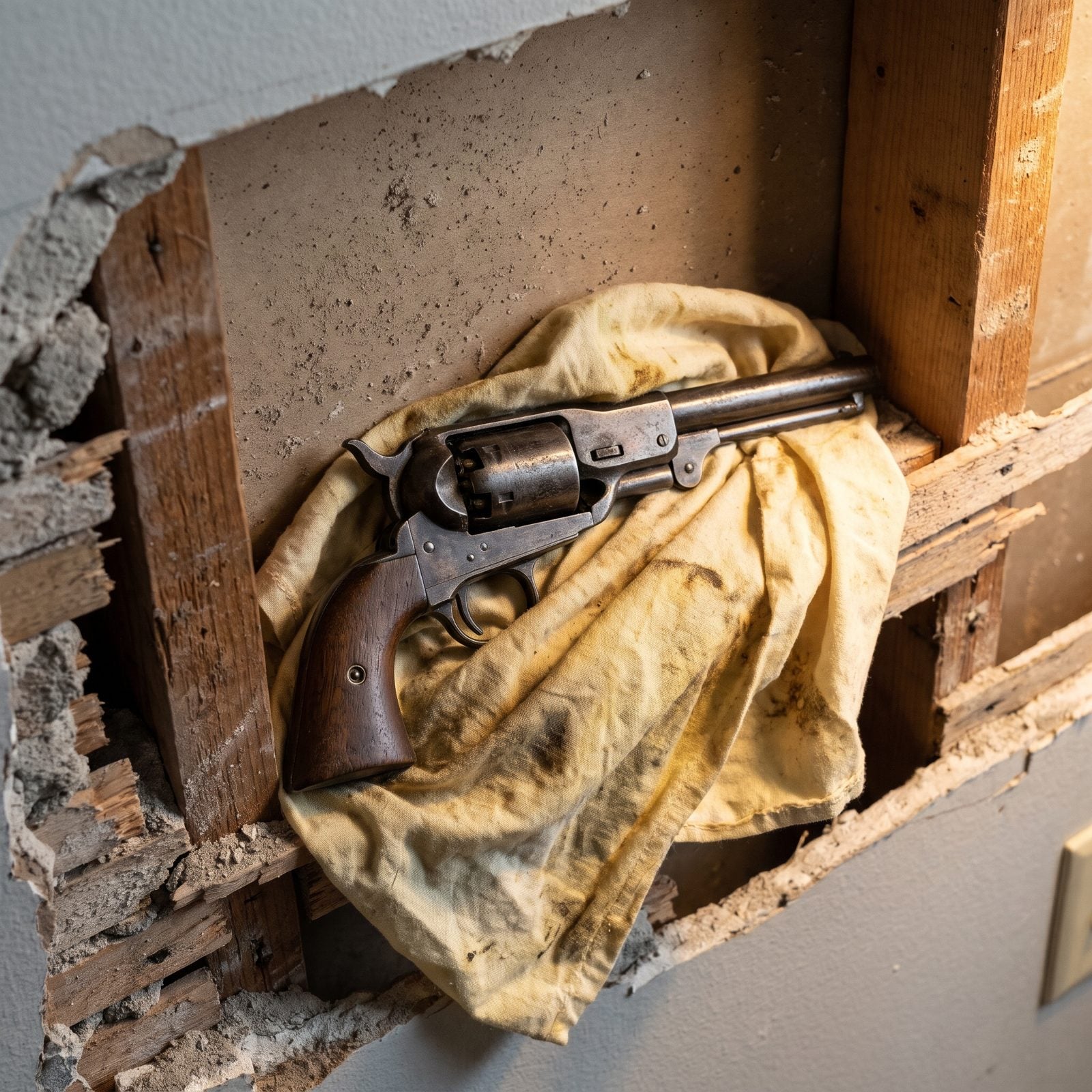
A revolver wrapped in oily rag, tucked into a cavity, often still loaded. These show up more than you’d guess, hidden by owners who wanted a weapon close but out of sight — or by someone with a reason to make a gun vanish.
Treat any firearm you find as loaded, because old ammunition can and does still fire. Keep your fingers off the trigger, point it at nothing, set it down. In the US, laws about found firearms vary by state, and a weapon with a filed serial number or a dark history is a matter for the police, not your mantelpiece. When in doubt, call them.
35. Glass-Plate Negatives Showing the House’s First Residents
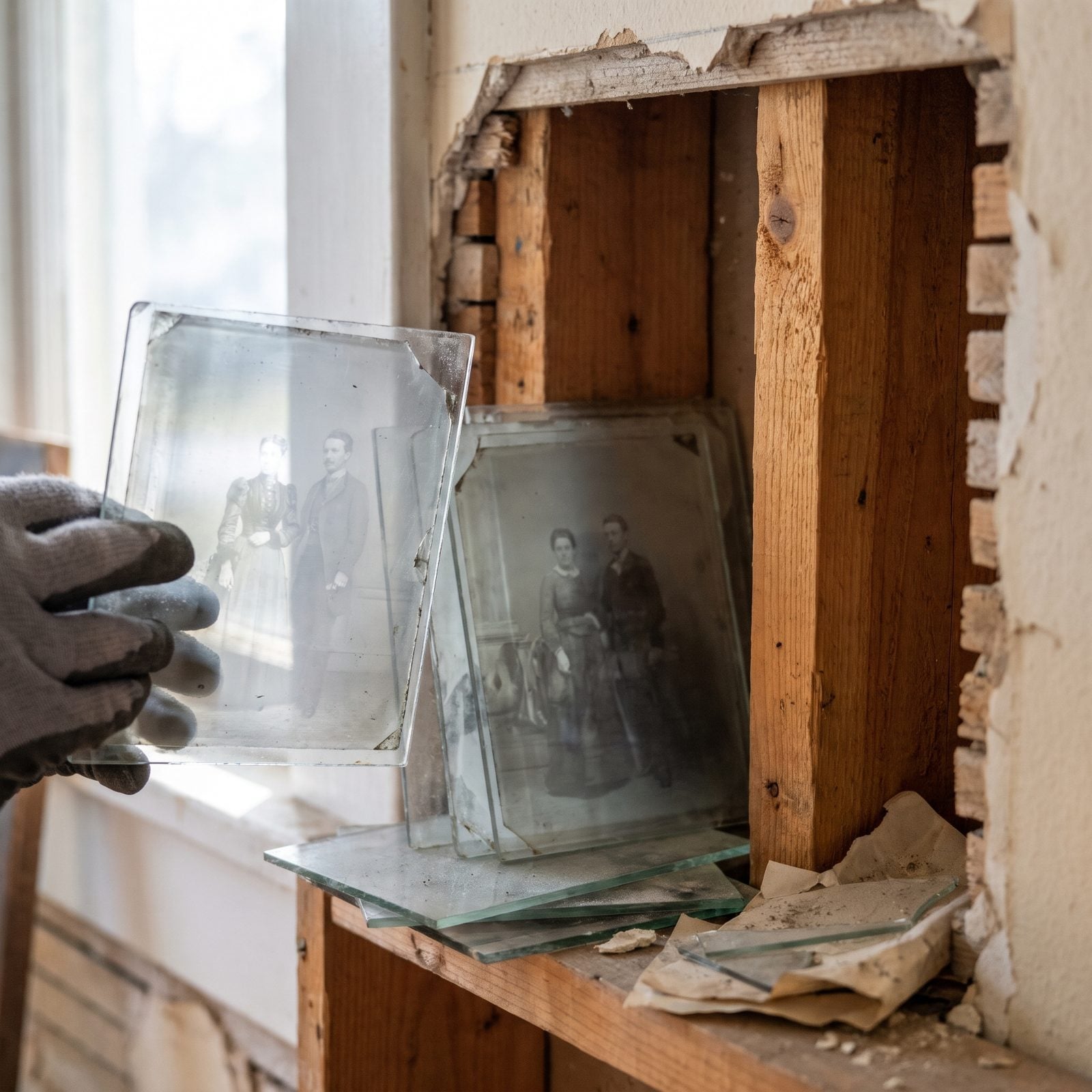
Glass-plate negatives — the photographic standard from the 1850s into the early 1900s — turn up in attics and wall voids wrapped in paper or packed in old boxes. Hold one to a window and faces swim up out of the glass, reversed and ghostly. Sometimes they’re the only surviving images of the people who built or first lived in the house.
The glass is fragile and the emulsion flakes if you handle it wrong. Wear gloves when you lift plates, keep them vertical, store them separated so they don’t stick. Any decent archive or photo conservator can scan them, and seeing the original residents of your own walls stare back is worth every bit of care it takes.
34. A Family Time Capsule With Photographs and Notes
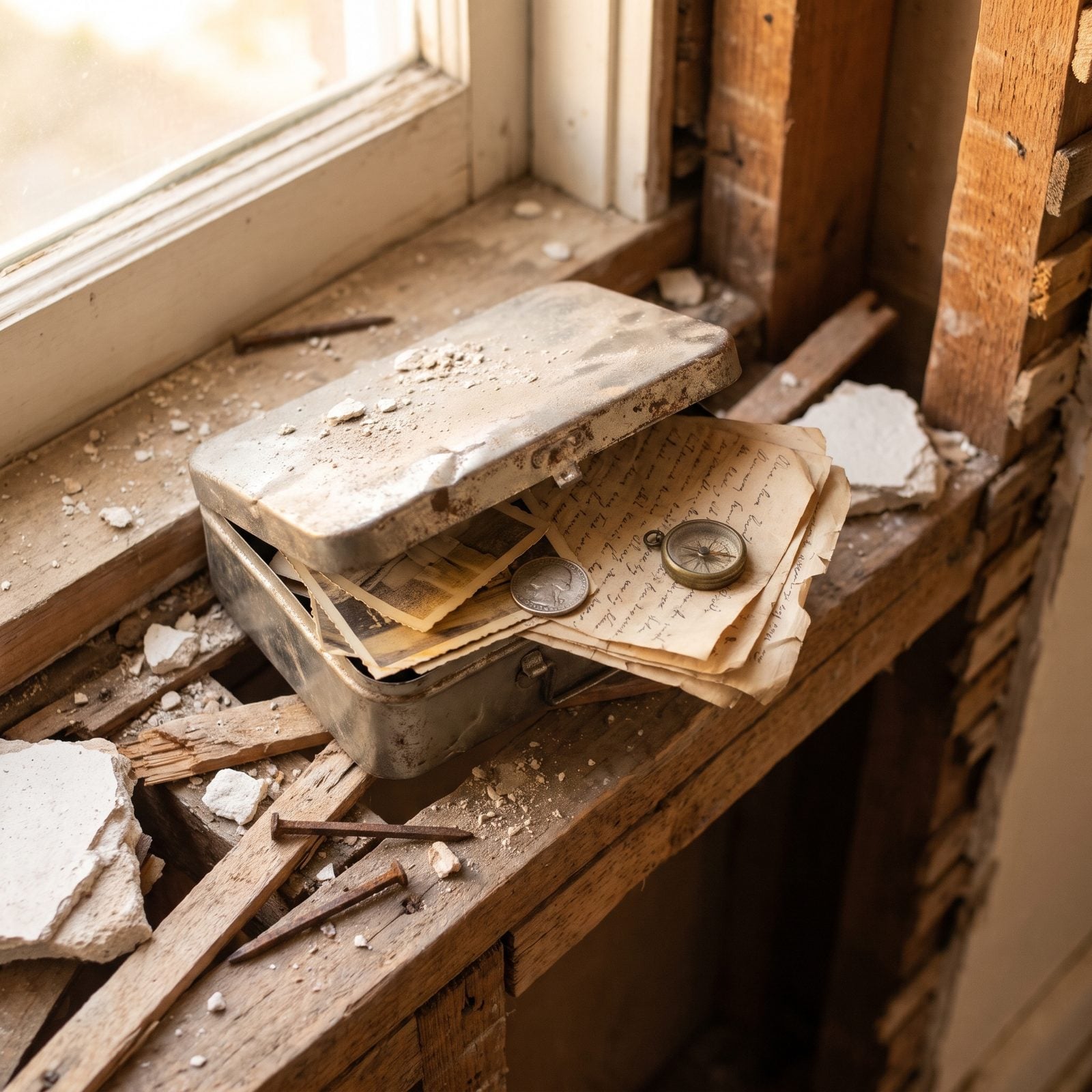
Some people left their secrets on purpose, hoping you’d come looking.
Deliberate time capsules show up sealed into walls, under floorboards, and behind cornerstones: photographs, newspaper clippings, handwritten notes, a coin from the year of construction, sometimes a letter addressed to whoever finds it. Builders and families alike did this — a small message thrown forward into a future they’d never see.
Open one and the decent thing is to add to it. Read the note, scan what you can, then reseal the box with something of your own and put it back in the wall. The next person to knock on hollow plaster deserves the same jolt you just got.
33. Prohibition-Era Whiskey Bottles Still Corked and Full
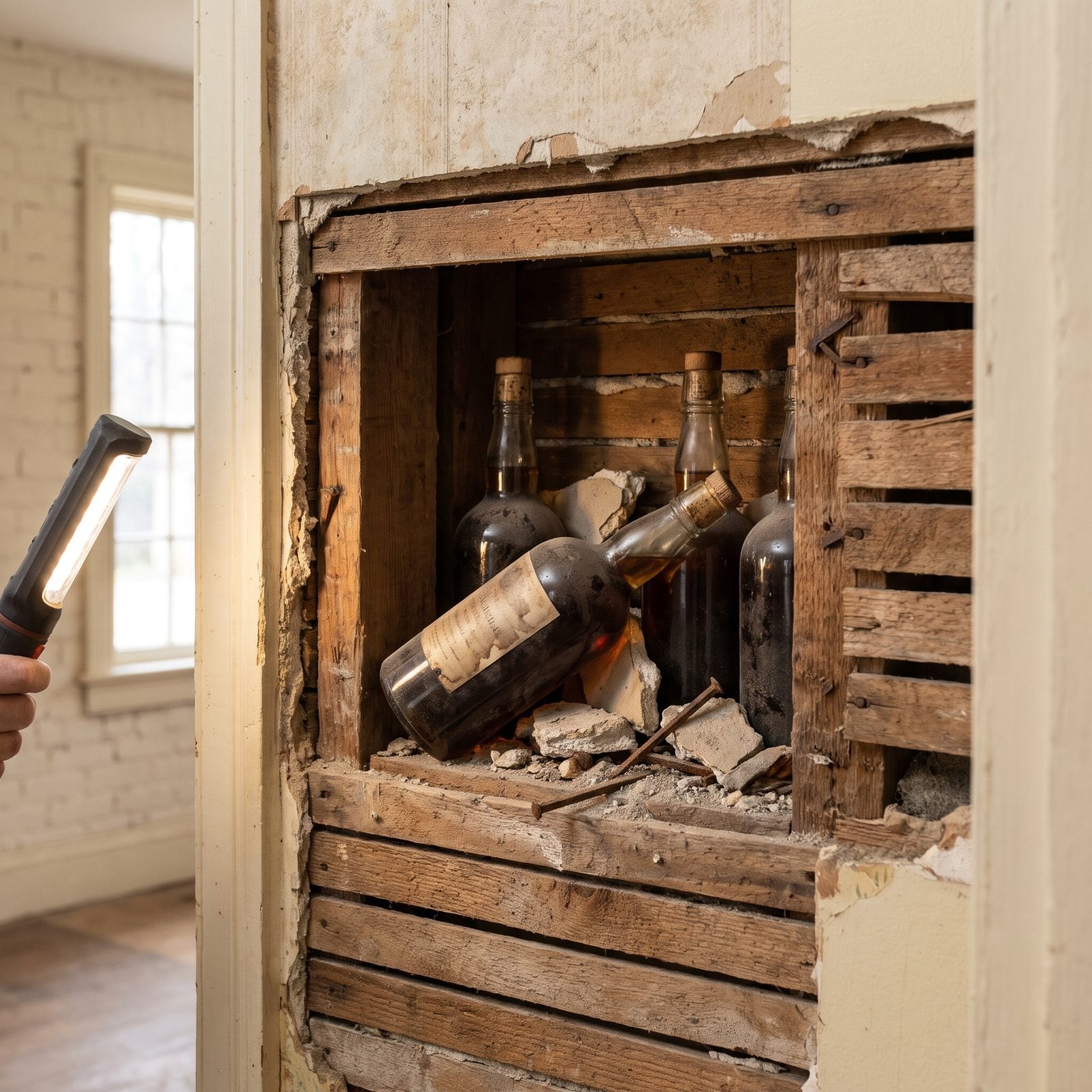
Someone built a wall around their stash and never came back for it. That’s the quiet story behind every batch of corked whiskey found between the studs of a house built before 1933. Owners hid bottles from federal agents, from nosy neighbors, sometimes from their own future selves.
The part people get wrong: that liquid is almost never drinkable. Cork shrinks, air creeps in, and years of temperature swings inside a wall cavity turn even good rye into something closer to varnish. Value lives in the glass and the labels, not the pour.
32. A Complete Fireplace Bricked Over and Forgotten for Decades
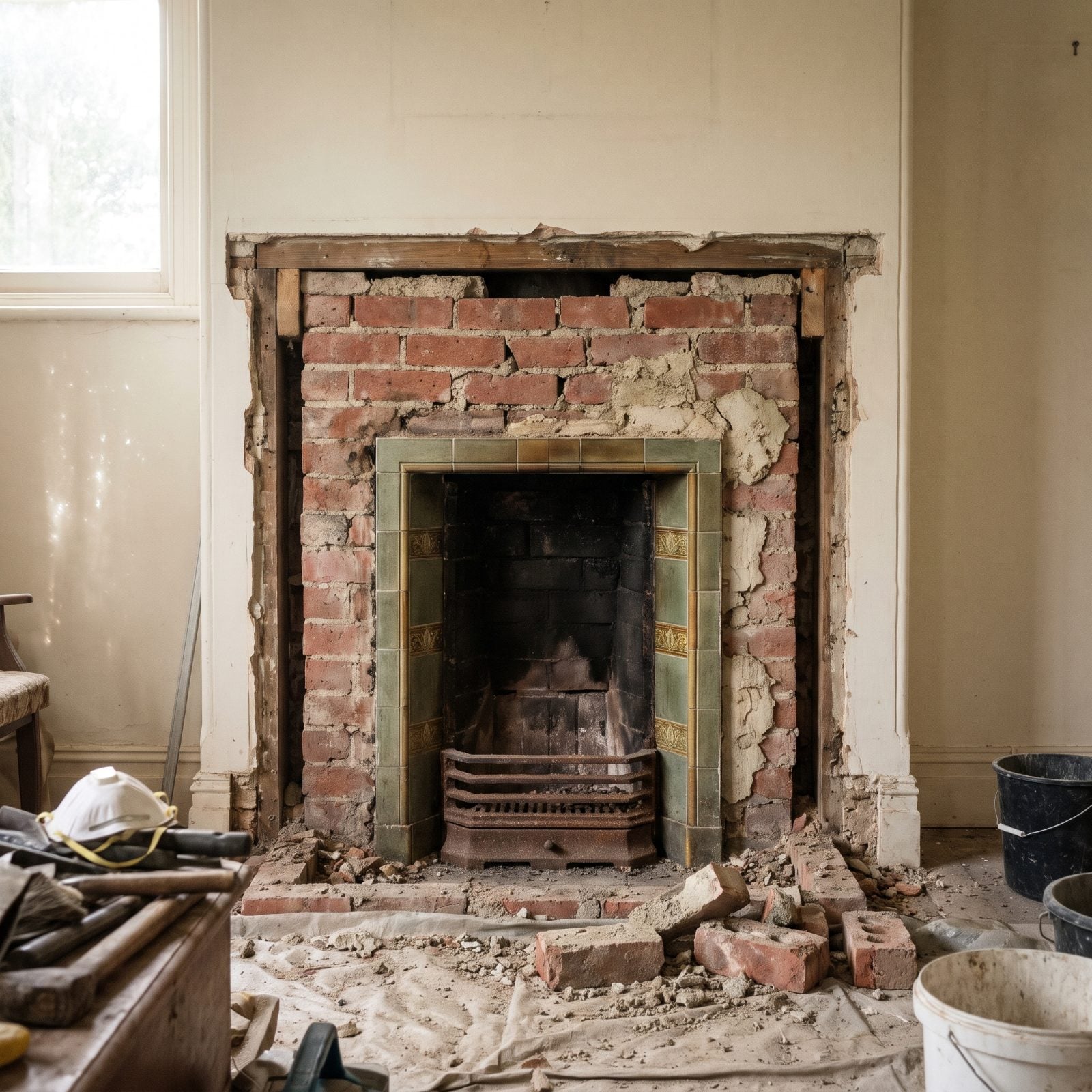
Mid-century homeowners bricked up fireplaces by the thousands. Central heating arrived, chimneys became drafty liabilities, and the cheapest fix was a layer of brick with a coat of paint slapped over the lot.
Open one up and the original firebox is often sitting there perfectly intact. A tiled Victorian surround, maybe. A cast-iron grate the sealers couldn’t be bothered to pull.
Don’t get romantic about relighting it just yet. Have the flue inspected first, because a chimney sealed for fifty years can be cracked, packed with old bird nests, or missing its liner entirely. The fireplace survived. That doesn’t mean it’s ready for a fire.
31. A Hidden Doorway Quietly Connecting Two Rooms
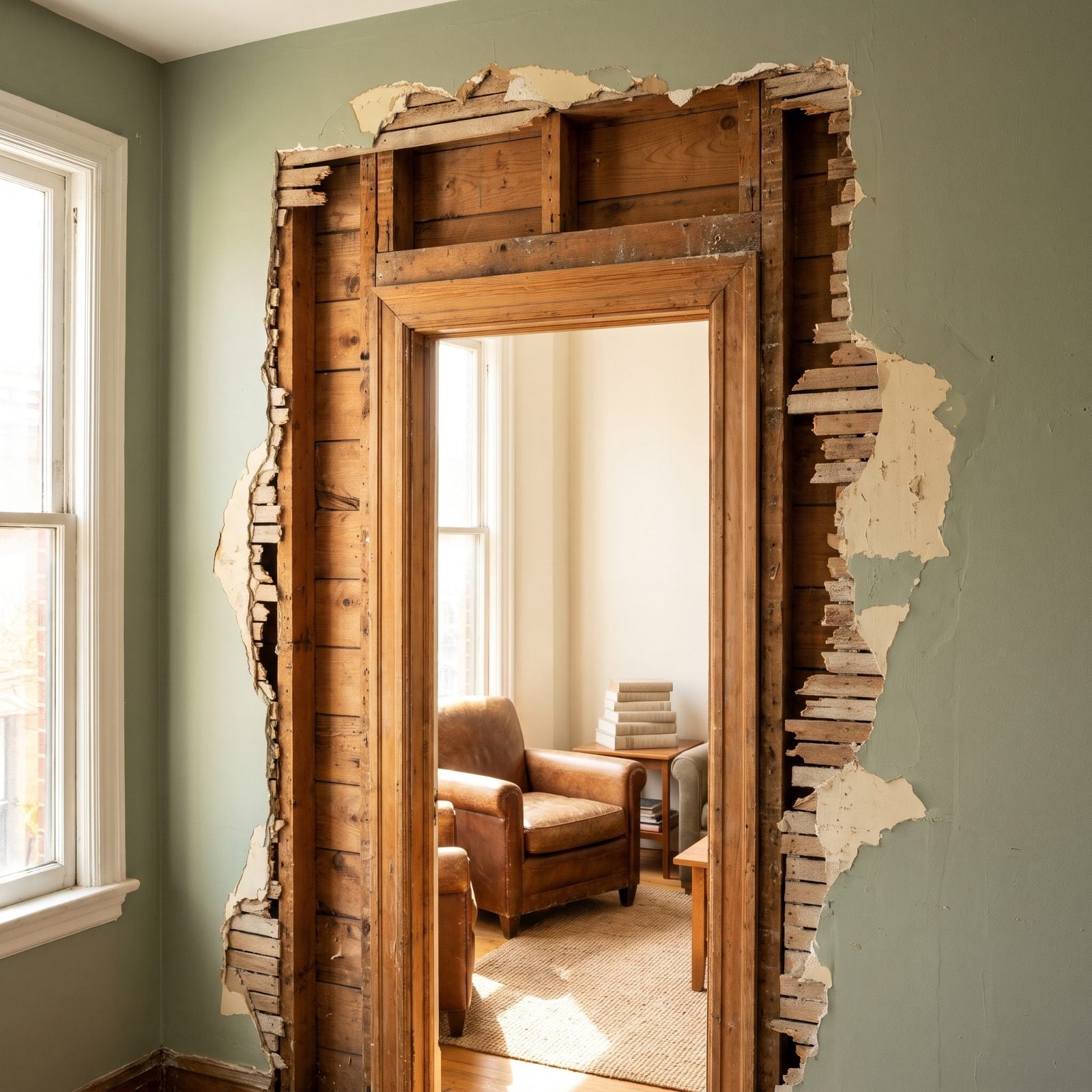
You tap a wall, it sounds hollow, and suddenly your single room was two rooms a century ago. Concealed doorways turn up constantly in houses that got chopped into apartments and later stitched back together.
Most are mundane. Picture a door closed off when a landlord split a parlor into rentals around 1940, then plastered flat by the next owner who never knew it was there. Now and then you find a genuine passage built for discretion — far rarer, and almost impossible to prove.
The house remembers a floor plan the current owner never agreed to.
30. An Intact Dumbwaiter With Its Original Ropes and Platform
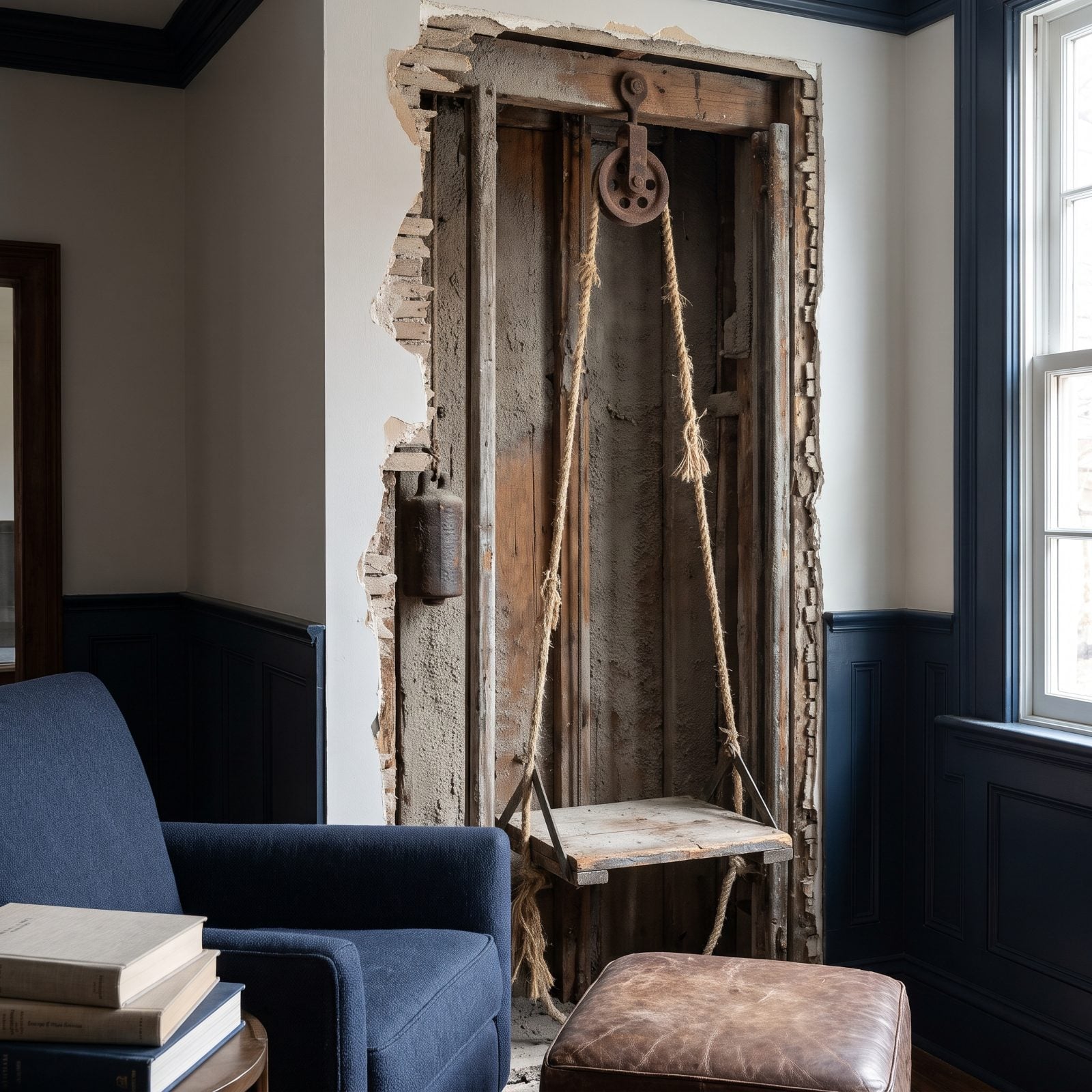
A flat, open wooden plank slung from ropes over an iron pulley, with an old iron counterweight hanging on a hook beside the shaft, built to haul meals up from a basement kitchen or send laundry down to a cellar. Dumbwaiters were everywhere in larger homes from the 1880s into the 1920s.
Later owners added closets or ran plumbing, and the shaft got sealed in the fastest way possible. The platform and its hemp ropes often survive right where they last came to rest.
29. A Missing Painting Hidden Behind a False Wall
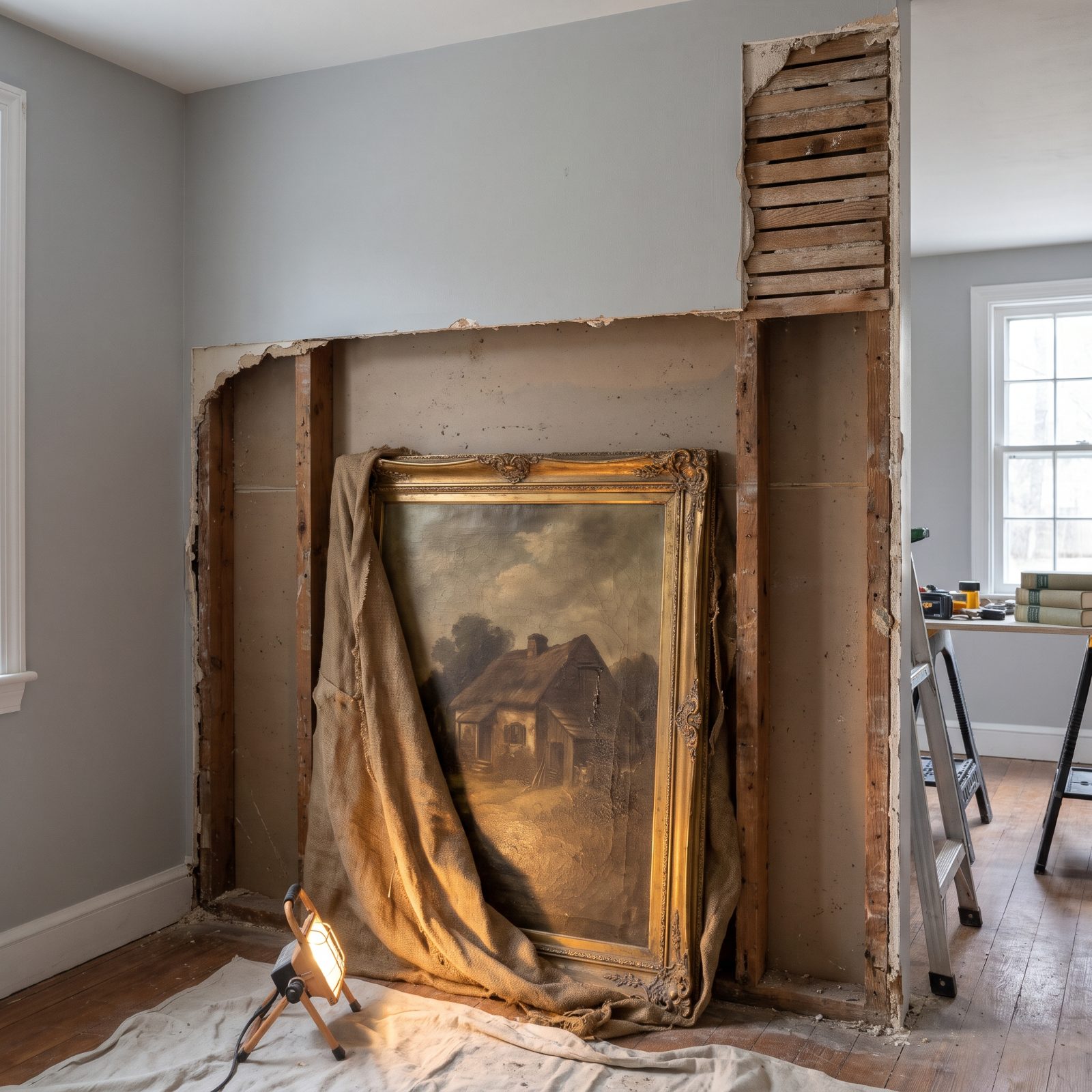
This is the find everyone dreams about and almost nobody gets. It does happen, though: a canvas slid behind a built-out partition and left there — during wartime, or to keep it from an heir, a creditor, an advancing army.
Now the sobering part. Most paintings pulled from walls are family portraits of no market value, warped by damp and foxed with mold. A documented recovery of a genuinely lost work is extraordinarily rare, and it draws provenance disputes the moment it surfaces.
If you ever uncover one, don’t clean it. Don’t touch the surface. Call a conservator, then a lawyer, in that order.
28. A Preserved Wedding Dress Packed Carefully Into the Wall
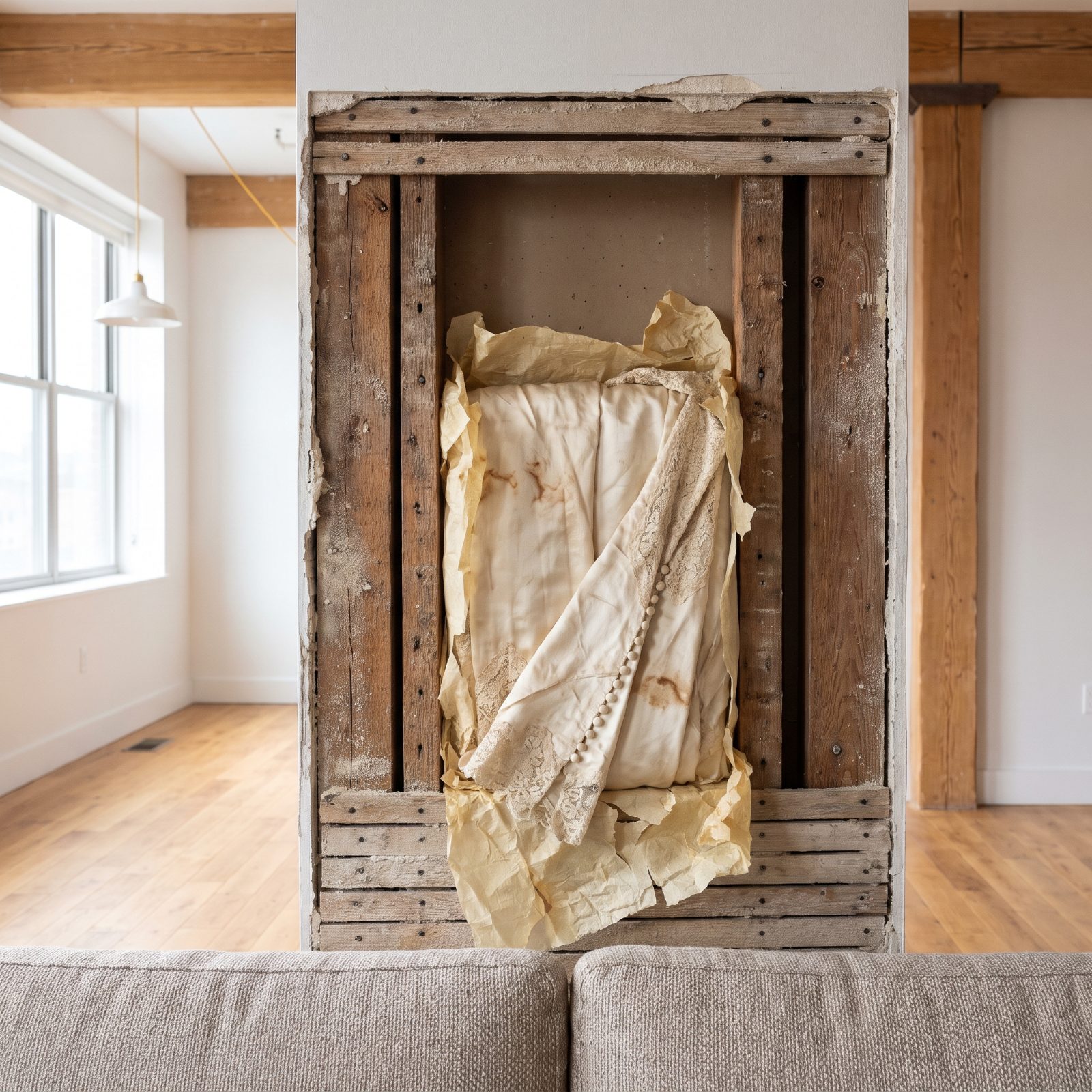
A garment folded into a wall is one of the strangest finds, because someone chose to lose it on purpose. Preserved clothing turns up in cavities and attics more than you’d think, and a wedding dress carries obvious weight.
Sometimes it’s grief made physical — a dress hidden after a marriage ended or a bride died. Sometimes it’s pure thrift, stuffed in as makeshift insulation when money ran short. The fabric itself usually can’t tell you which.
I’ll admit a textile find moves me more than any coin hoard. Coins are just money. A dress is a whole day someone refused to throw away.
27. A Reel of Undeveloped Silent Film Sealed in the Framing
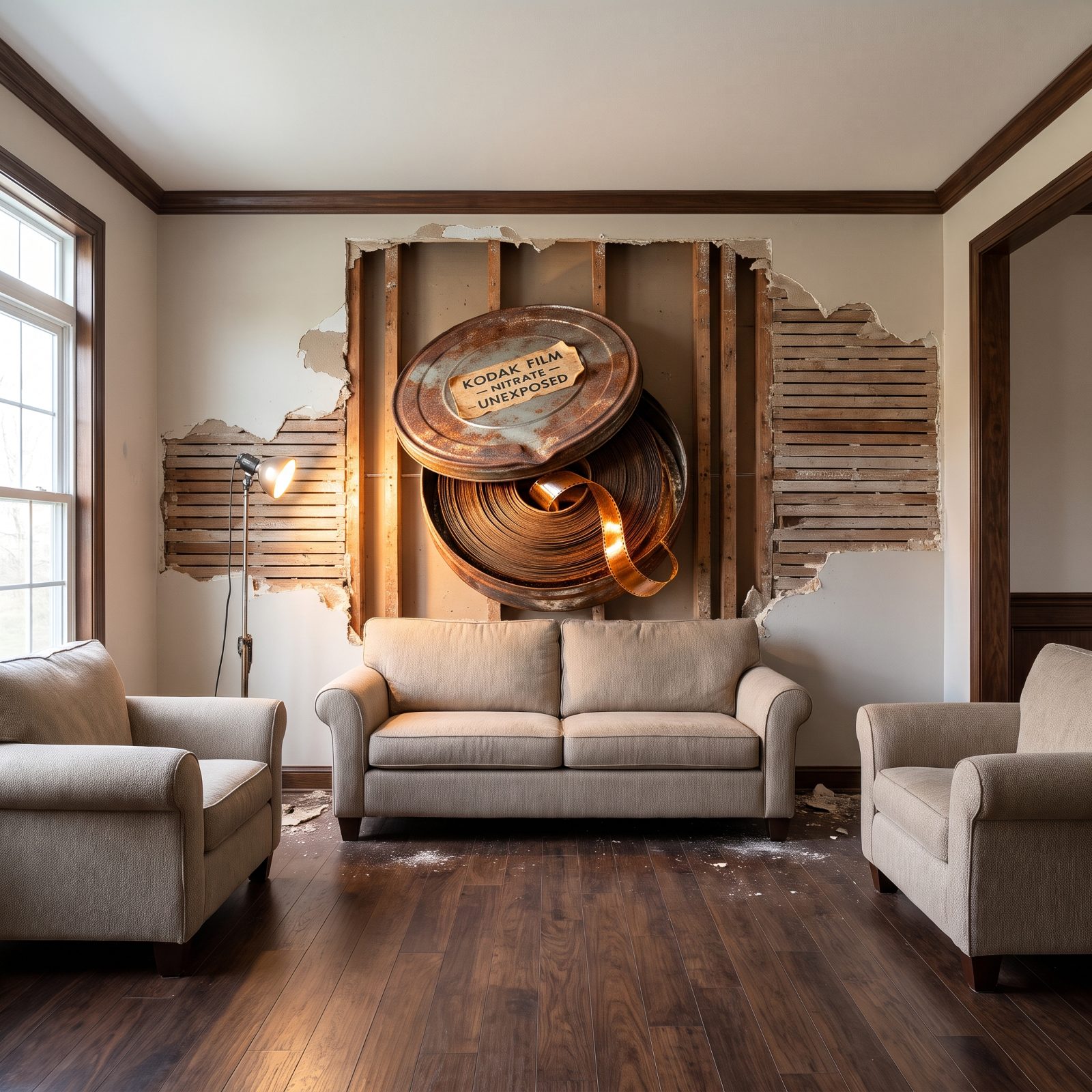
Do not, under any circumstances, hold a lighter near this. Early silent film from before the late 1940s was shot on cellulose nitrate, which is genuinely dangerous. It degrades into an unstable, flammable mess, and in warm, poorly ventilated spaces it can self-ignite.
An open can in a wall, with its reel already loosened and film looping out across the front, is an archival treasure and a hazard in the same breath. Film archives actively hunt for lost silent titles, since most of American silent cinema simply no longer exists.
26. A Wax Cylinder Holding an Early Home Recording
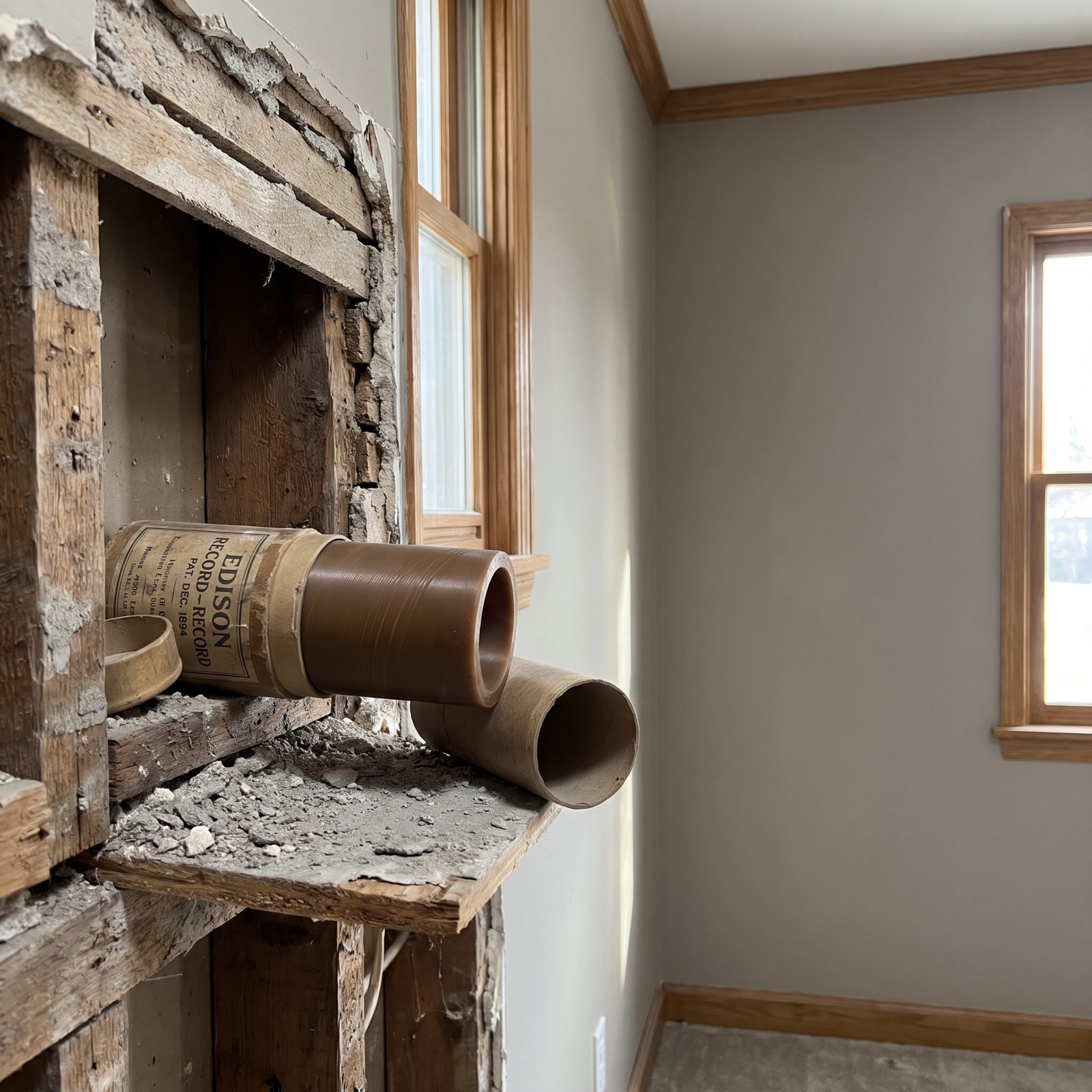
Before flat records, sound lived on brown wax cylinders. Home phonographs with recording attachments let ordinary families cut their own — meaning a cylinder found in a wall might hold a voice nobody has heard in a hundred years.
They’re agonizingly fragile. Wax grows mold, warps, and can crumble if you so much as play it on the wrong machine. Archives now read them optically these days, with cameras and software, no needle anywhere near the grooves.
A ribbed brown cylinder in a labeled cardboard sleeve is worth protecting the second you spot it. That’s no trinket. It could be the only surviving recording of someone’s grandmother singing.
25. Newspapers Stuffed Into the Walls as Insulation
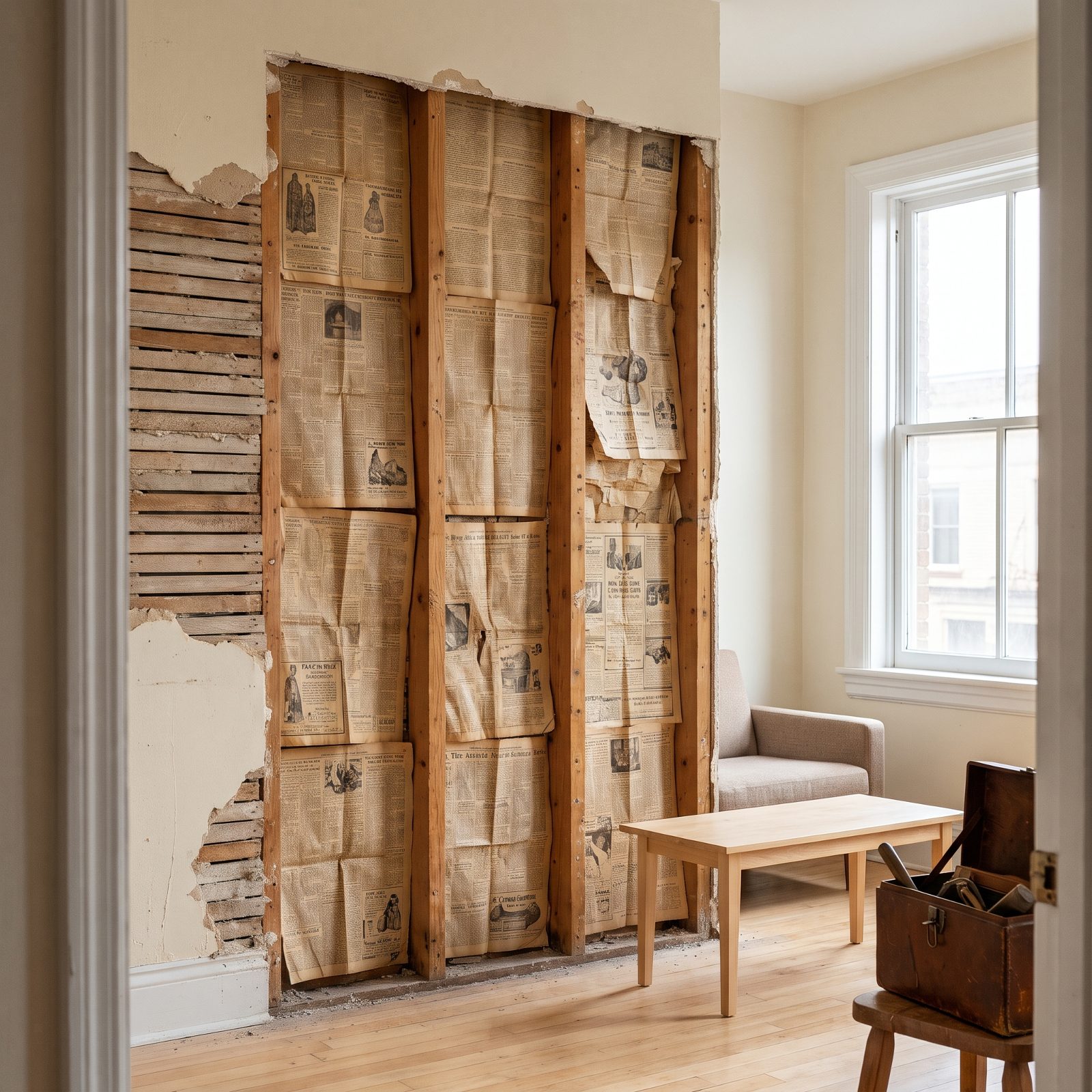
The most common wall find of all, and the most useful for dating a house. Before fiberglass, people stuffed cavities with whatever was free — newspaper, rags, corn husks, old catalogs. Newspaper won because every household had it by the armful.
The gift is the dateline. A paper from a specific town and day tells you almost exactly when that wall went up or got patched.
24. A Child’s Single Shoe Concealed Beside the Chimney
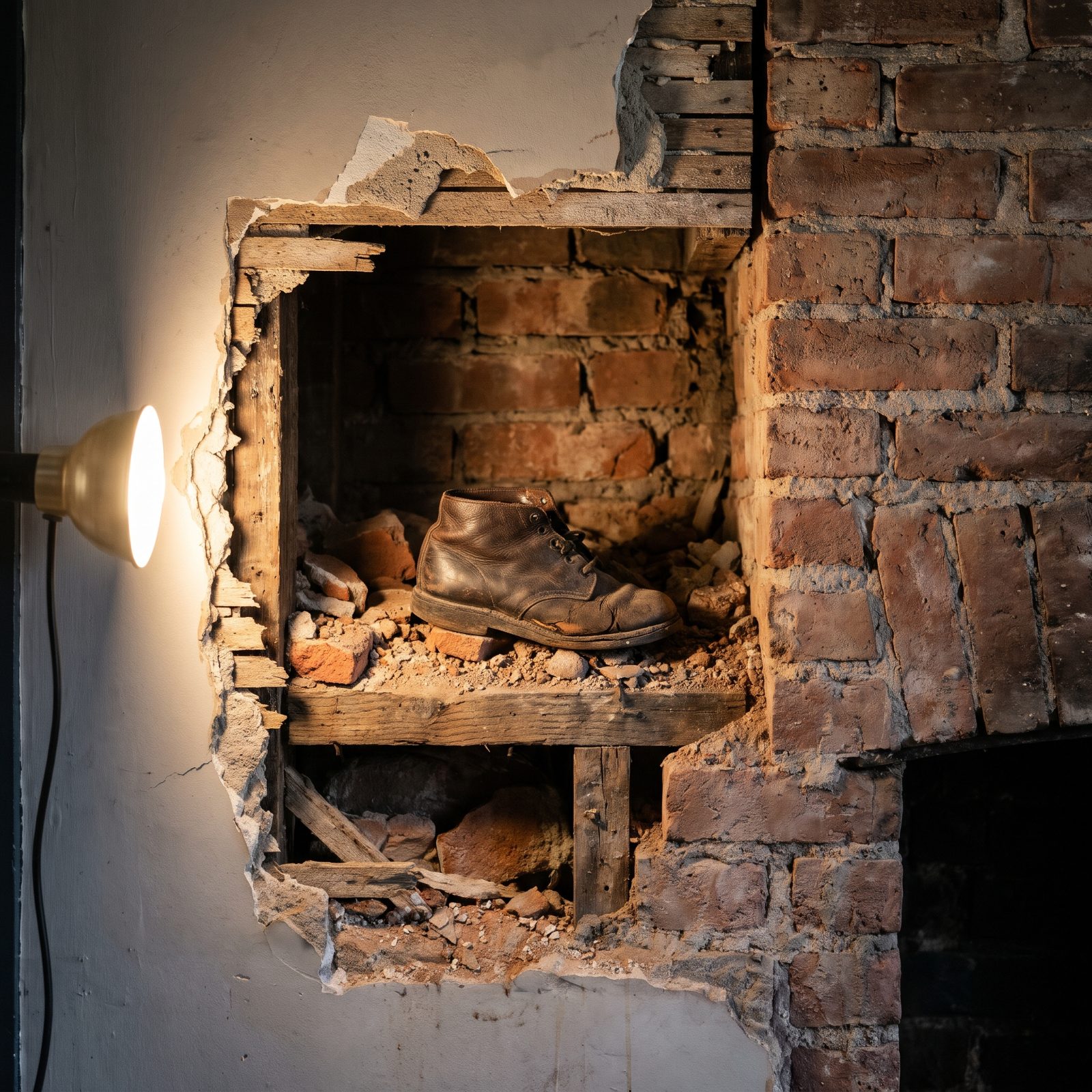
One small shoe. Always just one, usually well-worn, tucked near a chimney, doorway, or roofline. This is no accident and no lost toy — it’s one of the oldest documented folk customs in English-speaking homes.
Concealed shoes were deliberately hidden to protect the household, a charm against bad luck and ill intent going back centuries and carried across to America. Museums have catalogued thousands of them.
Historians ask one thing: leave it where you found it, or at the very least record the exact spot before you remove it. Location is everything here. A concealed shoe with no context is just an old shoe, and that’s a story lost for good.
23. A Horse Skull Walled Up Beneath the Parlor Floor
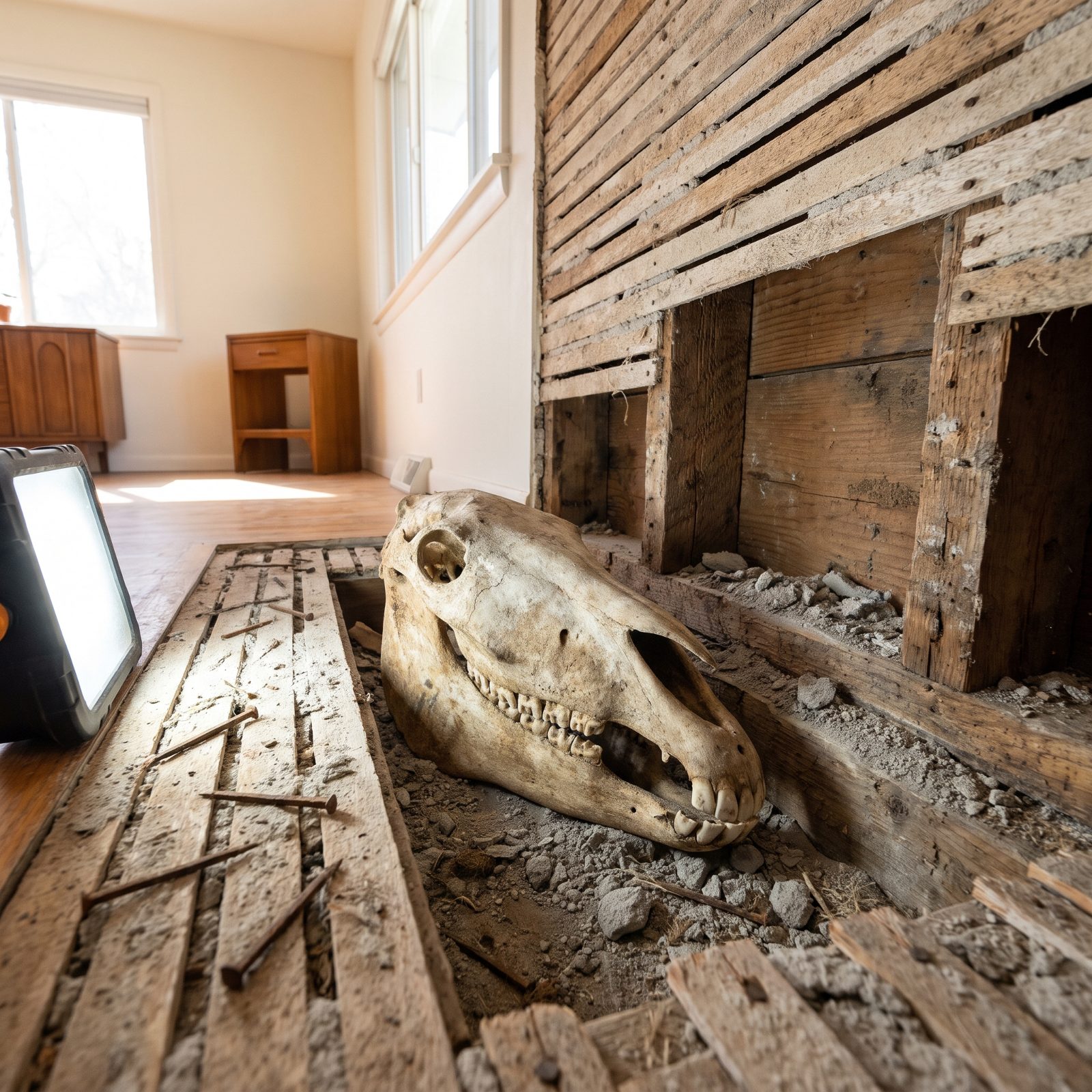
Pull up a floorboard in an old farmhouse and you might meet a horse. Not a ghost — an actual skull, deliberately bricked or boxed into the structure. Builders across Ireland and parts of England did this for centuries, usually under hearths and thresholds, and the leading explanation is acoustic: a cavity with a skull in it was thought to sharpen the sound of music and dancing in the room above.
Folklorists tie it to protection too, a charm against bad luck crossing the doorway. Cases keep turning up during renovations in rural Irish and English homes well into living memory.
22. The Architect’s Original Hand-Drawn Plans, Rolled Inside a Stud Bay
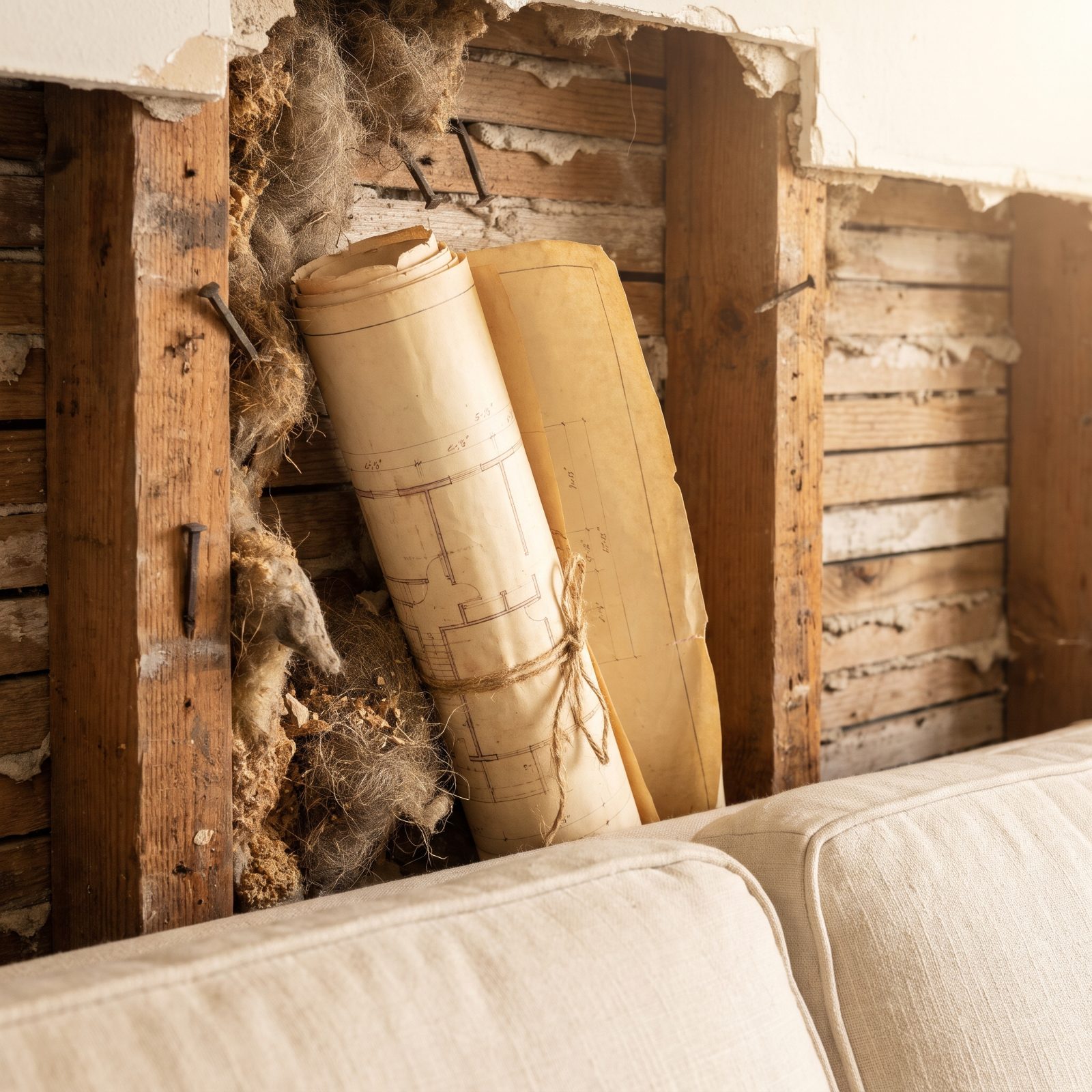
Sometimes the house tells you how it was built, in the builder’s own hand. Original plans turn up rolled into wall cavities and attic voids, left by carpenters who had no further use for them once the framing was up.
What makes these a real find is the correction marks — pencil notes where a doorway moved, a chimney shifted, a room grew by two feet mid-construction. You’re reading the argument between the drawing and the reality. Preservation architects prize them because they reveal the original intent before a century of remodels buried it.
21. A Resident’s Handwritten Diary Slipped Behind the Baseboard
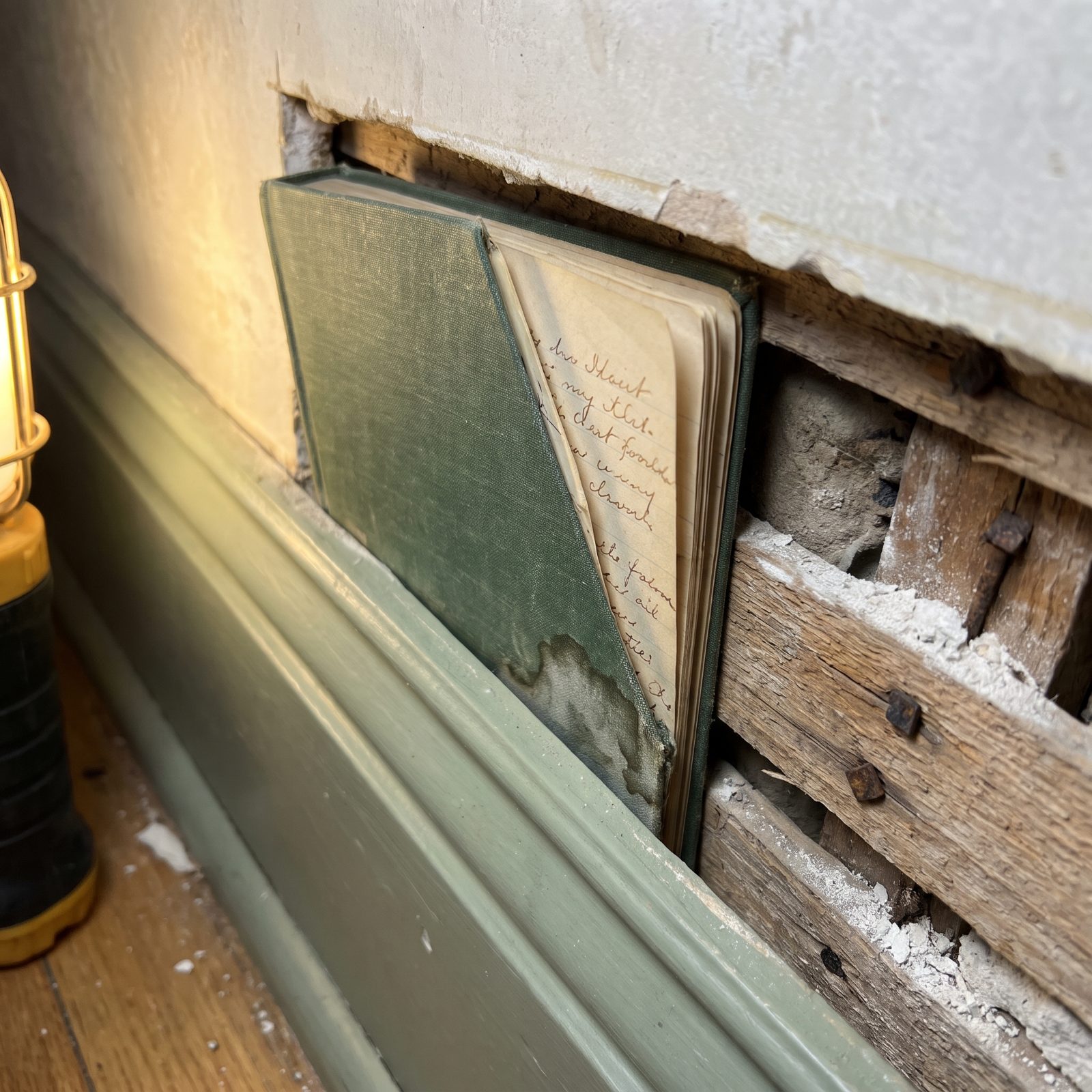
The most intimate thing a wall can hand you is someone’s private handwriting. Diaries and letters turn up behind baseboards and inside chimney breasts — sometimes hidden on purpose, sometimes just dropped and lost in the dark.
Read one and the house stops being a building. It becomes a stage with former occupants on it, worrying about money, weather, a sick child. Local historical societies will often help date and read these, though honestly it depends what shape the ink is in. Damp destroys them faster than anything else, so the dry ones survive and the rest turn to mush.
20. A Child’s School Slate Still Covered in Arithmetic
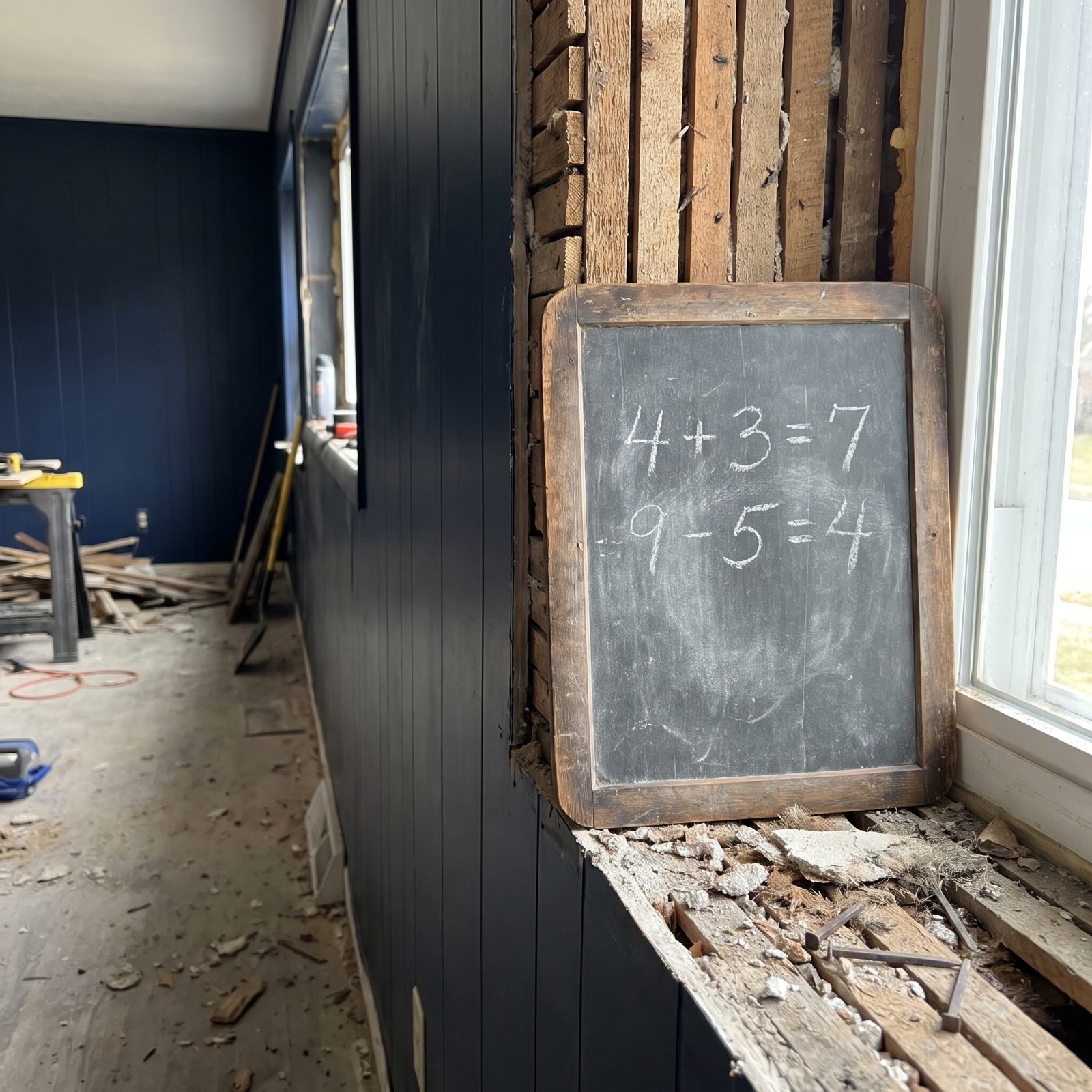
A child’s slate turns up in a wall cavity, and there’s still chalk on it. Two bold, crisp sums, 4+3=7 and 9-5=4, someone was working through before setting the thing down and, somehow, losing it to the house for a hundred years.
They’re small, and they don’t photograph as dramatic treasure. But a slate with the day’s lesson still visible is a direct line to a kid who sat in that room doing homework. The chalk never fully wipes. Even now the numbers stand out bright white against the dark slate.
19. A Porcelain Doll Sealed Up in Her Original Dress
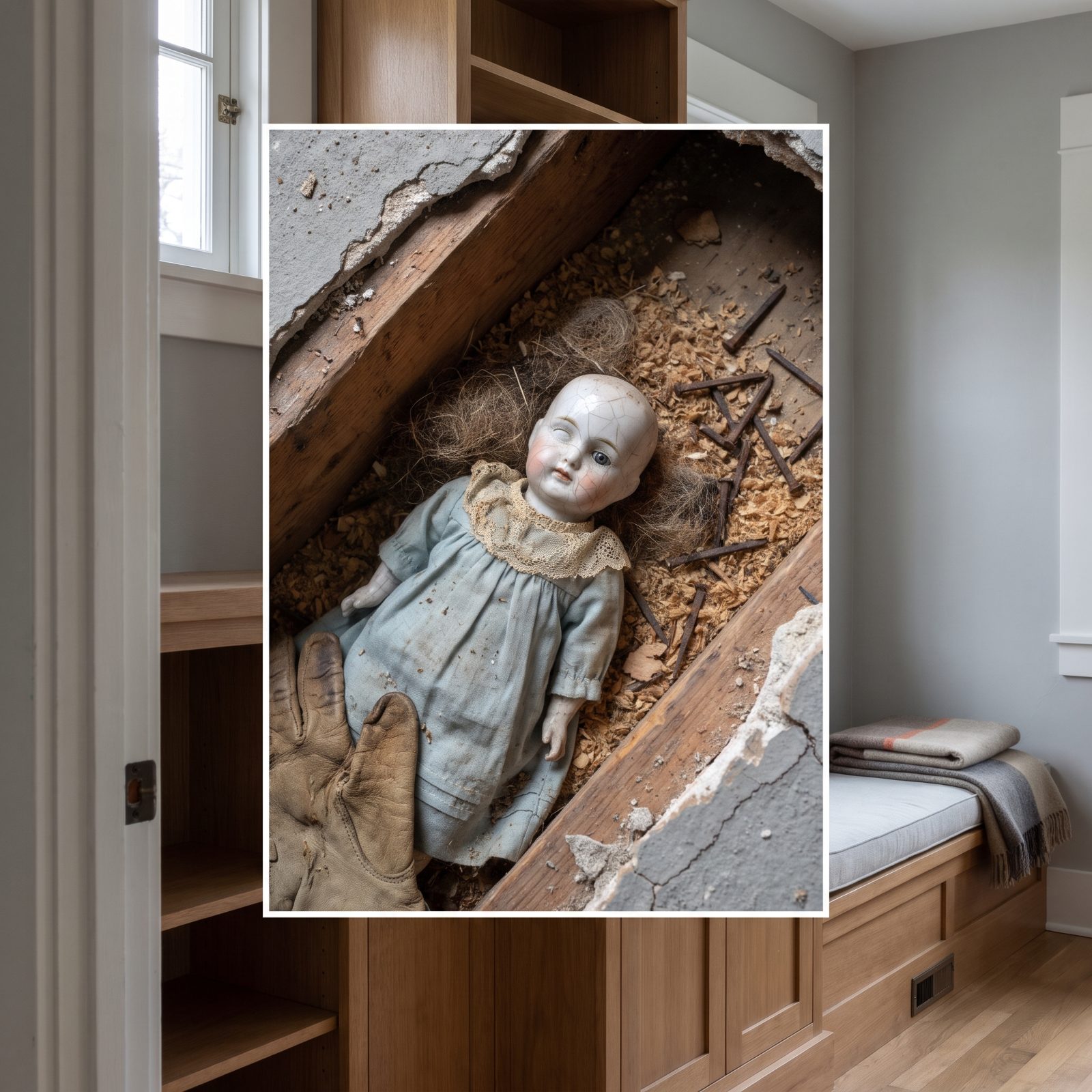
Finding a doll in a wall rattles people more than a skull does, and I get why. There’s something about a small human face sealed in the dark. The unsettling read is the obvious one; the likelier read is sweeter.
Children hid toys in cavities, under floors, in chimney nooks — sometimes as a game, sometimes to keep a favorite thing safe. A porcelain doll in her original dress, fabric intact, is genuinely collectible and tells you about period clothing in miniature. Antique dealers date these by the head material and the maker’s marks stamped at the nape.
18. A Bundle of Early Baseball Cards That Turned a Wall Into a Jackpot
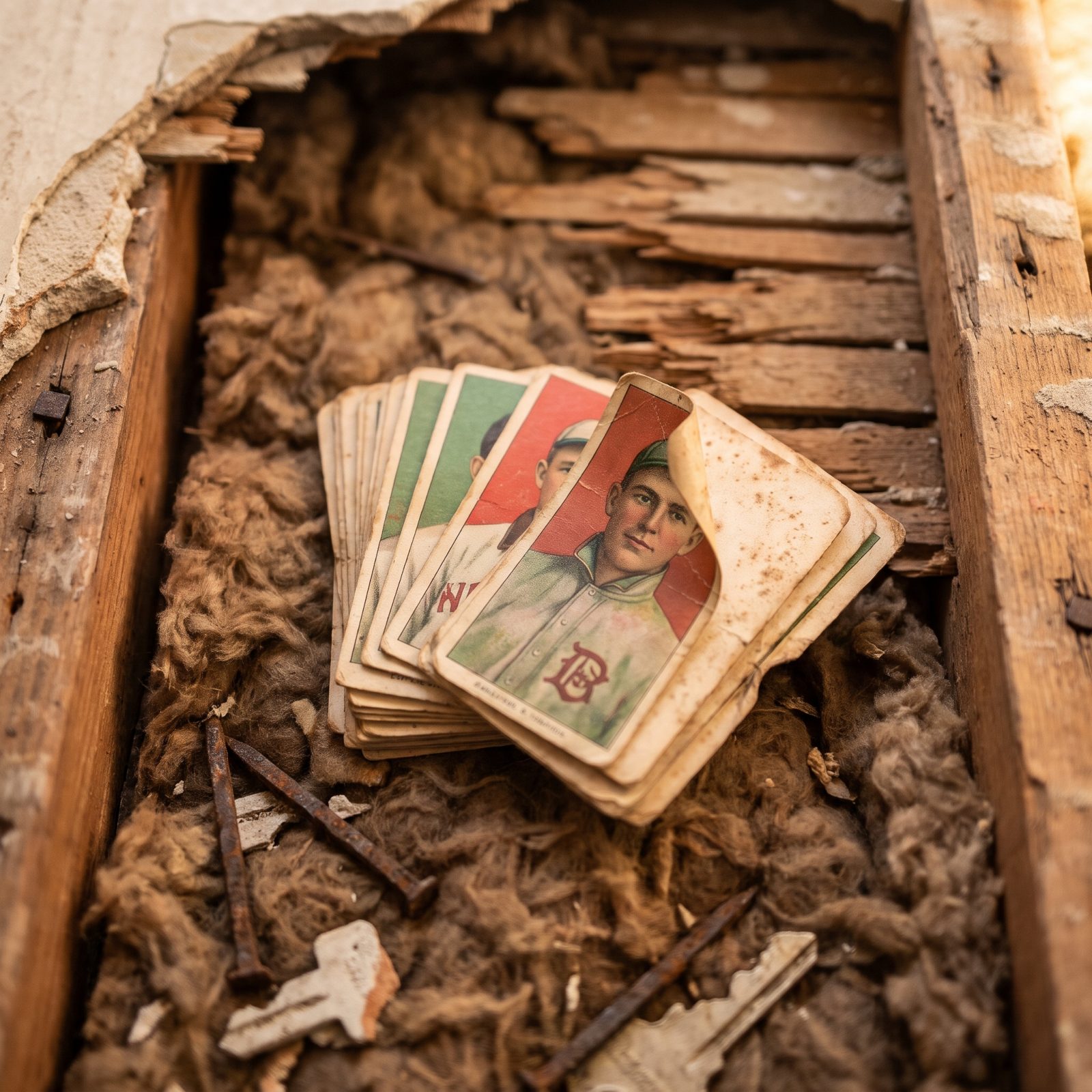
This is where a wall can pay for the whole renovation. Early baseball cards — the tobacco-insert kind from around 1909 to 1911 — surface in old attics and cavities because kids stuffed them anywhere flat and dark.
The famous T206 set is the one everyone dreams of, and condition is everything. A card creased and stained is worth a fraction of a crisp one. A pristine example of the rarest card in that set has sold for millions at auction. Most wall finds aren’t that. But even a handful of common ones from that era can be worth real money if the paper survived dry.
17. Rare Comic Books the Dry Wall Cavity Quietly Saved
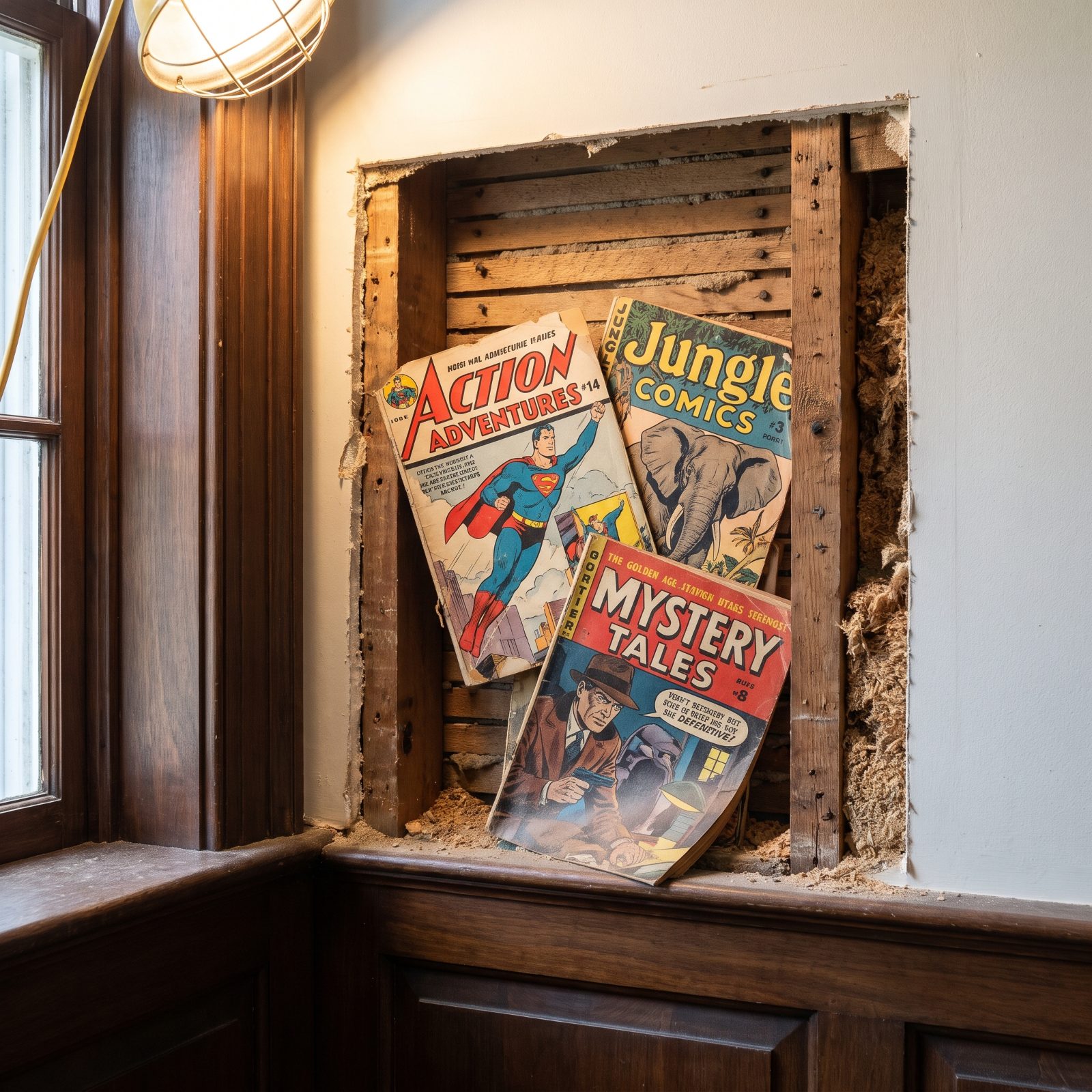
Comics are newsprint, and newsprint is fragile. Which is exactly why a dry wall cavity can be their best friend — no light, no handling, no humidity swings. Comics that would’ve been read to pieces in a kid’s hands sometimes survive in near-original shape because they fell behind a wall and stayed there, forgotten, for most of a century.
Golden Age issues from the late 1930s and 1940s are the prize. The highest-grade copies of the first Superman and Batman appearances have sold for multiple millions. Condition drives price far more than people expect. A ragged copy and a crisp one of the same issue aren’t in the same financial conversation.
16. A Hand-Painted Mural Found Alive Under the Paneling
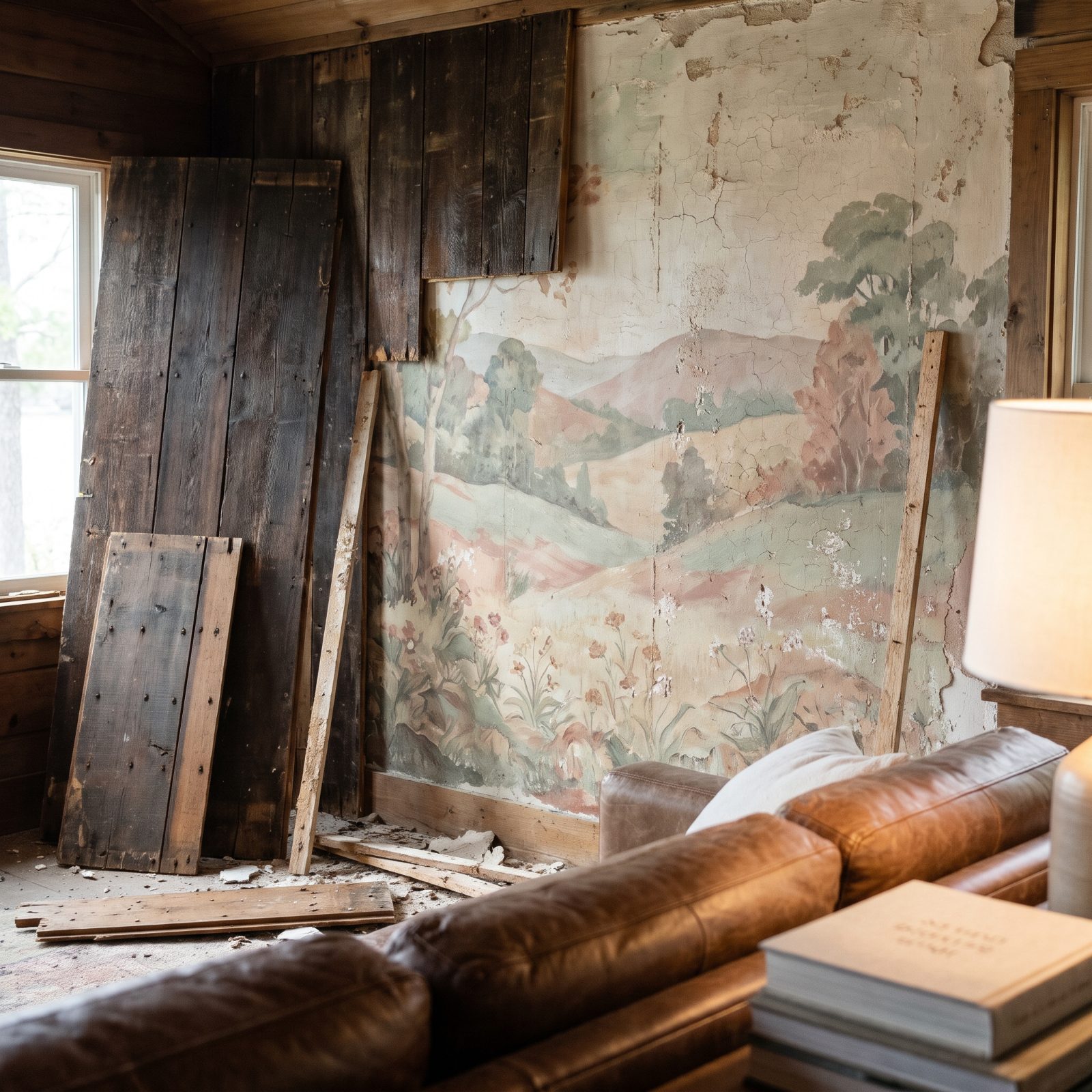
Peel back cheap paneling and sometimes the original wall was art the whole time. Hand-painted murals, done directly on plaster by itinerant painters or ambitious owners, hid for decades under 1960s and 70s coverings that someone nailed right over them.
Early American itinerant muralists painted landscapes, harbors, and stenciled borders across New England parlors in the early 1800s. When one surfaces intact, conservators get involved fast, because cleaning it wrong can lift the paint off the plaster for good.
15. Stacked Layers of Original Victorian Wallpaper, Peeled Back One Era at a Time
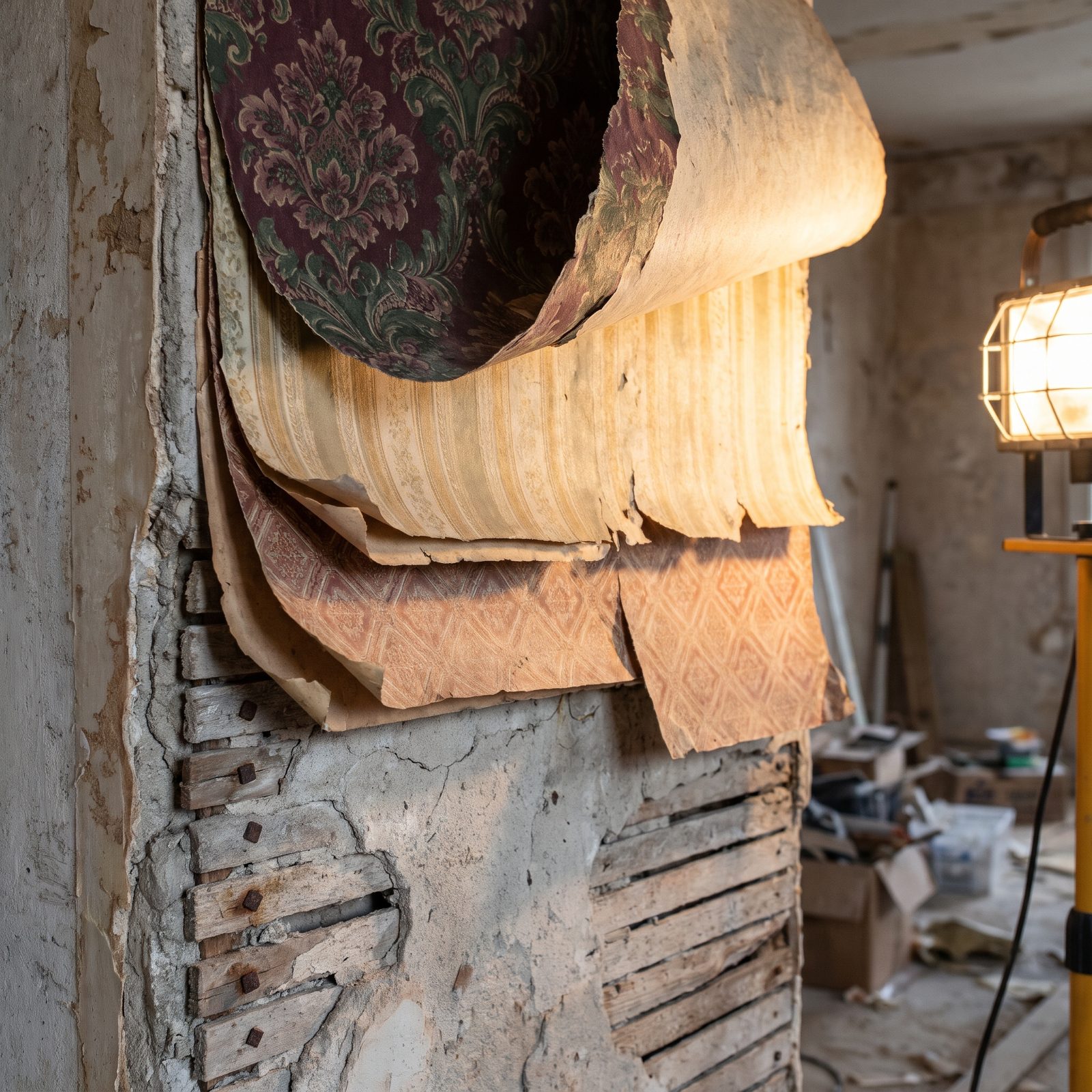
Strip a Victorian wall and you’re doing archaeology. Each layer of wallpaper is a decade, because the owners never removed the old paper — they just papered over it, and the wall became a stack of tastes.
Early wallpapers hide a darker detail worth knowing. Some of those bright green Victorian papers were colored with Scheele’s Green, an arsenic-based pigment, and in damp rooms it could release toxic compounds. People got sick in rooms wrapped in the stuff.
14. A Cache of Cobalt-Blue Apothecary Bottles Tucked in the Wall Void
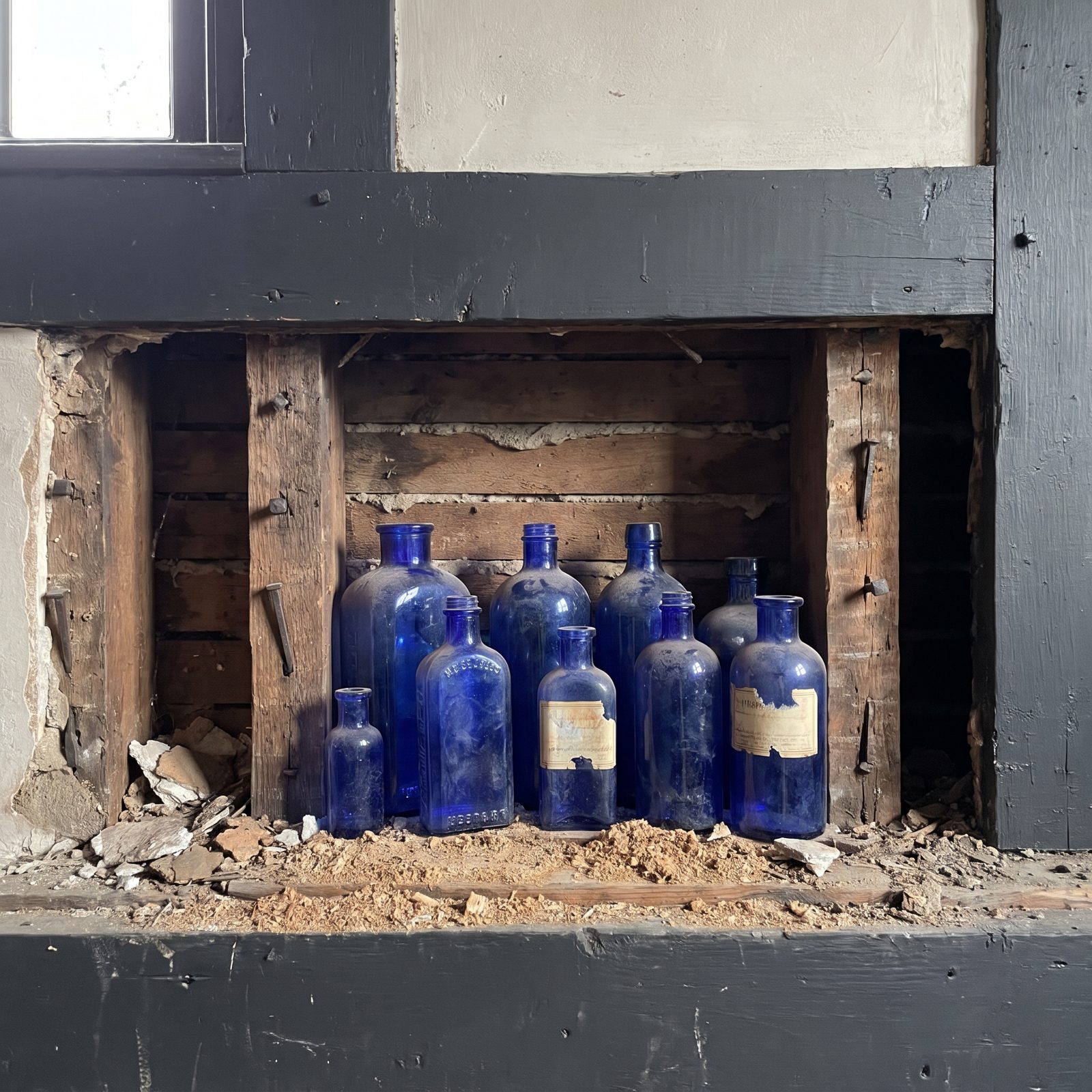
The prettiest wall find photographs itself. Hold cobalt-blue bottles up to a work light and they glow like stained glass. They turn up in cavities and under floors because poison and medicine were often legally required to be sold in colored or distinctively shaped glass — so you could tell the dangerous bottle by feel, in a dark room, half asleep.
Collectors love the embossed ones, though the raised lettering on these is too worn and grimy to read. The bottle shapes and the faded scraps of paper label can still help date the house’s medicine cabinet. Most are worth modest money. The appeal is the blue.
13. The Wiring and Bells From a Servant-Call System
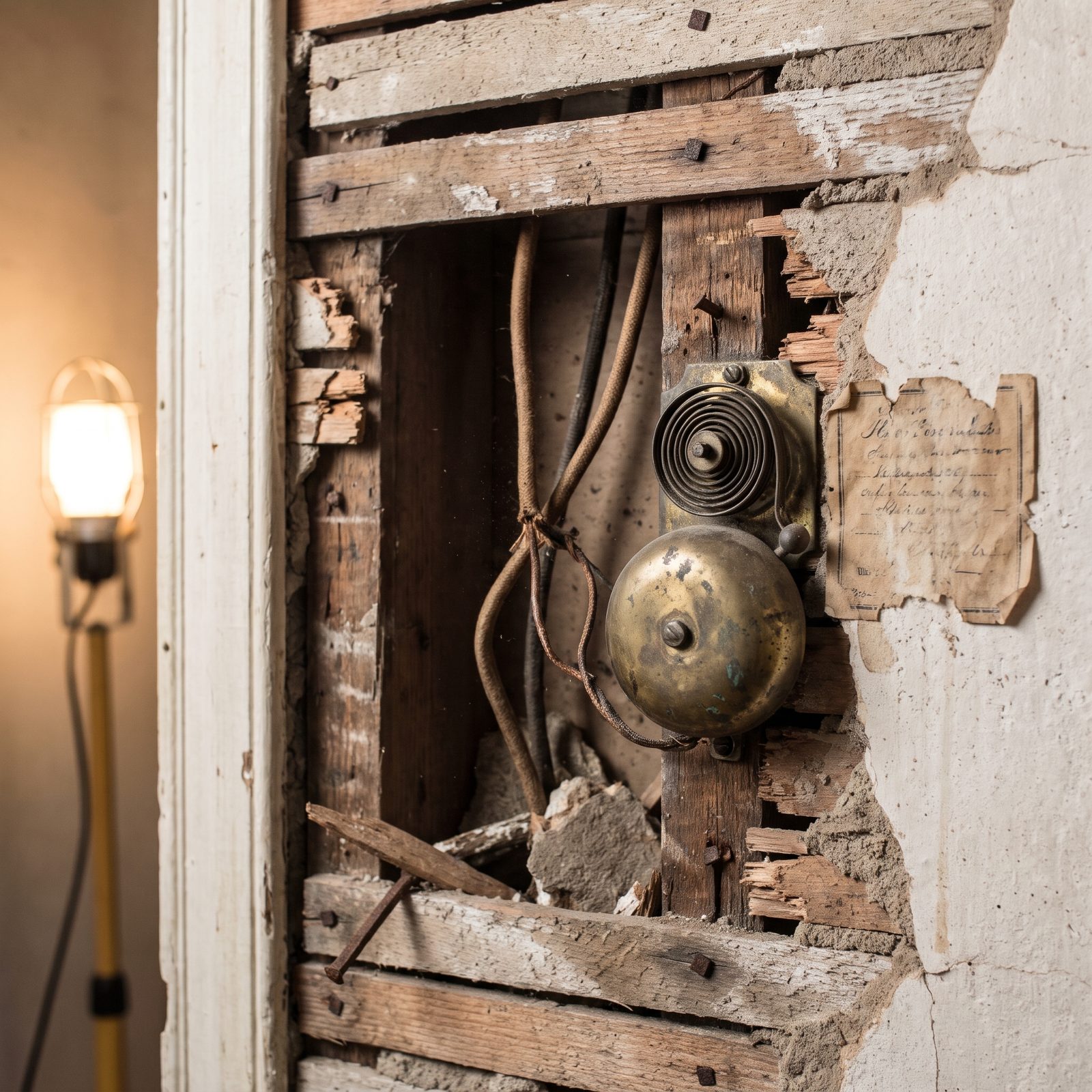
Pull open the plaster of a grand old house and you may find a nervous system still wired into the walls. Thin cloth-wrapped wires fan out from room to room, ending in little brass bells that once jangled below stairs.
Every bell answered a specific room, so a servant could read the swing of the indicator box and know exactly where the summons came from. The wiring runs low-voltage, off a battery and a push button by the fireplace. And it tells you more about who lived there than any deed ever could.
People rip this out thinking it’s dead electrical. It isn’t electrical in the modern sense at all — it’s a map of a household’s pecking order, frozen in copper.
12. A Victorian Mourning Brooch Woven From Human Hair
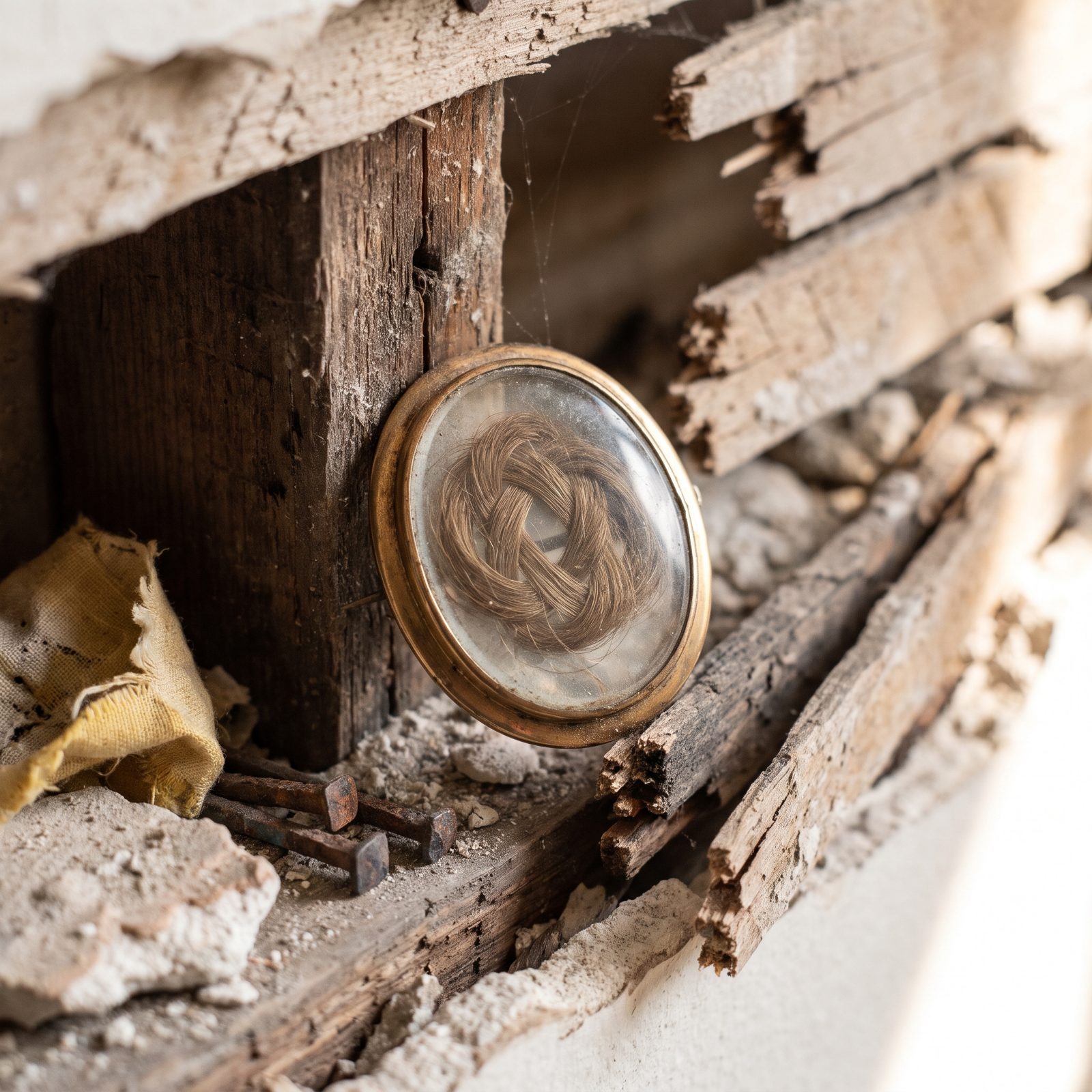
Someone kept a piece of the dead against their chest, and then hid it in a wall.
Hairwork brooches were love letters you could wear. The hair of a mother, a child, a dead spouse — braided into tight loops and sealed under glass in a gold or jet frame. Grief made tangible, carried daily.
Why it winds up in a wall cavity is the part that gets you. Maybe a later owner found it too unsettling to keep but couldn’t bring themselves to bin it. Maybe it just slipped and was lost. If you ever lift one out, handle it like the keepsake it was, because that braid belonged to a real person with a name.
11. A Set of Handmade Ivory Dentures
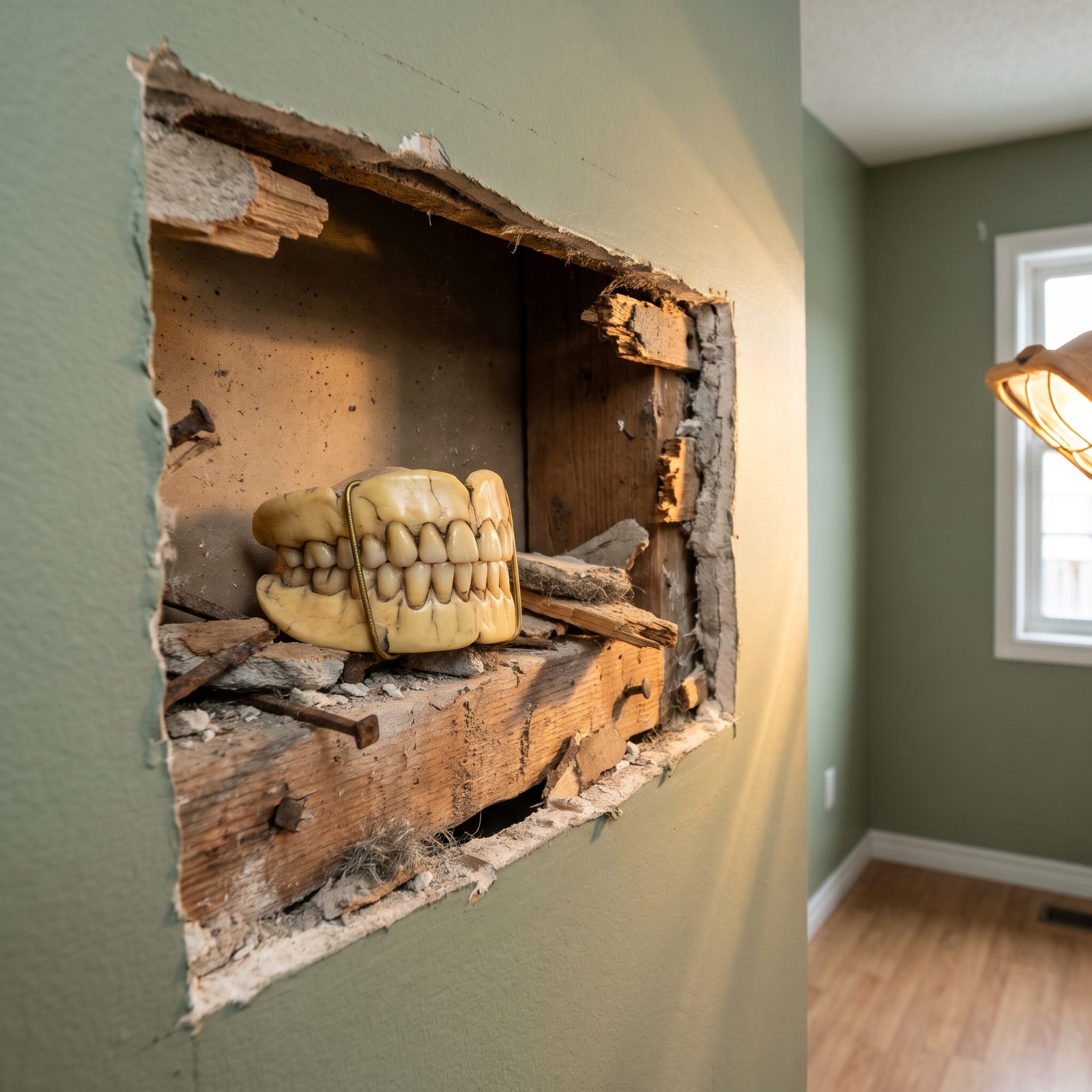
Few wall finds make a renovator put down the crowbar quite like a grinning set of old dentures. Before porcelain, false teeth were carved from ivory — hippo and walrus mostly — then fitted with real human teeth sold by the poor or pulled from the battlefield dead.
Ivory yellows, warps, and smells, so these were vanity more than function. You wore them to look presentable and took them out to eat. George Washington’s famous teeth were this exact kind of grim craftsmanship. Never wooden, despite the myth.
10. A Family’s Silver Cutlery Wrapped in Newspaper
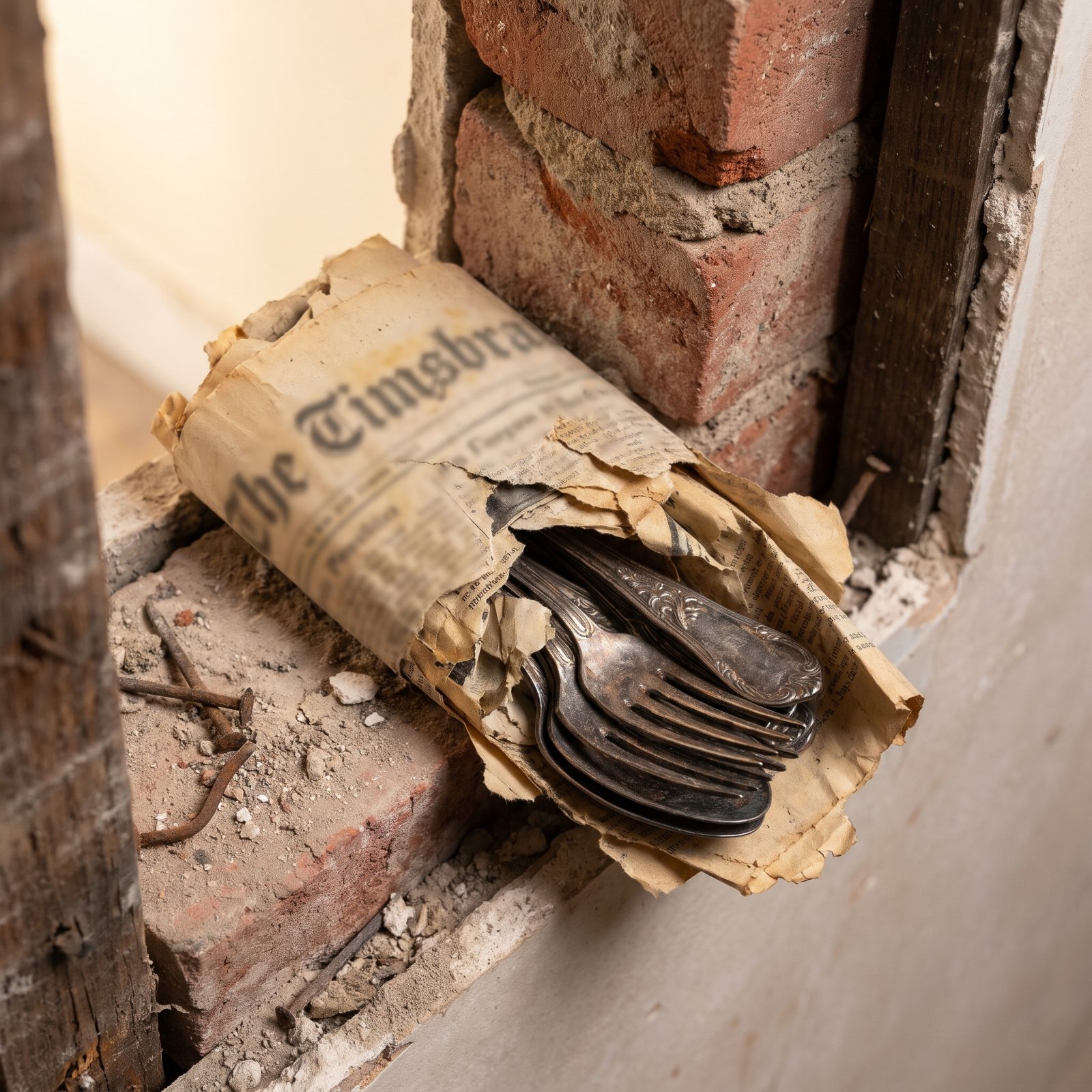
Here’s the quiet tragedy behind a lot of wall finds: someone hid their valuables so well they never got them back. A roll of the good silver — a whole bundle of ornate forks — wrapped in a dated newspaper and tucked into a cavity before a trip, a war, or a bad feeling about the times.
The newspaper is the gift. That masthead dates the hiding almost to the week, and sometimes the headlines spell out exactly what they were afraid of.
I always think the same thing when I read about these. They meant to come back for it.
9. Handprints Preserved in the Original Plaster
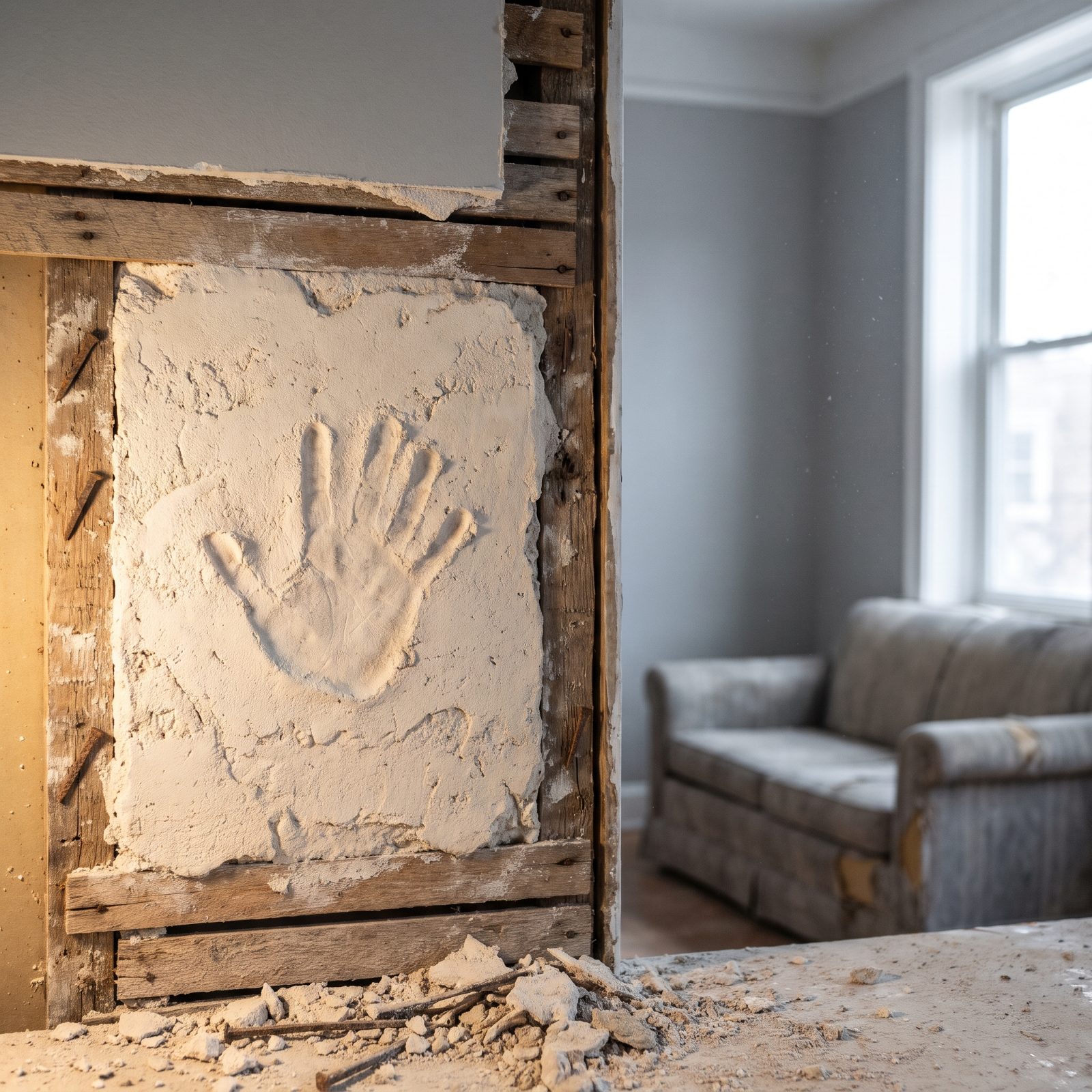
Wet lime plaster holds whatever touches it. Sometimes that was a plasterer’s palm, pressed in to steady himself. Sometimes a child’s small hand, left on purpose.
These are the finds that stop a crew cold. Not valuable, not sinister — just a person reaching across a century and a half to say I was here. The ridges of their fingertips sit in the surface exactly as they left them.
8. A Coded Note That No One Could Immediately Read
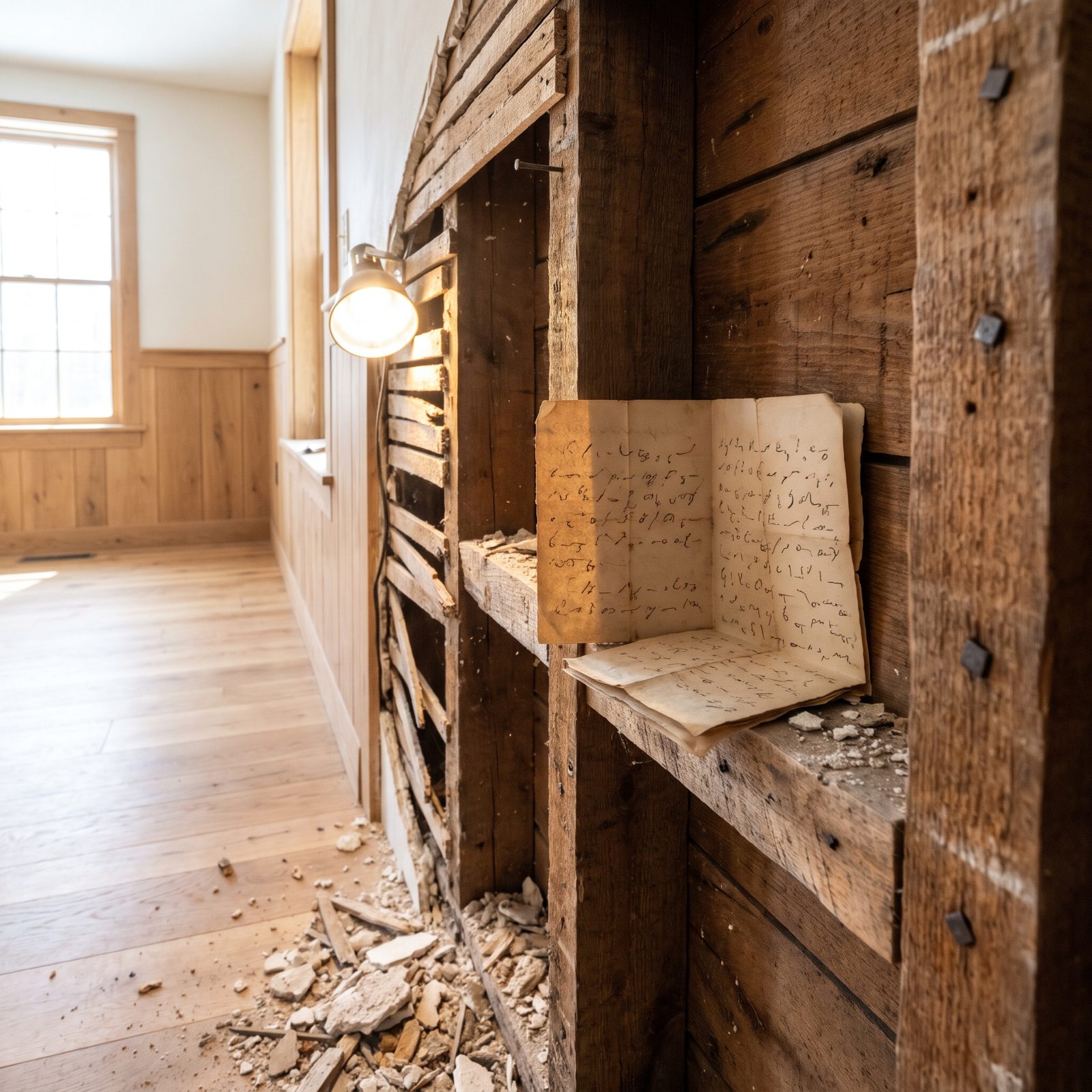
A sheet of paper, rows of marks, and not one word you can read. Coded or shorthand notes turn up in old walls more often than you’d guess, and the first assumption is always something dramatic — a confession, a secret, a crime.
Usually it’s duller and better than that. Victorian and Edwardian clerks learned shorthand systems like Pitman and Gregg, so a note in dense squiggles is often a shopping list, a sermon draft, or a private diary written where the housemaid couldn’t snoop.
The thrill is real, though. You’re holding something written to be unreadable, and cracking it means learning a system that’s nearly extinct. Shorthand forums online have decoded dozens of these for free.
7. A Concealed Family Bible With Genealogy Pages
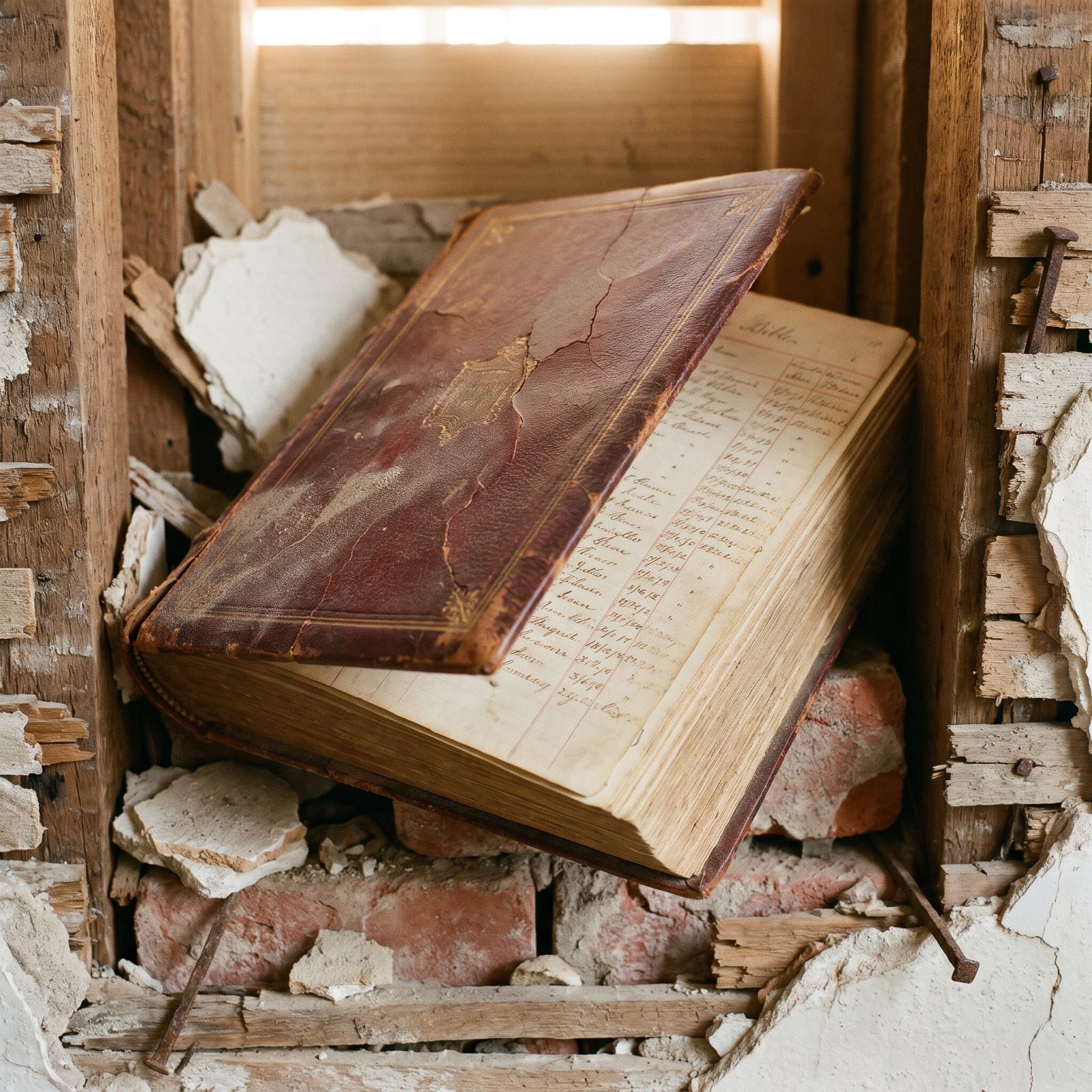
For a lot of families through the 1800s, the Bible was the only legal record of their own existence. Births, marriages, and deaths went on the printed genealogy pages at the front, written in the family’s own hand, long before any county clerk got around to it.
So when one surfaces inside a wall, it can be an entire lineage nobody knew was lost. Those pages have reconnected descendants, settled estate questions, and filled gaps the official archives never had.
Find one and don’t hand it to the first antiques dealer who smiles at you. Local historical societies and genealogy groups will often help trace the family and get the names into a searchable record — worth far more than whatever the book fetches at resale.
6. A Speakeasy Hatch Hidden Behind Built-In Shelves
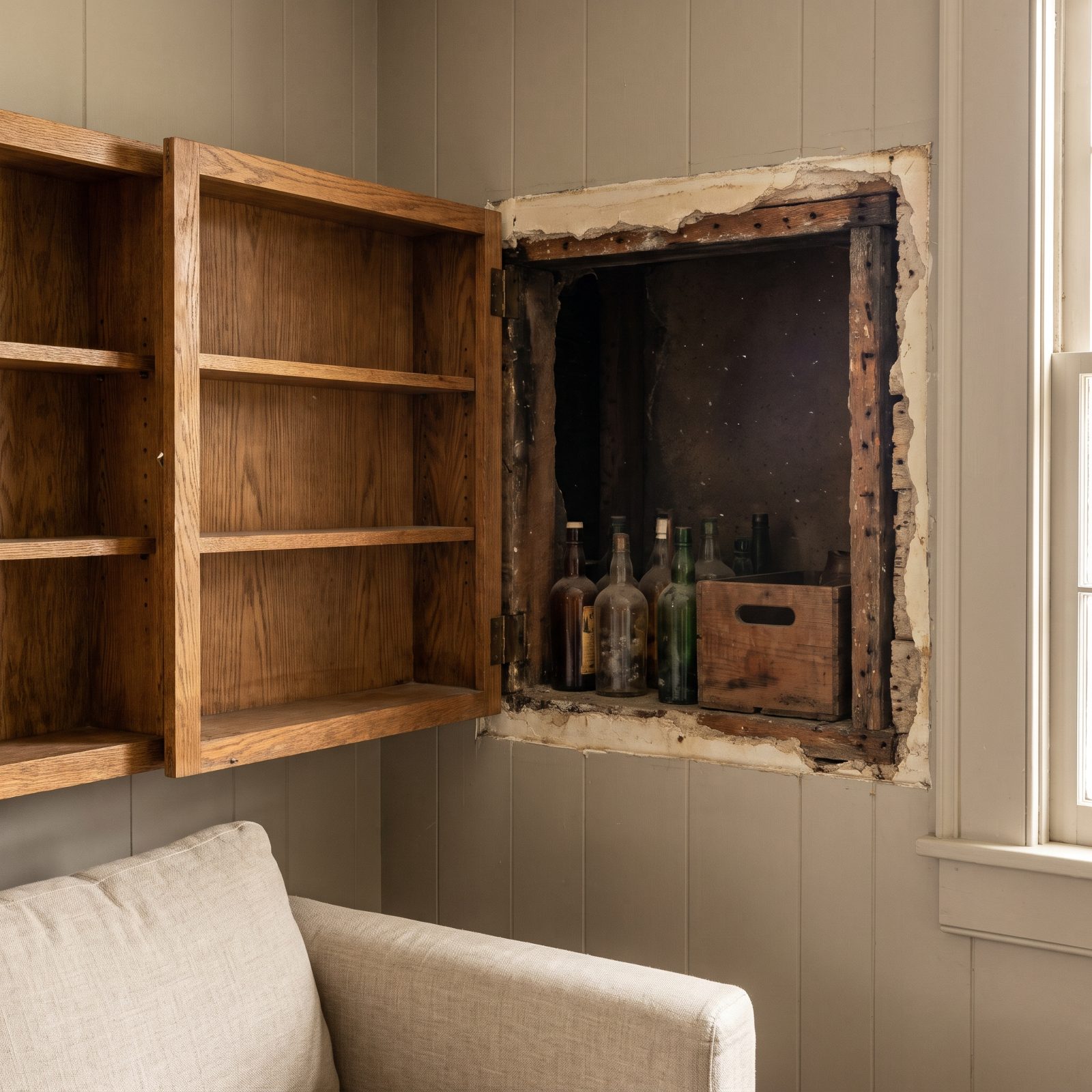
Swing a hinged wall cabinet away from the wall in a Prohibition-era house and you might find what it was covering. A ragged hole torn through the plaster, opening onto a cavity just big enough for bottles and a man’s nerve.
Prohibition ran 1920 to 1933, and ordinary homes got clever about it. Hidden liquor cabinets behind shelving, swing-out panels, compartments tucked under the stairs. The ones found today sometimes still hold the original stock — bottles gone cloudy but sealed tight.
5. A Priest Hole Large Enough to Conceal a Person
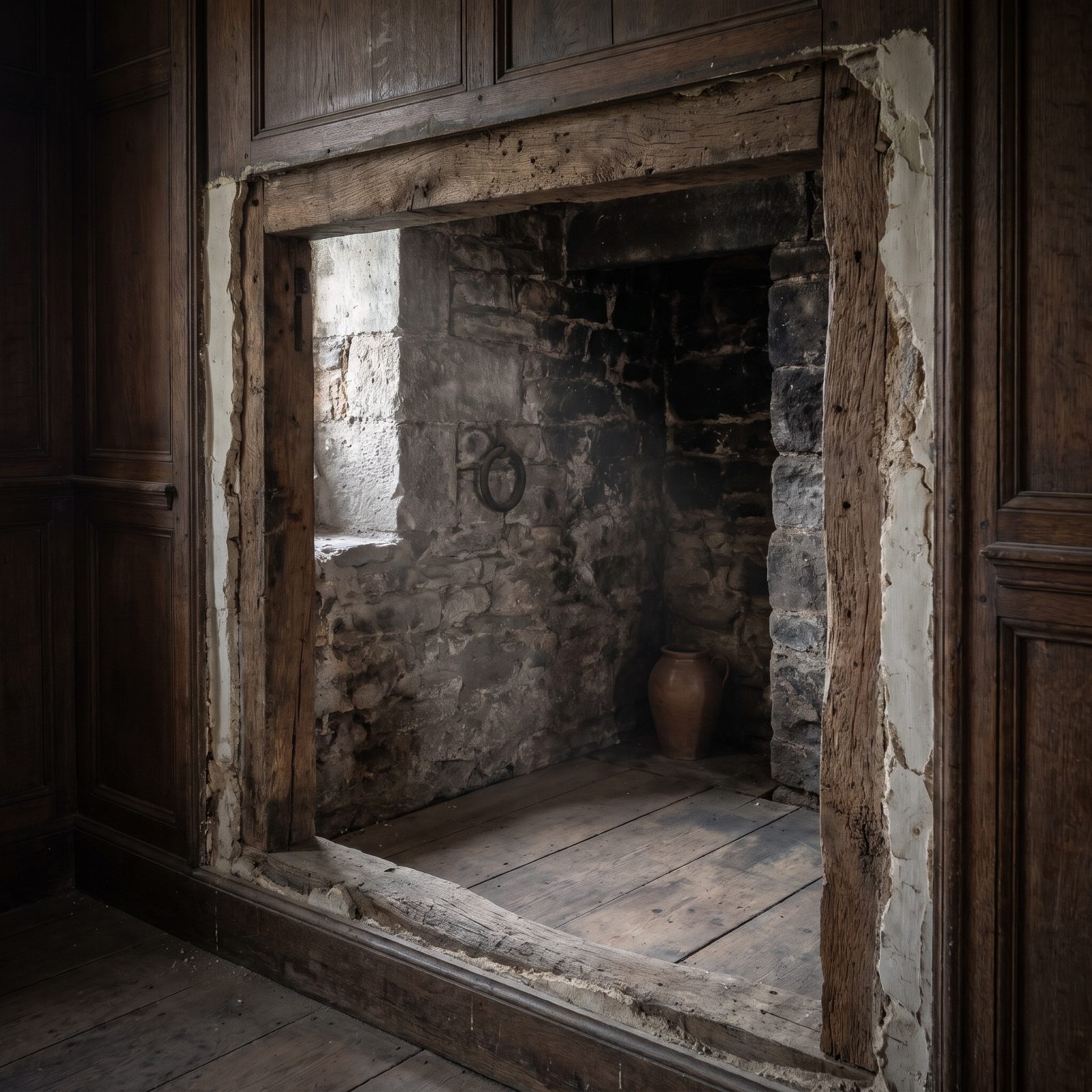
In Elizabethan England, hiding a Catholic priest could cost you your life, so wealthy recusant families built places to hide them. Priest holes — voids behind fireplaces, under floors, inside thick chimney stacks, a few even plumbed with water so a man could survive days without food.
The best of them came from a lay brother named Nicholas Owen, who spent roughly twenty years at the work. His were so cunning that some are thought to remain undiscovered in old manors even now. He was eventually caught and tortured to death in 1606, and never gave a single one up.
Finding one is rare and serious. These are protected heritage features in Britain, not curiosities to gut.
4. Counterfeit-Currency Printing Plates
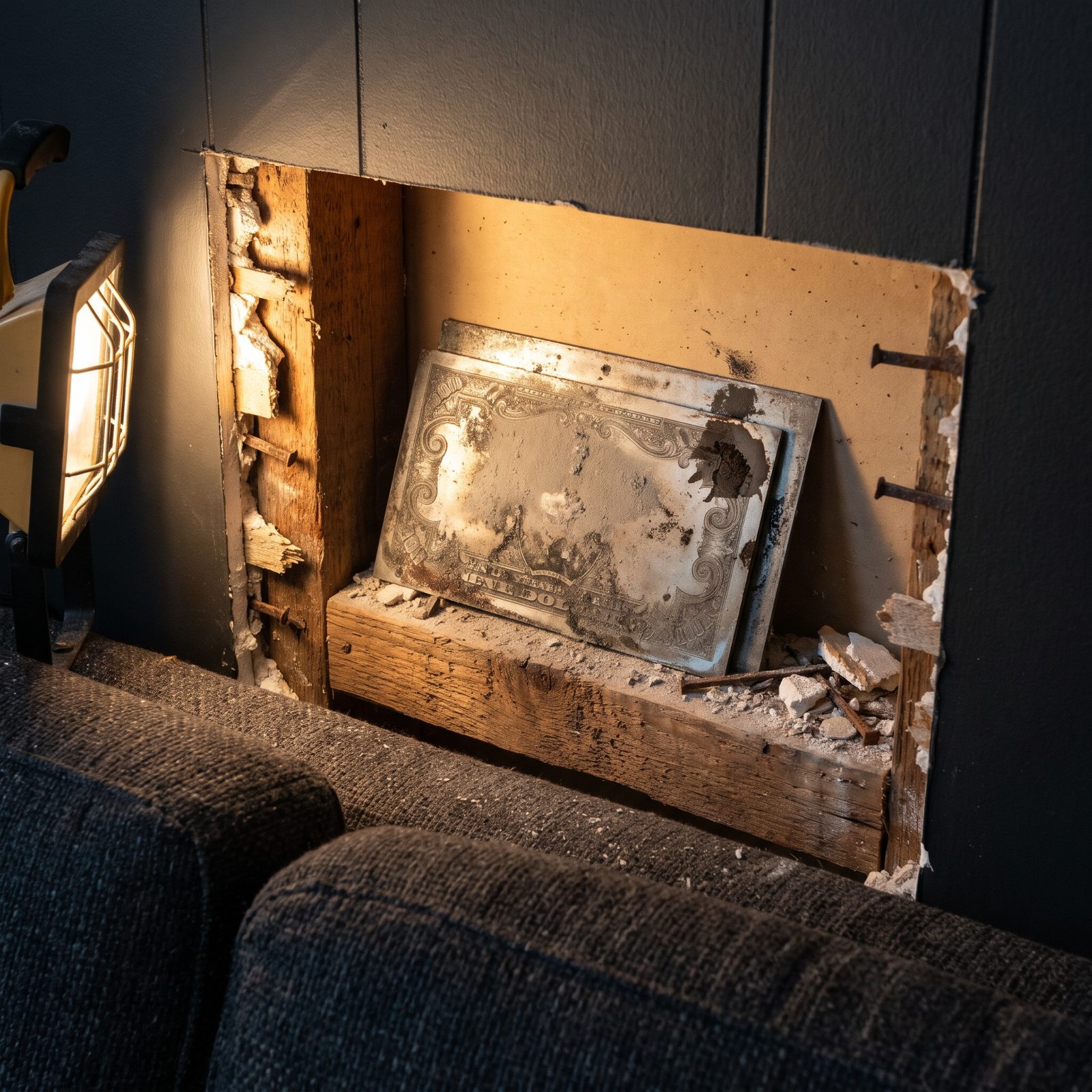
Not every wall secret is sentimental. Some are evidence.
Engraved metal plates for counterfeiting currency turn up in old homes now and then, hidden by whoever used them and never retrieved. The engraving is finely cut and reads in mirror image, reversed from a finished note, and once you grasp what you’re actually looking at, the hair stands up a little.
Here’s the part people don’t expect. Counterfeiting plates, even antique ones, can still be illegal to possess in the United States, and finding them doesn’t make them yours to sell. The Secret Service was founded in 1865 specifically to chase counterfeiters — long before it ever guarded a president.
3. A Wall-Sized Honeycomb Dripping With Decades-Old Honey
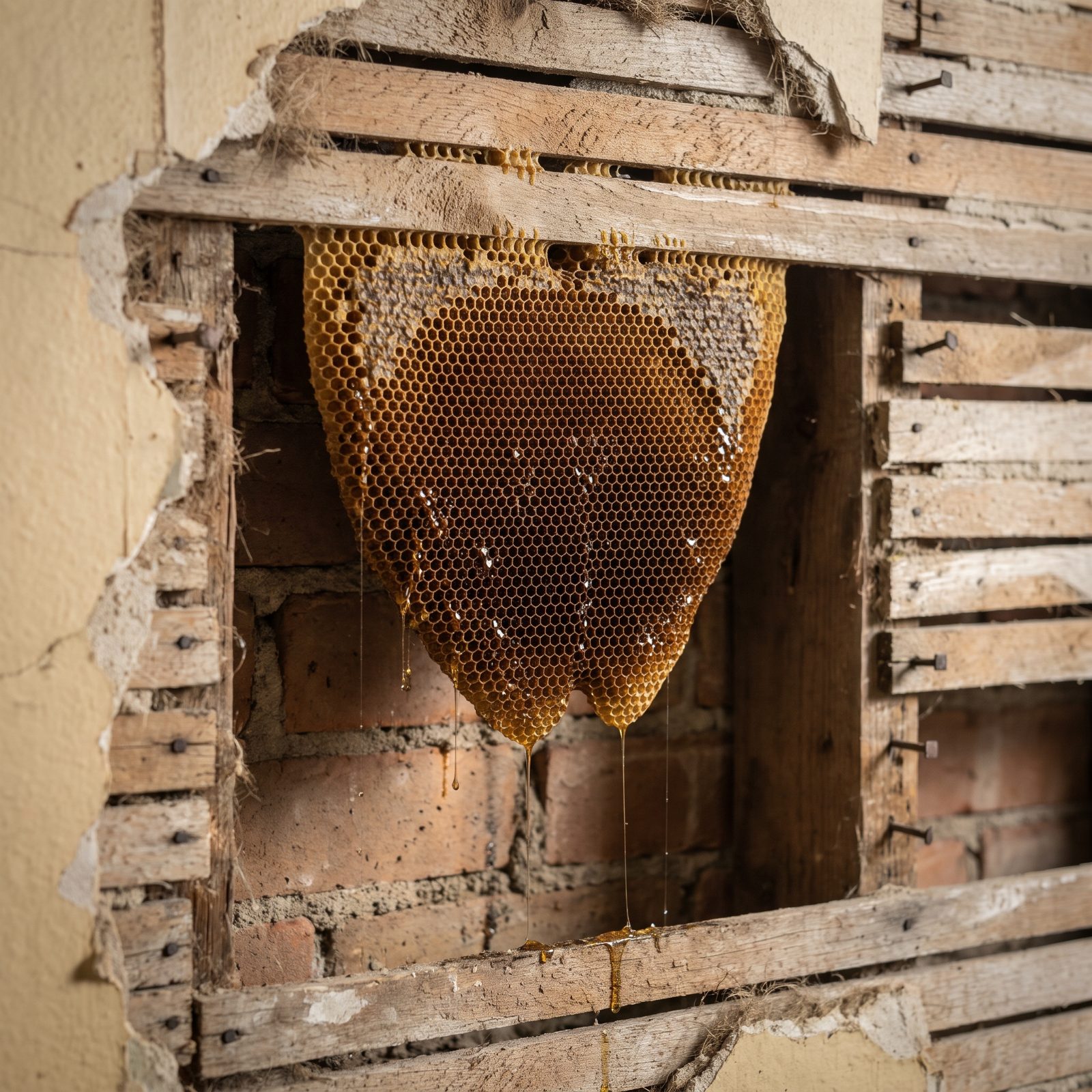
Open a wall near a chimney flue or a south-facing gable and you might meet a colony that moved in long before you did. Cases turn up regularly across the UK and the US. The surprise is never the bees — it’s the weight. An established hive packed into a single stud bay can carry a hundred pounds of comb and honey, enough to bow plaster from the inside out.
Old honey goes dark and syrupy, almost molasses-thick, and it doesn’t spoil the way food does. But don’t eat the stuff you pull from a wall. It’s been marinating in dust, insulation, and whatever else the colony dragged home.
2. A Squirrel’s Hoard of Acorns Mixed With Missing Rings
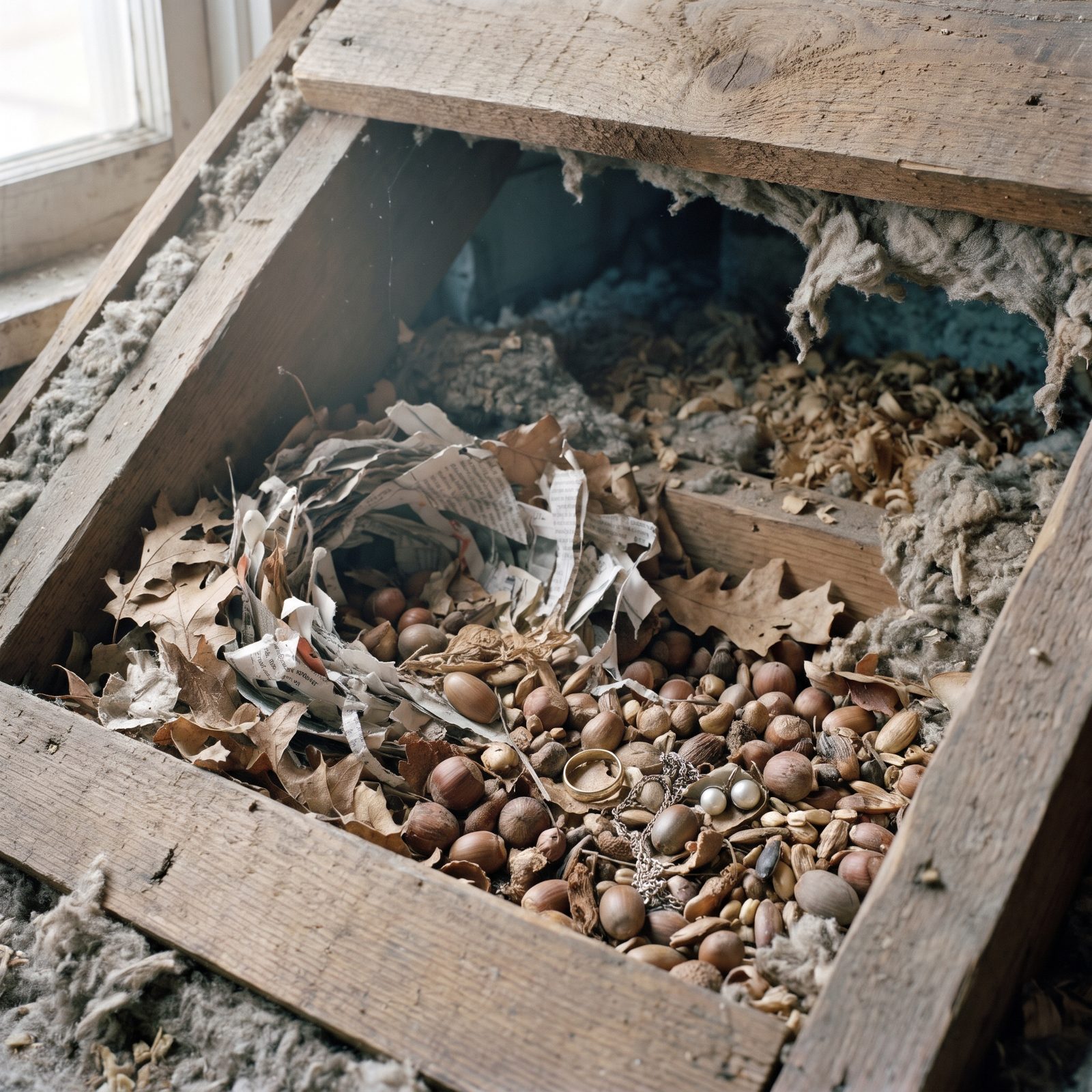
Squirrels and rats are collectors. They stash food in wall voids and attic corners, and every so often they tuck in something shiny hauled through a gap in the soffit. Renovators have torn apart old nests and found jewelry, coins, and small keepsakes bedded down among the acorns.
The case everyone cites: wedding rings that vanished years earlier, surfacing in a rodent cache during a remodel. Odd, but no mystery. A rodent swiped it off a windowsill or a nightstand and carried it home.
So here’s the tell. If something small and valuable disappeared near an exterior wall and never came back, check the voids before you blame the houseguest. I’ve heard too many of these stories end with a sheepish apology years too late.
1. Human Remains Sealed Behind the Plaster
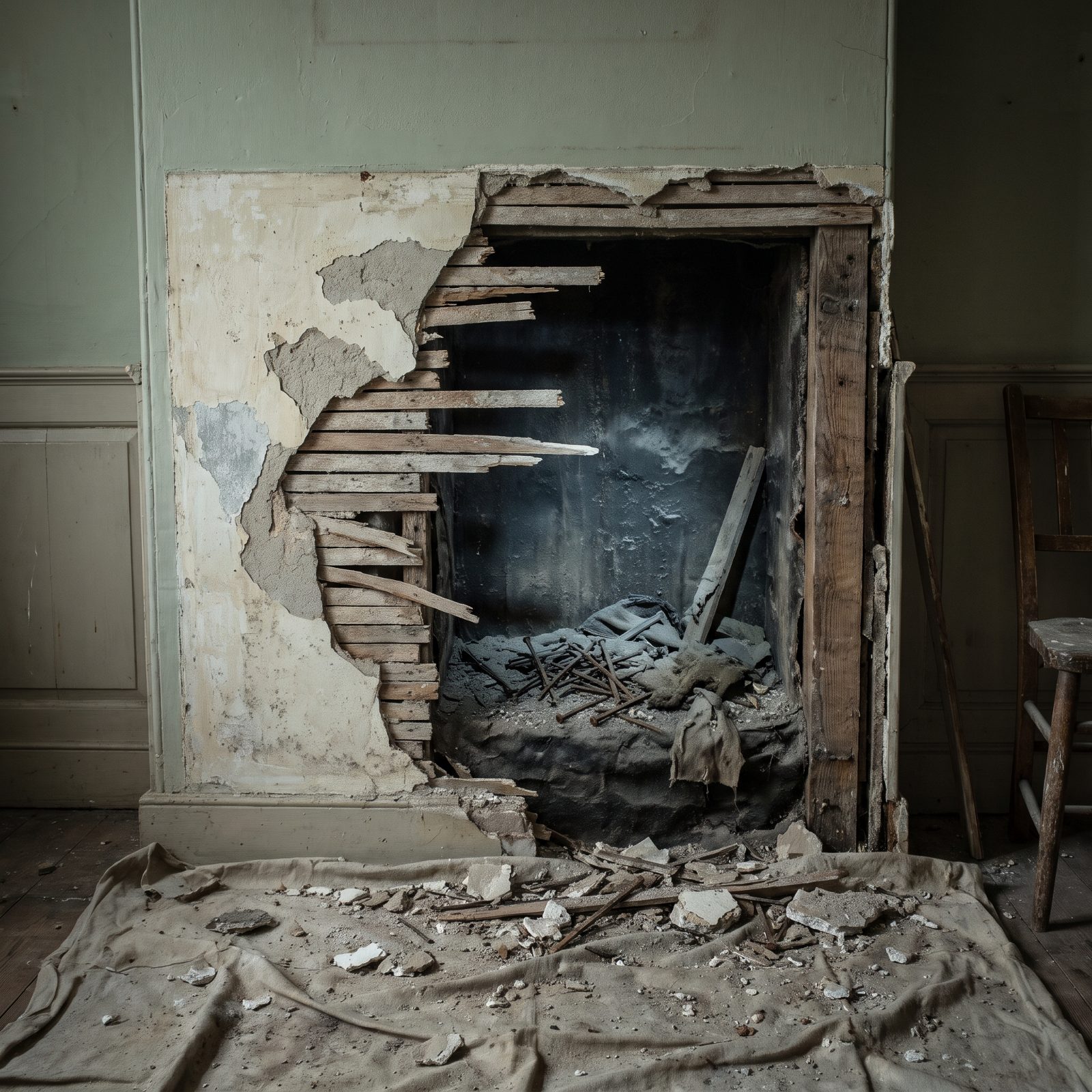
This is the discovery that ends the workday and starts a police report. It happens more than you’d think. Renovations in old homes have uncovered concealed human remains behind walls, under floors, inside sealed chimney breasts — everything from genuine historic burials to unsolved cold cases.
The moment you suspect bones, you stop. Everything stops.
The rule here isn’t up for debate. Find remains during any work and you call the authorities before touching another thing. Coroners, and sometimes archaeologists, work out whether you’ve got a crime scene, a forgotten family plot, or something centuries old. Move anything and you can wreck a case — or ruin the one excavation that would have told the whole story.