
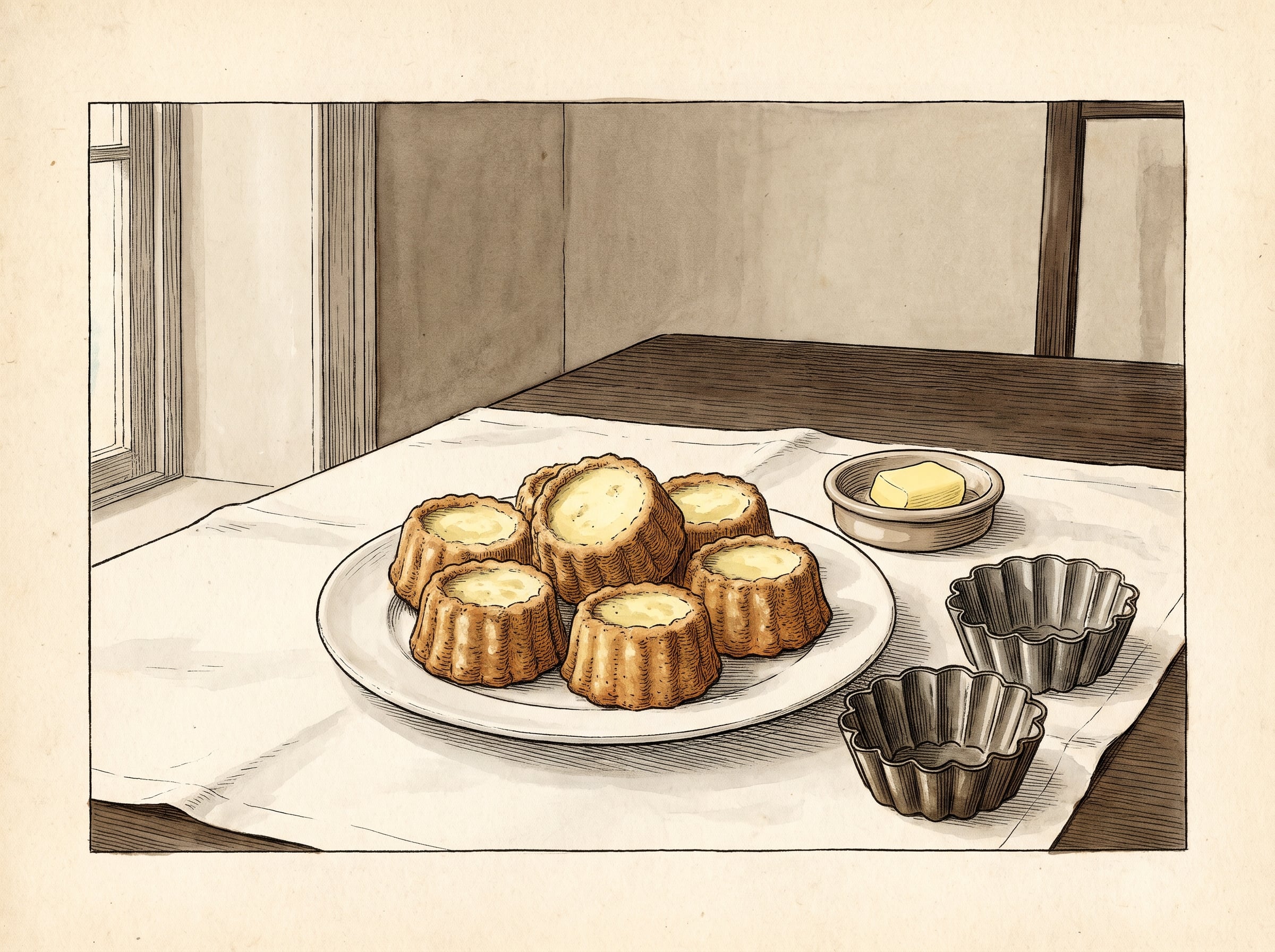
Mary Randolph’s batter bread fits in a single sentence: wheat flour and corn meal, four eggs, some rich milk and a row of little tin moulds. That sentence comes from the book usually called the first regional American cookbook, still being printed in 1860, more than thirty years after its author died. It is also an early relative of the soft Southern dish we now call spoon bread.
Please note that some of the images in this article were created with the assistance of AI.
From The Virginia Housewife; or, Methodical Cook, 1860
The Story Behind This Recipe
From Moldavia to Cary Street
In March 1808, a Richmond newspaper announced that "Mrs. RANDOLPH" had opened a boarding house on Cary Street "for the accommodation of Ladies and Gentlemen." Not long before, she had been one of the city’s celebrated hostesses. Mary Randolph was born on August 9, 1762, at Ampthill, her family’s plantation in Chesterfield County. In December 1780 she married her cousin David Meade Randolph, and the couple built a Richmond mansion they called Moldavia, a blend of "Molly" and "David." Then Thomas Jefferson became president and removed David from his post as U.S. Marshal, and the family’s fortunes slid. The boarding house became well known and was often full. Most of its kitchen work was done by Black women. The 1810 census lists nine enslaved people in her household, and historians say enslaved cooks shaped how she prepared food.
By 1819 the Randolphs had left the boarding house for Washington, where she finished The Virginia House-Wife. It appeared in 1824 with 225 pages, nearly 500 recipes, and directions for soap, starch, blacking and cologne. Its dishes used Virginia produce and drew on African, American Indian and European cooking. She was working on a third edition when she died in 1828. She was buried below Arlington House at a spot she had chosen herself, and she is the first person known to be buried at what became Arlington National Cemetery. The book was republished at least nineteen times before the Civil War. Our recipe comes from a Philadelphia printing of 1860.
A batter with a long family tree
The name is simply a description: the cook is told to "make a thin batter," not a dough. The soft, moist corn dish behind it probably began with Native American cooks. In South Carolina, settlers called their version Owendaw or Awendaw, after a local Sewee town. Early printed recipes in this family tended either to be sweetened, like Indian pudding, or to add wheat flour, as Randolph’s does with six spoonfuls of flour to three of corn meal. The first printed recipe for something recognizable as spoon bread came later, in Sarah Rutledge’s The Carolina Housewife of 1847, and the name "spoon bread" caught on around the turn of the 20th century.
Debra Freeman, a Richmond food historian, has said spoon bread always had a Virginian connection, and Randolph is counted among those connections. Freeman has also suggested that a half-Virginian, half-French dish baked in little ramekins "sounds like" James Hemings, the enslaved chef who trained in French cooking in Paris while serving Thomas Jefferson. That is her view, not settled fact.
Four eggs and a quick oven
There is no yeast, soda or baking powder here. The four eggs, beaten into the batter, do all the lifting, decades before baking powder and soda took over Southern corn breads. The measures are just as loose: spoonfuls, "a little salt," and "a sufficient quantity" of milk, judged by how thin the batter looked. Keeping food cool took work. Harriott Pinckney Horry, who stayed at the boarding house in May 1815, described Randolph’s refrigerator. It was a box inside a slightly larger box, with powdered charcoal packed between them, and it was filled with ice every day to keep butter, meat and other foods cool. The 1825 edition of the book included a sketch of one.
The little tin moulds meant each person got a small bread of their own. We have not found any source tying this bread to holiday breakfasts. What the record does show is a fast, egg-raised bread that Southern households kept cooking from this book into the 1860s.
1860s
Notes From the Era
The recipe · 1860
Batter Bread
From The Virginia Housewife; or, Methodical Cook by Mary Randolph (1860). Every word of the recipe below is as printed.
Ingredients
- six spoonsful of flour
- three of corn meal
- a little salt
- four eggs
- a sufficient quantity of rich milk
Method
-
Mix the batter and bake in moulds
Take six spoonsful of flour and three of corn meal, with a little salt–sift them, and make a thin batter with four eggs, and a sufficient quantity of rich milk; bake it in little tin moulds in a quick oven.
Our notes
Reading It Today
Spoonfuls and "sufficient" milk. The recipe doesn’t say which spoon to use. Reading a spoonful as roughly a tablespoon works, but what matters is the ratio: two parts flour to one part corn meal. "Rich milk" means whole milk with its cream left in. Randolph gives no amount and only asks that the batter be thin.
What a quick oven means. A "quick oven" is a hot oven. Small moulds of thin batter would bake fast at that heat and puff up as the eggs set.
What to expect. Four eggs in so little flour should make something tender, moist and eggy, closer to a popover or a custardy corn muffin than to a loaf. The corn meal gives a little grit and a mild corn flavor. There is no sugar in the recipe, so it is not sweet.
How it differs from bread today. Most breads today rise with yeast or baking powder and are kneaded or left to rest. This one has no yeast or baking powder, only eggs to raise it, and no kneading or waiting. Like a muffin batter, it goes straight into individual tins and then into the oven.
Source: Mary Randolph, The Virginia Housewife; or, Methodical Cook (E. H. Butler & Co., Philadelphia, 1860). Read the 1860 book at Project Gutenberg.
Sources for the history
- Mary Randolph, The Virginia Housewife; or, Methodical Cook (E. H. Butler & Co., Philadelphia, 1860), Project Gutenberg
- Mary (Randolph) Randolph, 1762–1828 · 200 Years, 200 Stories, Library of Virginia
- The Grave of Mary Randolph – Arlington House, National Park Service
- Mary Randolph – Wikipedia
- The Virginia House-Wife – Wikipedia
- Spoonbread – Wikipedia
- Kevin Pang, "Spoon Bread, Edna Lewis, and the French–Soul Food Connection," America’s Test Kitchen (2021)
The original recipe text is from a work published in 1860 and is in the public domain in the United States. The history, notes and illustrations are Digstalk’s own. Brand names that appear in historic recipes are mentioned as historical fact only. Illustrations are AI-generated in a vintage style. The recipe is shown exactly as it was published in 1860; we have not photographed a test batch.