A good hotel room holds a clue most guests never notice. Run a finger along the baseboard, tilt your head toward the lamp, and the surface comes back clean every time. Not luck. Not a bigger cleaning budget either. It’s a set of small, repeatable moves worked out by people who clean a dozen rooms before lunch and can’t afford a second pass. The habits below cost nothing to copy, and they earn their keep: less time spent, bathroom germs kept out of the bedroom, and the kind of finish you usually only see on checkout day.
Please note that some of the images in this article were created with the assistance of AI.
39. Folding Microfiber Cloths Into Eighths for Eight Fresh Faces
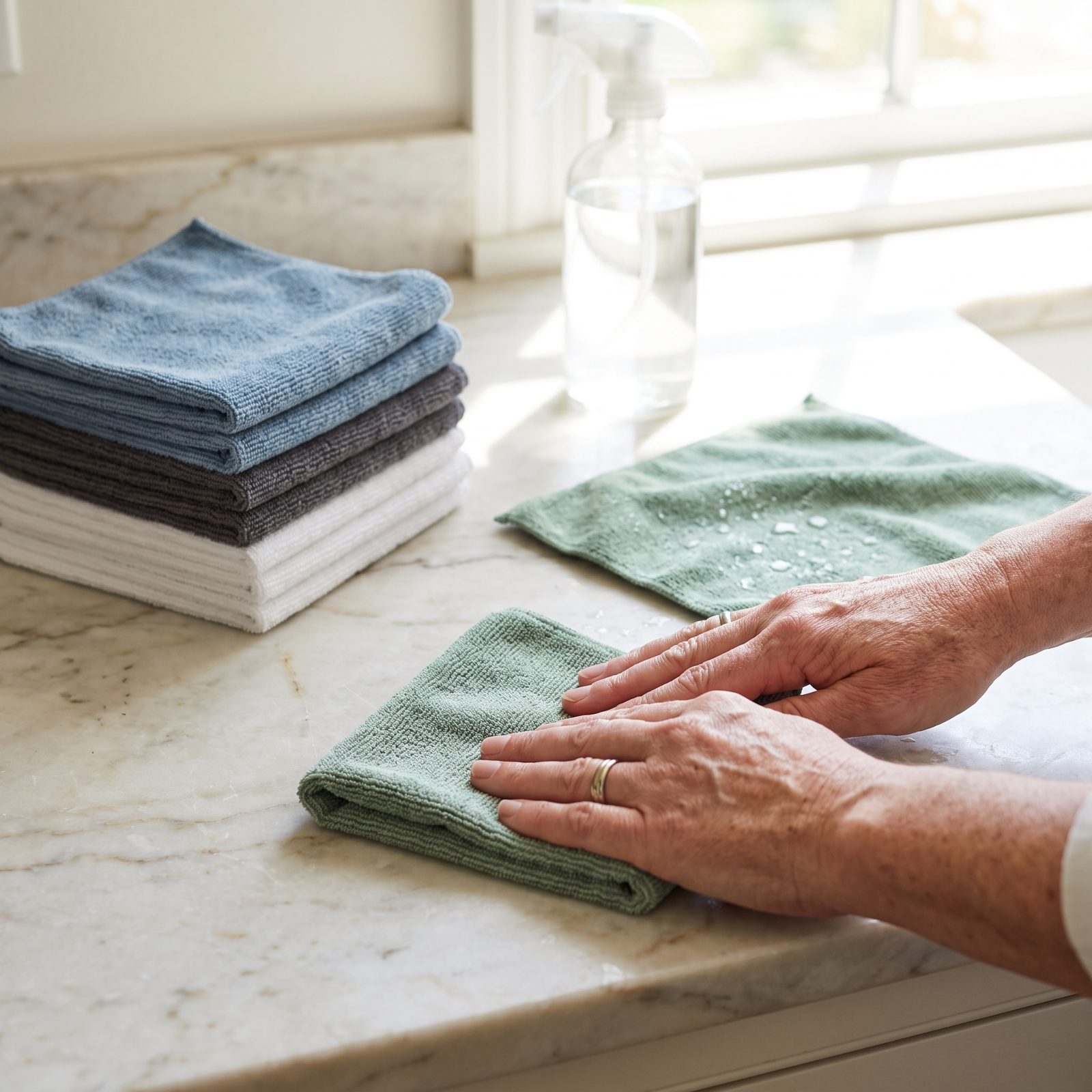
A flat open cloth gives you one surface, then smears what it just picked up all over the next pane. Fold it in half, in half again, and once more — now that single cloth becomes eight separate working faces. When one side greys out, you flip to a clean fold instead of walking back to the sink.
Housekeepers do this because stopping to rinse is the slowest part of the job. At home it means one cloth handles a whole bathroom without ever reusing a dirty patch.
38. Inspecting Surfaces From a Low Side Angle Where the Light Rakes Across
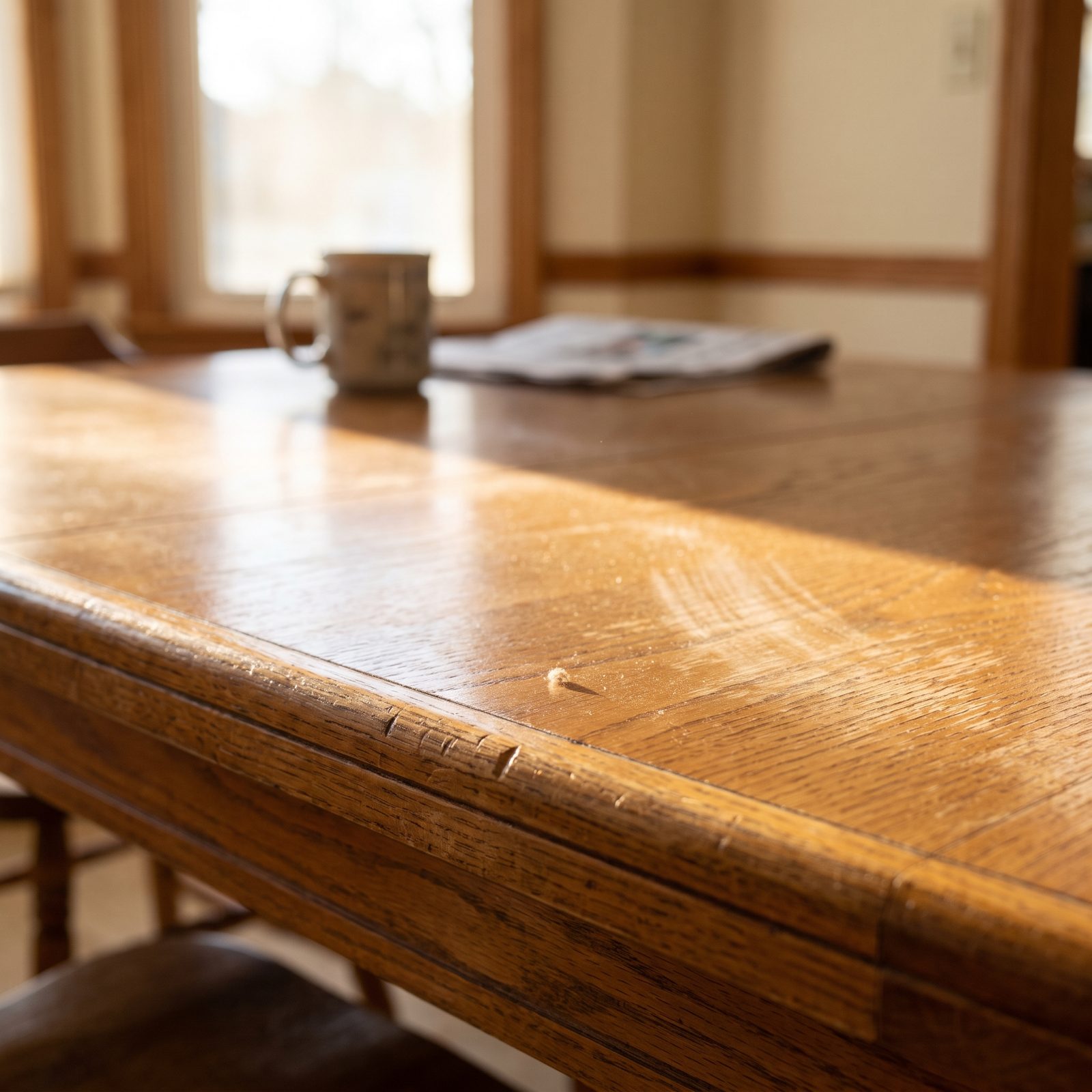
Dust hides when you look straight down at it. Crouch, get your eye close to the surface, let light rake across at a shallow angle, and suddenly every streak and film and missed patch glows like a tide line.
Hotel inspectors have checked rooms this way for decades. A window or a single lamp off to the side does the work. Clean to what the raking light shows you, not what the overhead fixture lets you ignore.
37. Stripping Beds With an Inward Roll That Traps Hair and Crumbs Inside
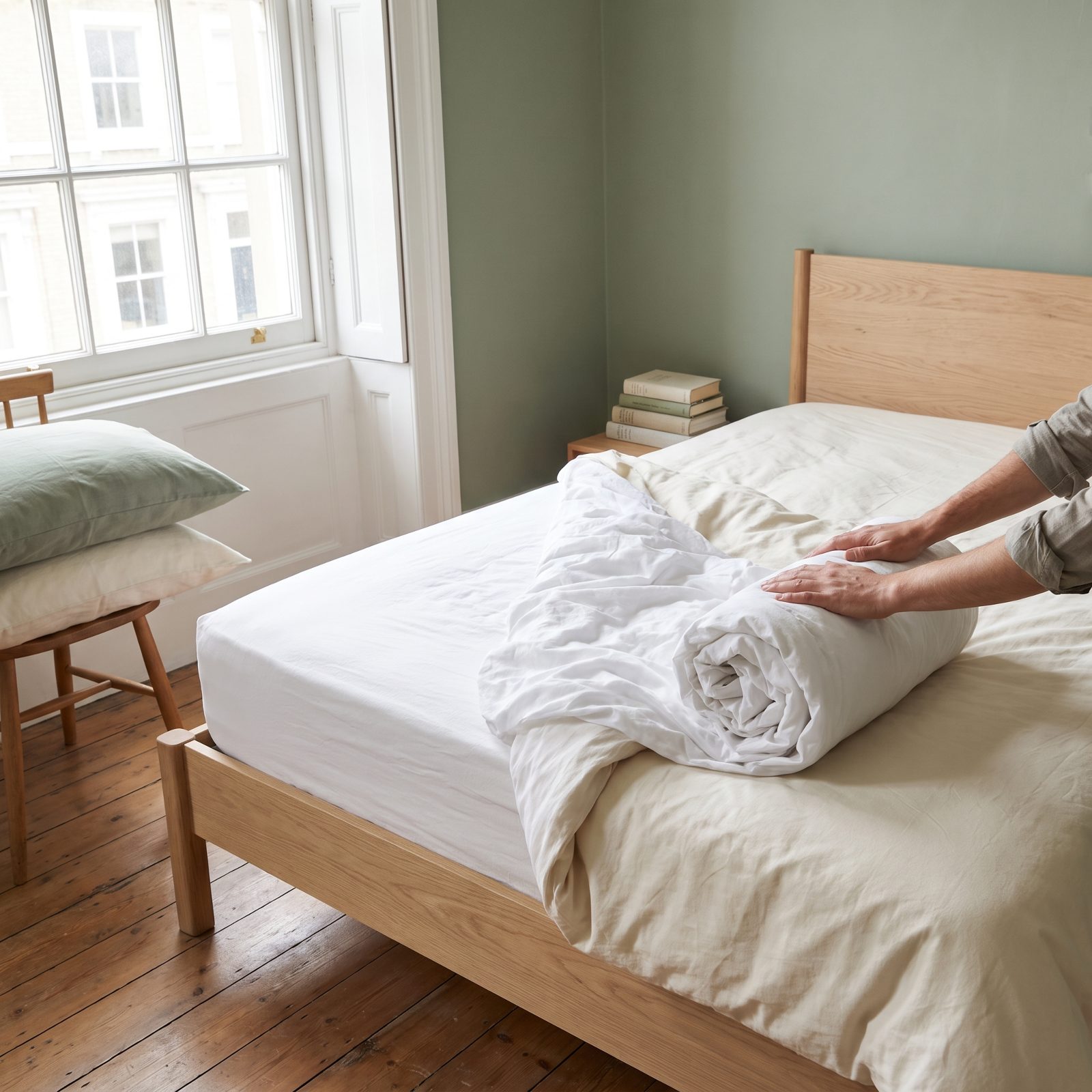
Shaking out a dirty sheet is how you launch skin flakes, hair and crumbs into the air and onto the carpet you just vacuumed. Peel the linens toward the center instead and roll inward, so everything loose stays wrapped inside the bundle.
Carry the whole roll straight to the hamper. Nothing scattered, nothing airborne. Same thirty seconds, and the room ends up cleaner than it was before you touched the bed.
36. Letting the Toilet Brush Drain Beneath the Raised Seat
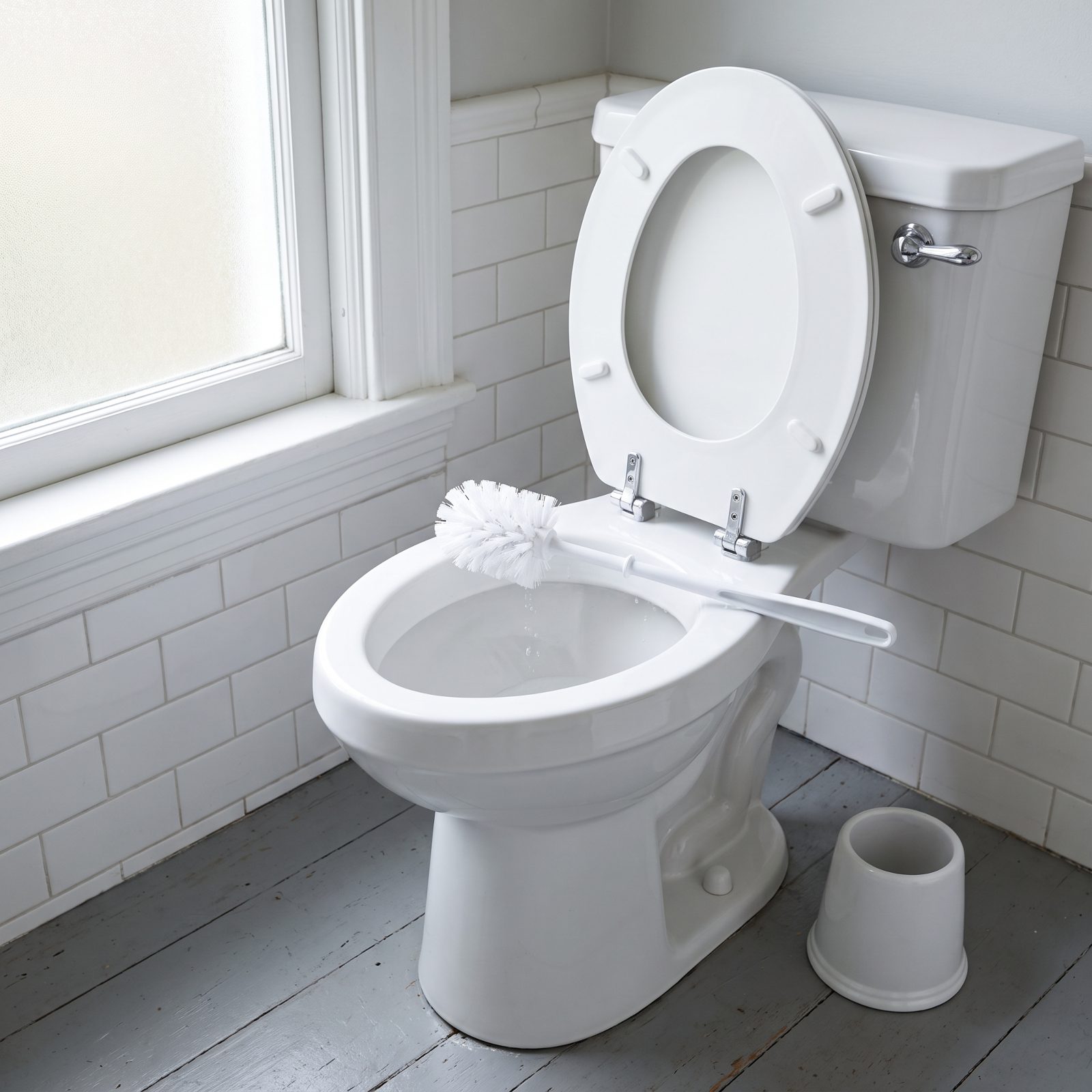
A wet brush shoved back in its holder sits in a puddle of its own grime and grows a smell by morning. Housekeepers balance the brush under the raised seat so it drips into the bowl and air-dries for a few minutes before it goes away.
Small move, big payoff. The holder stays dry, the bristles stay fresher, and that corner of the bathroom stops being the thing you’d rather not think about.
35. Spraying the Cloth Instead of the Mirror
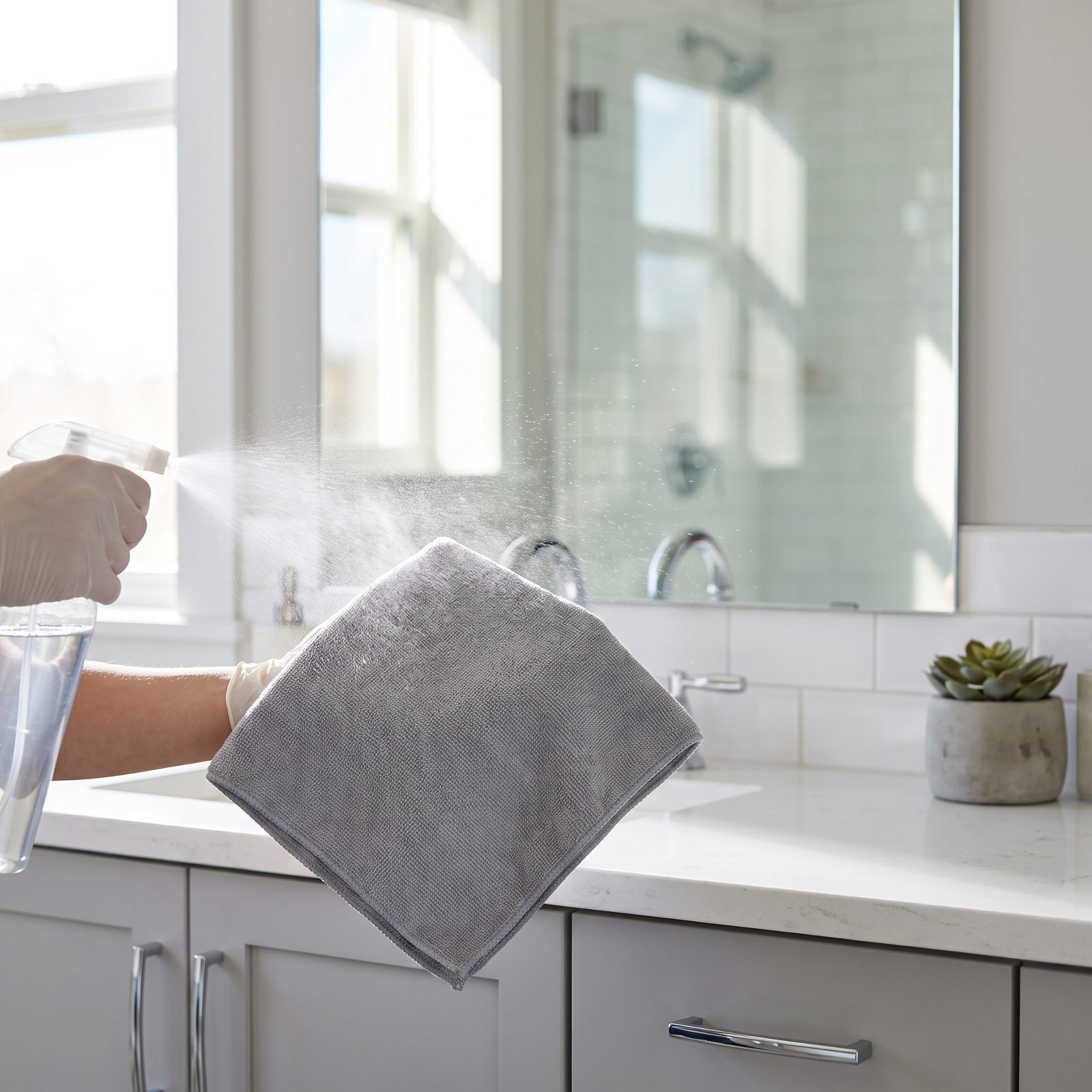
Spray straight at a mirror and the cleaner runs down in rivulets, pools at the bottom, and seeps behind the frame or into the silvered backing where it leaves black spots over the years. Spray the cloth and you control exactly how much moisture touches the glass.
Less liquid, no drips, no creeping edge damage. It’s the difference between a mirror that stays clear and one that develops a cloudy rim nobody can ever scrub out.
34. Using White Cloths to Check for Soil You Can’t See
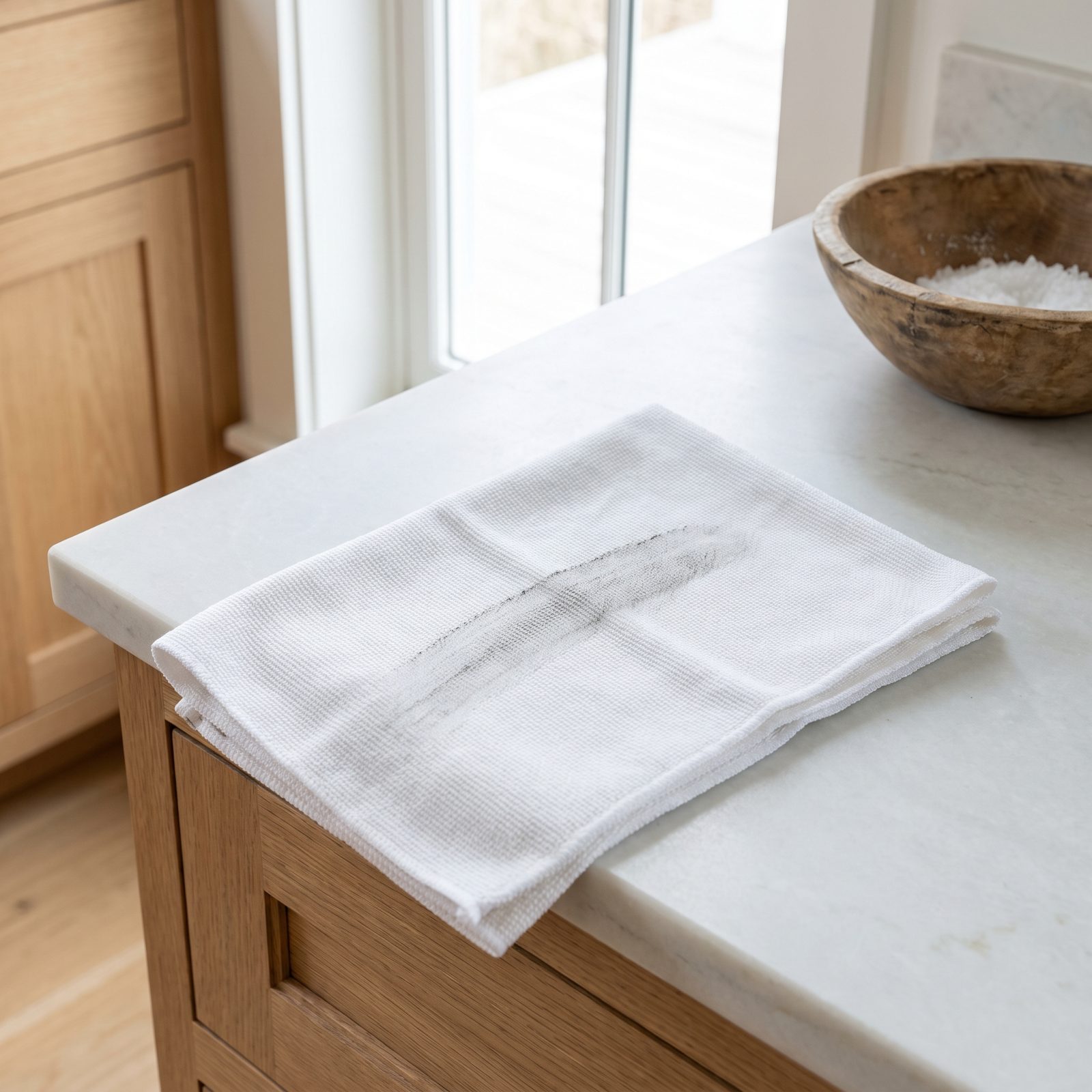
White cloths aren’t a style choice. They’re a test. Wipe a surface you think is clean and the cloth tells the truth, showing grey, brown or greasy residue you’d never catch by eye.
Comes up dirty? Surface needs another pass. Stays white? You’re done, and you can stop second-guessing. Colored cloths hide all of this, which is why professionals keep white for the final check.
33. Stacking Spare Liners in the Bottom of the Bin
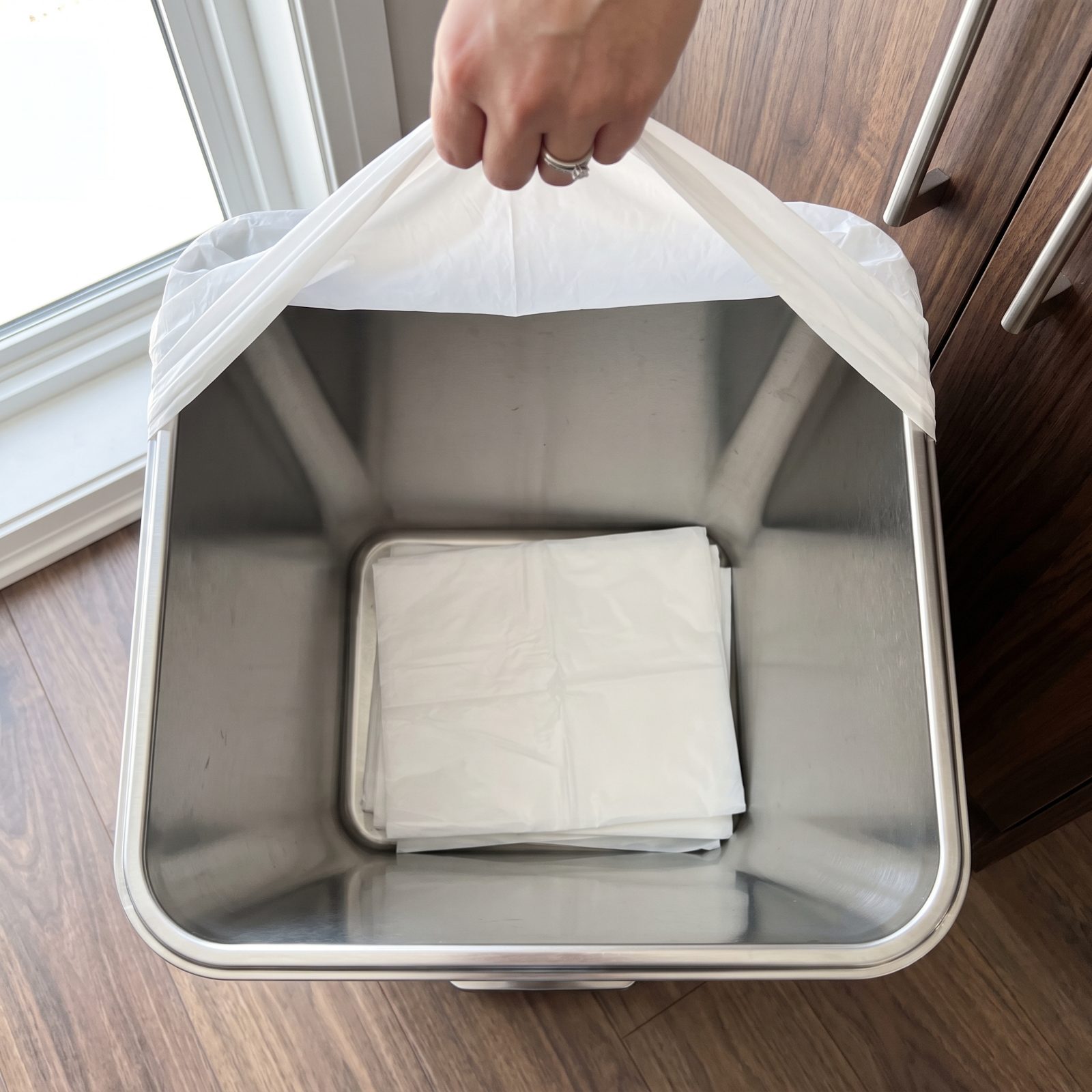
The annoying gap in taking out the trash is the hunt for a new bag, usually with full hands and a dripping sack. Housekeepers skip it by stacking several folded liners in the bottom of the empty bin before the fresh bag goes in.
Pull out the full one, reach down, and the next liner is right there waiting. A ten-second reset instead of a trek to the pantry.
32. Cleaning Glass With Separate Wash and Finish Cloths
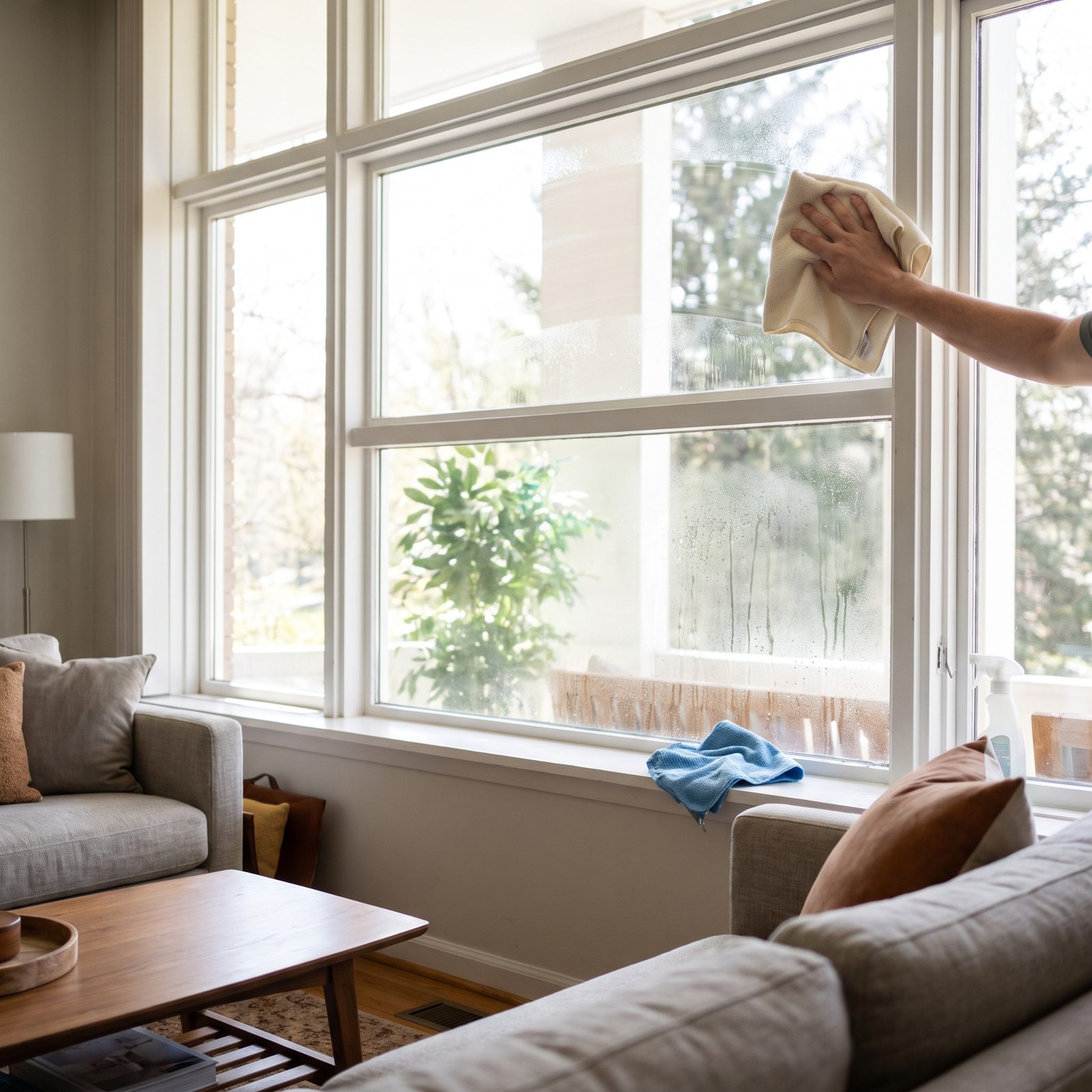
One cloth can’t do two jobs on glass. A single damp cloth lifts the dirt but then drags that same moisture and film around, and that’s where streaks come from.
The professional method splits the work. One cloth washes, a second dry cloth follows behind to buff away every trace of moisture. Wash, then finish. That second pass with a bone-dry cloth is the whole secret behind glass that disappears.
Streaks aren’t a sign you used the wrong spray. They’re a sign you tried to wash and dry with the same cloth.
31. Wiping in Overlapping S-Strokes Instead of Random Circles
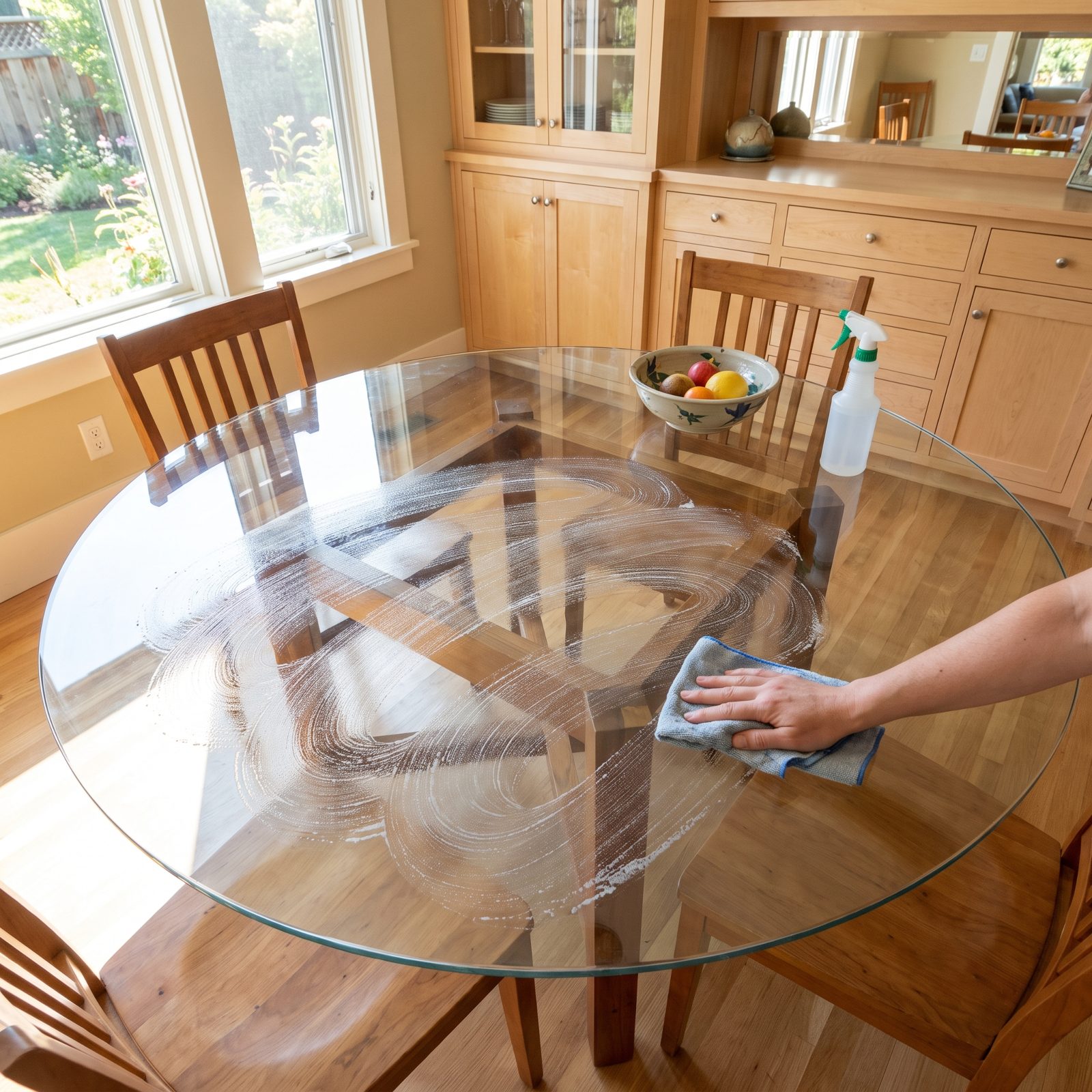
Scrubbing in random circles feels thorough and does the opposite. It pushes dirt back over ground you already cleaned, so you keep shoving the same grime from spot to spot and leave streaky rings behind.
Go with a steady S-stroke instead, each horizontal pass overlapping the one above it by an inch or so, always working in one direction. The dirt travels ahead of the cloth and off the surface rather than circling back. One pass, done, nothing missed between the lines.
30. Making One Full Clockwise Circuit of the Room

Random cleaning is how you end up dusting the same shelf twice and forgetting the windowsill entirely. Pick a direction, start at the door, and loop around the room in one unbroken circuit until you arrive back where you began.
Every surface gets hit once, in order, and you never backtrack. The route does the remembering so your head doesn’t have to. And honestly, it kills the aimless wandering that makes cleaning drag on all afternoon.
29. Assigning One Color Cloth to the Toilet Alone
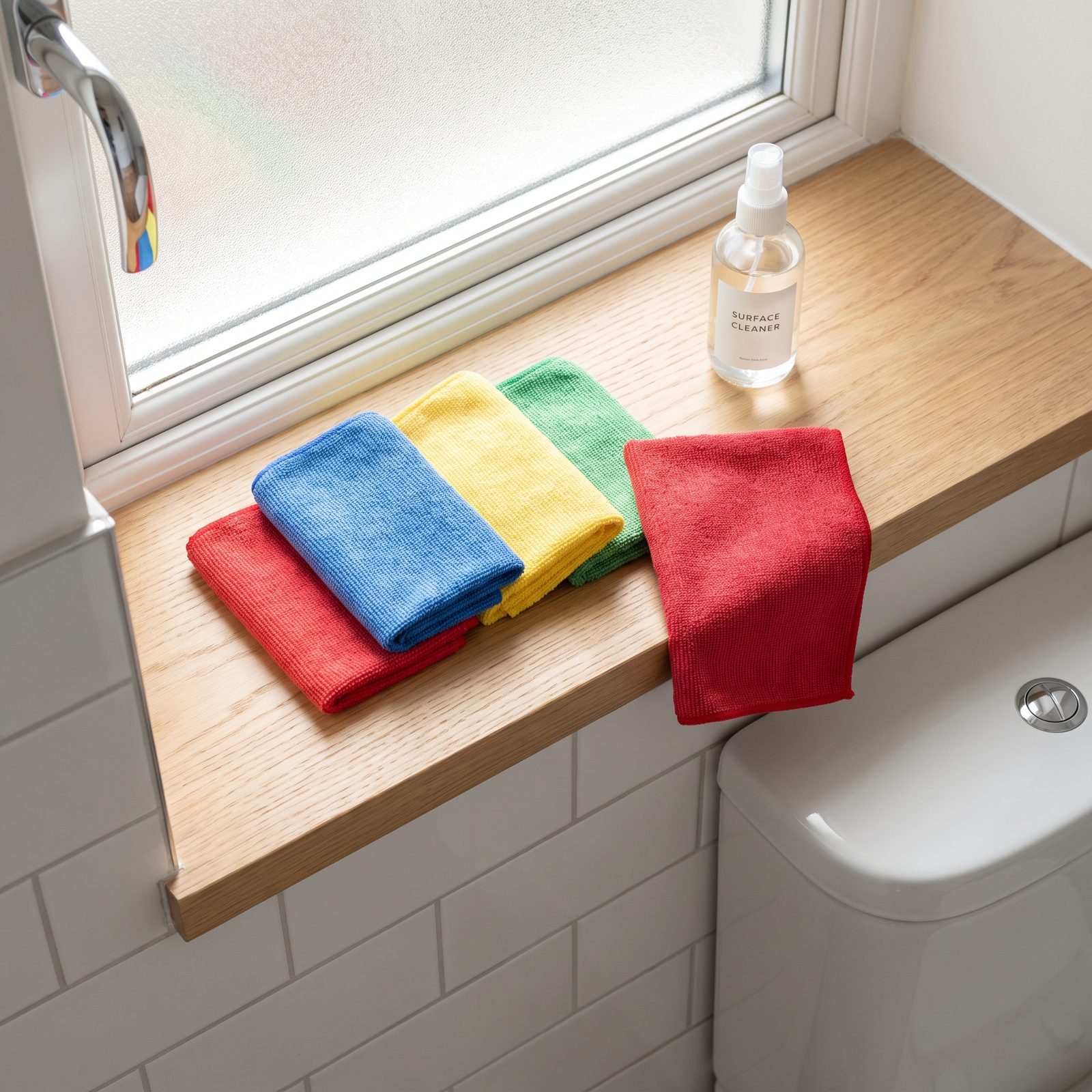
Red means toilet. That’s the whole system, and it’s the one habit separating people who clean for a living from the rest of us.
In hotels every cloth has a job and a color, so the rag that wiped the toilet rim never touches the sink, the mirror, or the glass you drink from at 2am. You don’t need a fancy chart at home. Pick one color, dedicate it to the toilet forever, and never let it migrate. A four-pack of microfiber cloths costs a few dollars and ends an invisible problem most people don’t know they have.
28. Working the Bathroom From Cleanest Surface to Dirtiest
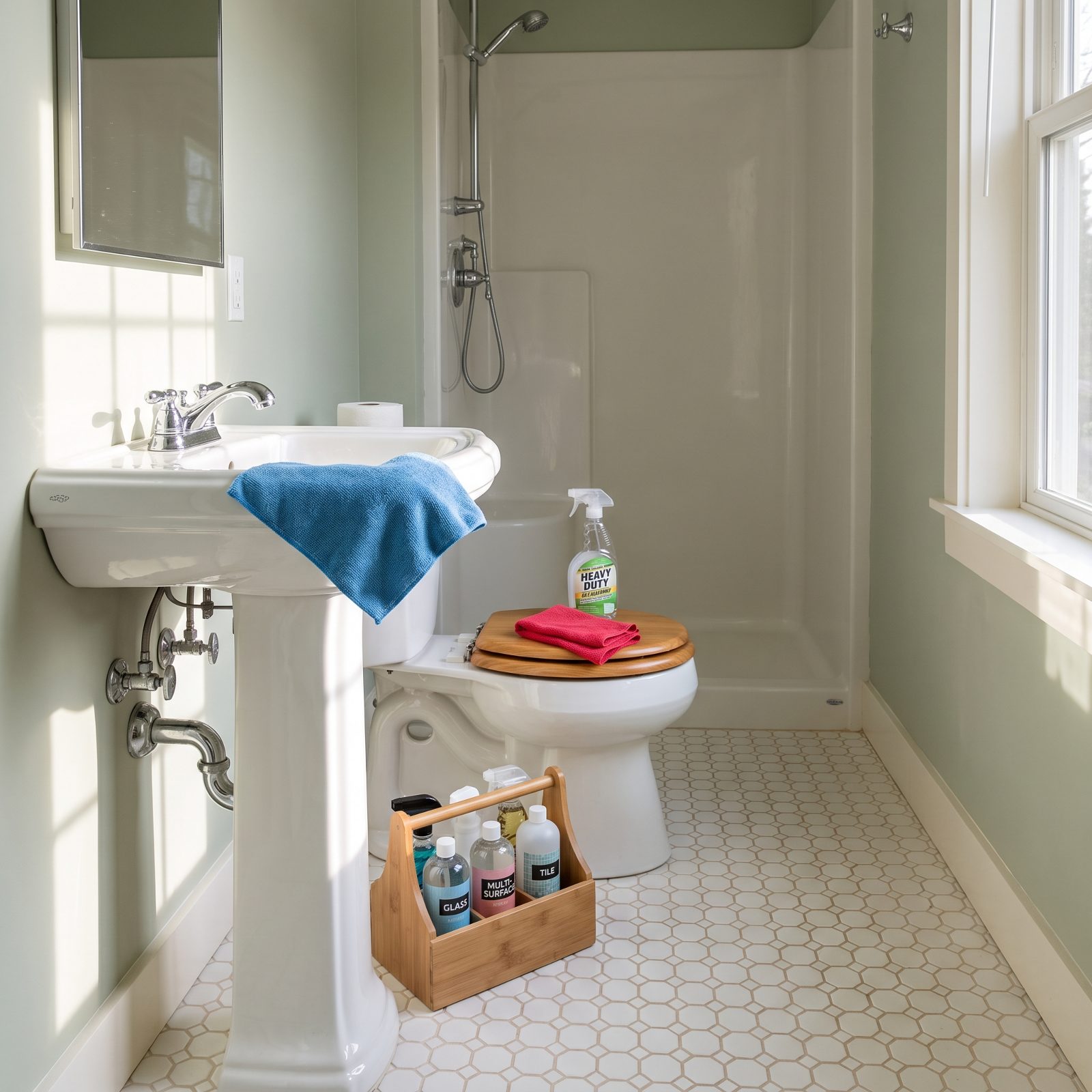
The toilet goes last. Always. Not because it’s the worst job, but because the order protects everything you already cleaned.
Start at the mirror and sink, where the germ load is lowest, then move down to the tub and finish at the toilet. Clean that first and every splash and aerosol from flushing and scrubbing drifts right back onto your fresh surfaces. You’d never know. That’s the trap.
Housekeepers run this route in their sleep because it saves them from re-cleaning. Reverse it and you’re doing the same square footage twice without realizing.
27. Clearing Dry Dust and Hair Before Any Spray Touches a Surface
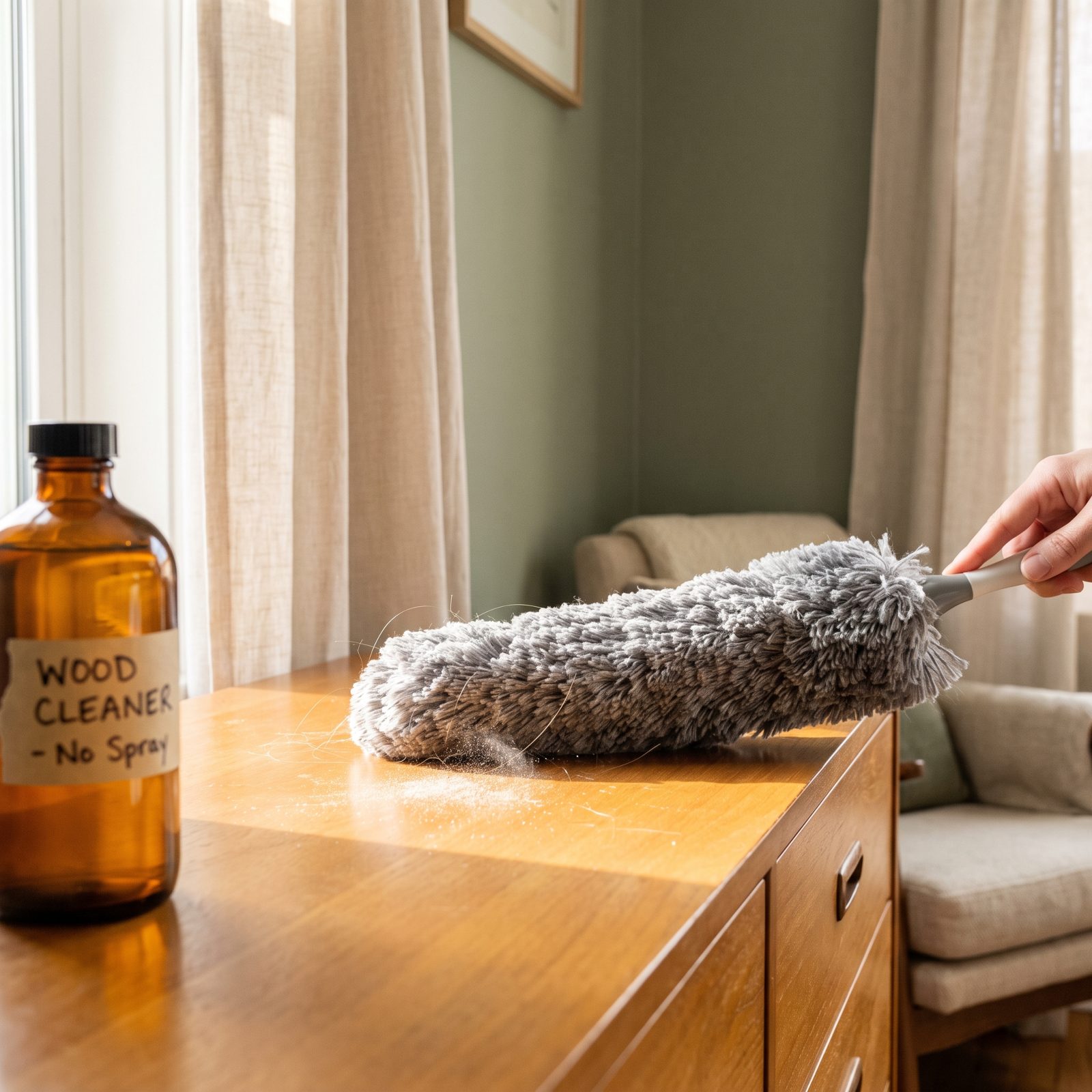
Spray a dusty shelf and you don’t clean it. You make mud.
Dry debris has to come off first — dust, hair, crumbs, lint, all of it lifted with a dry cloth or duster before a drop of liquid goes down. Add spray to a dusty surface and the water binds with the grime into a smeared gray film that takes three passes to lift and streaks anyway.
This one takes most of us way too long to learn. For years we sprayed first, wiped second, then stand there wondering why the glass looked worse than before. Dry then wet. That order halves the work.
26. Spraying, Then Walking Away While the Cleaner Does the Scrubbing

The fastest cleaners you’ll ever watch spend a lot of time doing nothing. On purpose.
They spray the soap scum, the baked-on grease, the hard-water crust, then leave it and go clean something else. By the time they wander back, the cleaner has broken the bond and the gunk wipes off in a single pass. No elbow grease, no scrubbing until your shoulder aches.
Most people spray and attack it a half-second later, so the product never got a chance to work and now you’re doing its job for it. Give it five minutes. Walk away. Come back to something that already gave up the fight.
25. Leaving Disinfectant Wet Long Enough to Actually Kill Germs
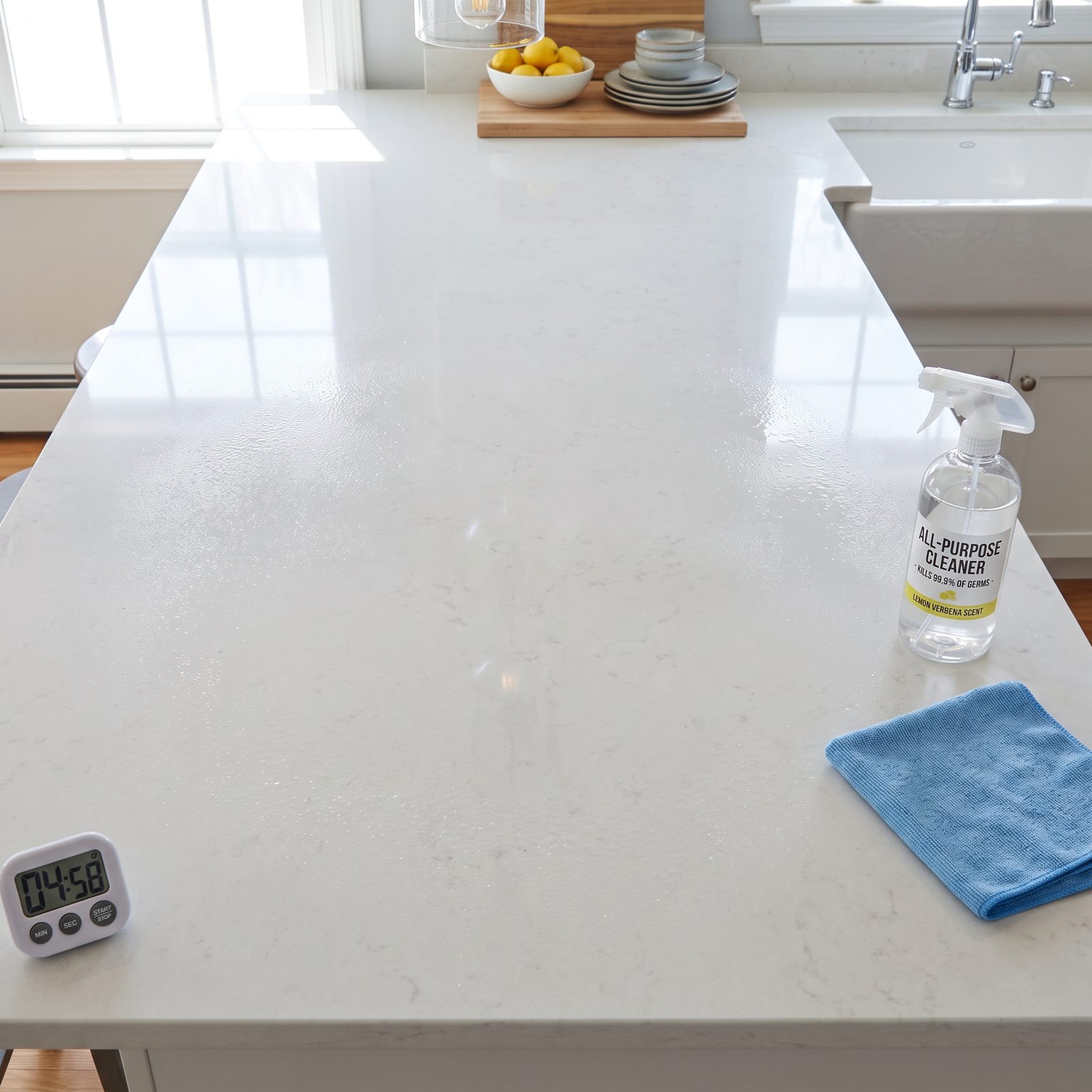
Almost everyone gets this part wrong. Spray a surface, wipe it dry a second later, and you’ve disinfected nothing.
Disinfectants carry a contact time printed on the label — the stretch of minutes the surface has to stay visibly wet to kill what it claims to kill. Some need thirty seconds. Some need ten full minutes. Wipe early and all you’ve done is push germs around with a damp cloth.
Hotel housekeepers know their product’s number cold. At home, read the back of the bottle once, note the time, and let it sit. The wet film does the actual work. Dry it too soon and you’ve performed the theater of cleaning without the result.
24. Dusting From the Ceiling Down So the Floor Is the Final Stop
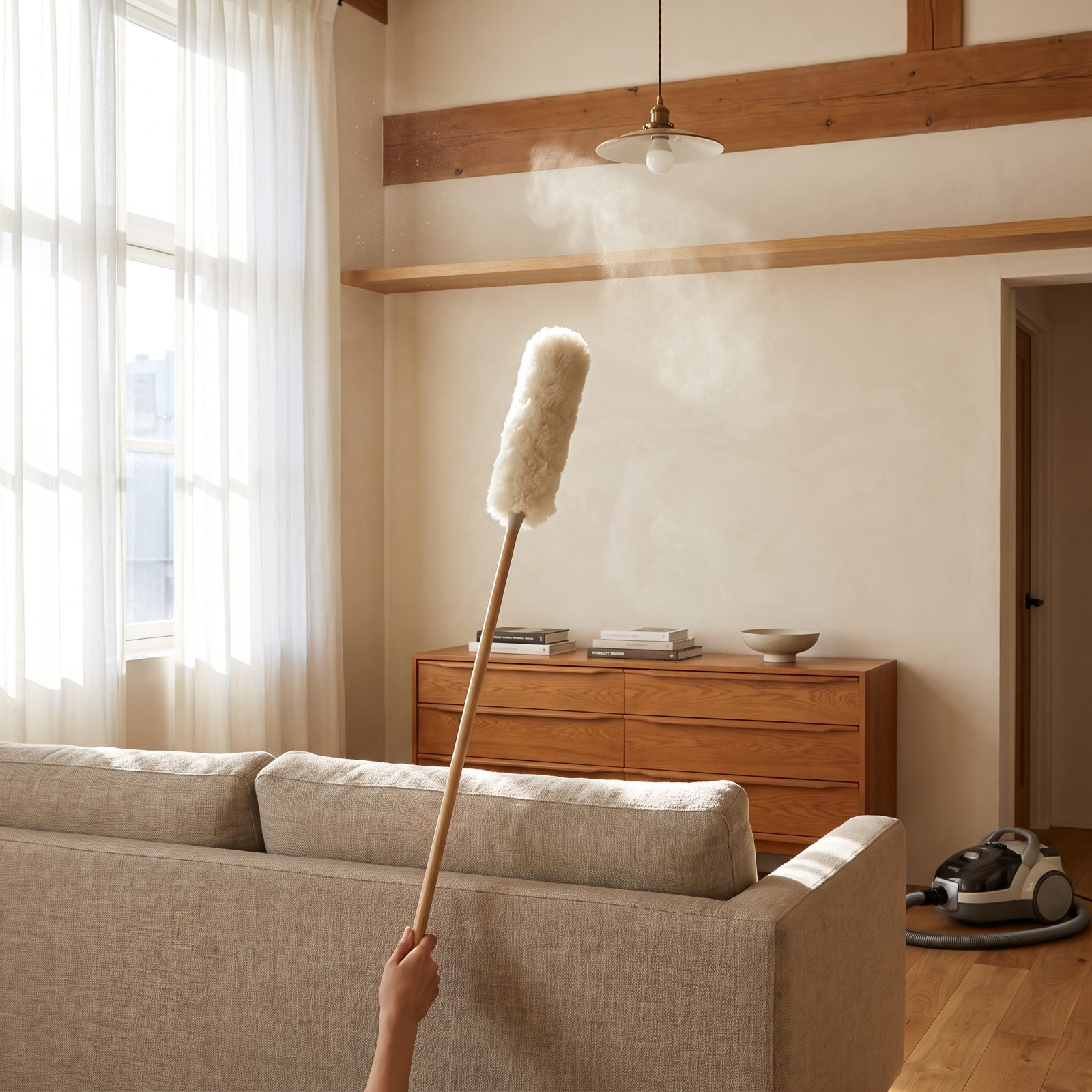
Gravity does half the work if you let it.
Start high — ceiling corners, light fixtures, the tops of shelves and frames — then work down. Everything you knock loose up there falls onto the surfaces below, so by the time you reach the floor you’re collecting all of it in one sweep. The floor is always last.
Do it backwards and you’ll vacuum a clean floor, dust the shelves, then watch a fresh gray layer drift right back down onto the boards you just finished. Top to bottom. One direction. No redo.
23. Slipping an Old Pillowcase Over Each Ceiling-Fan Blade
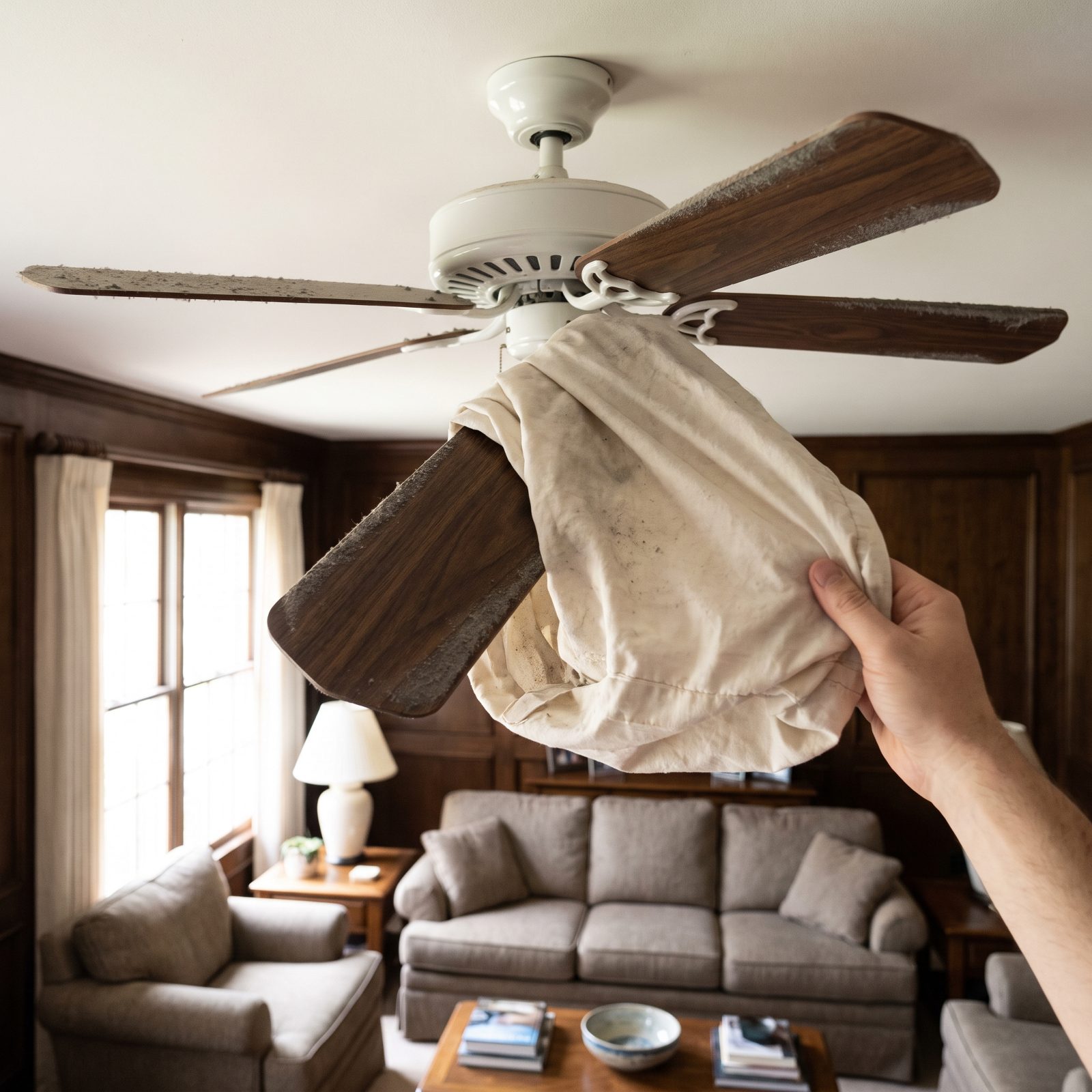
Ceiling fan blades carry a ridge of gray fuzz nobody notices until it’s snowing down onto the couch below.
Here’s the fix: an old pillowcase. Slip it over one blade, press gently on the top and bottom, and slide it back toward you. The dust gets wiped off and trapped inside the case instead of scattering across the room. Work around the fan, then shake the case out in the yard.
Wipe a blade with a bare cloth and you’ve just relocated the dust to the floor, the coffee table, and your couch. The pillowcase catches it. Clever, nearly free, and it uses something already in your closet.
22. Running the Crevice Tool Along Every Wall Before the Open Floor
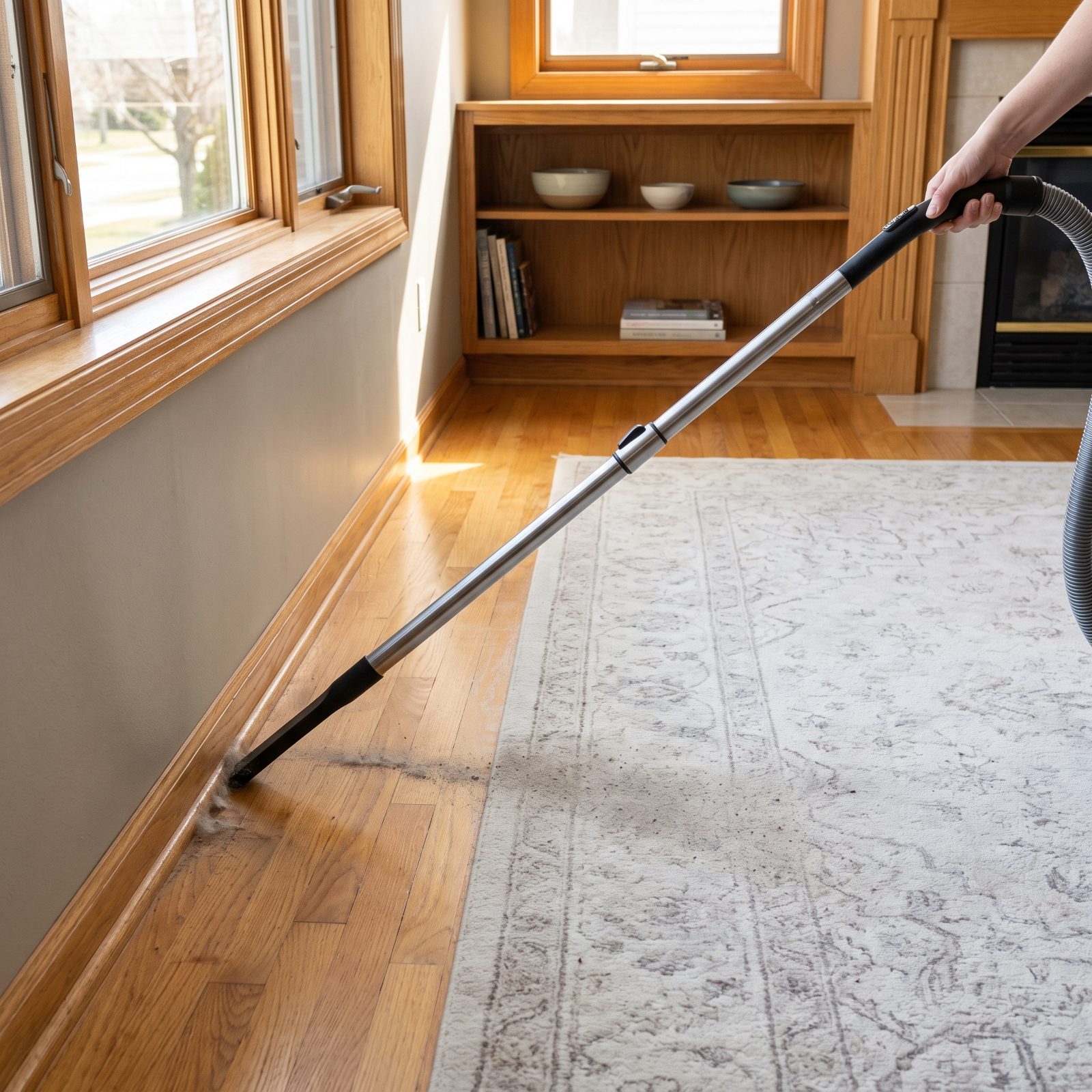
Debris doesn’t settle in the middle of the room. It collects along the walls.
Hotel housekeepers hit the perimeter first, running that narrow crevice nozzle along every baseboard and into every corner where lint, crumbs, and hair pile up against the wall. Only then do they switch to the regular head for the open floor.
Vacuum the big open area first and the wide head shoves all that edge debris out into the room, so now you’re chasing it across clean boards. Edges first, middle second. The order keeps you from scattering the very stuff you came to collect.
21. Looking the Mattress Over Every Single Time the Sheets Come Off
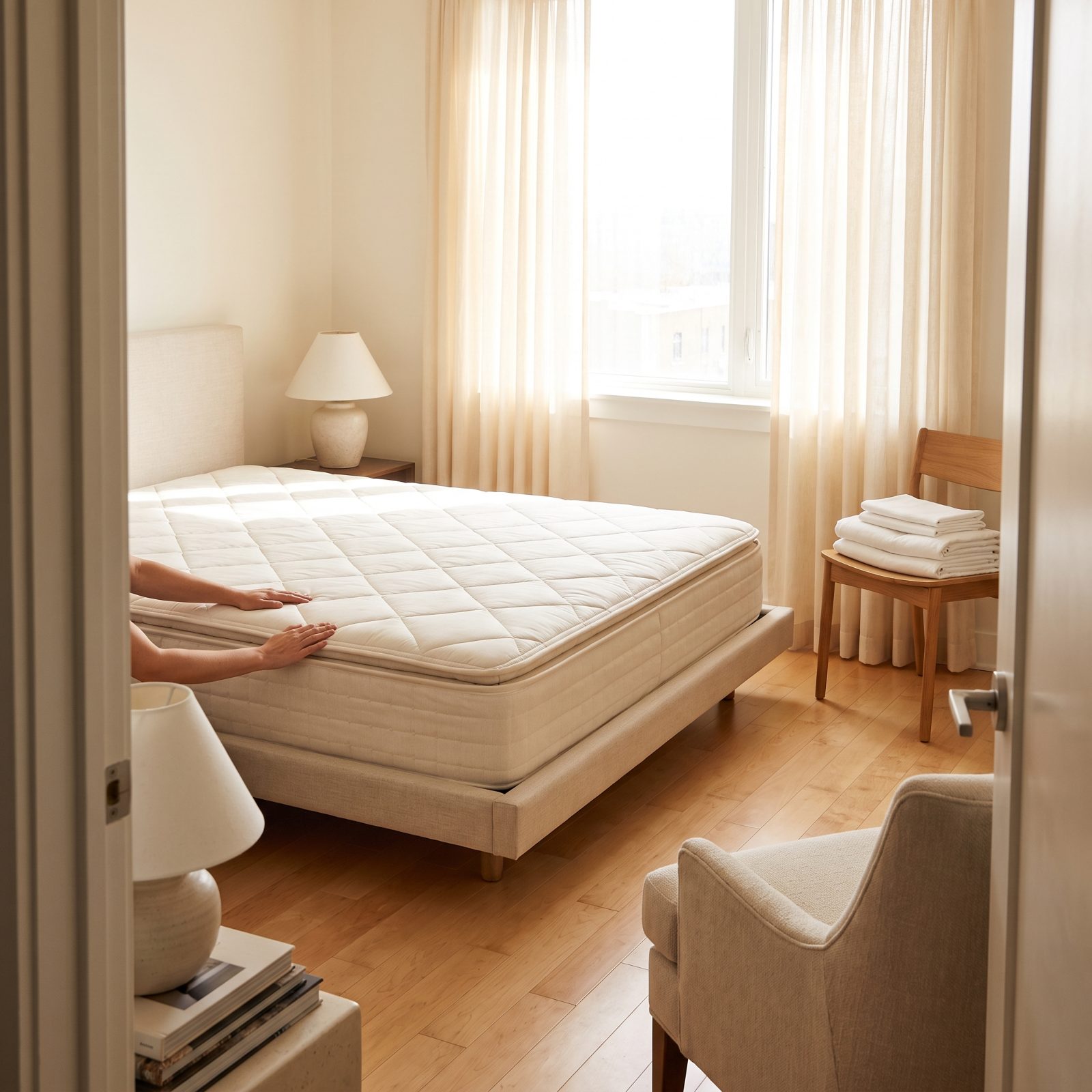
The sheets are off. The mattress is right there. Take the ten seconds.
Housekeepers scan every mattress during the changeover, hunting for stains, a damp patch, a tear — anything that flags a problem before it turns into a big one. A small moisture spot caught early is a quick fix; the same spot ignored for months becomes mildew you can smell from the doorway.
At home this is the only moment you’ll ever get clear access to the whole surface. Use it. Remake the bed and that mattress vanishes under linens until the next wash, which for most of us runs longer than we’d care to admit.
20. Checking Under the Bed While It’s the Easiest It’ll Ever Be
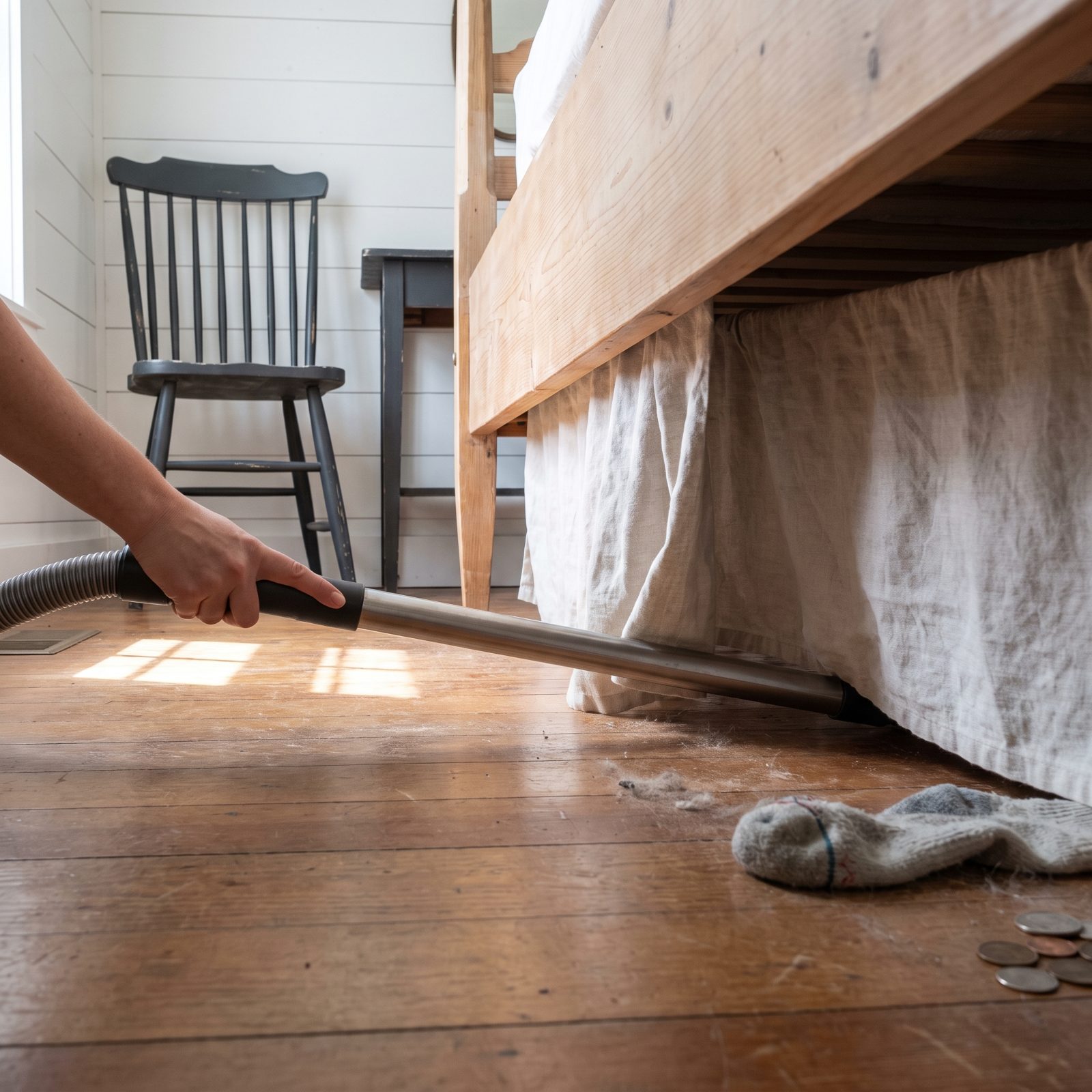
Under the bed is where dust goes to live undisturbed. And the one moment you’ve got real access to it is right now, with the vacuum already out and the wand slipping right under the long bed skirt that hangs to the floor.
Pin this check to your regular vacuuming and it stops being a dreaded chore and turns into a thirty-second habit. Slide the vacuum wand under the skirt, grab whatever rolled into the dark, done.
Wait for a dedicated under-the-bed cleaning day and that day never arrives. Nobody hauls out the vacuum just to peer under the bed skirt. Pair it with something you already do and it actually gets handled.
19. Treating Linen Stains Before They Reach the Washer
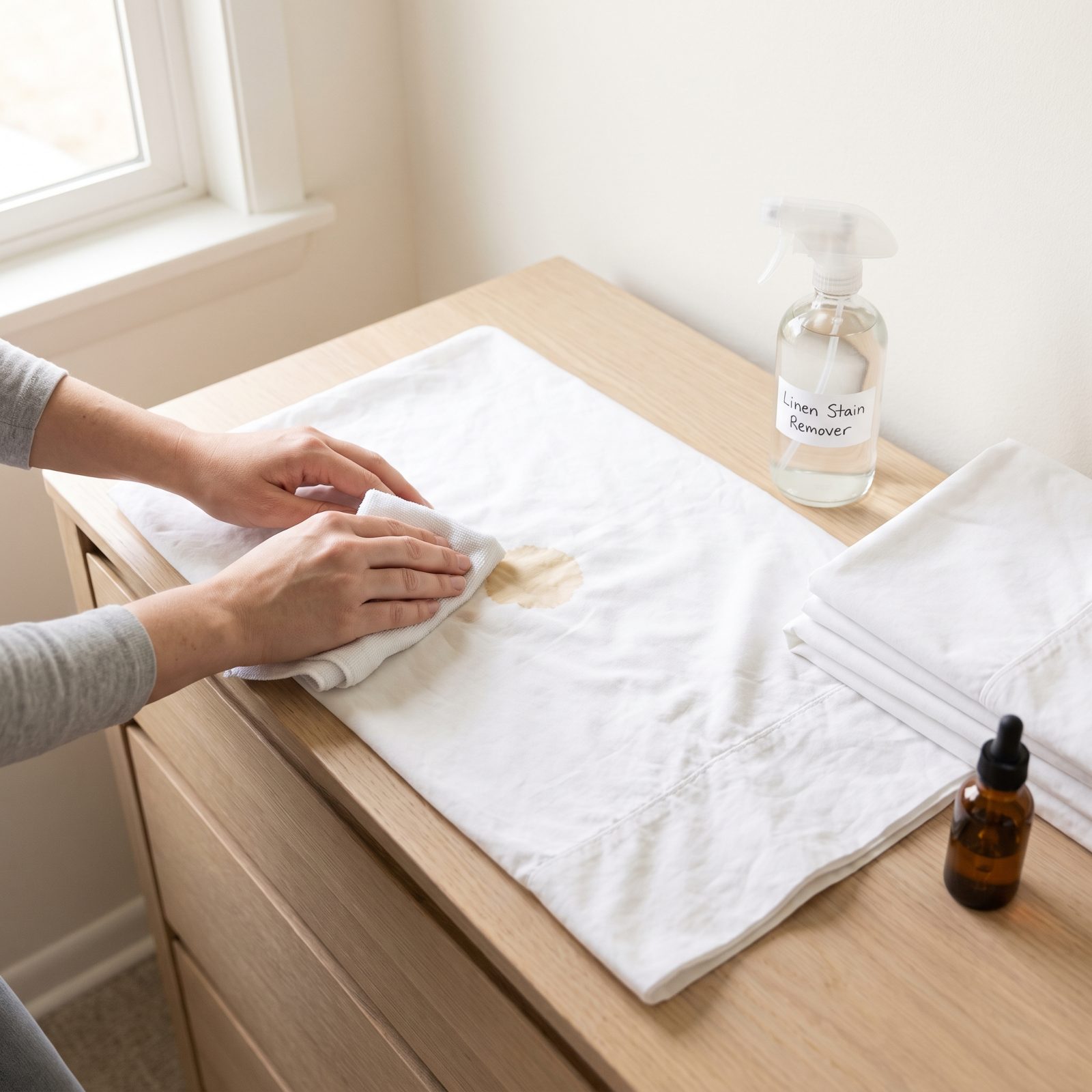
The washer sets stains. Hot water and a full tumble turn a spot of red wine into a permanent tenant, and housekeepers know it, so they treat the mark the second it appears rather than hours later in the laundry room.
A dab of water, a little mild solution, a blot from the outside in so it doesn’t spread. That’s the whole move. No scrubbing — scrubbing just grinds the pigment deeper into the weave.
18. Checking a Finished Room From the Doorway

You clean a room nose-to-the-counter, which means you never actually see it the way a guest does — from the door, taking in the whole thing at once.
So the pros step back to the threshold before calling a room done. From there the eye catches what close work misses: a crooked lampshade, a cushion sitting wrong, a cord snaking across the floor, the one drawer left half open. Let the angle do the inspecting for you.
17. Collecting Stray Objects in One Basket
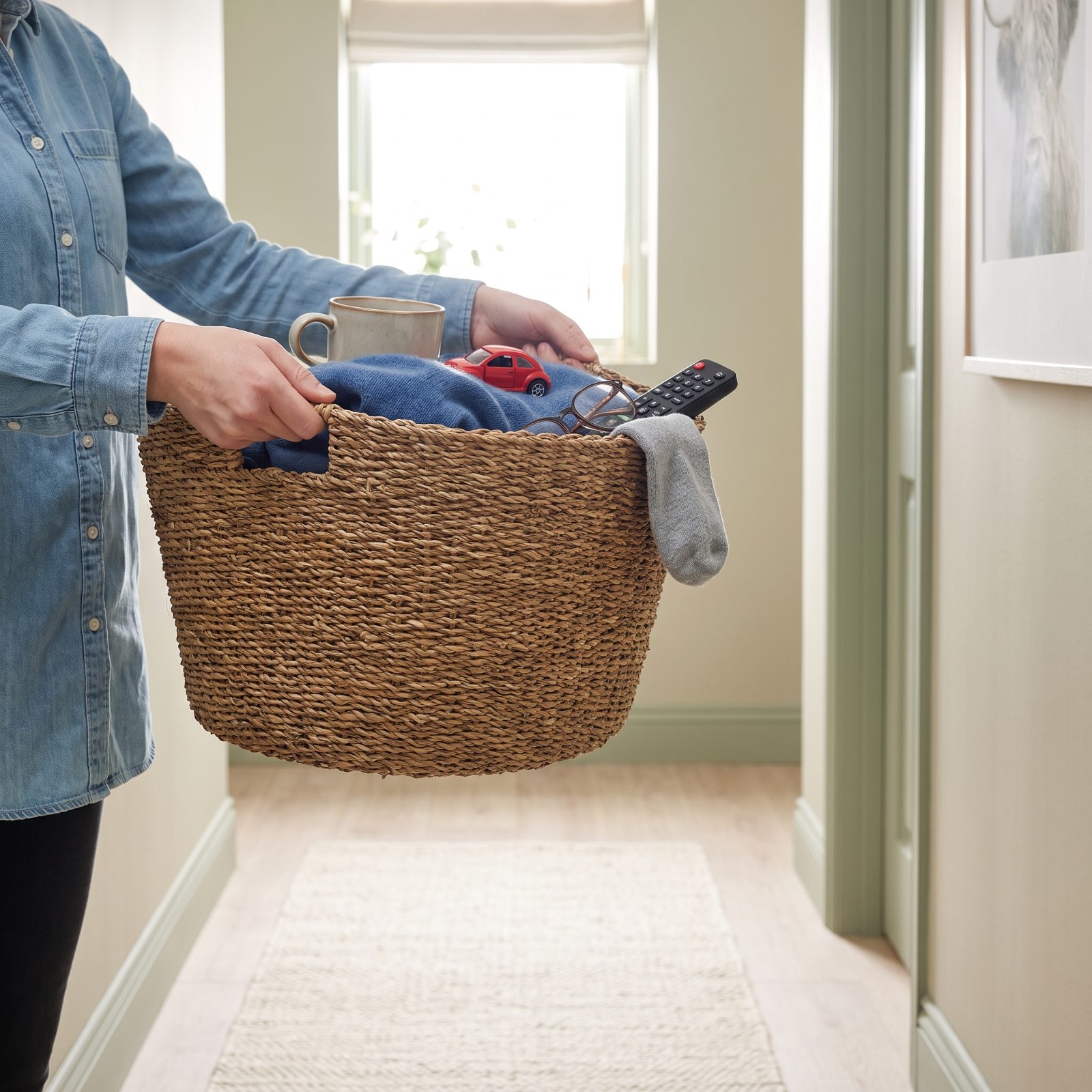
Every detour kills momentum. You spot a mug in the bedroom, carry it to the kitchen, get sidetracked on the way, and suddenly forty minutes are gone.
The fix is one basket carried through the house. Anything out of place goes in it — the mug, the stray sock, the pen, the mail. Redistribute everything at the very end, in a single trip, once the cleaning’s done. The room clears while your feet stay put.
16. Keeping a Small Caddy Packed and Ready
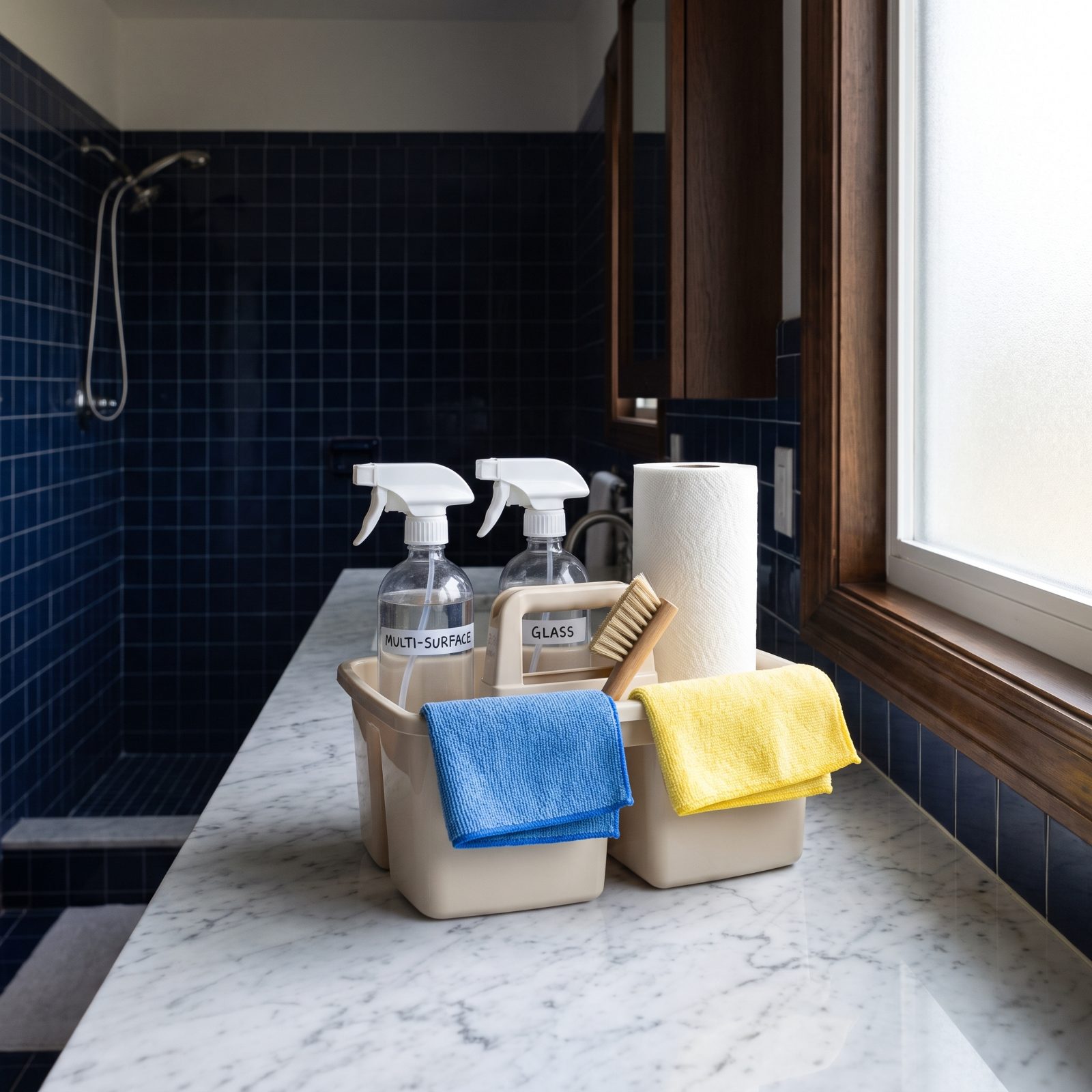
A trip to the supply cupboard is a trip away from the job. Housekeepers carry everything in one grab-and-go caddy, so the tools follow them room to room instead of the other way around.
Stock it with the basics — a couple of sprays, a few cloths, a brush, paper towel — and keep it packed between uses. Then, when the urge to clean actually strikes, there’s no five-minute hunt that talks you out of starting.
15. Dusting Lampshades With a Lint Roller
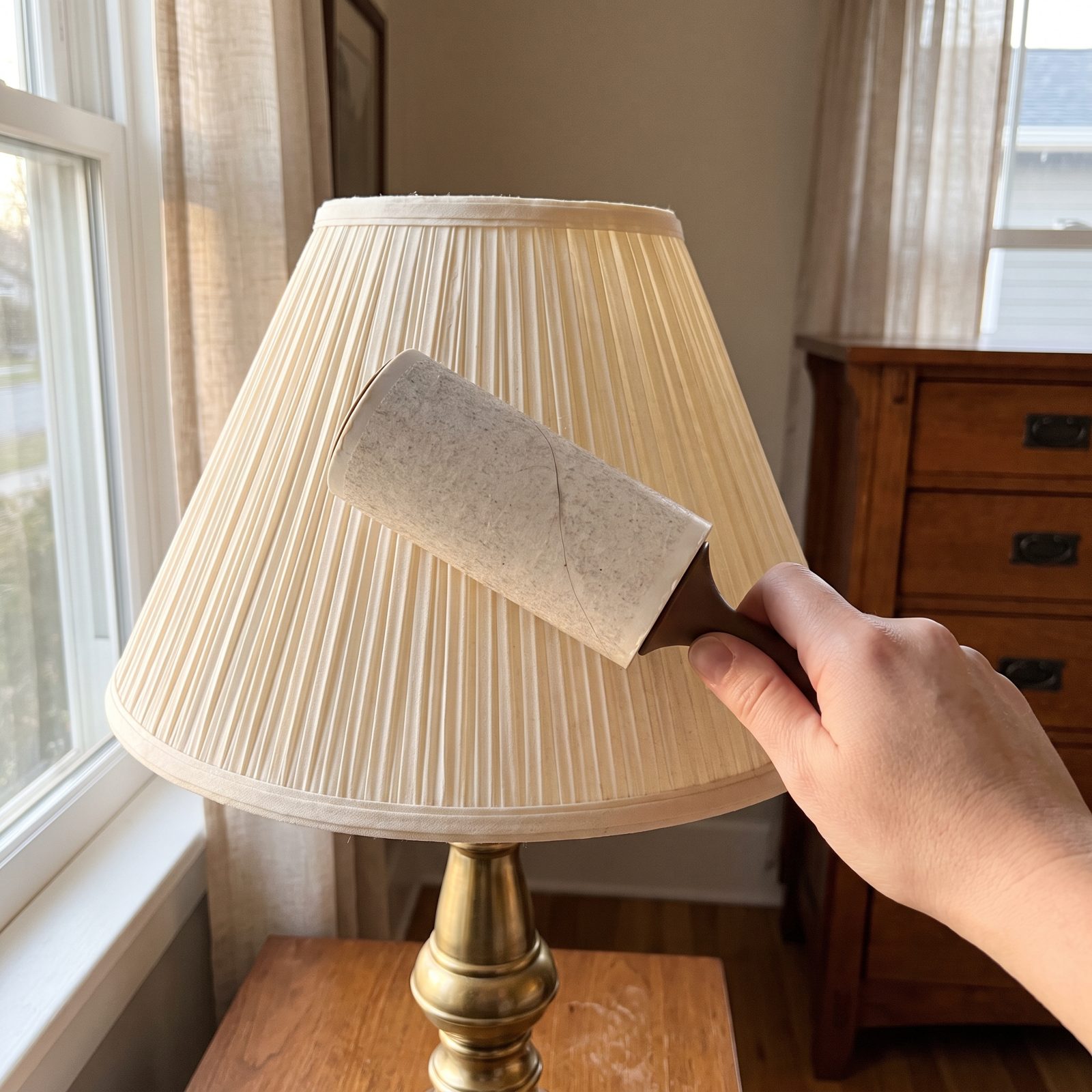
A cloth smears dust into fabric, a feather duster just shuffles it around, and on a pleated shade both leave a bigger mess than you started with.
The lint roller lifts it clean off. The adhesive grabs dust, pet hair and threads without pressing the shade out of shape, so the pleats stay crisp. One pass, done.
14. Wiping Stainless Steel With the Grain
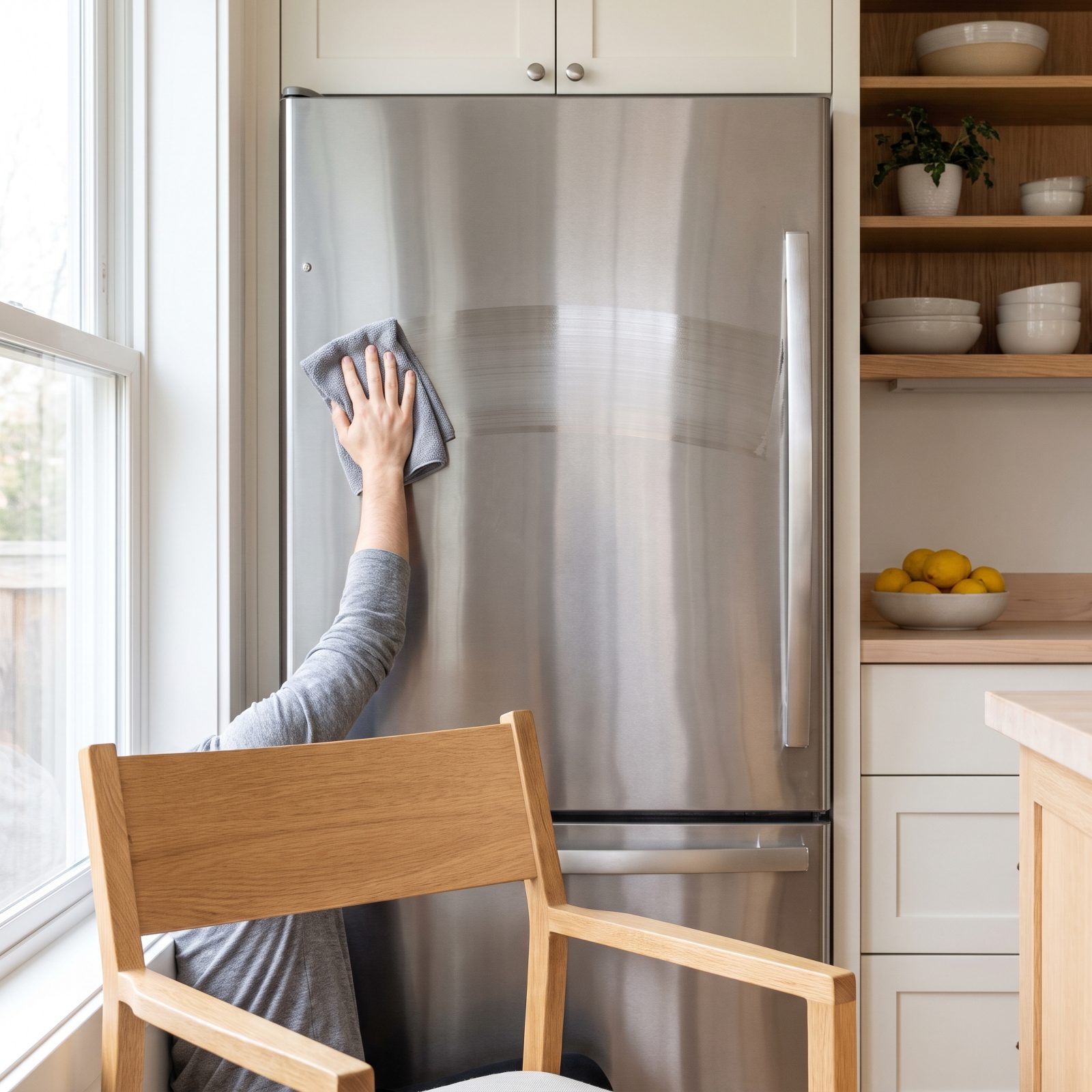
Stainless steel has a direction. Swipe a cloth in a sweeping curve across that brushed grain and you leave a broad arc of streaks that catch every bit of kitchen light, mocking all your effort.
Wipe the way the lines run — usually side to side on a fridge or dishwasher — then finish with a dry cloth in the same direction. The surface reads clean because nothing fights the finish anymore. Small habit, but it’s the gap between a smudged panel and a mirror.
13. Polishing Faucets With a Dry Finishing Cloth
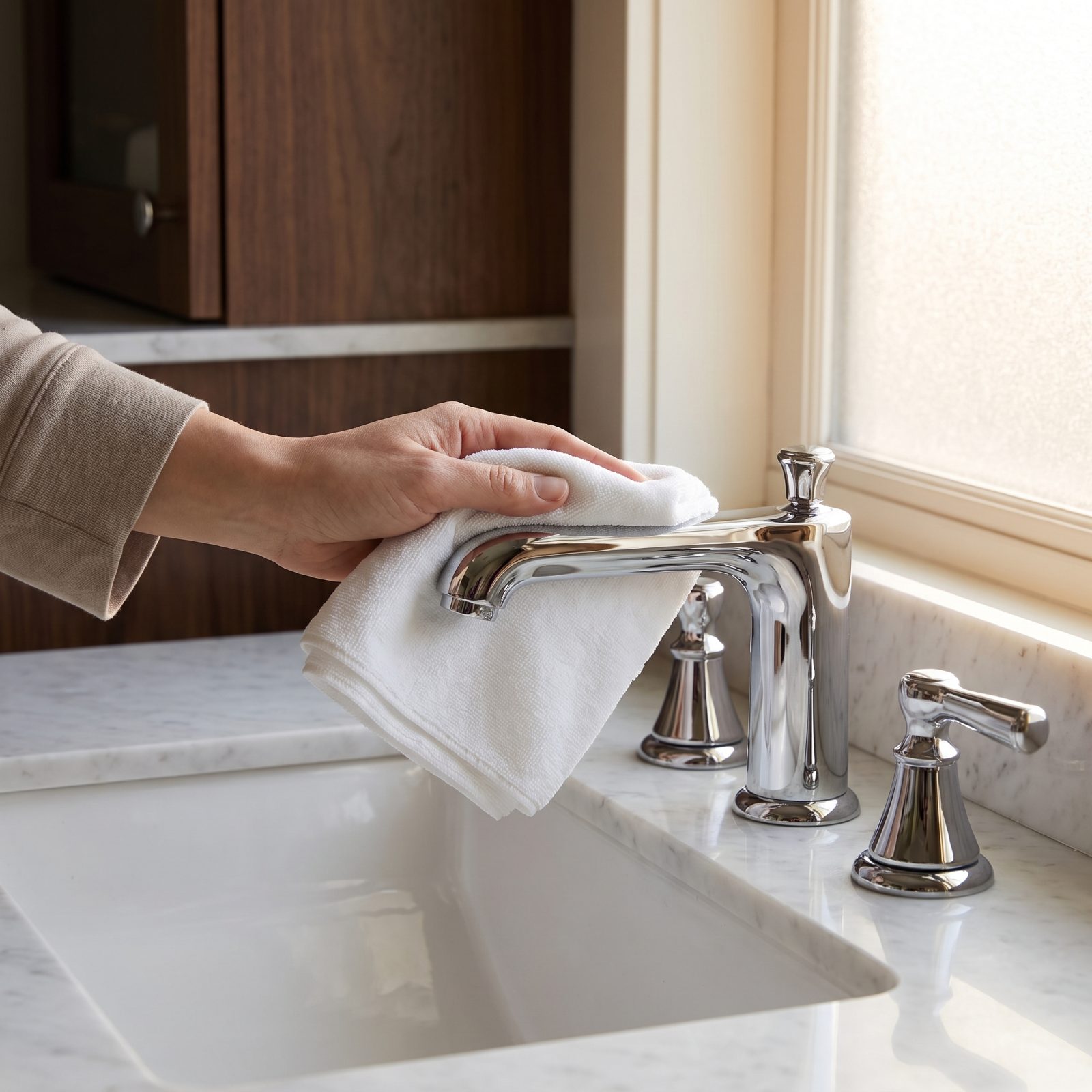
This is the step everyone skips. You clean the faucet, rinse it, and walk away while it’s still wet — then the water dries into spots and the whole thing looks neglected an hour later.
The dry buff at the end is where that hotel shine comes from. A soft cloth, no product, just chasing off the last of the moisture until the metal throws back the light. Thirty seconds for the glint that makes a bathroom feel finished.
12. Wrapping Crusted Faucets for a Targeted Soak
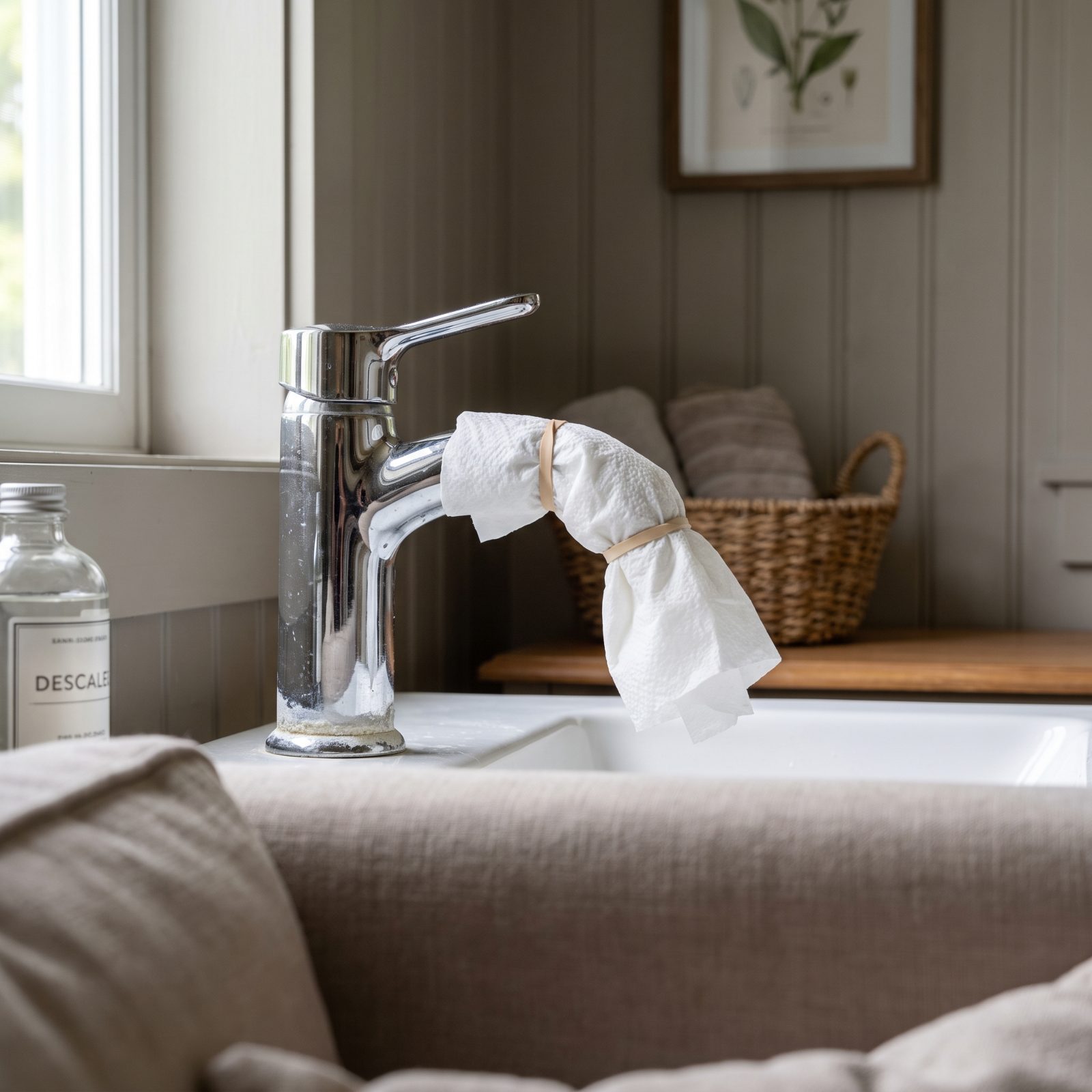
Hard water leaves a chalky crust around spouts and aerators that no amount of wiping touches. Scraping scratches the finish. Flooding the whole sink with acid is overkill.
Instead, soak a paper towel in a descaling solution — mild vinegar works for most — wrap it around the crusted spot, and walk away. The wrap pins the treatment against the buildup instead of running off. Come back later and the scale wipes away soft.
11. Running a Detail Brush Around Fixture Bases
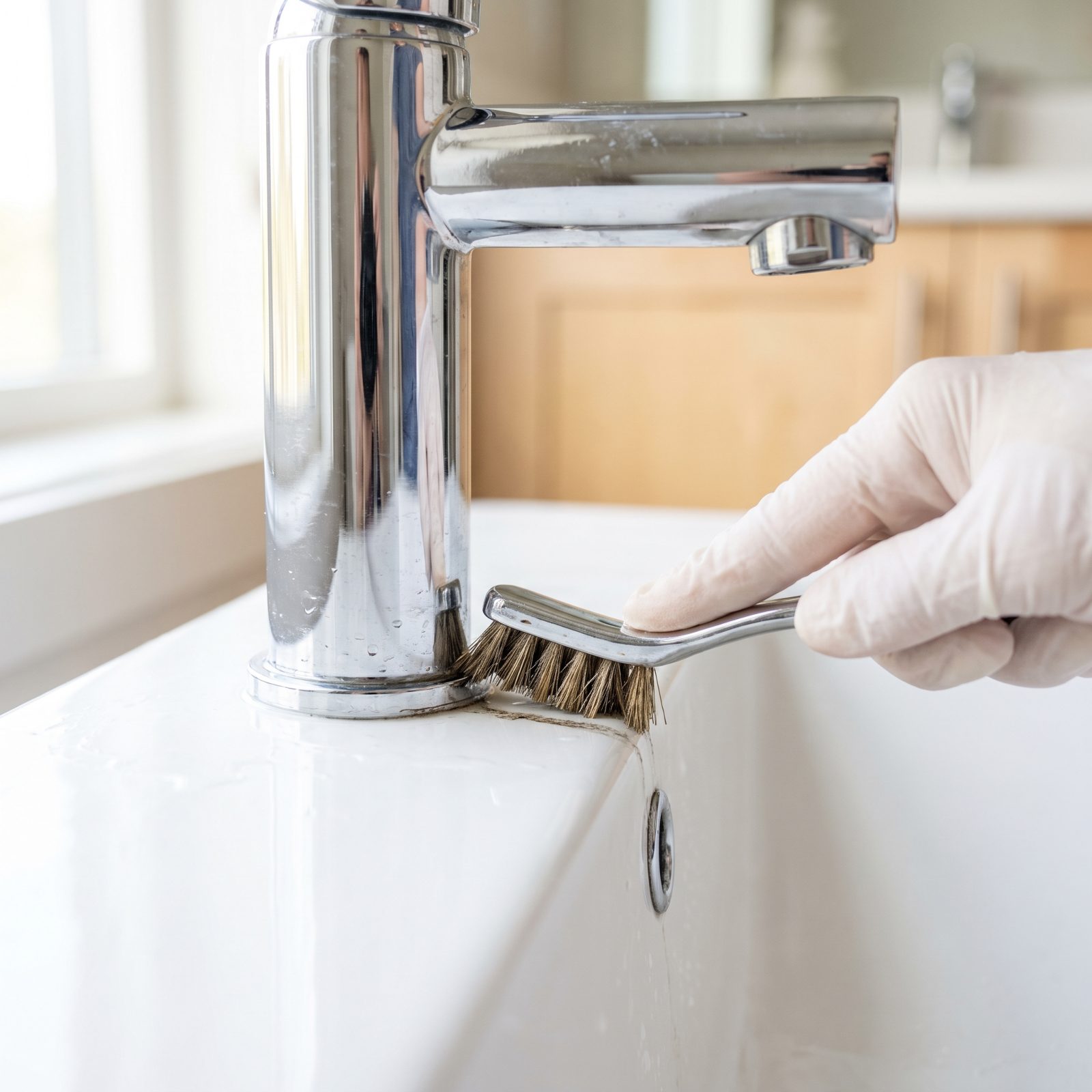
Cloths bridge the gaps. They glide right over the seam where a faucet meets the sink, the groove around a drain, the crease behind a toilet base — and that’s exactly where grime settles in and darkens.
A small brush, old-toothbrush energy but stiffer, drops into those seams and loosens what the cloth skated past. Nobody notices this detail when it’s done. Everybody notices when it isn’t.
10. Cleaning Switches, Handles and Remotes in One Pass
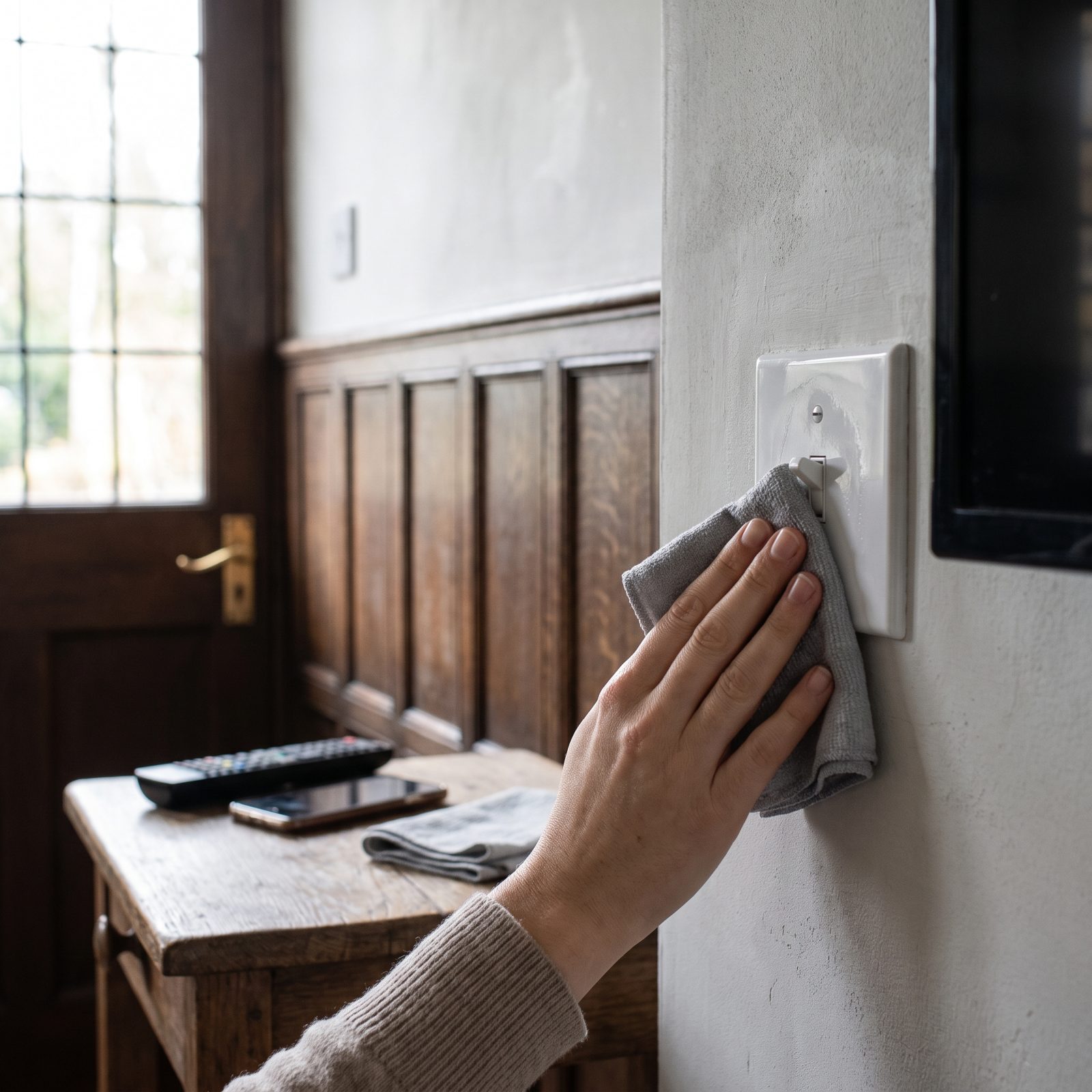
The dirtiest spots in a home aren’t the ones you see. They’re the ones every hand touches — switches, door handles, the fridge pull, the remote, the thermostat — and most routines ignore them entirely.
Housekeepers hit them as one task, a single loop with a disinfecting cloth, so nothing gets missed and nothing gets double-handled. Name it as a step and it stops being the thing you always forget.
9. Changing the Cleaning Water Before It Turns Cloudy
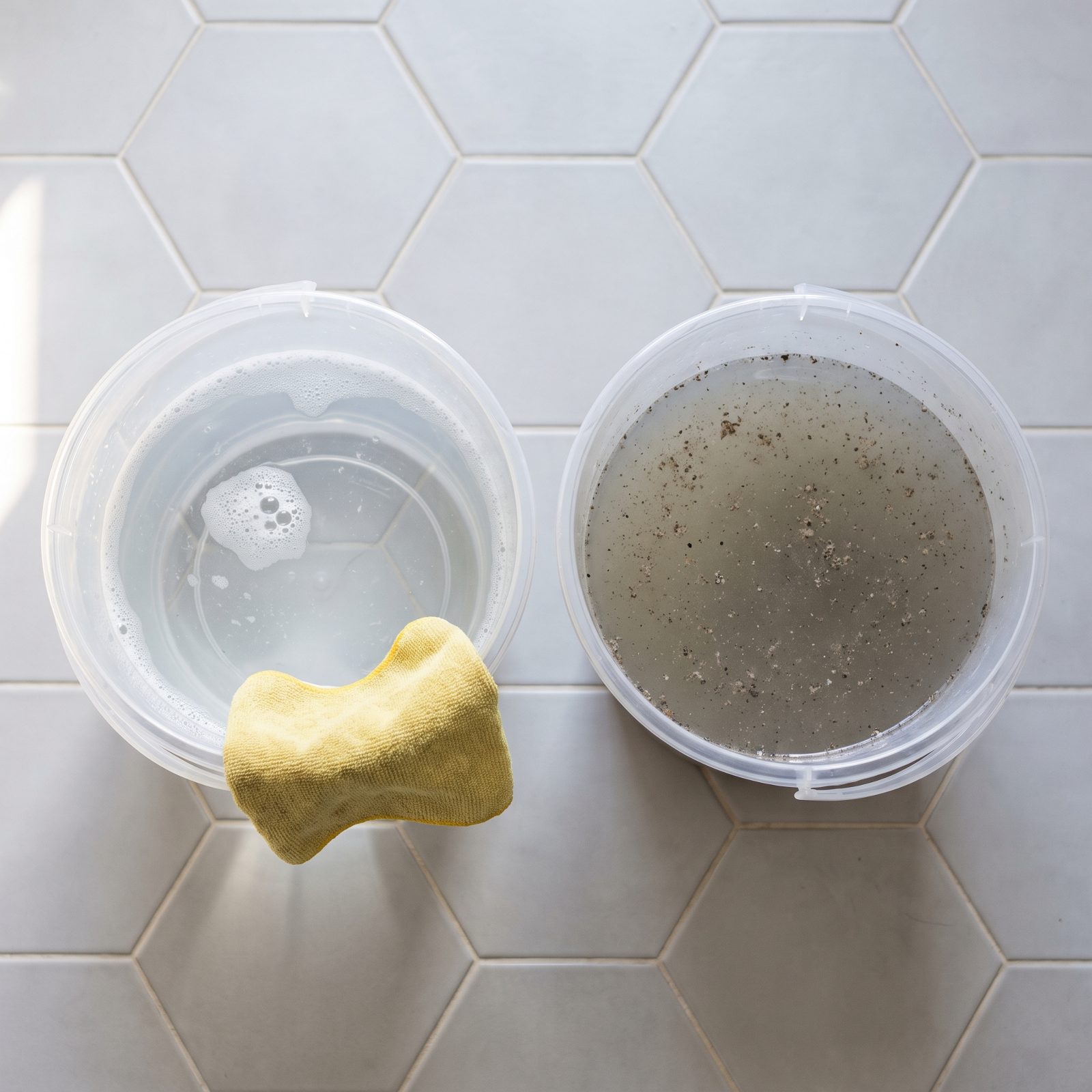
Nobody tells you this: once your water goes grey, you’ve stopped cleaning and started painting. Every pass just spreads a thin film of yesterday’s dirt onto whatever you touch next. Housekeepers swap the water the second it clouds, long before it looks filthy, because suspended grit redeposits well ahead of the moment the bucket actually looks disgusting.
Keep a second bucket of clean solution within reach. Dumping and refilling takes under a minute and saves you re-doing a counter that dried with streaks you couldn’t figure out.
8. Keeping a Separate Mop Bucket for Bathroom Floors
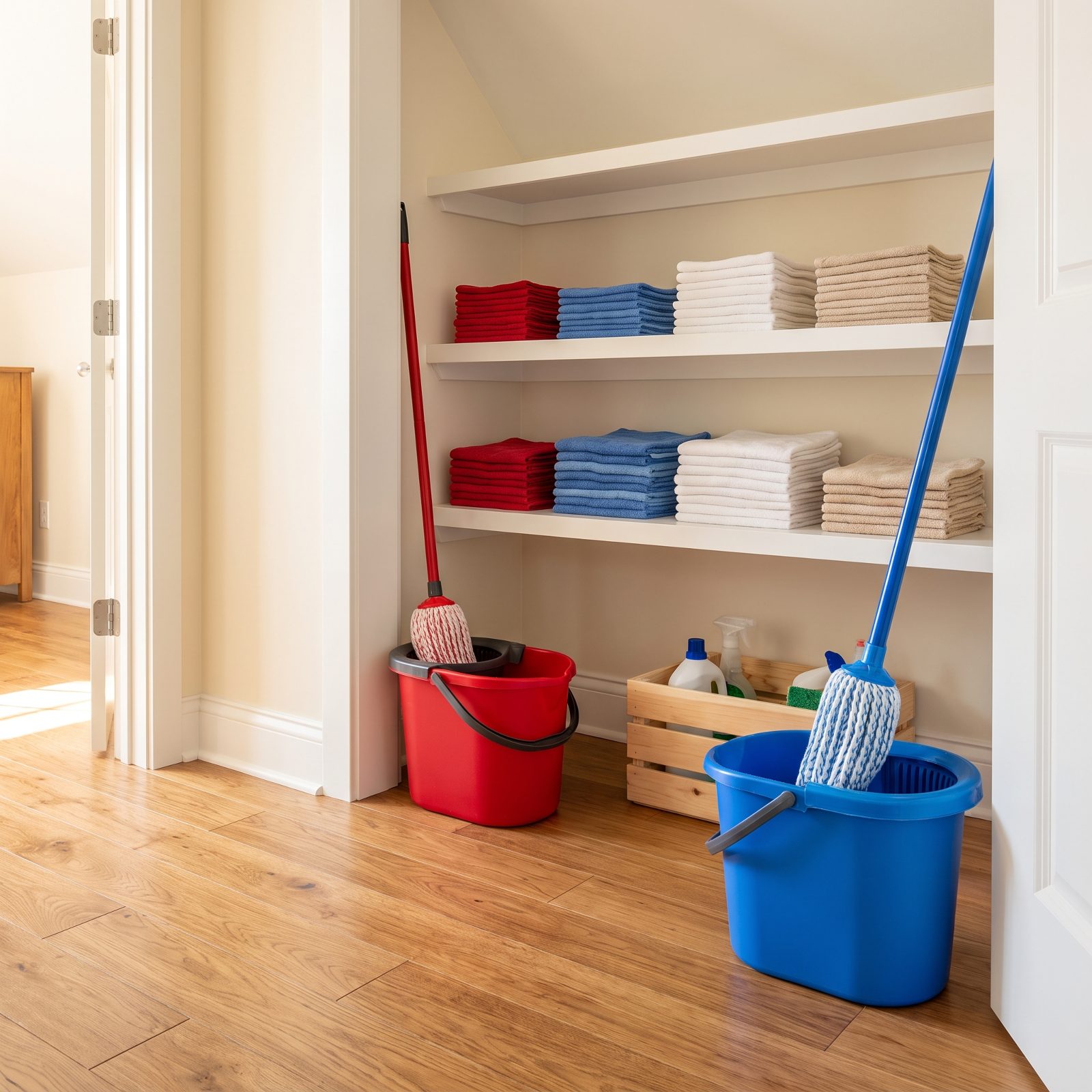
The bathroom floor sees things no other floor in your house will ever see. Drag that same mop water into the kitchen and you’ve handed your dining room a souvenir.
Professionals assign the bathroom its own bucket, its own mop head, often its own color. Color-coding sounds fussy until you’ve accidentally wiped down a cutting-board area with the wrong rag. One cheap red mop, set aside for bathrooms only, and the whole problem disappears.
7. Hunting Down Odor Sources Instead of Spraying Over Them
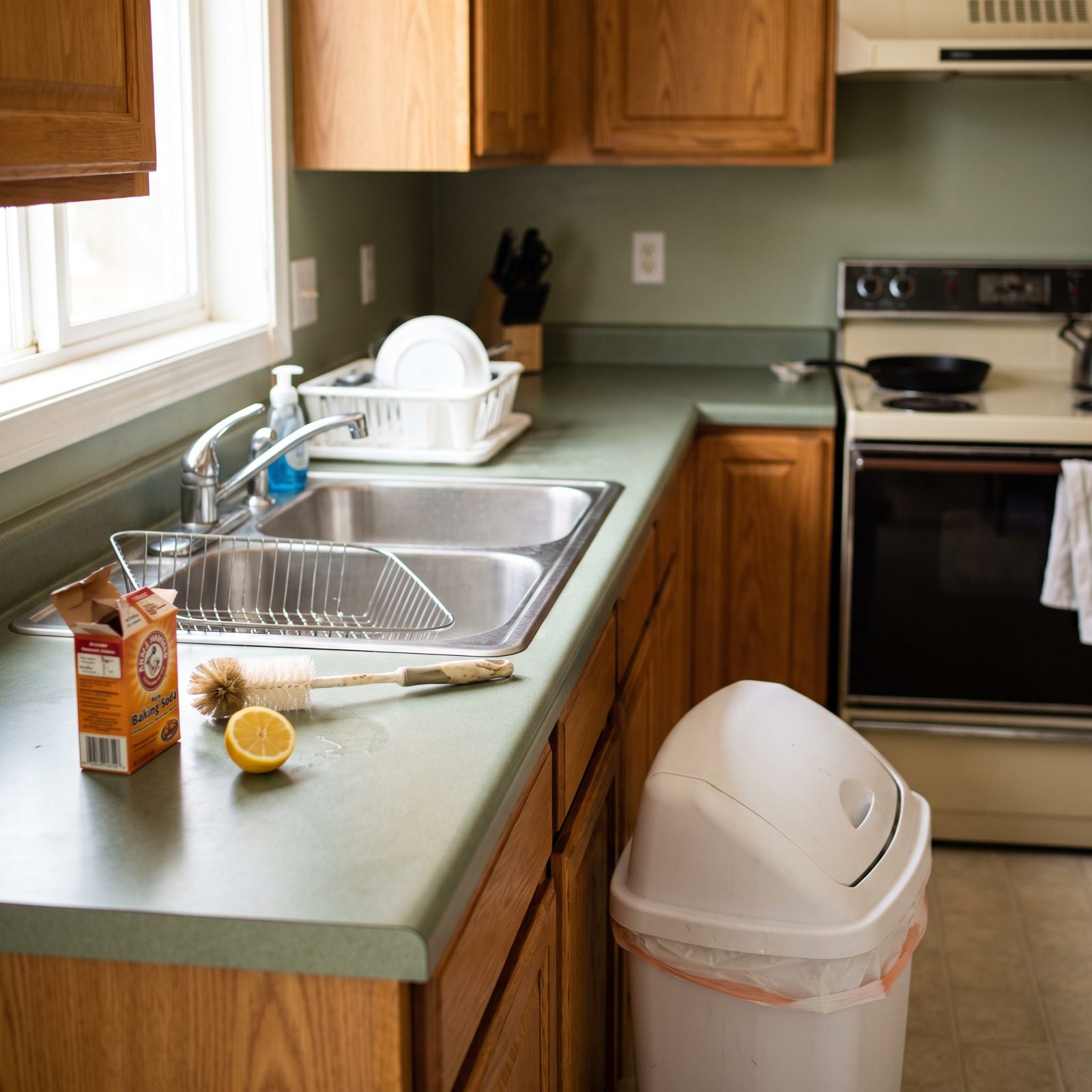
Air freshener is a confession. It tells everyone the smell is still there, now wearing a floral costume.
People who clean rooms all day know a smell has an address. It lives in the bin liner, the drain, the damp towel someone balled up in a corner, the gap under the fridge. They go straight to the source, scrub it, dry it, and the air sorts itself out.
6. Washing Microfiber Without Any Fabric Softener
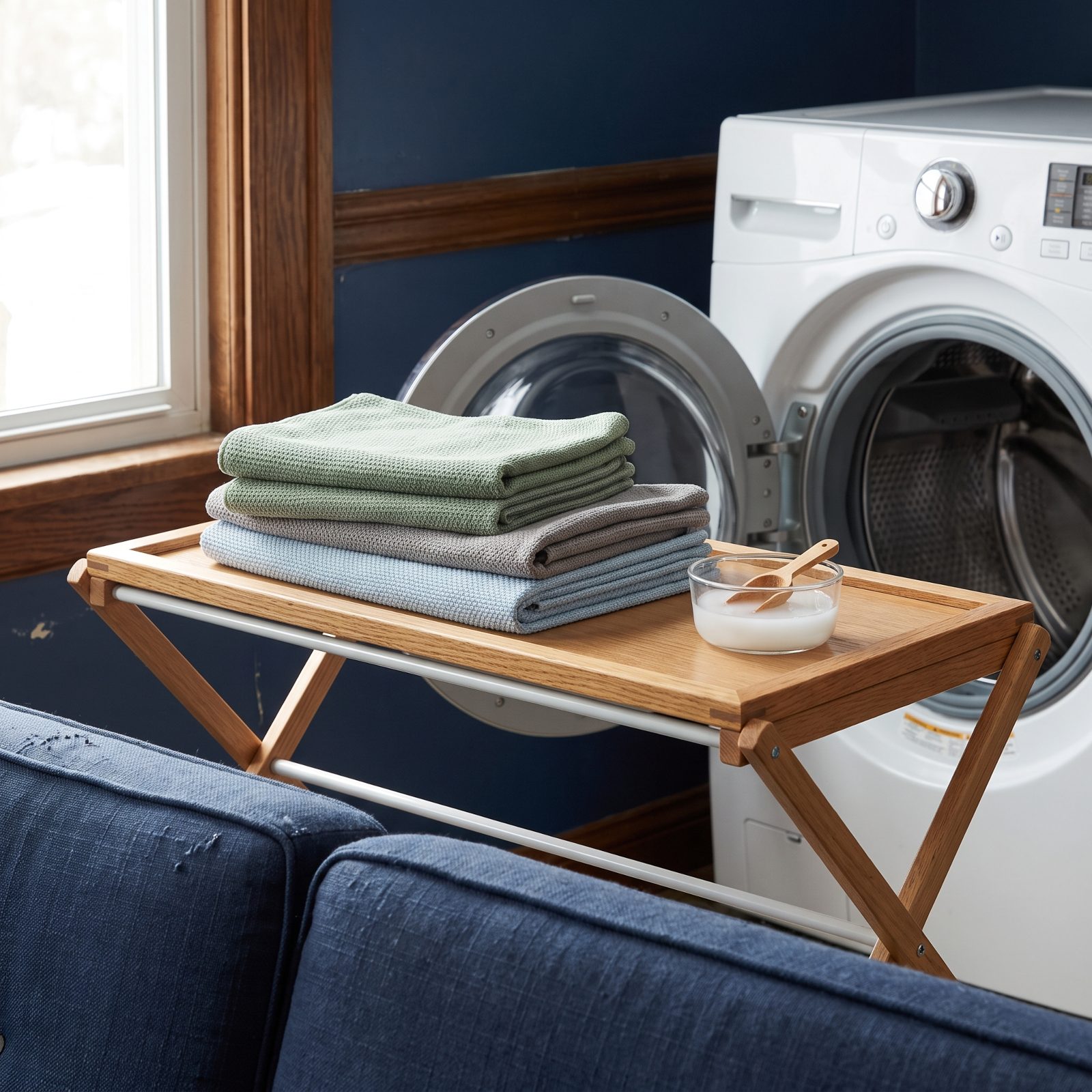
Fabric softener and microfiber are enemies, and most people never find out. Softener works by coating fibers with a waxy film, which is lovely on a bath towel and a disaster on a cleaning cloth, because the whole point of microfiber is that uncoated, split texture that grabs dust and lifts grease.
Glaze over it and your cloth turns into a glorified smear tool. So wash microfiber in warm water, skip the softener, skip the dryer sheet. A small scoop of plain, softener-free liquid detergent in the wash keeps them clean and fully working.
5. Drying Mop Heads Fully Before They Go Back in the Closet
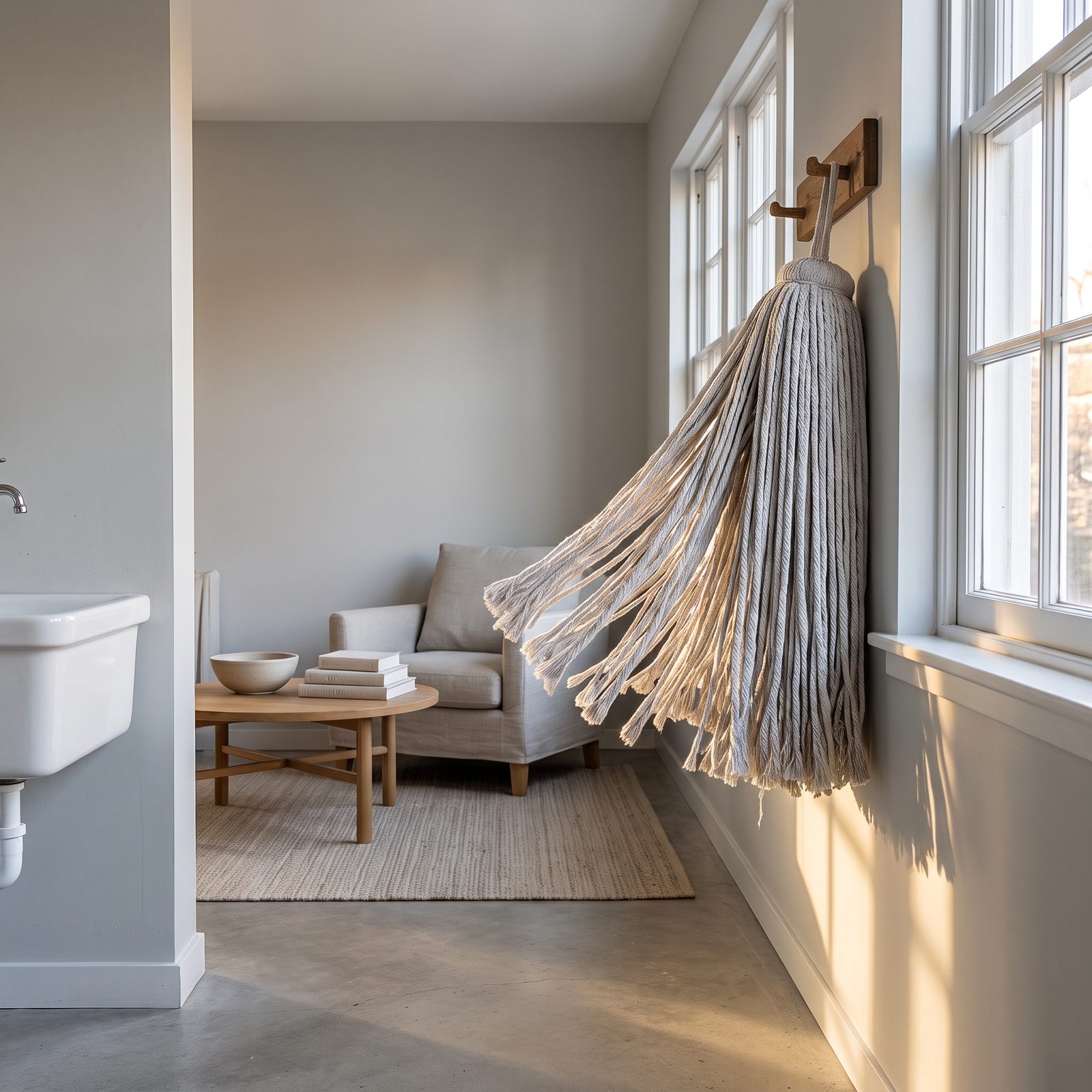
A damp mop head balled up in a dark closet is a science experiment you didn’t sign up for. That sour, swampy smell your floors sometimes get? It rode in on the mop.
The habit is simple, and almost everyone skips it. Rinse the head, wring it hard, then hang it somewhere with air moving around it until it’s bone dry. Left to dry flat against itself, it grows the kind of film you can smell before you can see it. Dry it properly and it lasts longer, smells like nothing, and stops leaving streaks.
4. Emptying the Vacuum Long Before Suction Drops Off
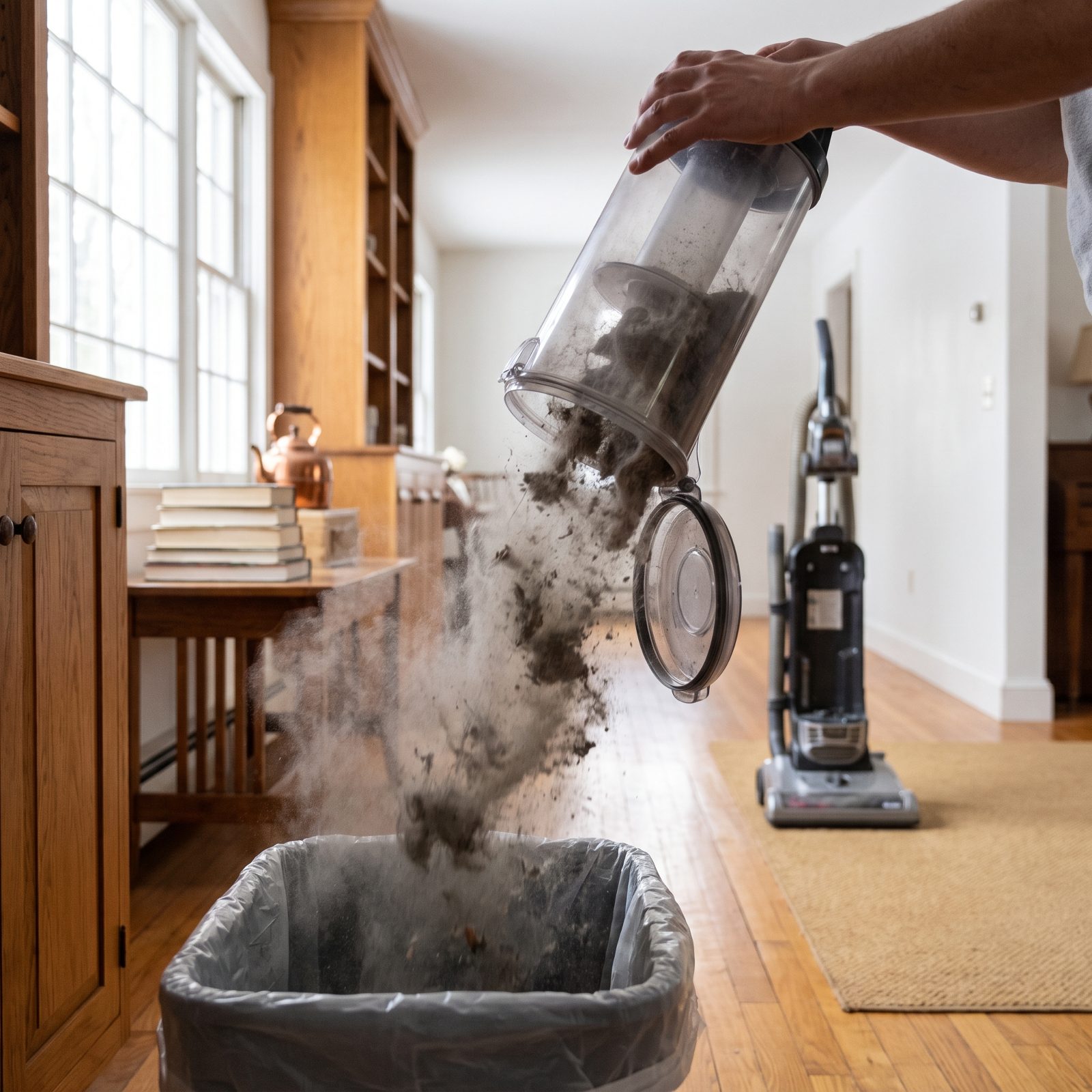
Most people empty the vacuum when it’s full. Full is already too late.
Airflow is the entire mechanism. A bin or bag at even half capacity chokes the suction, so you push the machine over the same stretch three times wondering why it stopped picking anything up. Housekeepers empty it at the one-third mark, every time, no debate. The vacuum glides, the carpet looks done in one pass, and the motor doesn’t strain itself into an early grave.
3. Cutting Hair Off the Vacuum Roller on a Schedule
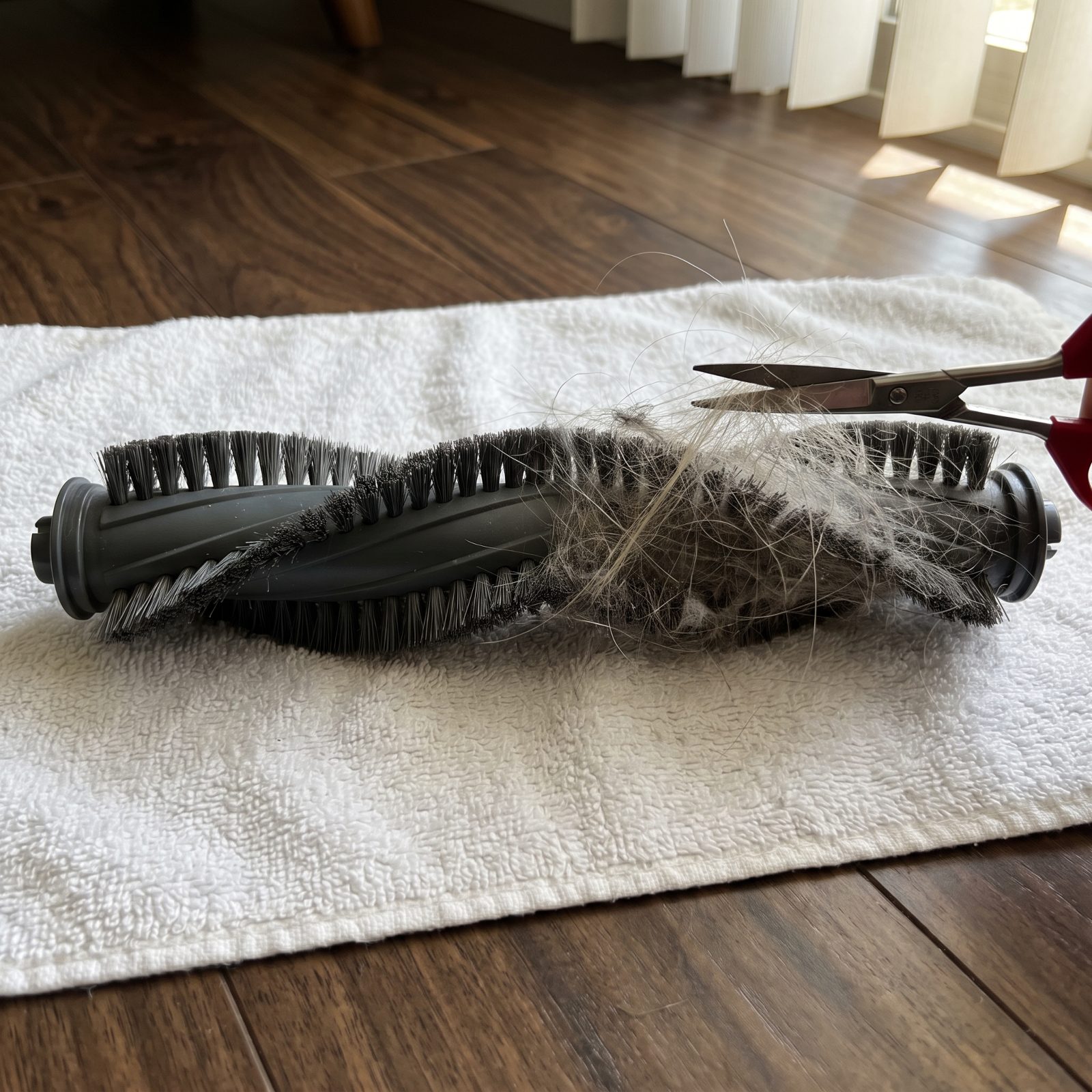
A brush roll wrapped in hair isn’t spinning. It’s just riding along the carpet pretending.
That brush bar is supposed to agitate the fibers so the suction can pull dirt up from the base of the pile. Choke it with hair and thread and it freezes solid, which means you’re vacuuming the surface and leaving everything underneath exactly where it was. Flip the machine over once a week, run scissors or a seam ripper down the length, and peel the tangle off.
2. Tucking Each Sheet Set Inside Its Own Pillowcase

The fitted sheet is the villain of every linen closet. It refuses to fold, it never finds its way back to its own set, and you wind up making the bed from two different flannels.
Fold the flat sheet, the fitted sheet, and one pillowcase into a tidy bundle, then slide the whole thing inside the second pillowcase. One pouch per set. No hunting, no mismatches, and the shelf finally looks like someone lives there on purpose.
1. Picking One Rotating Deep-Clean Task Each Week
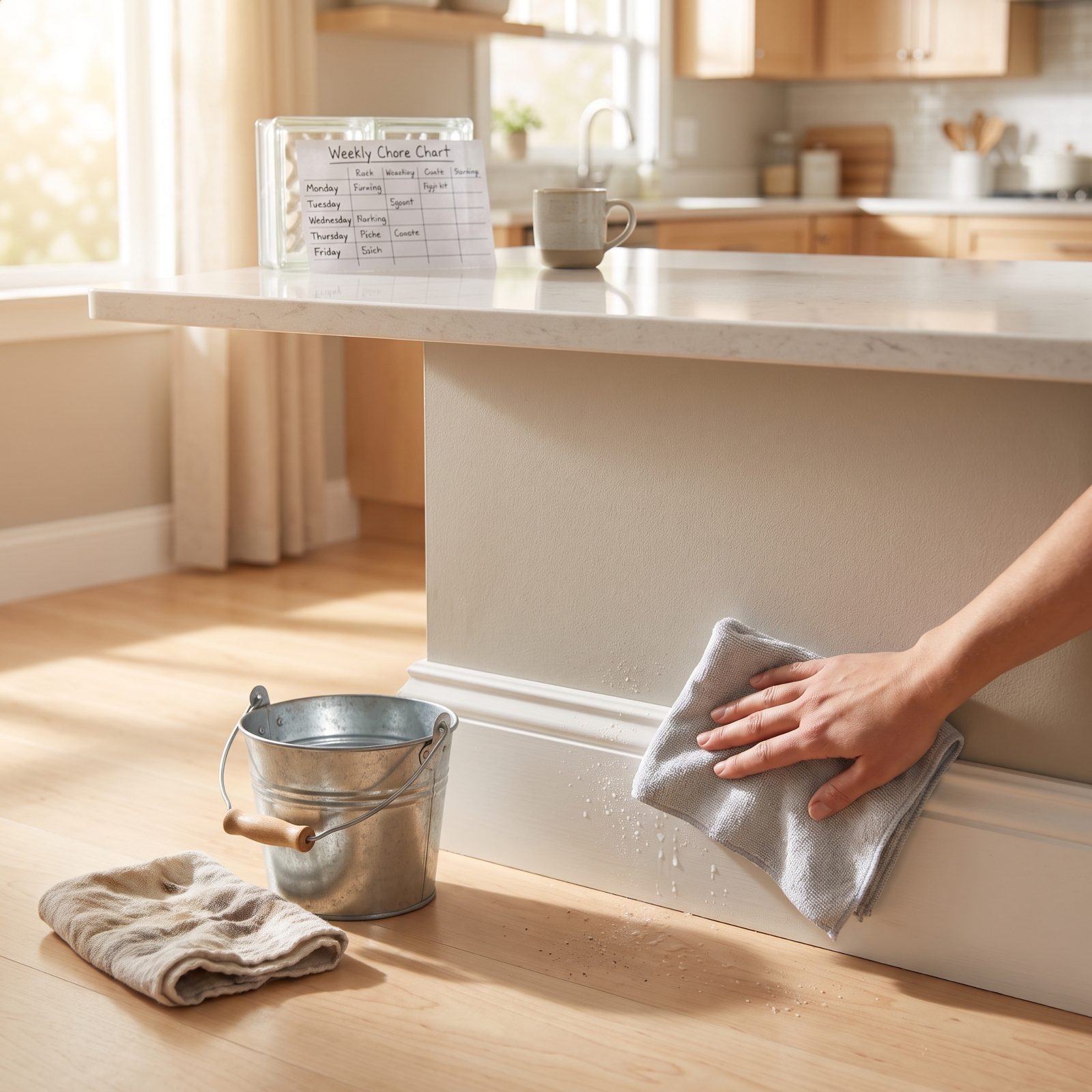
Nobody actually does the dreaded all-day deep clean. It sits on the mental to-do list for months, grows teeth, and never happens.
So stop treating it as one event. Assign a single detail task per week and let it rotate: baseboards, then the inside of the oven, then light fixtures, the fridge coils, the grout. By the time you circle back to where you started, months have passed and each surface was due again anyway.
The deep clean you never schedule is the one that never gets done. The one you break into Tuesdays gets done forever.
It spreads the dull work across the calendar so thin you barely feel it, and the house never reaches the point of needing rescue.