Somewhere around the third garbage bag, it stops being about the garage. You started out tossing dried-up paint cans and expired batteries, and now you’re sitting cross-legged on the floor holding a pair of ski boots you haven’t worn since the Clinton administration, asking yourself what you even want anymore. That’s not a mess talking. It’s something bigger.
Please note that some of the images in this article were created with the assistance of AI.
Decluttering and the midlife reckoning run on the same machinery: identity, nostalgia, loss, that nagging urge to grab the wheel of a life that got away from you. The objects are just where it shows up first. What follows are the moments that look like housekeeping but feel suspiciously like a reckoning. You’ll recognize more than you’d like.
16. You Empty One Junk Drawer and Question the Whole House
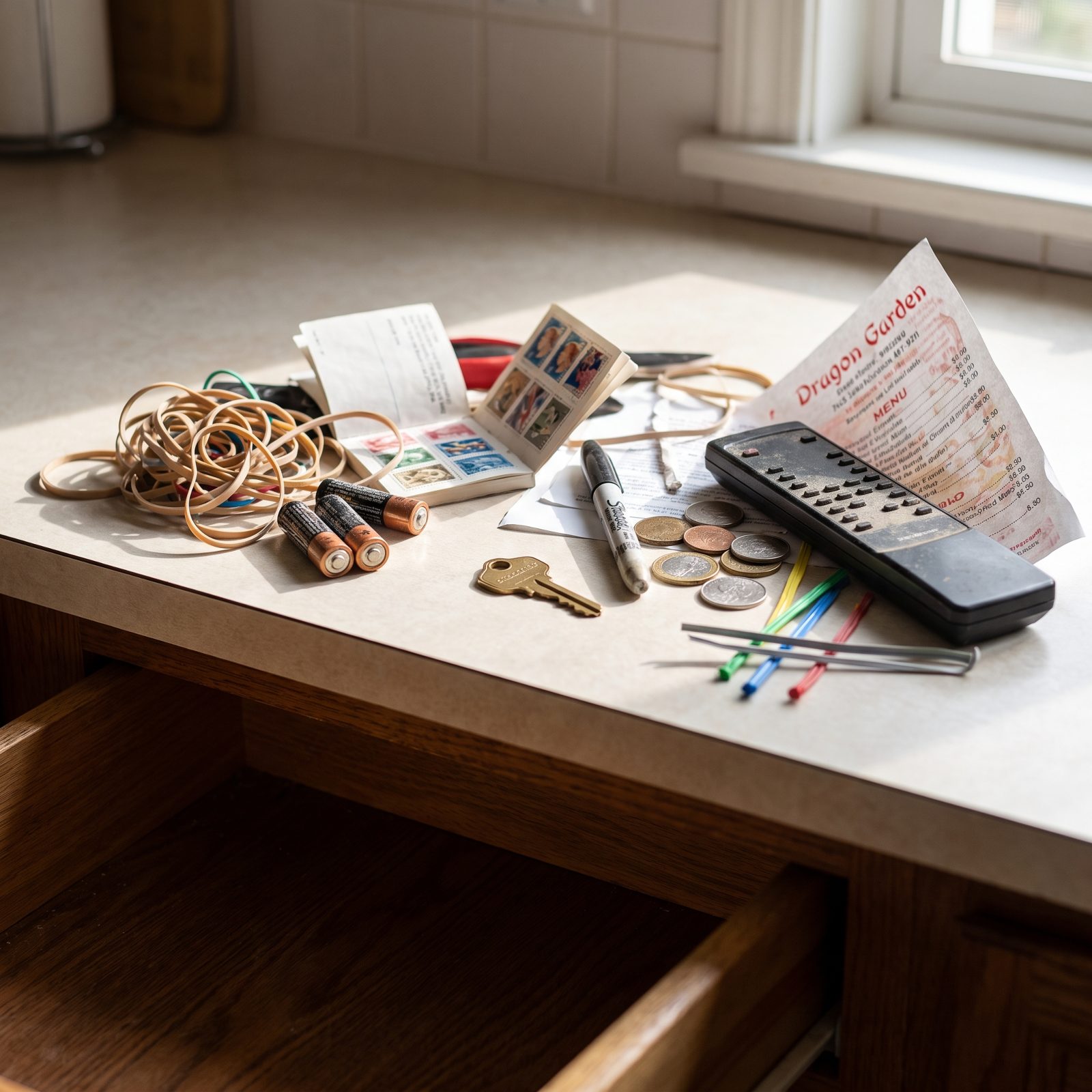
It was supposed to take ten minutes. The junk drawer. The one with the dead batteries and the key that opens nothing. But once it’s empty and gleaming, your eyes drift to the cabinet above it, then the closet down the hall, then the attic you’ve been avoiding since the kids left.
Here’s the midlife crisis in its purest form: you go in to fix one small, contained thing and come out doubting the entire structure. Psychologists call it the snowball effect, but it’s really just momentum meeting dread. One honest look invites the next one, and the next one gets bigger.
The job, after all these years, is never the drawer. The drawer was just the thing you felt brave enough to open first.
15. Your Closet Still Belongs to Someone You Used to Be
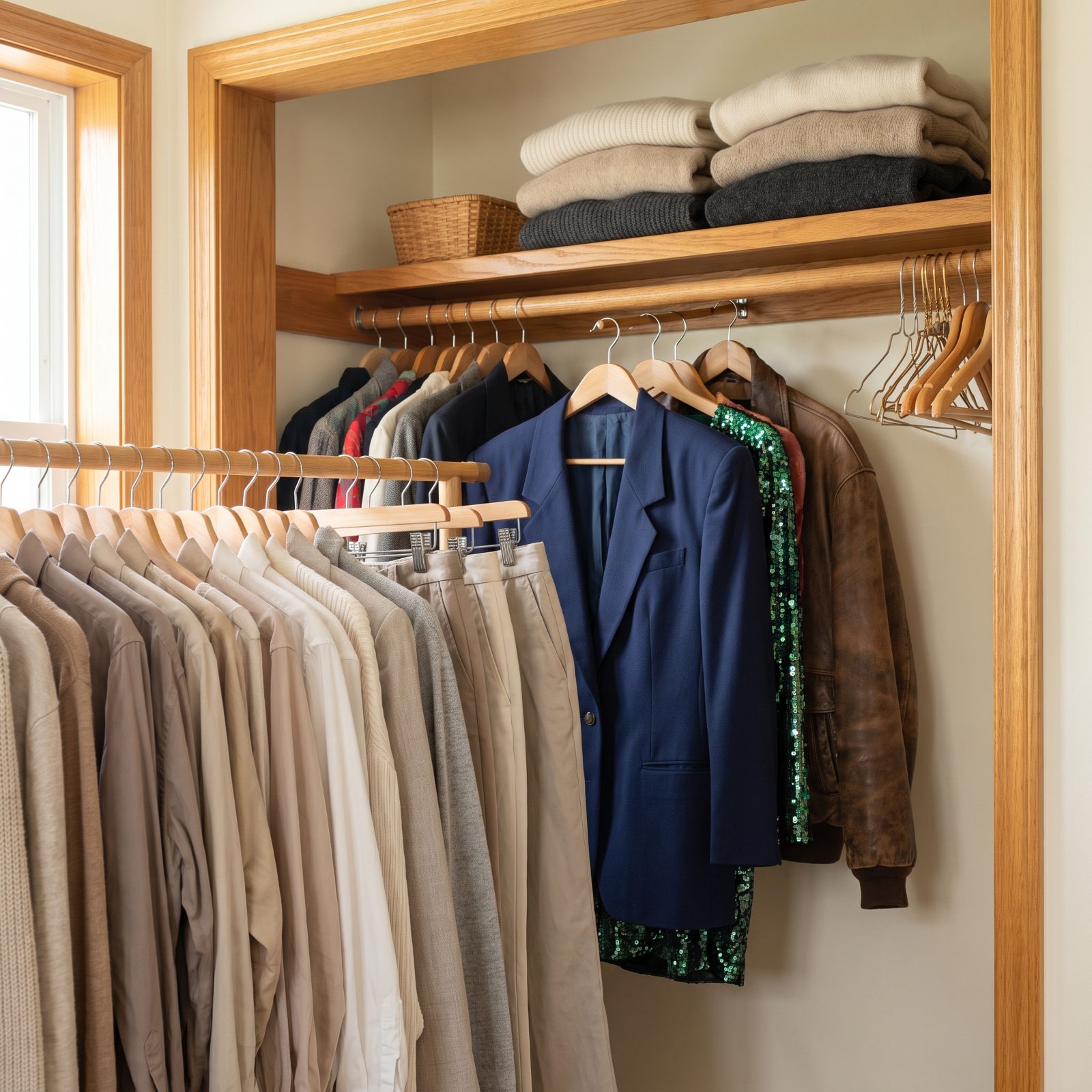
Push past the clothes you actually wear and you hit a wall of someone else. The power blazer from the job you quit. The dress for the body you had. That outfit you bought for the person you were absolutely certain you’d become.
A closet is a physical record of old identities, which is why clearing one out feels so much heavier than it should. You’re not deciding what to donate. You’re deciding which versions of yourself you’re finally willing to stop auditioning for.
Midlife pulls the same trick with the intangible stuff — the title, the role, the story you told at parties. You keep it on the rod long after it stopped fitting, because taking it down means admitting that chapter is closed.
14. Finding Your Old Jeans Makes Time Feel Extremely Real

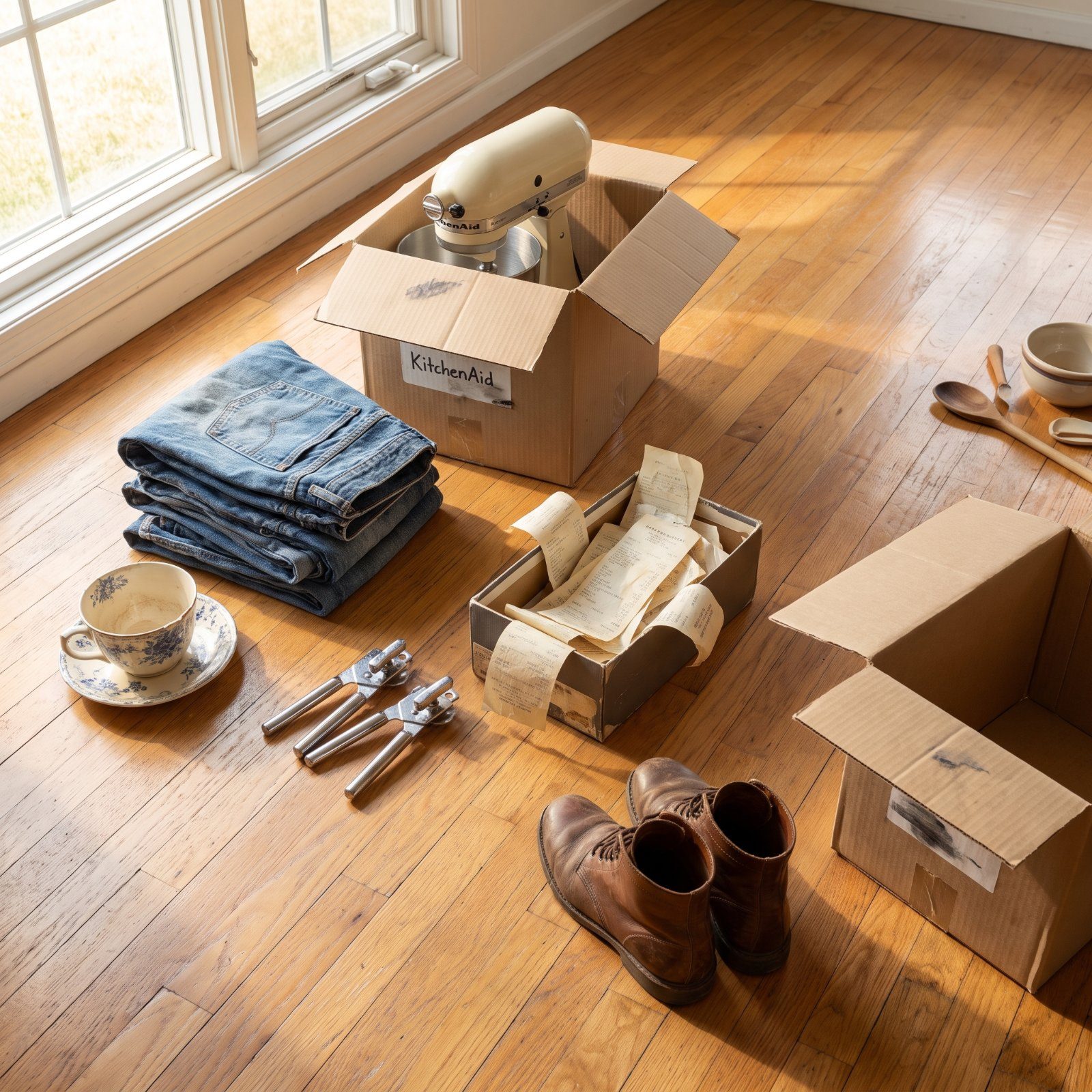
Nothing announces the passing of time quite like a pair of jeans from two sizes and two decades ago. You hold them up, do the math, and feel in your whole body exactly how long it’s been.
Objects are anchors. They freeze a moment you’ve otherwise let blur, and when you dig one up, it drags a precise before-and-after right into your hands. An old pair of jeans can level you faster than a photo album.
This is the same vertigo that defines the middle years. Something small — a song, a smell, a waistband — forces a sudden audit of where the time went. The jeans don’t fit. What really stings is how recently you were sure they always would.
13. The Kids’ Empty Rooms Force a New Identity Question
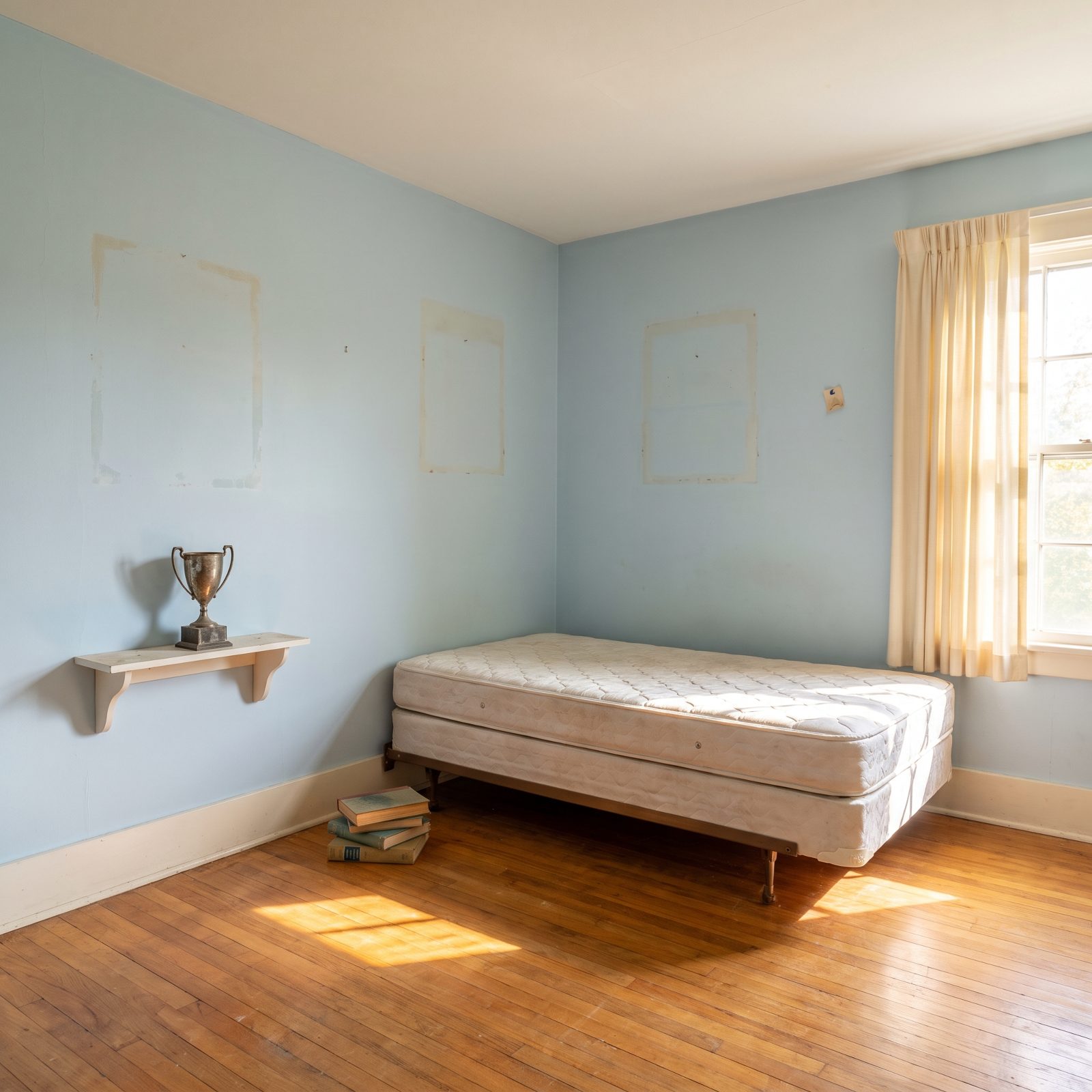
You walk in to pack up the last of the kid’s stuff and realize you have no idea what this room is supposed to be now. An office? A guest room? A gym you’ll use twice? And underneath all that: if you’re not running the daily operation of raising someone, what exactly are you?
The empty nest hands you a square footage problem that’s really a self problem. For years your identity had a clear job description. The room emptying out mirrors the role emptying out, and both leave you standing in a space that no longer tells you who to be.
Here’s the part nobody mentions. That blank room isn’t just loss — it’s the first open floor plan you’ve been handed in twenty years. The question isn’t only what you lost. It’s what you finally get to choose.
12. You Keep the Bread Maker for Your Fantasy Self
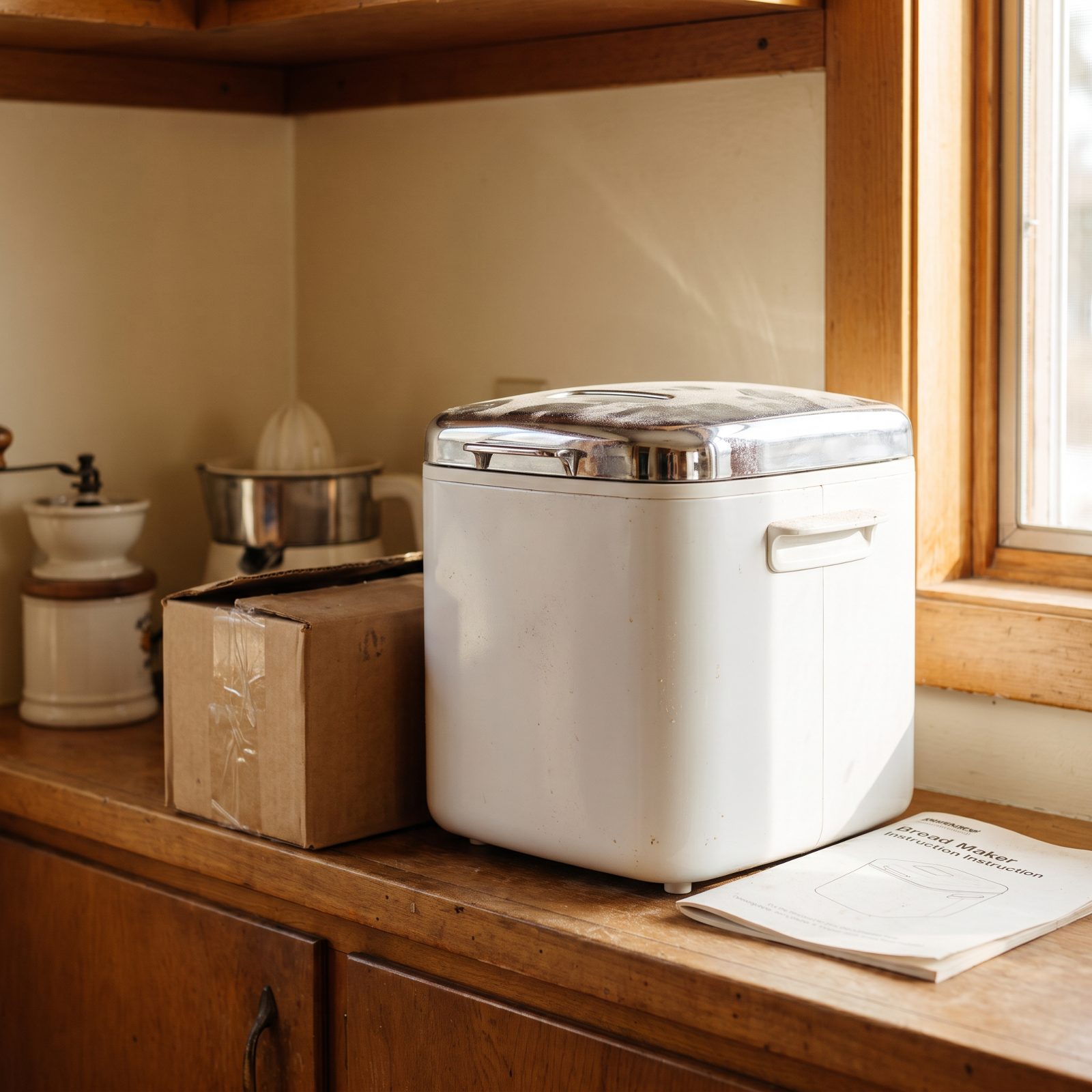
The bread maker. The pasta roller. The yogurt machine, the fancy juicer, the dehydrator you bought in a fit of conviction. Each one was purchased for a person who wakes up early, bakes sourdough, and has their life together. You’ve met this person exactly never.
These appliances aren’t clutter — they’re aspiration in appliance form, and letting them go means admitting the fantasy self might not be arriving. That’s a surprisingly hard thing to admit at any age, and in midlife it’s the whole ballgame.
So the box stays on the shelf, dust and all, because as long as it’s there the possibility stays open. It’s a promise you haven’t quite given up on.
11. You Finally Release the Treadmill That Cost Too Much
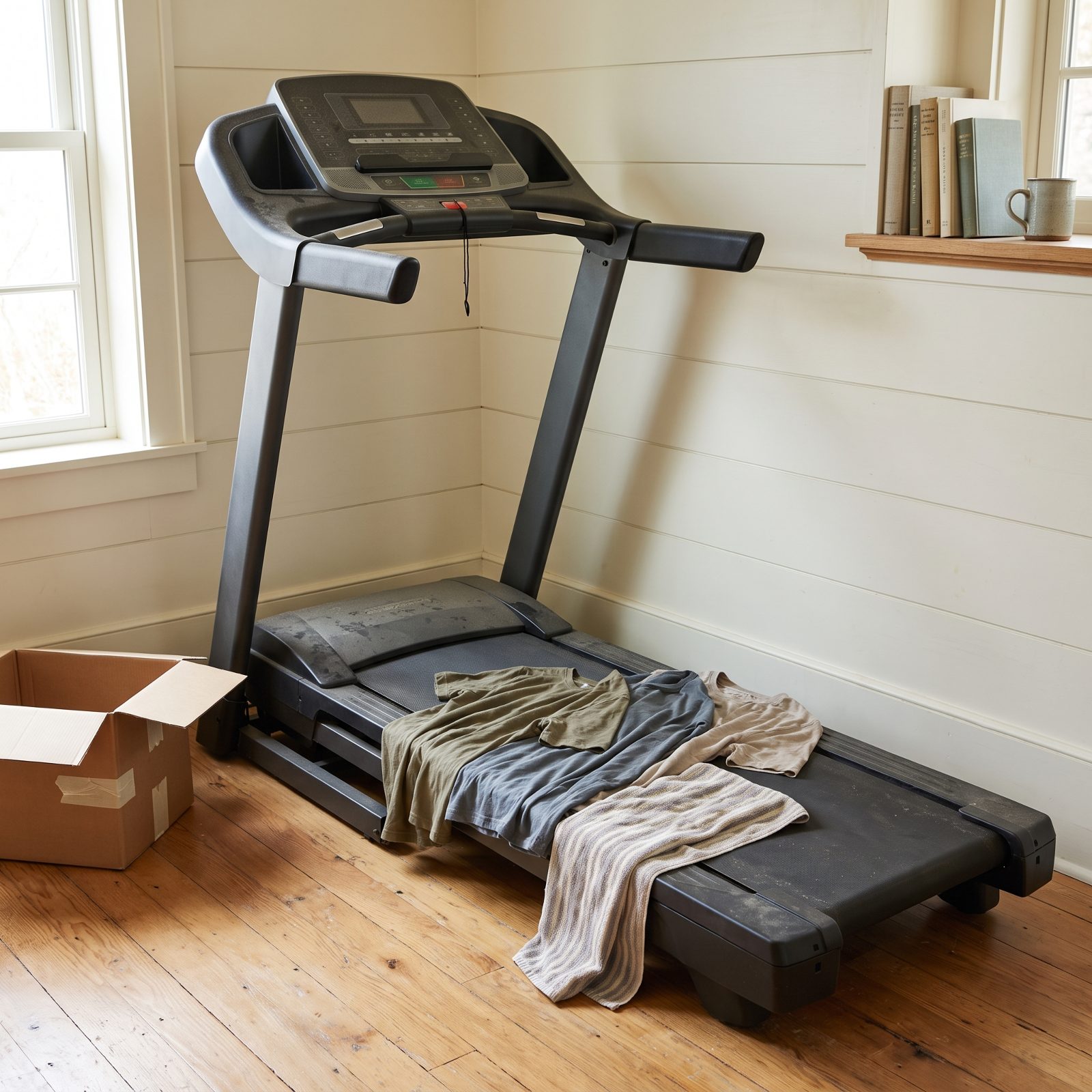
It cost a small fortune. It became a clothes rack within a month. And for years you refused to get rid of it, because getting rid of it would mean admitting the money was gone.
That’s loss aversion wearing gym clothes. The pain of writing off what you already spent feels sharper than the relief of reclaiming the corner it’s hogging, so you keep paying rent on a mistake. Economists call it the sunk cost fallacy, and it governs far more than treadmills.
Midlife is lousy with sunk costs. The career you don’t love but already built. The hobby you lost interest in. The version of the plan you outgrew. Hauling that treadmill to the curb is practice for a much harder lesson — what you spent is already gone, and keeping the thing doesn’t bring it back.
10. Inherited China Turns Family Expectations Into Visible Objects
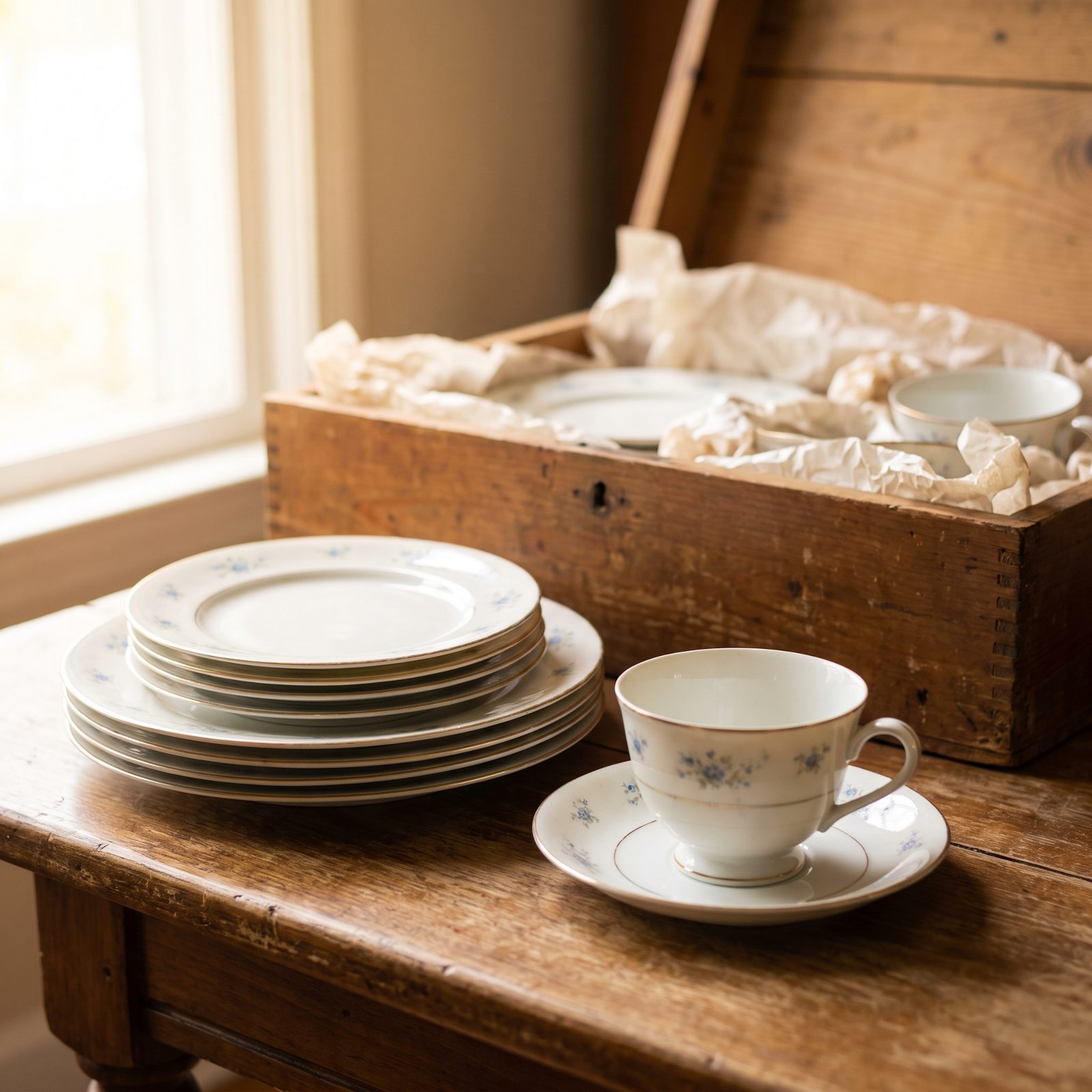
The china is beautiful and you use it never. But it was your grandmother’s, and parting with it feels like parting with her, and with every family dinner she ever hosted, and with the unspoken rule that this is the kind of thing a person holds onto.
This is where decluttering gets genuinely hard, because the object isn’t really an object. It’s a relationship, a duty, a whole lineage of expectation stacked in the cabinet. Letting go of it feels less like cleaning and more like betrayal.
You’re not deciding whether to keep the plates. You’re deciding whether you’re allowed to disappoint people who aren’t here anymore.
Midlife is when that question surfaces everywhere. The expectations you inherited, the life script someone handed you, the shoulds you never chose. The china just makes them visible, with a gold rim.
9. Three Identical Can Openers Expose Years of Autopilot
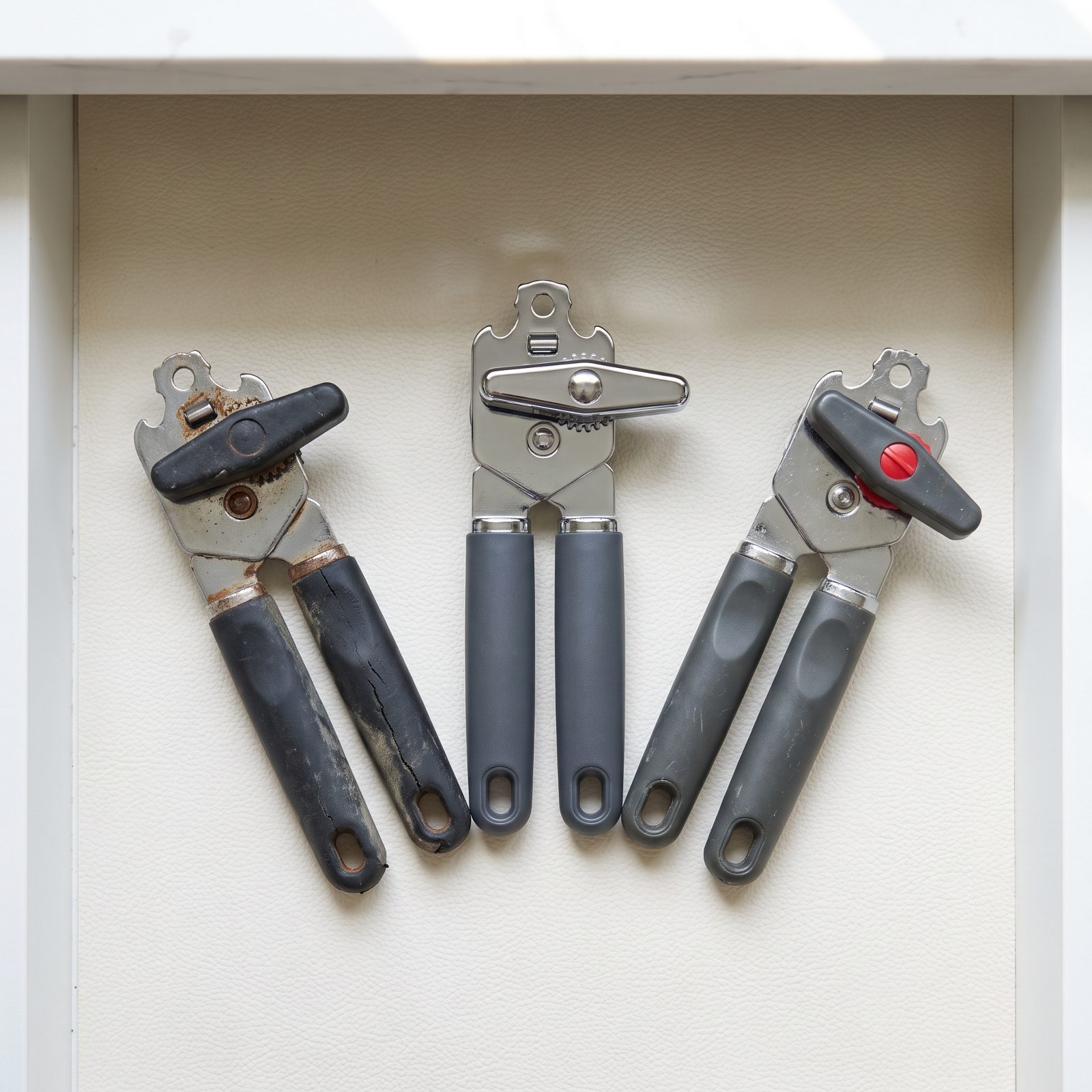
Three can openers. Three. You bought a new one each time you couldn’t find the old one, and now here they all are, lined up like evidence. Not of a hoarding problem. Of years spent on autopilot, where you kept acquiring instead of pausing to notice what you already had.
That’s the quiet shock of a deep clean. The duplicates reveal how long you’ve been operating without really looking, buying the same solution over and over because stopping to check felt like too much effort.
The middle of life delivers the same gut-punch. You look up and realize how much of the last decade ran on default settings, how many days you repeated without choosing them. The can openers are funny. The feeling underneath them is not.
8. You Organize Receipts Instead of Making the Bigger Decision
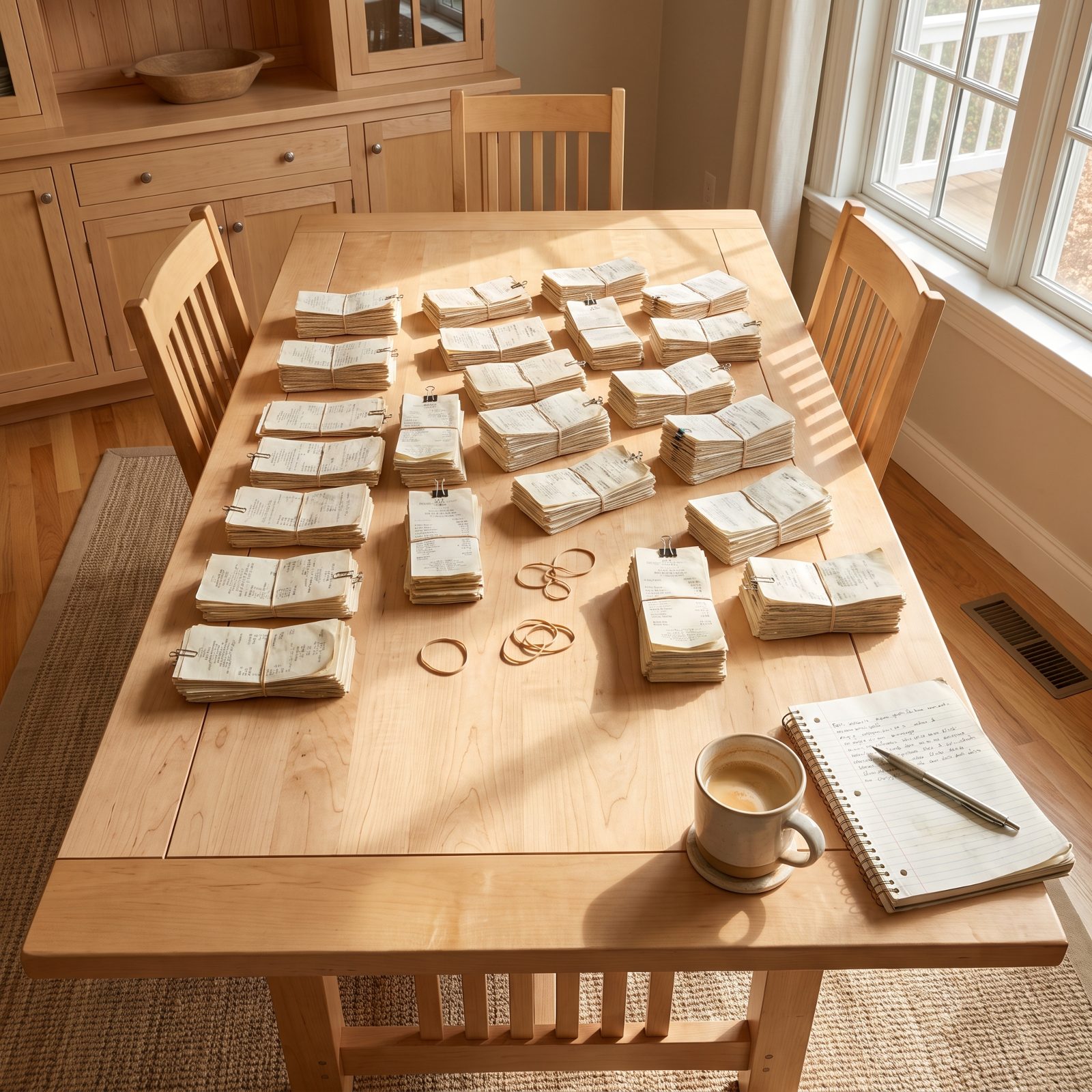
Suddenly, alphabetizing seven years of receipts feels urgent. So does relabeling the spice jars and color-coding the garage. Meanwhile the actual question — the job, the move, the marriage, the whole direction of things — sits untouched in the next room.
Welcome to productive procrastination, the art of doing something genuinely useful to dodge the thing that actually matters. Small, controllable tasks hand you a feeling of order. The big decision hands you nothing but uncertainty, so you polish the receipts instead.
Midlife restlessness loves this move. When the real choice is too big and too scary, control gets displaced onto whatever’s within reach. A tidy drawer is proof you’re capable and in charge, even as the larger life sits exactly where it was. It feels like progress. It’s often just hiding, with a label maker.
7. You Blame the Clutter for a Much Bigger Restlessness

You told yourself that once the house was clear, you’d feel settled. Lighter. Like yourself again. So you cleared it. The surfaces gleam, the boxes are stacked by the door, and the restlessness is still there, standing in the middle of all that open space, waiting.
Here’s the reckoning at the bottom of the whole project: the clutter was never really the problem. It was the thing you could point at instead of the feeling you couldn’t name. Clean the house and the house is clean. The deeper itch doesn’t care about floor space.
And that’s the real link between a deep clean and the middle of life. Both start as a problem you can see and end at a problem you can’t. The stuff was easier to confront. But when the room is empty and the feeling stays, you finally have to ask what you were actually trying to clear out. That question doesn’t fit in a donation box.
6. You Suddenly Want Half the House Gone by Midnight

It arrives like a fever. One minute you’re putting away laundry, and the next you’ve got three trash bags open while you yank clothes off hangers you haven’t touched in years. The whole house suddenly feels like a costume you need to step out of right now, before morning, before you lose your nerve.
It’s the same impulse that sends a perfectly reasonable person out to buy a motorcycle or quit a steady job at fifty-two. Researchers call it an identity disruption, a moment when the story you’ve been telling yourself about who you are stops fitting. Clearing the house becomes a way of clearing the self. The stuff stands in for decisions a younger version of you made, so purging it feels like reclaiming authorship.
The timing matters too. Daylight brings logic and logic brings hesitation, but in the dark, with the house quiet, you’re negotiating only with yourself.
5. New Storage Bins Look Suspiciously Like a Fresh Start
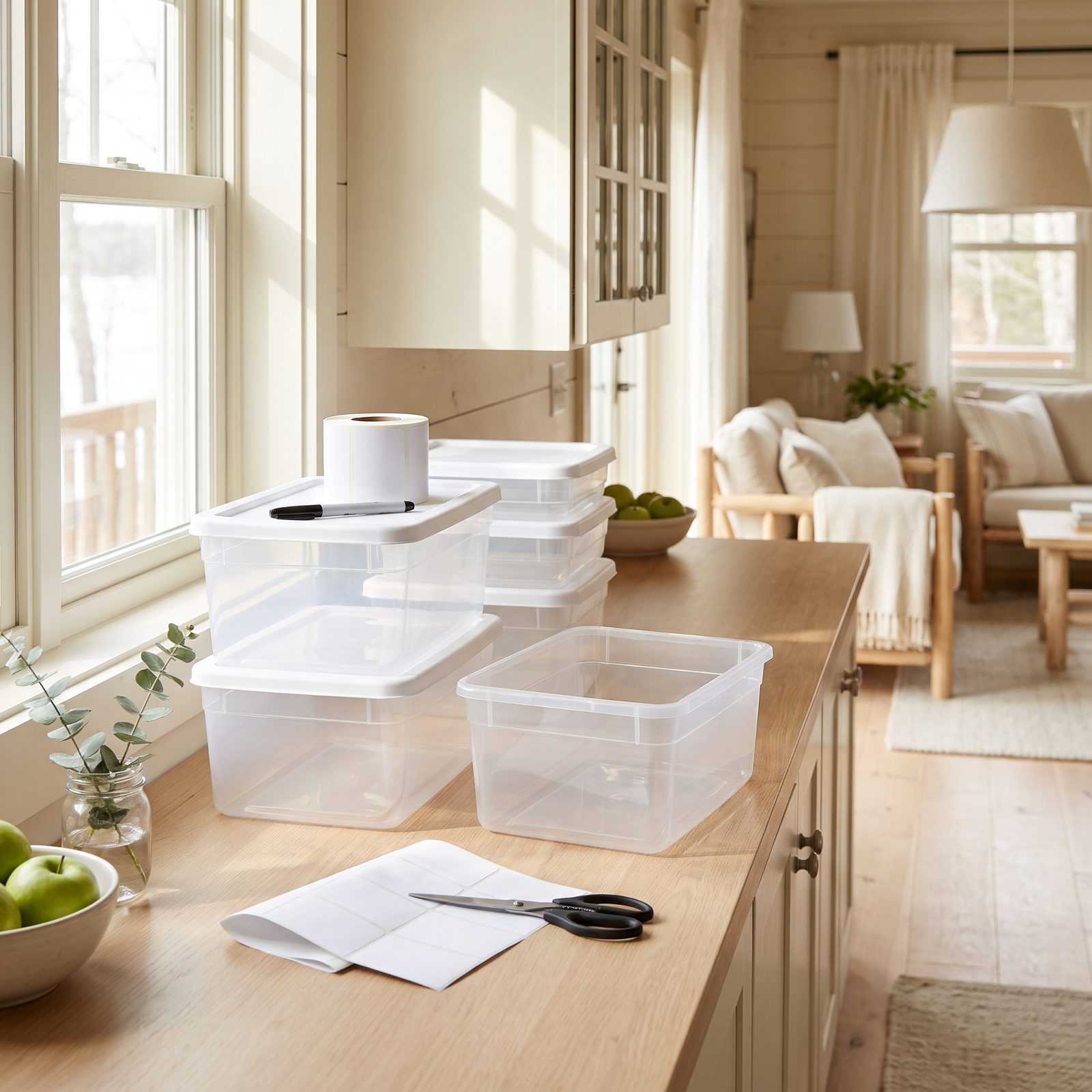
There’s a specific high in the storage aisle. You stand there holding a sleeve of matching bins and feel, briefly, like a more organized person already exists somewhere inside you and just needs the right containers to come out. You haven’t sorted a single thing yet. But the bins promise you will.
Set it next to the midlife shopping spree of reinvention: the gym membership, the language app, the kayak gathering cobwebs in the garage. You’re not buying the object. You’re buying the version of yourself who uses it well.
The bin is cheaper than therapy and feels, for about twenty minutes, like it might do the same job.
Psychologists have a name for part of this: the “fresh start effect,” the way a clean slate (a new year, a new container, a new label system) convinces us our future behavior will beat our past. The bin is a blank page, and blank pages intoxicate precisely because nothing has gone wrong on them yet.
4. The Donation Bag Waits in the Hallway for Three Weeks
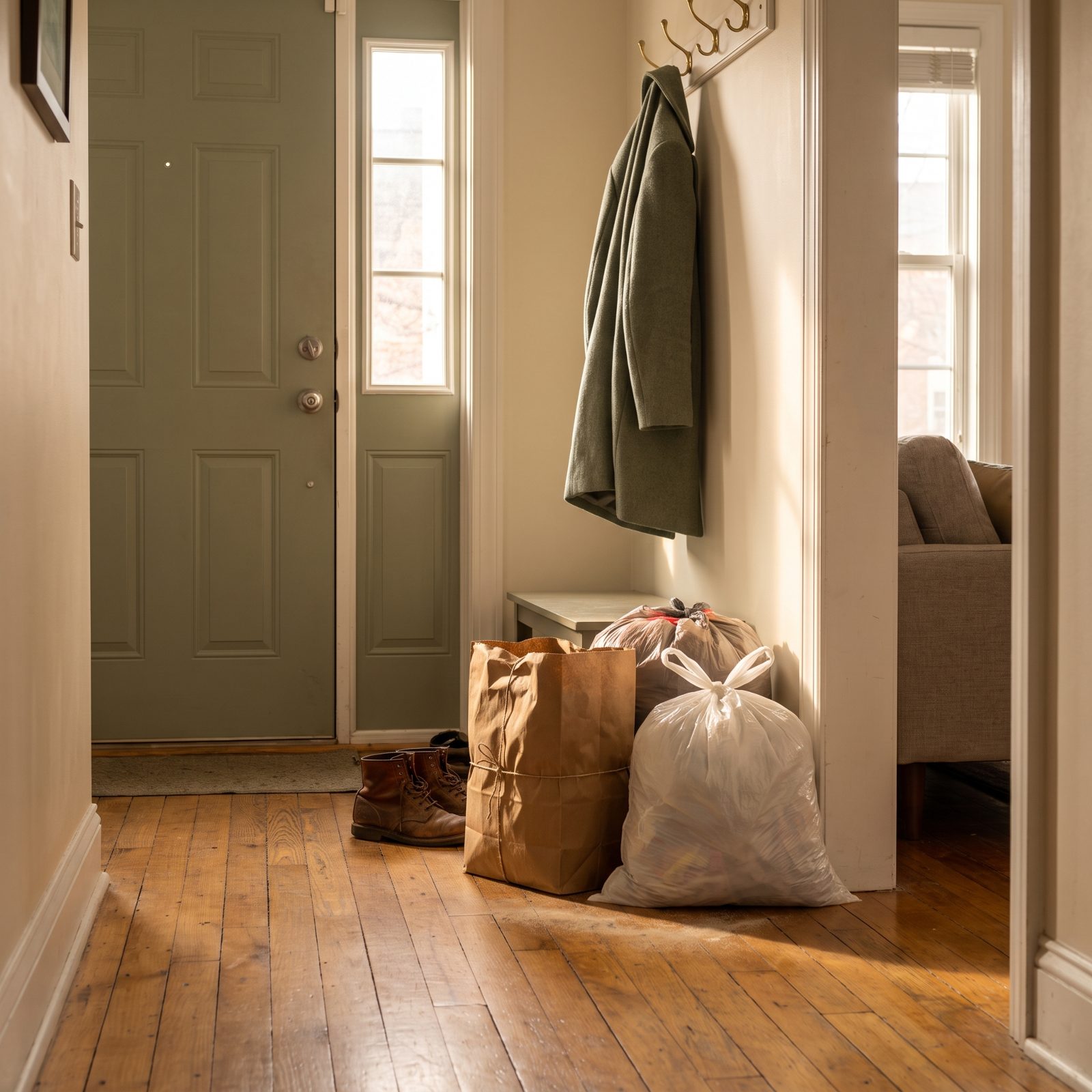
You did the hard part. You decided. The sweaters are bagged, the top knotted, the whole thing parked by the door like a packed suitcase. And there it sits. One week. Two. You step around it every single morning on your way out and somehow never put it in the car.
This is the exact shape of the big midlife decision that gets made and then stalls out — the resignation letter written but not sent, the conversation rehearsed but not had. Deciding is not leaving. And leaving is the part that costs something.
What’s happening at the door is loss aversion doing its quiet work. The bag is out of your closet but not gone either, which means you could still change your mind. Keeping it in sight is a hedge. The moment it leaves the house those things stop being yours, and some stubborn part of the brain treats that small finality as a loss worth delaying.
3. You Stop Saving the Good Towels for Imaginary Guests

The good towels. You know the ones. Thick, matching, bought for a bathroom you imagined having, saved for guests who come twice a year. Then one ordinary Tuesday you reach past the thin scratchy ones and take a good towel for yourself. No occasion. Just you.
It sounds small. It isn’t. This is the same reckoning that ambushes you in the second half of life, the one that asks what, exactly, you’ve been waiting for. The nice china, the perfume, the trip — we save our best things for a future that keeps not arriving, as if the present isn’t important enough to deserve them.
There’s a name for the mindset you’re breaking: delayed gratification curdled into permanent denial. At some point the math changes. The runway ahead feels shorter than the one behind, and “someday” starts to look like a word that quietly means “never.” Using the good towel is a tiny declaration that today counts, that you are the honored guest in your own house.
Honestly? We resisted this one for years. Kept candles we never lit. The good towel broke the spell.
2. You Rearrange the Sofa to Prove Change Is Still Possible

Nothing was wrong with where the sofa sat. You just woke up and needed it somewhere else. By noon you’re sweaty, the rug is rolled up, and there’s a pale ghost-rectangle on the wall where a picture hung for nine years. You stand back, breathing hard, oddly victorious.
This is reinvention on the cheap, and it works every time. You can’t rewrite a career in an afternoon, but you can shove the furniture around, and the brain reads a changed room as proof you’re still a person who can make things different.
It scratches the same itch as the dramatic haircut or the rental car with the top down. Call it an agency fix. When life feels bolted in place, controlling your immediate surroundings hands back the feeling of being the one steering. The new layout isn’t really about where you sit. It’s about having done something.
1. The Newly Empty Shelf Feels Thrilling and Slightly Terrifying

You finish clearing a shelf, step back, and there it is: nothing. Bare wood. A clean, honest emptiness where clutter used to live. For one second it’s a rush. Then a small cold thought creeps in — now what goes there? What if the answer is nothing? What if it just stays empty?
Empty space is the open question of the second half of life. The kids move out and the house goes quiet. A role ends and the calendar clears. We spend decades cramming every gap full, so clearing one feels less like freedom and more like a dare.
Nobody warns you about this part of decluttering. The hard bit was never the letting go. It’s the space afterward, which demands you decide who you are now instead of who you were when you first filled it.
That mix of thrill and dread is exactly right. It means the shelf is a possibility again instead of a storage default. Leave it empty a while. You don’t owe the space an answer today.