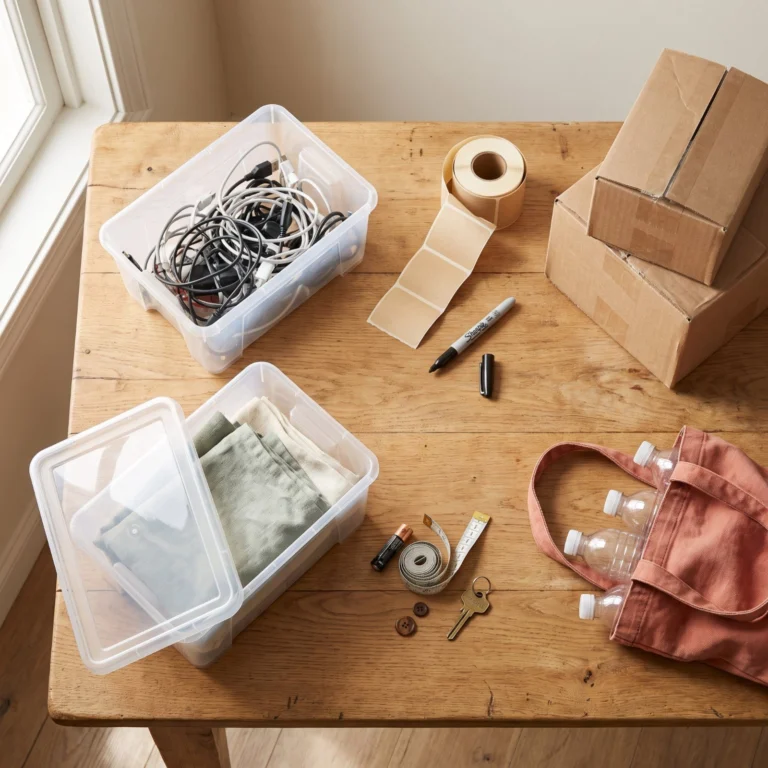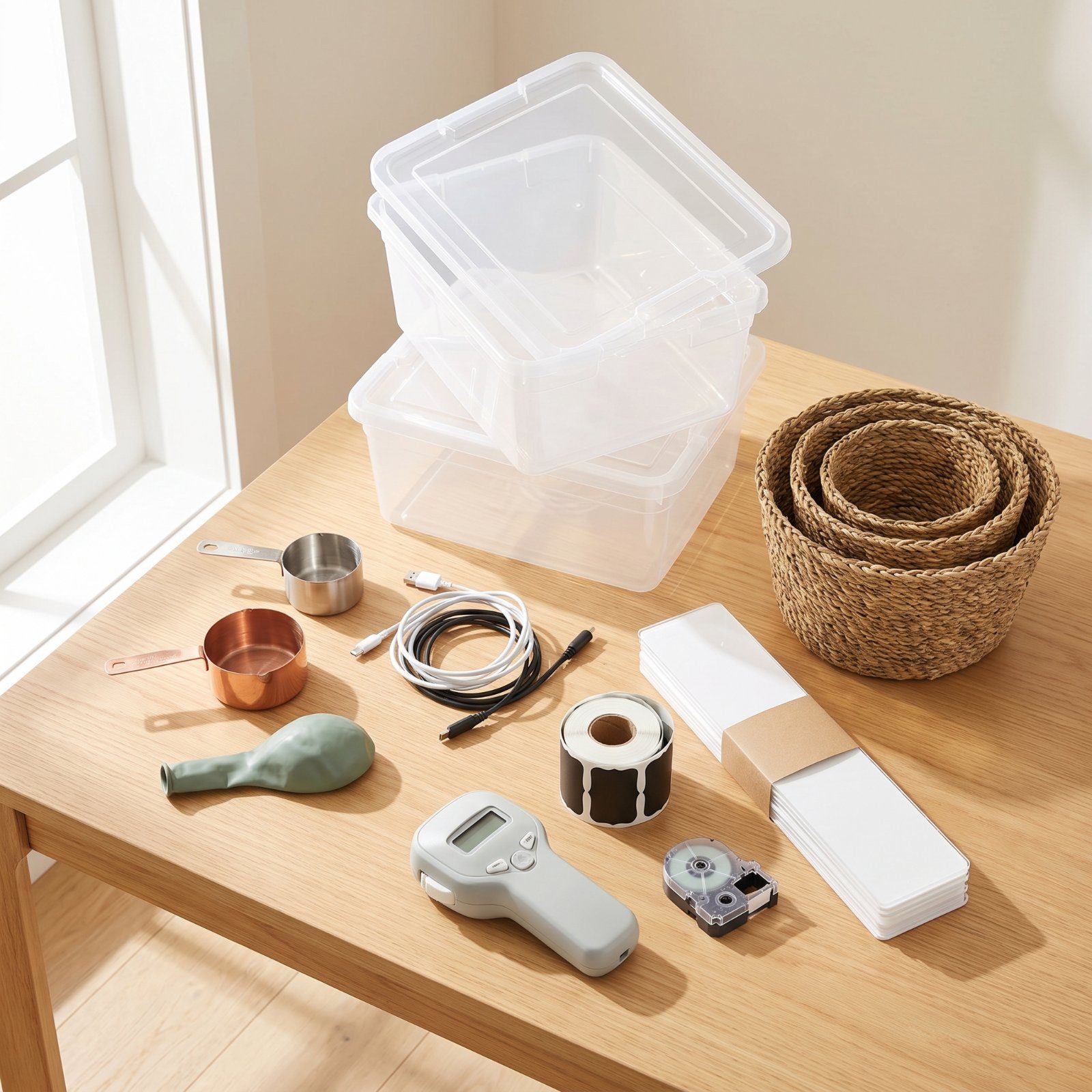
There’s a stack of empty bins in the garage right now, bought during three different reorganizing moods, and not one of them is full. You know the feeling. The cart fills with clear totes and woven baskets and little drawer dividers, and for one glorious hour you believe this round fixes everything. It usually doesn’t. Nobody admits the quiet part: the wiring that drags us back to the container aisle is the same wiring that drags people back to the job boards. Fresh-start optimism, a peek at what everyone else has, the small wish to feel in charge of something. We’ve lined up the parallels below, and odds are good you’ll spot at least one from your own closet, your own career, or both.
Please note that some of the images in this article were created with the assistance of AI.
14. Every New Bin Promises This Time Will Be Different
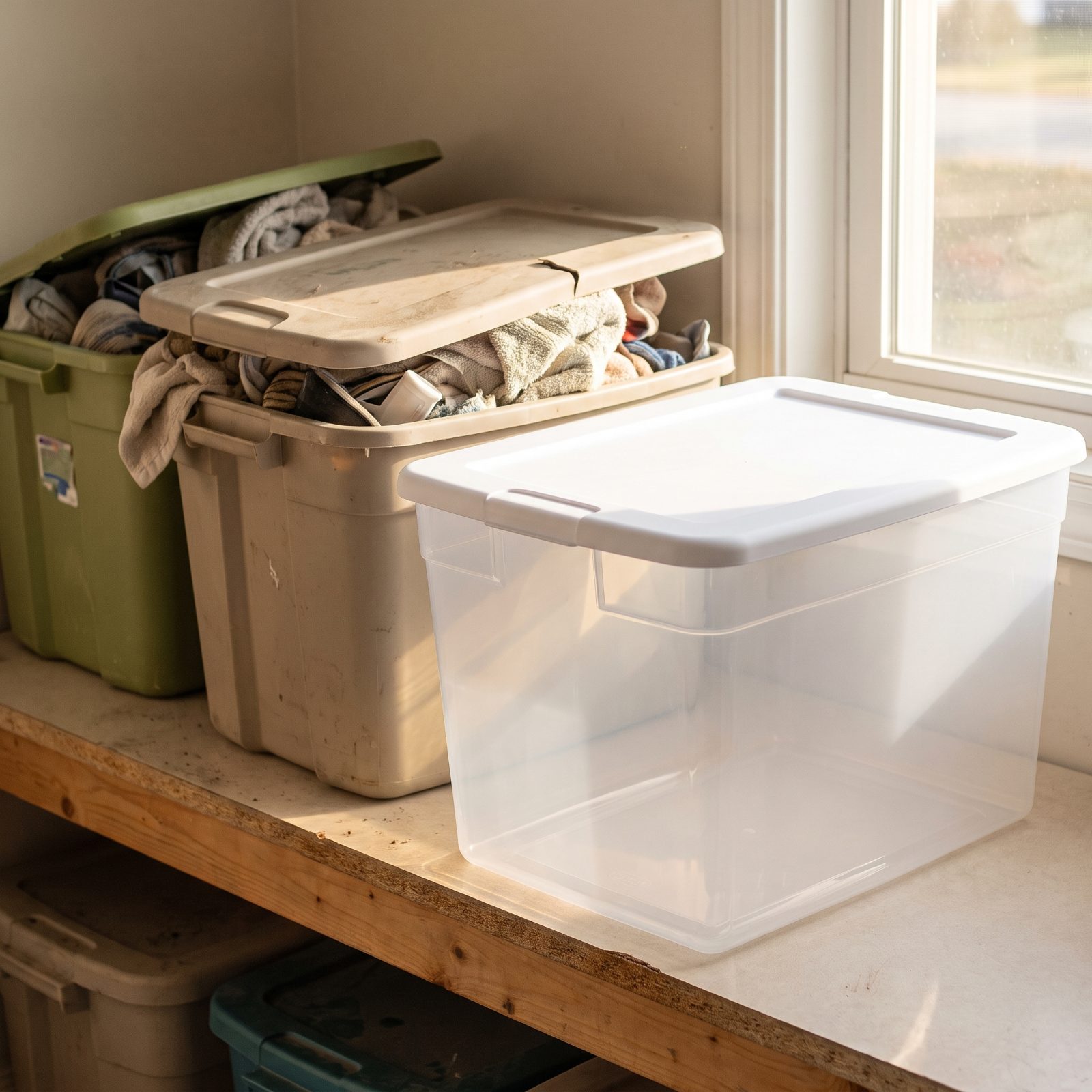
The new bin on the shelf looks like a promise — smooth lid, no cracks, no history — and you can already picture it holding the holiday wrapping in neat, labeled rows. Never mind the three warped bins behind it that made the same vow two years ago.
People do this with jobs too. The next one will have the better manager, the saner hours, the respect the last one withheld. Psychologists call it the fresh-start effect: a clean beginning feels like it comes with a clean self attached. A new container, a new title, same tendencies strolling in the door.
We’ve bought the bin. We’ve also talked ourselves into believing a different building would make us different workers. Neither claim survives contact with reality for long.
13. You Buy Clear Totes Instead of Emptying the Closet
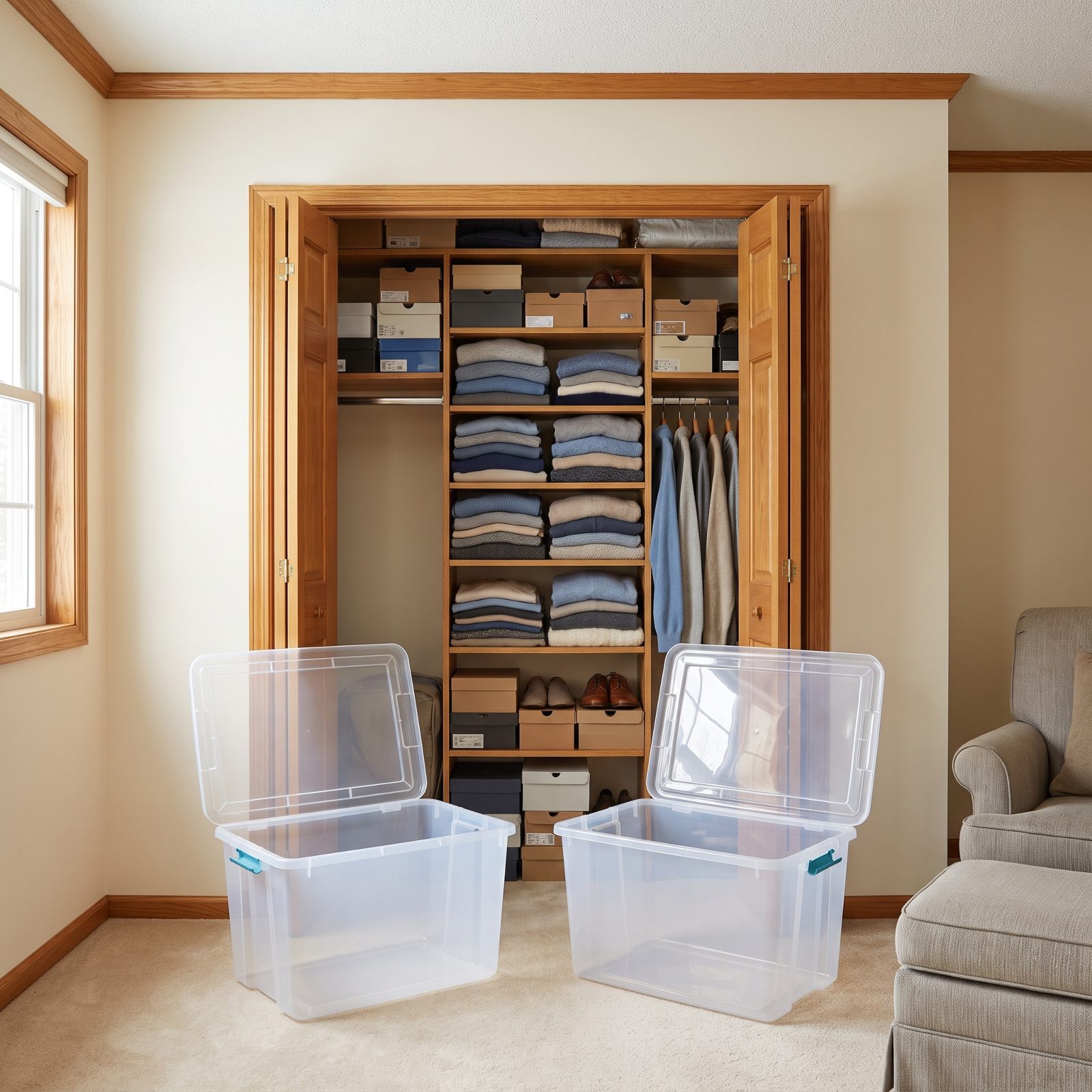
Watch the move: the closet is bursting, so you buy containers to hold the overflow. Not to get rid of anything. To relocate it into something tidier. The sweaters you haven’t worn since the last administration now live in a clear tote instead of a sagging pile, and you call that progress.
Changing jobs can run the same con. Instead of dealing with the thing that actually drains you — the way you overcommit, the boundaries you never set — you pack it all up and haul it to a new office. New desk, same overflow.
Buying storage for stuff you should donate is just organized avoidance wearing a nicer outfit.
Avoidance is sneaky because it feels productive. You spent money, you made an effort, the room looks better for an afternoon. But the volume never dropped. You just handed it a transparent home.
12. The Same Junk Drawer Follows You Into Every System
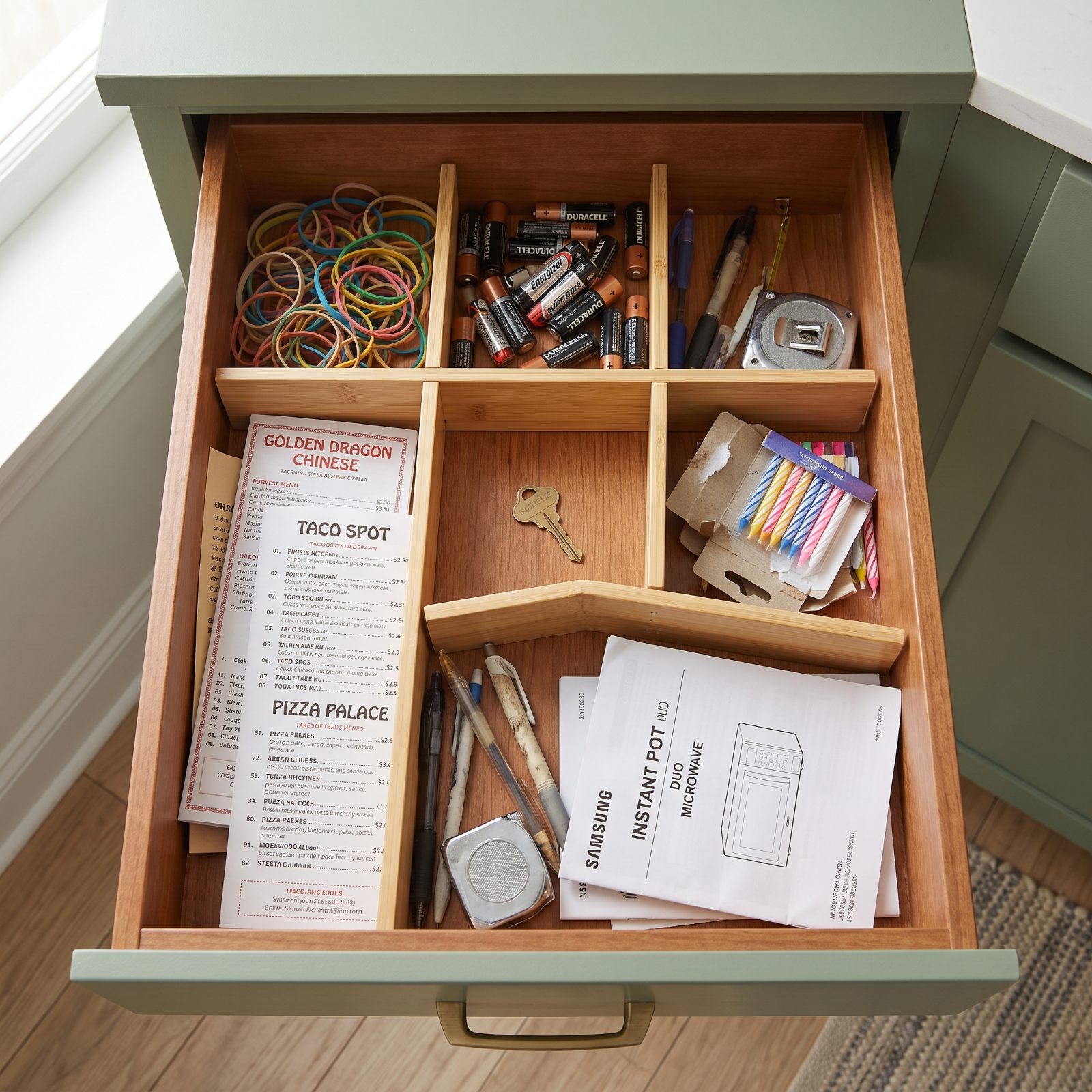
You can give the junk drawer bamboo dividers, little labeled trays, a whole new drawer entirely. Within a month it rebuilds itself from the loose batteries, the mystery key, and the pens that quit working during a previous presidency. The drawer isn’t the problem. It’s a holding pen for whatever has no home, and that category never empties.
At work it shows up as the same recurring frustration that trails you from company to company. New team, new boss, and somehow you’re back to feeling unheard in meetings by week three. The common factor is the one you carry in your pocket.
Plenty of us have reorganized the same drawer four times and sworn each round was the last.
11. You Fall for the Bin Before Measuring the Shelf

The basket was love at first sight — woven, structured, exactly the shade of natural you’d been picturing. You carried it home before you measured a single shelf, and now it sits on the floor, a full inch too tall to slide into the cabinet it was bought for.
This is how plenty of job changes go wrong. The role looks right, the title sounds right, the vibe in the interview is warm. Nobody measured the actual fit: the commute, the hours, the way your strengths line up with the work. The halo effect does the rest. One appealing feature convinces us the whole thing is appealing.
Attraction is not fit. The basket teaches that lesson for twenty dollars. Some people learn it from a job and it costs them two years.
10. Matching Baskets Let You Shop for a Better Self

A set of matching baskets isn’t really about storage. It’s about the person you’d be if the long wooden shelf above your sofa looked like that — the one who meal-preps, who always has the right-size container, who never loses the lids. You’re not buying bins. You’re buying a cleaner version of yourself.
Job changes carry the same quiet shopping-for-identity pull. A new title isn’t just a title. It’s who you get to be at the next reunion, the next dinner party, when someone asks what you do. The role becomes a costume for a self you want to try on.
9. Pinterest Pantries Make Your Own Shelves Feel Broken

Your pantry worked fine until you saw the ones online. The decanted cereal in glass canisters, the rainbow of labeled bins, the lazy Susan with nothing out of place. Suddenly your perfectly functional shelves look like evidence of some personal failing. Nothing changed except what you held them up against.
Social comparison runs the job-dissatisfaction engine too. Your work was fine until the group chat filled with someone’s promotion, someone’s remote package, someone’s four-day week. Your actual day didn’t get worse. Your reference point did.
The curated pantry, like the curated career update, is a highlight reel. You’re measuring your backstage against someone’s front stage.
8. The Shopping High Arrives Before Any Organizing Happens

The best part happens in the store. Cart filling, plans forming, that warm rush of imagining the finished closet. You get home, set the bags down, and the enthusiasm has already peaked. The bins sit unopened for a week. The dopamine was in the buying, not the doing.
Accepting a job offer delivers the same spike. The elation lives in the email, the handshake, the telling-people phase. Then the actual work starts and the glow is gone, because the brain rewards anticipation more than arrival. We adapt to the new thing fast and start scanning for the next hit.
Hedonic adaptation is the technical name. The practical name is wondering why the new bins are still in the bag.
7. One Overflowing Cabinet Triggers a Whole New System
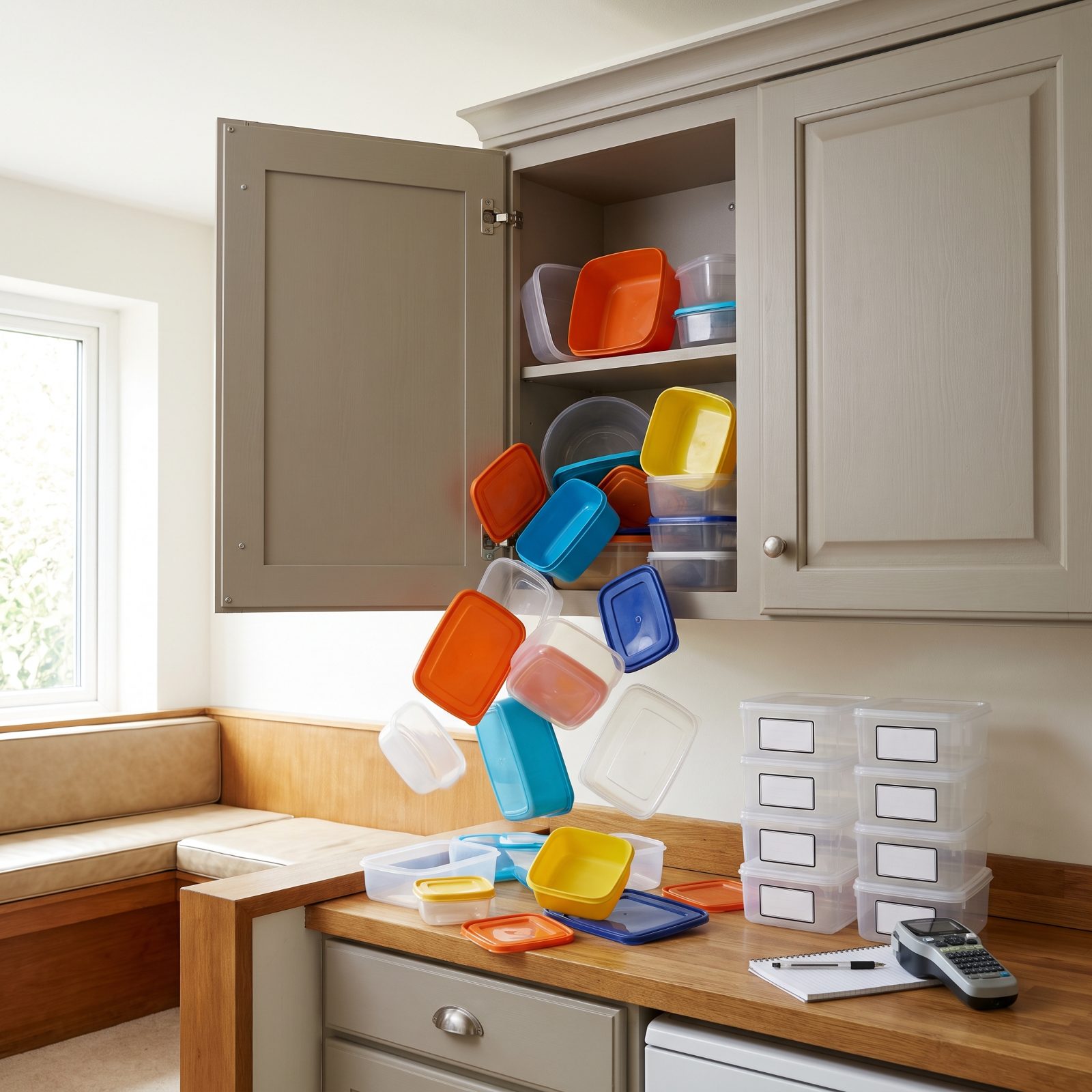
One cabinet crammed with colorful lidded containers avalanches onto the counter, and within the hour you’re mapping a total overhaul of the entire kitchen. New plan, new containers, maybe a whole zone approach. One bad moment escalated into a project three times the size of the actual problem.
At work, a single rough quarter or one frustrating review can trigger the same leap: not a conversation, not a small fix, but a full exit plan. A localized mess feels like proof the whole structure is broken.
Most of the time the fix is small and boring. Recycle the extras, keep the rest. But small and boring doesn’t scratch the itch to start over.
6. You Blame the Basket When the System Falls Apart

Three weeks in, the system’s a mess again, and the verdict lands fast: the baskets are wrong. Too floppy, too small, the wrong shape. So you shop for better ones. Couldn’t possibly be that you simply have more stuff than any basket could hold, or that you never maintained it. The container takes the fall.
This is the external-attribution reflex, and it loves a job exit. The manager was difficult, the culture was toxic, the pay was unfair. Sometimes all true. But pinning everything on the situation protects us from the harder question of our own part in it.
If every system fails and every job sours, the common thread deserves a longer look than the basket does.
It’s not always you. But the basket rarely did it alone.
5. Lidded Boxes Make Clutter Look Solved
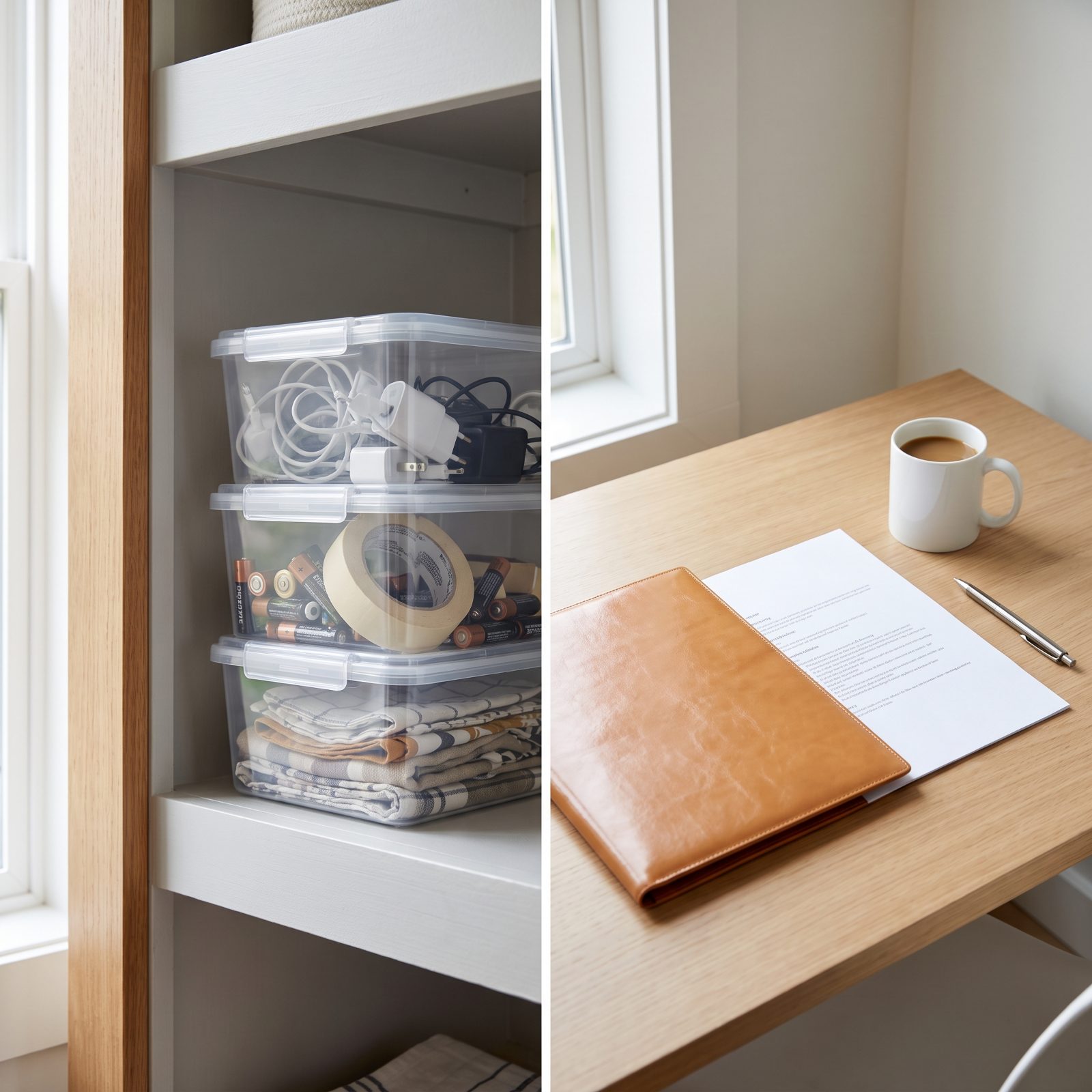
You snap the lid shut and the room exhales. The chargers, the batteries, the sad half-roll of tape are all still in there, tangled exactly as before — but now they’re boxed, stacked and contained, so your brain files the problem under done. A lidded box reads as handled. That’s the trick, and it gets us every single time.
Changing jobs runs on the same sleight of hand. The old frustrations get packed into a resume, lid snapped down, and the fresh title reads as a fresh start. Nothing inside actually changed. You just stopped having to look at it.
Psychologists call this out of sight, out of mind, and it’s less a flaw than a shortcut your brain takes to spare itself the work. We judge order by what’s visible, so a tidy surface lets us believe the mess underneath got sorted when really it just moved somewhere we don’t have to confront it.
4. Five-Star Reviews Beat What Your Cabinet Actually Needs

Thousands of people gave it five stars, and that number does something to us. It overrides the far more boring question of whether the thing fits your actual cabinet — the one that’s nine inches deep and already holds a lazy Susan from 2014. You buy the acclaim and bring home an object that’s wonderful for everyone except you.
Job offers show up wearing the same glow. A famous name, a title people respect, a company everyone nods at when you mention it. The reputation does the convincing. Nobody checks whether the role suits the life they’re actually living.
Social proof tells you a thing is good. It cannot tell you a thing is good for you.
That’s the gap we keep falling into. Reviews measure average satisfaction across strangers with different cabinets and different problems. Your situation is a sample size of one — and it’s the only one that matters when the box arrives and nothing fits.
3. Specialty Organizers Turn Tiny Annoyances Into Shopping Emergencies
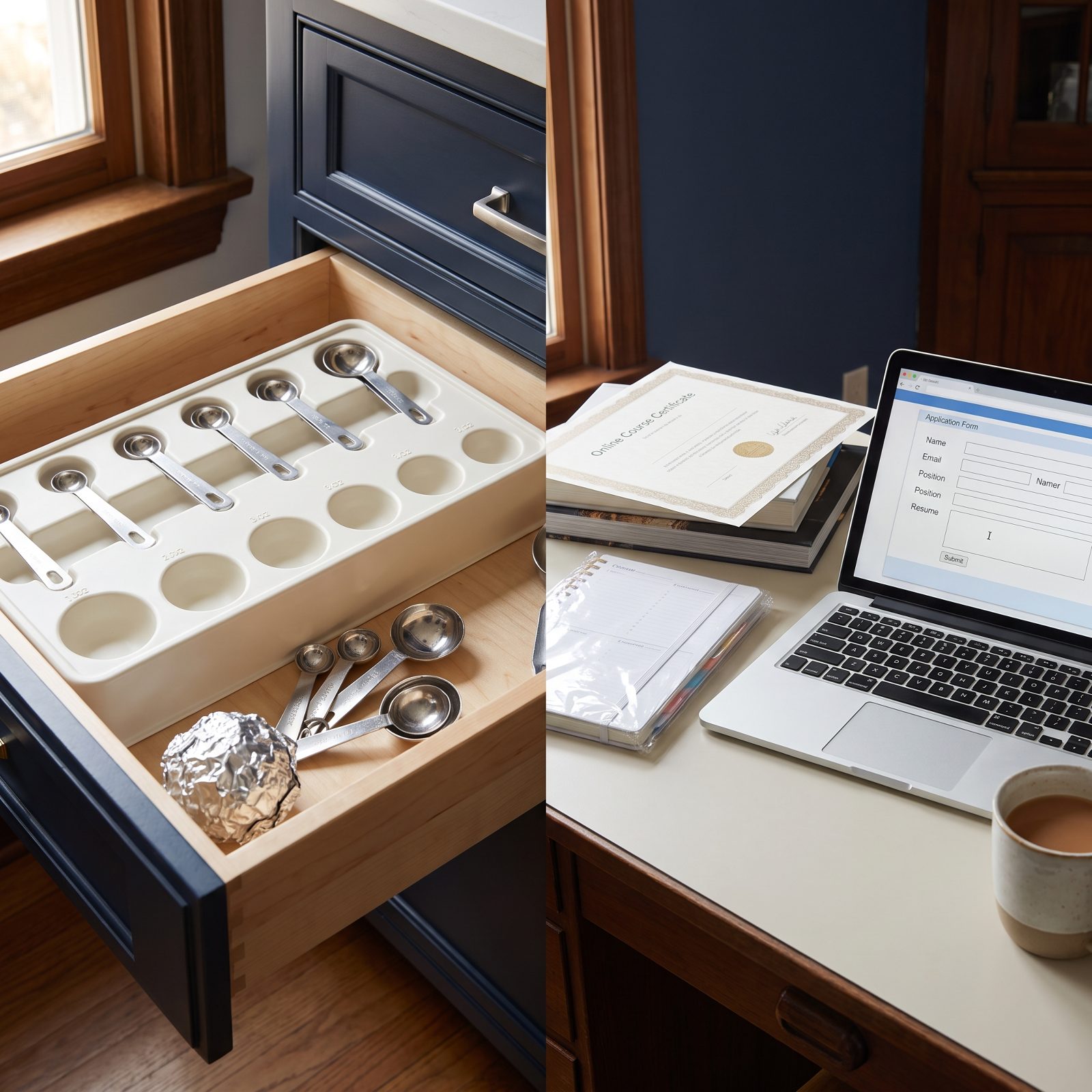
A measuring spoon rolled loose in the drawer. One spoon. By evening you’d bought a molded tray engineered to cradle each measuring spoon in its own slot. The annoyance was the size of a pea; the response was the size of a shopping cart.
Small workplace irritations detonate exactly like this. A bad meeting, a snubbed idea, one Monday that landed wrong, and suddenly you’re three browser tabs deep into a career change at eleven at night. Tiny trigger. Enormous reaction.
What’s really going on is the itch to regain control, and buying something is the fastest way to scratch it. A purchase is action you can take immediately, which makes it almost impossible to resist when a problem leaves you feeling helpless. The spoon never needed a custom-molded solution — you just needed to do something, right then, about something, and the drawer happened to be closest.
2. One Perfect Drawer Convinces You to Redo Every Closet
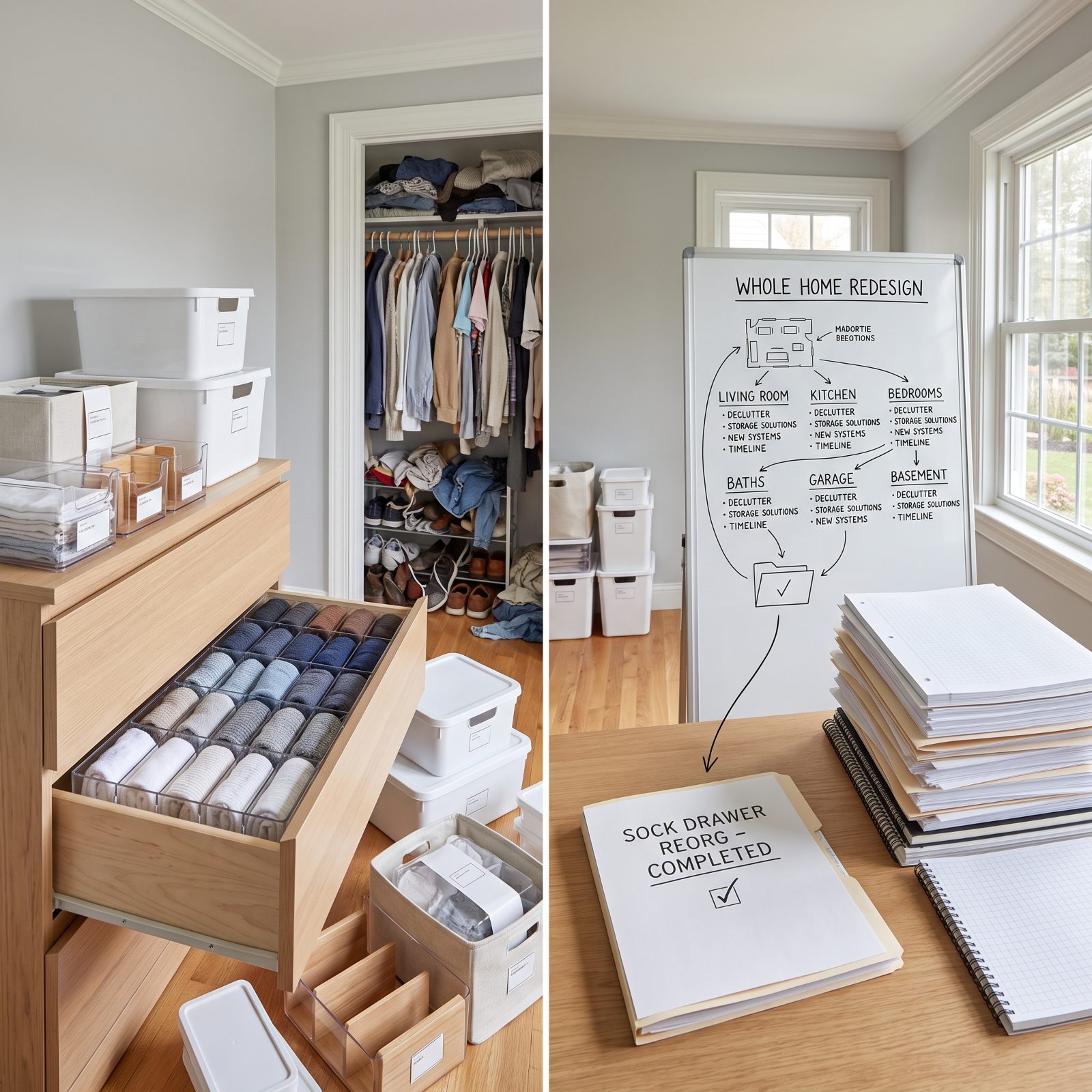
You nailed the sock drawer. Dividers in, everything upright and sorted by color, a small rectangle of total serenity in an otherwise chaotic bedroom. And now the chaos everywhere else feels unbearable by comparison. The win didn’t satisfy you — it raised the bar and made the rest look worse.
One good quarter at work does the same thing. A project lands, you feel capable and sharp, and suddenly your whole career looks like it’s underperforming your new standard. Success doesn’t content you here. It makes you restless for a bigger stage.
The engine is fresh-start optimism, that intoxicating hunch that if one thing came together, everything can. Useful in small doses, ruinous in large ones. One perfect drawer is a finished thing. Every closet is a project with no edges, bought in a burst of hope you’ll be lucky to still feel by Thursday.
1. You Grab Discontinued Bins for Problems You Might Have
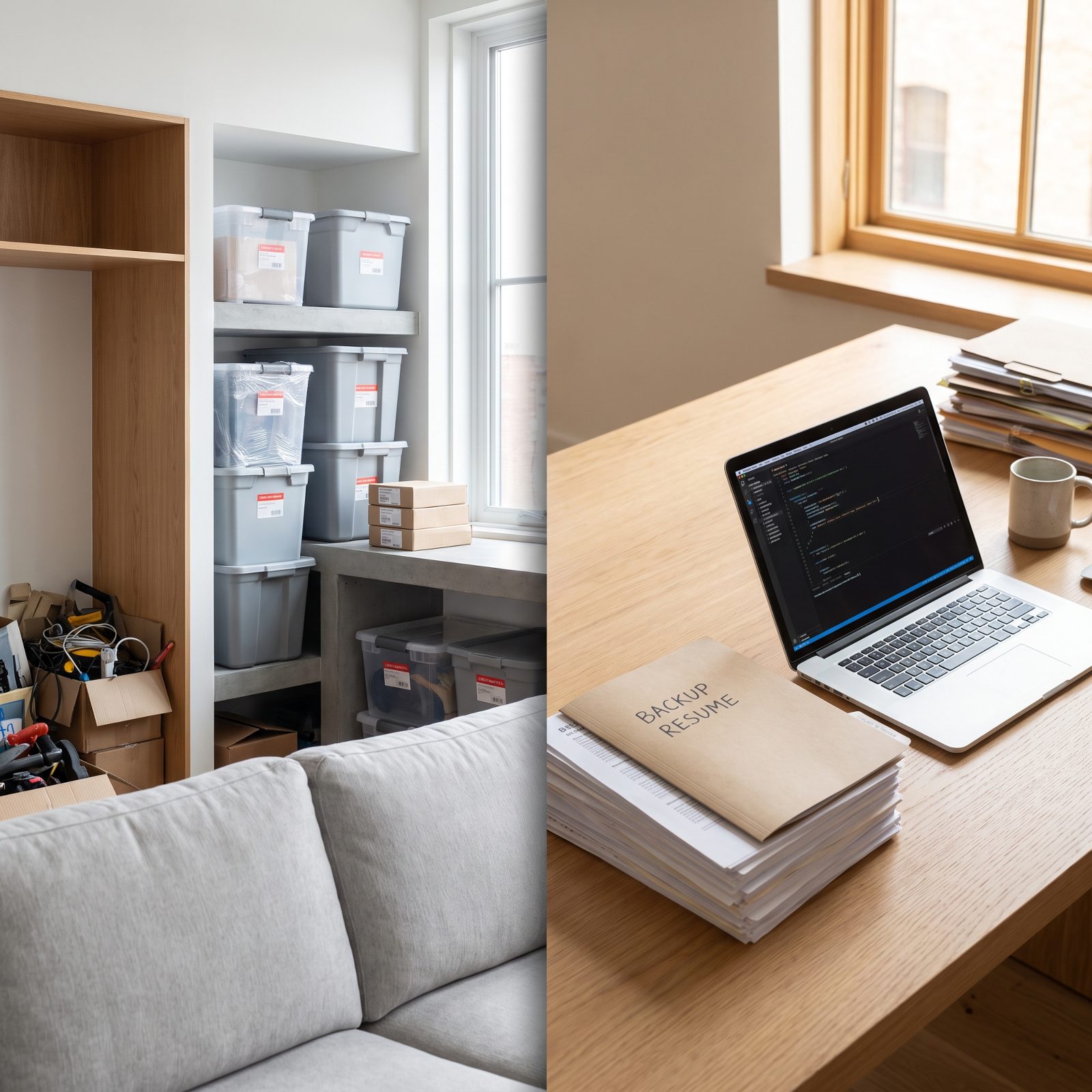
They’re discontinuing your favorite bin. You own four. You buy six more — not for a problem you have, but for the phantom future problem of wanting one someday and finding the shelf bare. The scarcity did all the work. You’re now storing storage.
People hedge their careers the same quiet way. A backup option kept warm against a layoff that hasn’t come, a side project stashed in a drawer, a resume refreshed for a door nobody’s threatening to close. Call it what it is: avoidance dressed as preparation.
Loss aversion is the culprit, and it’s a brute. We fear losing the option of something far more than we value having it, so a bin going unavailable stings worse than never owning it, and we overbuy to kill the feeling. Here’s the quiet irony. Stockpiling against an imagined future is often how we dodge the mess that’s already here, in front of us, needing attention today.