The windows are open. The radio’s on. You started with one drawer, and now it’s three in the afternoon and you’re on your knees in the hallway with a labeled bin, a checklist, and a slightly alarmed look on your face. Somewhere along the way the household reset stopped being about dirt.
Please note that some of the images in this article were created with the assistance of AI.
Spring cleaning is where the clean-your-house part and the run-your-life part shake hands. The same wiring that makes us crave order in the junk drawer wants it in the bank account, the calendar, the kids who won’t call back. Below are the behaviors you’ll recognize instantly, because you’ve done them. And the reasons they feel so good. You’ll see yourself. Bring a rag.
17. You Clean One Shelf And Suddenly Every Cabinet Is Open
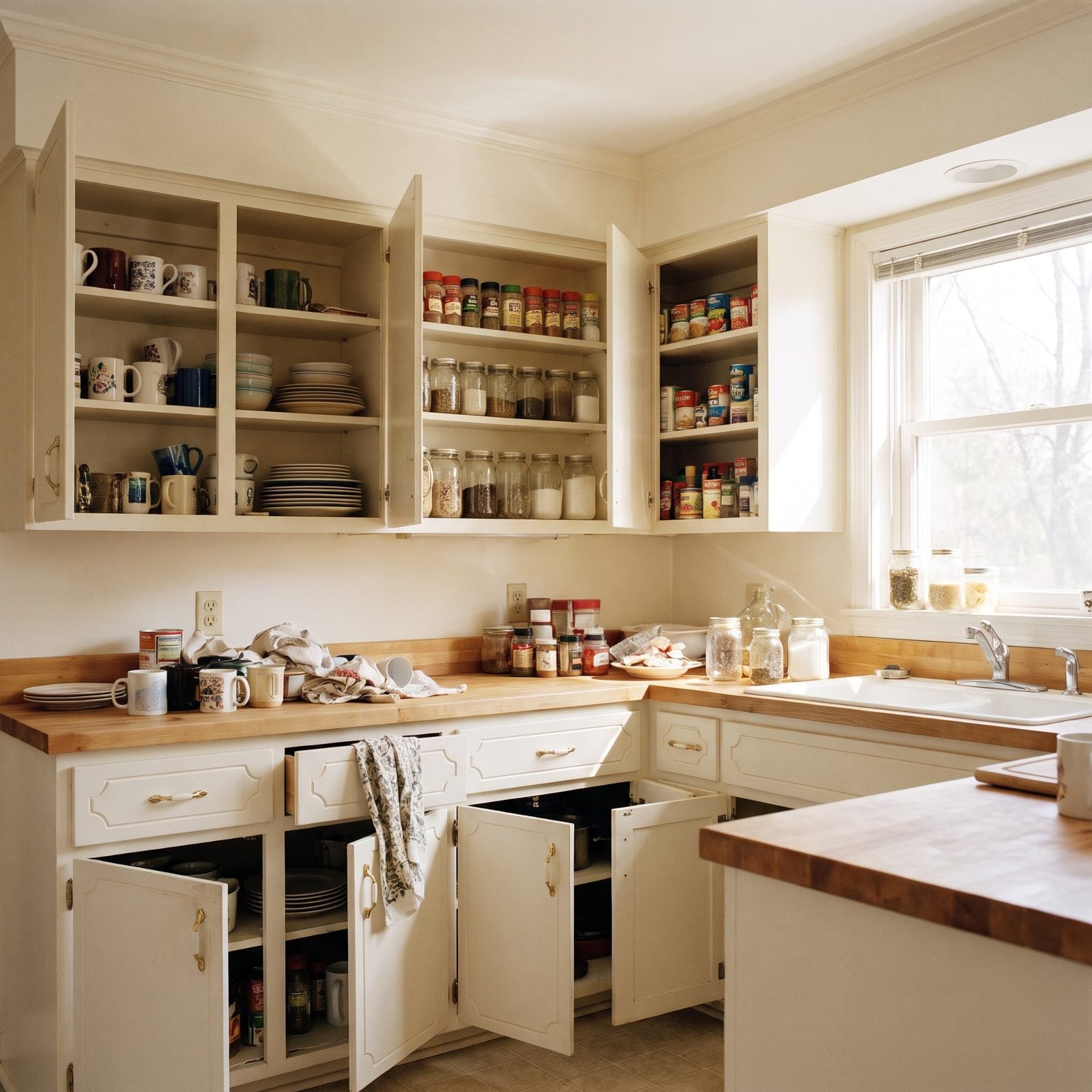
It starts honest. One shelf, the one with the sticky ring from a honey jar. You wipe it, and while you’re in there you notice the shelf above it, and then the whole cabinet is empty on the counter, and the cabinet next to it has to come out too, because now they don’t match.
Same instinct that makes you reorganize your entire finances after one article about retirement, or rethink a whole wardrobe because one pair of jeans finally gave out. It’s called the Diderot effect, named after a philosopher who got a fancy robe and ended up replacing his whole study to live up to it. One clean thing raises the standard for everything near it.
The feeling is real and a little intoxicating. The danger is the clock. You can lose an entire Saturday to a chain reaction that began with a teaspoon of honey, and I say this as someone who has eaten dinner standing up because the table was still covered in plates.
16. The Checklist Gets More Detailed Than The Actual Cleaning
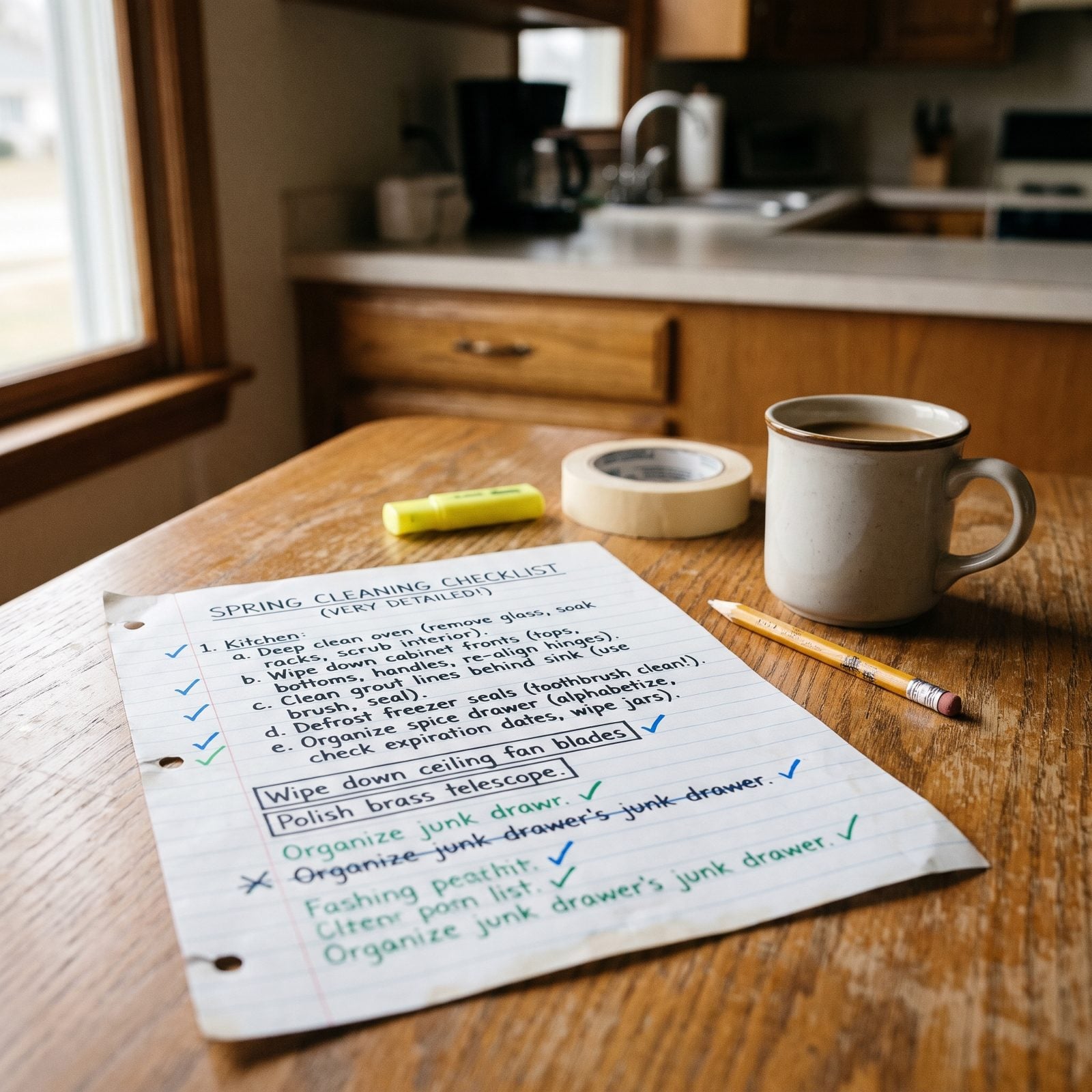
There’s a moment every spring where the list becomes the project. You sit down to plan, and forty minutes later you’ve built a document with categories, sub-categories, time estimates, and a little box to tick for each. Most of the boxes even get a tick. But the list keeps growing faster than the cleaning.
You’ve watched someone do this at work, too — the person who spends a whole meeting building the perfect spreadsheet for a task they could have finished by hand in the time it took to format the header row. Why does planning feel like progress? Because your brain rewards it the same way it rewards the actual doing, and it’s lower risk besides. A list can’t disappoint you. A grout line can.
Make the list, sure. Then put the pen down before it becomes a hobby of its own.
15. Everyone Gets Assigned A Room And A Deadline
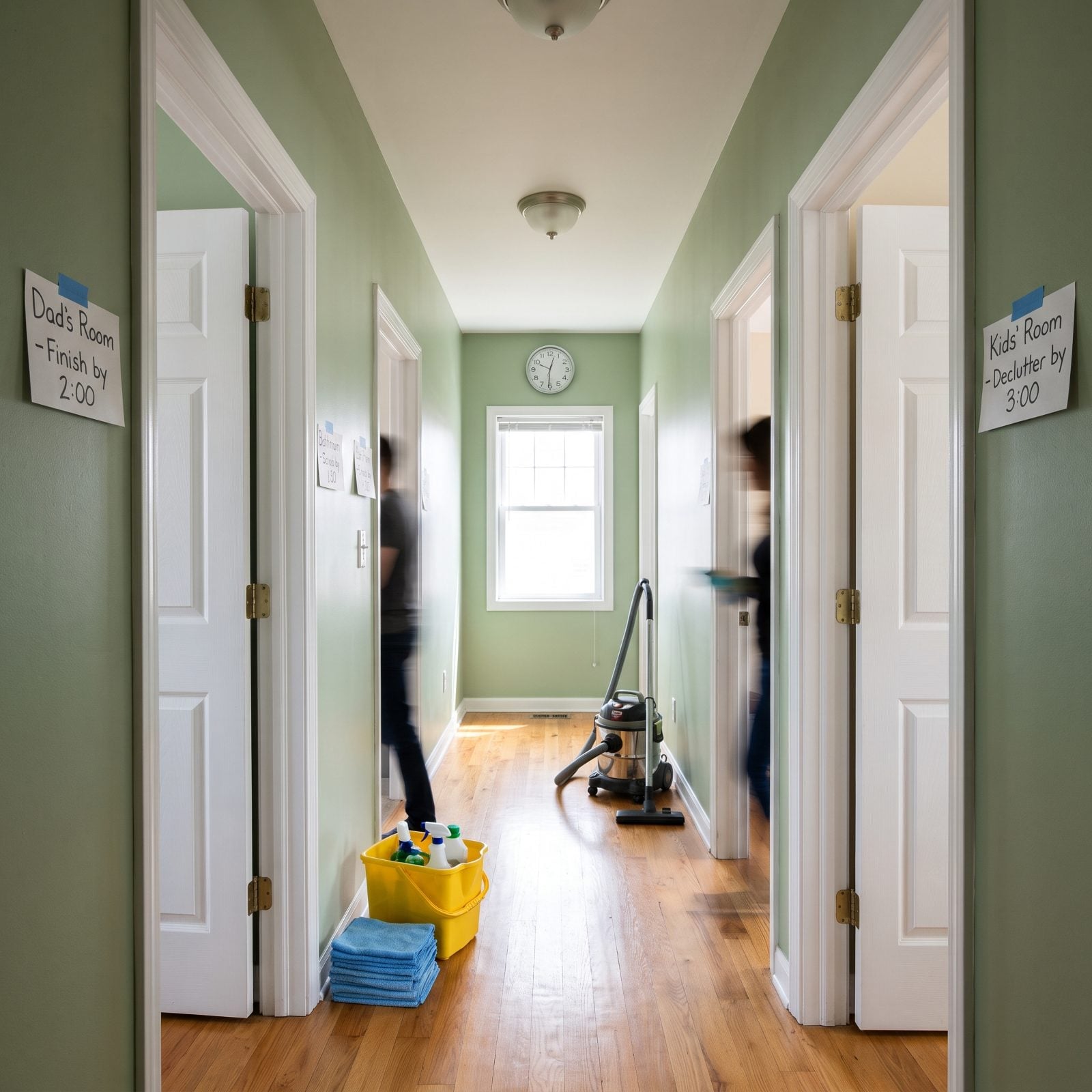
By mid-morning there’s a system. You’ve got the bathroom, someone’s got the living room, someone else got the garage because they complained the least convincingly. There are deadlines. There may be a sign on a door. The household has quietly become a small logistics operation with you at the top.
This is the same reflex that makes us project-manage a family vacation down to the hour, or hand out jobs at Thanksgiving like a shift supervisor. When we feel responsible for an outcome, we trust our own standards over anyone else’s. Delegating feels like a risk, so we delegate with rules attached.
Here’s the catch worth remembering: nobody cleans a baseboard with real commitment when they were drafted. The work gets done. The buy-in doesn’t.
14. You Schedule Window Washing Around The Weather Radar

Window washing is the one chore the weather can ruin, and you know it. So you check the forecast. Not once. You watch the radar, wait for the dry stretch, time it for the day the pollen count drops and the humidity’s low, because a smudge in direct sun is a personal affront.
Forecasting applied to housework. It’s the same impulse that makes us wait for the perfect moment to start the diet, make the call, write the thing. We tell ourselves conditions have to align. Often they’re aligned enough already.
Spring sun is merciless on glass, I’ll give you that. Every streak shows. But I’ve watched a whole clear afternoon slip past because the breeze picked up and might, possibly, blow dust onto wet panes. At some point the forecast is just a very reasonable-sounding way to not start.
13. You Create A Clean-To-Dirty Route Through The House
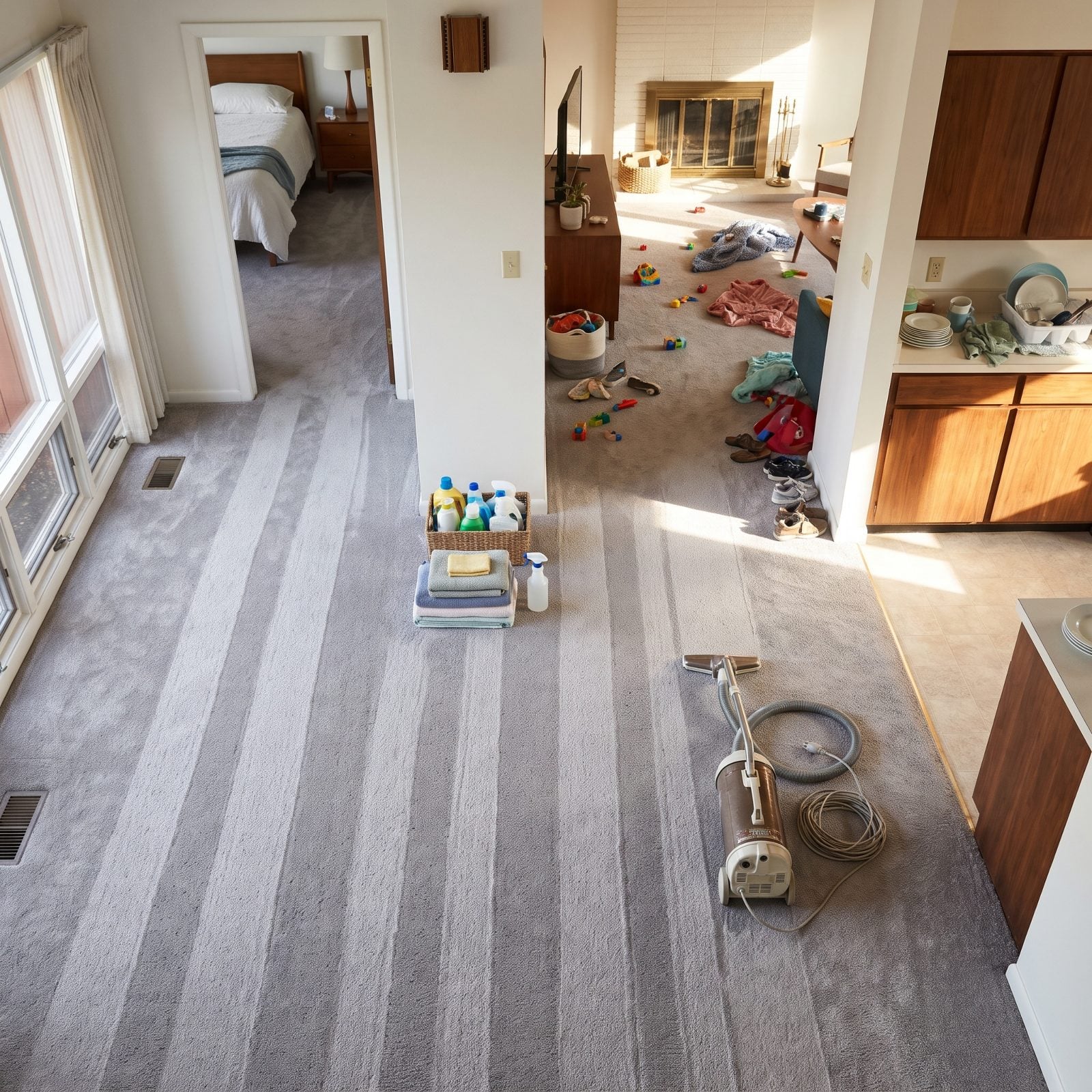
Serious cleaners have a route. You start upstairs and work down, or you start at the back and sweep toward the door, so you never track dirt across a floor you’ve already done. You will physically refuse to walk back through a clean room. There is an order, and the order is law.
Genuinely smart. It’s also the housework version of how we sequence our whole lives — finish the degree, then the job, then the house, then the kids, in that order, because a plan with a sequence feels safer than one without. Order shrinks the unknown, and the unknown is what the anxious brain hates most.
The route isn’t really about efficiency. It’s about never having to face the same mess twice.
The funny part is how attached you get. Suggest skipping a step and watch the eye twitch. Alright, go in order. I understand completely.
12. The Sofa Moves Because Dust Might Be Hiding There
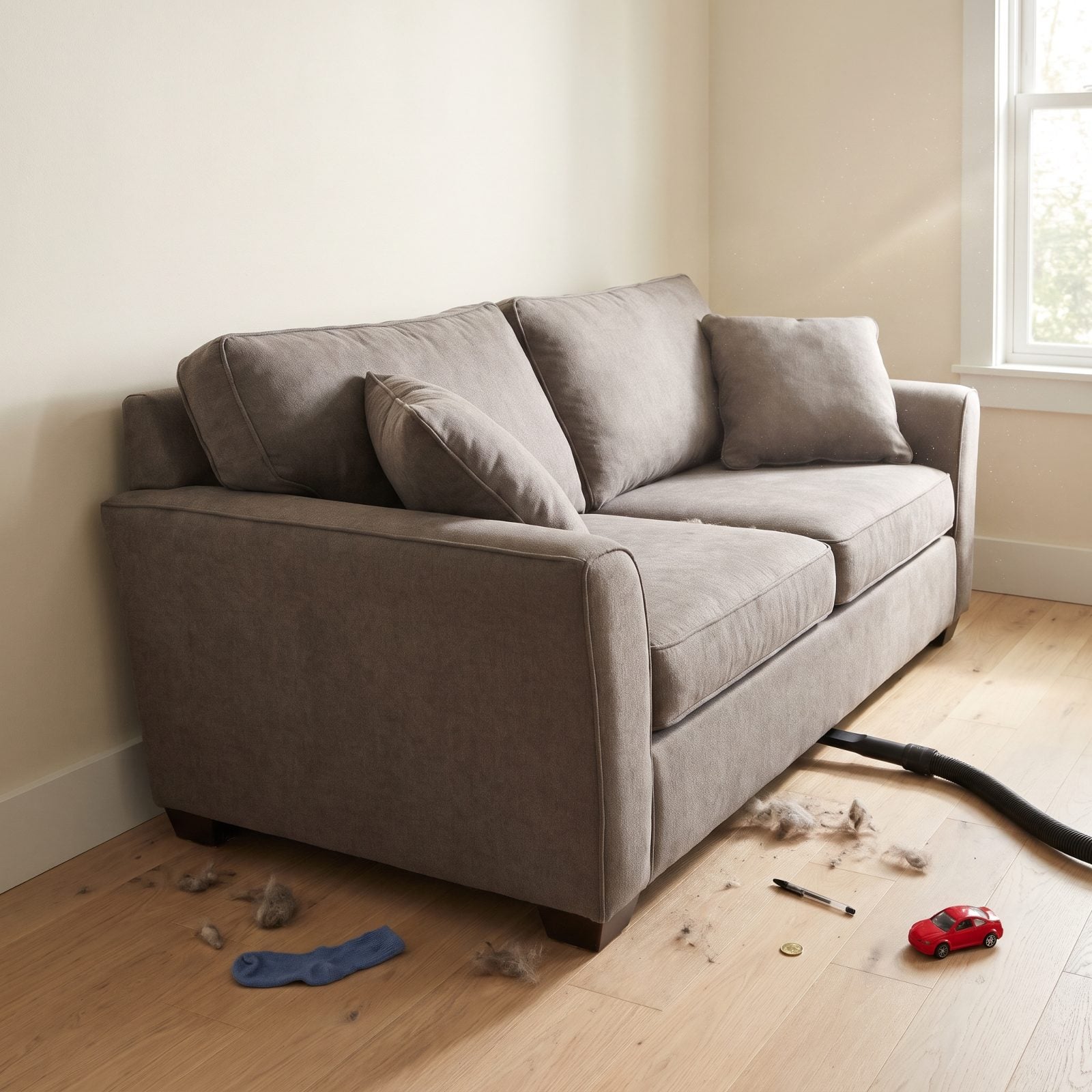
Nobody sees behind the sofa. You know nobody sees behind the sofa. You move it anyway, because the idea that dust is back there, undisturbed and smug, is more than you can stand. Out it comes, revealing a lost sock, a pen, forty cents, and a carpet of fuzz.
This is the need to clean the parts of your life no one else can inspect. The tidy inbox you alone will ever read. The under-sink cabinet. The settled affairs. We do it not for an audience but for ourselves, because a known mess left unseen still nags like a splinter you can’t quite reach.
11. You Attack Grout With A Retired Toothbrush
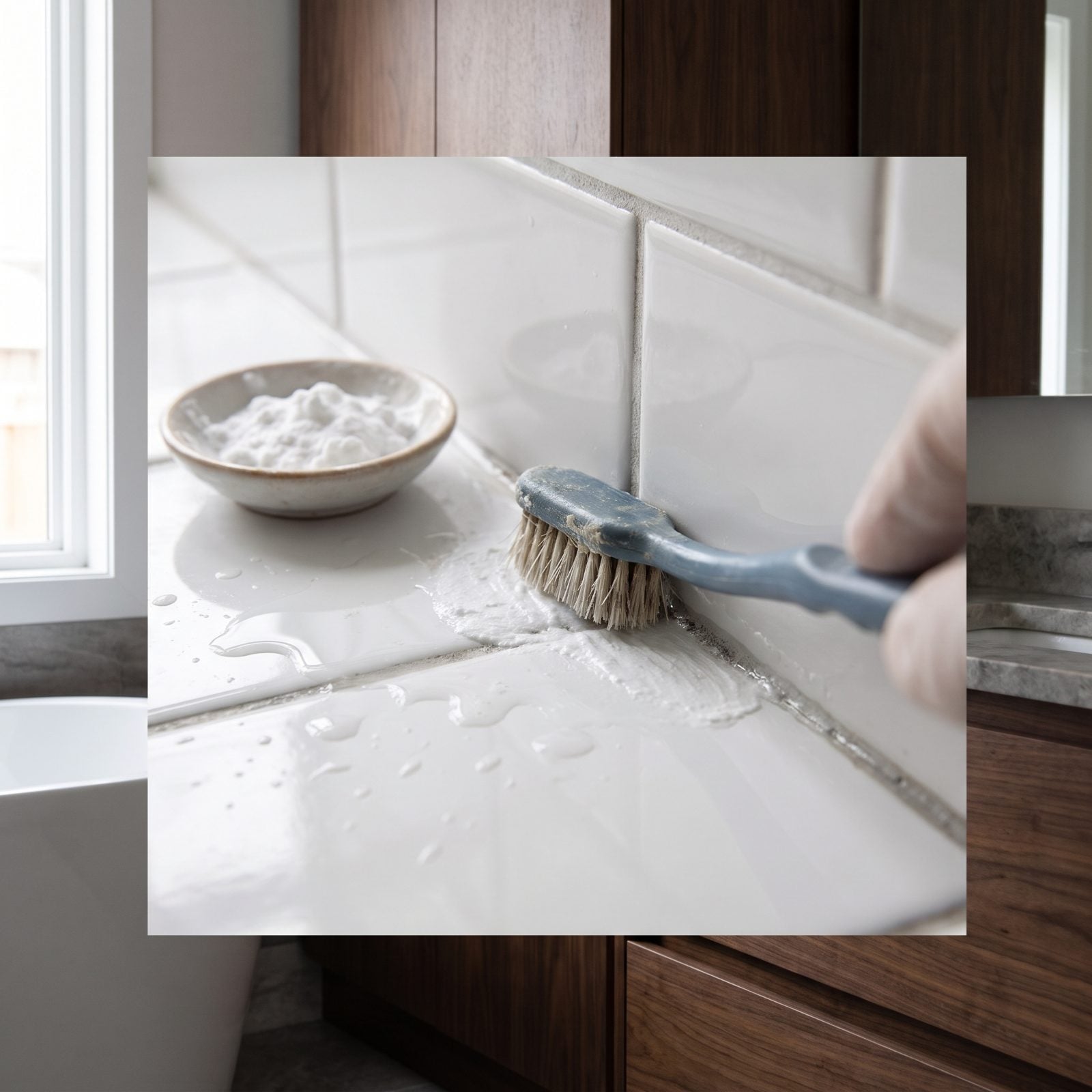
The grout. The toothbrush. The square inch of tile you’ve been working for eleven minutes while the rest of the bathroom waits. This is where cleaning crosses into craft. You’re no longer maintaining a home; you’re restoring a relic, one millimeter of mildew at a time.
There’s deep satisfaction in it, and it’s worth understanding why. The grout gives you total control over a tiny, visible, measurable result. In a life full of problems that won’t resolve no matter how hard you push, here is one that gets whiter the longer you scrub. That feedback loop is the draw. Same reason some people organize the spice rack when the rest of life is on fire.
Zoom out, though. You can spend an hour on grout nobody will notice and leave a whole shower undone. The retired toothbrush is a wonderful tool and a magnificent way to avoid the big job.
10. You Check Expiration Dates Like A Border Agent
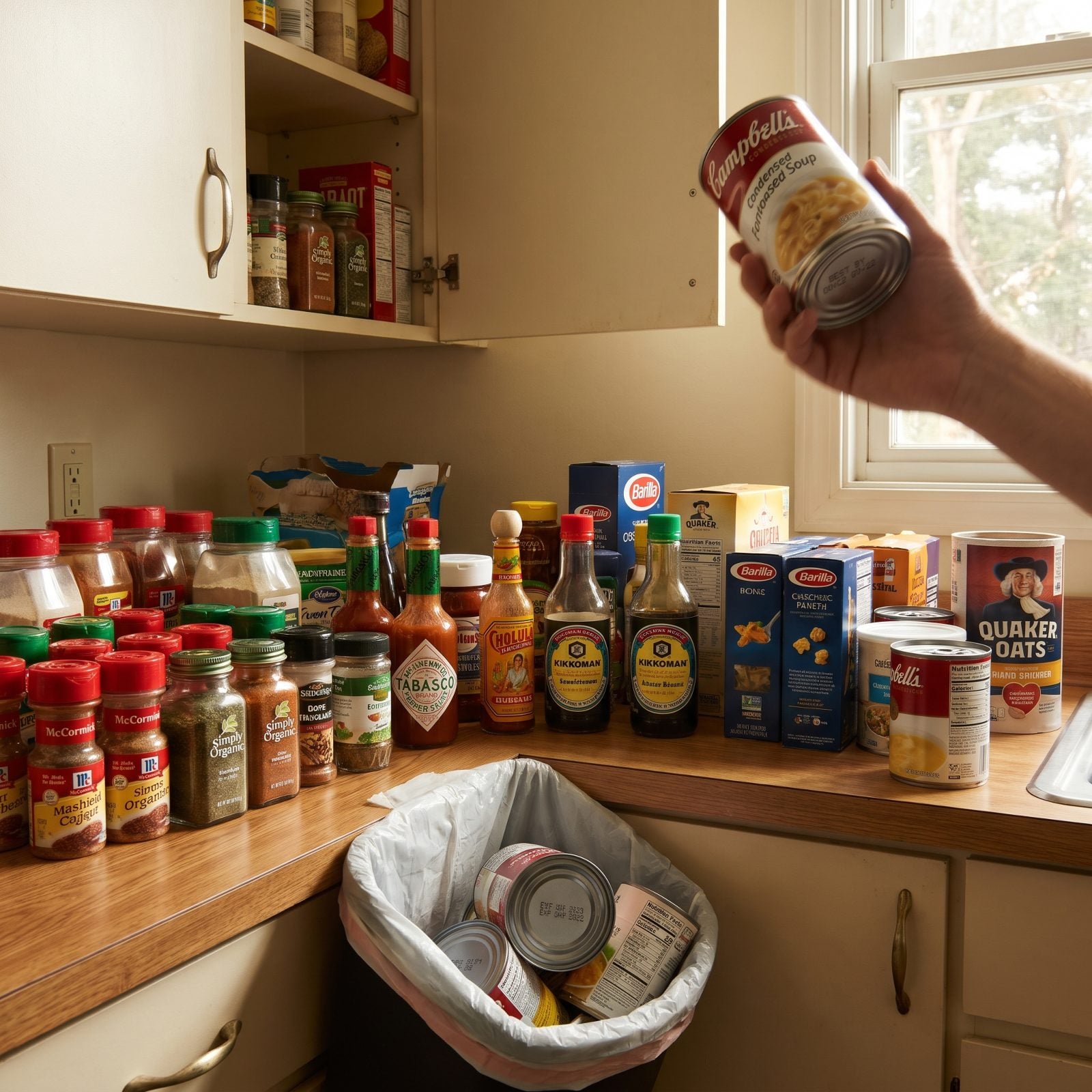
Everything comes out of the pantry and lines up on the counter for questioning. You tilt each can to the light, find the stamped date, and render judgment. Expired by a month? Gone. The spice that’s been there since a presidency you’d rather not name? Gone, with a small sense of ceremony.
This is risk management in its purest form, the same muscle we flex checking policy renewal dates, warranty windows, the fine print nobody reads. Dates feel objective. They let us make a clean yes-or-no call in a world that mostly offers maybe. Loss aversion is quietly at work too: the fear of a bad outcome from one expired jar outweighs the small waste of tossing something that was probably fine.
9. You Sort Clutter Into Bags With Ruthless Little Rules

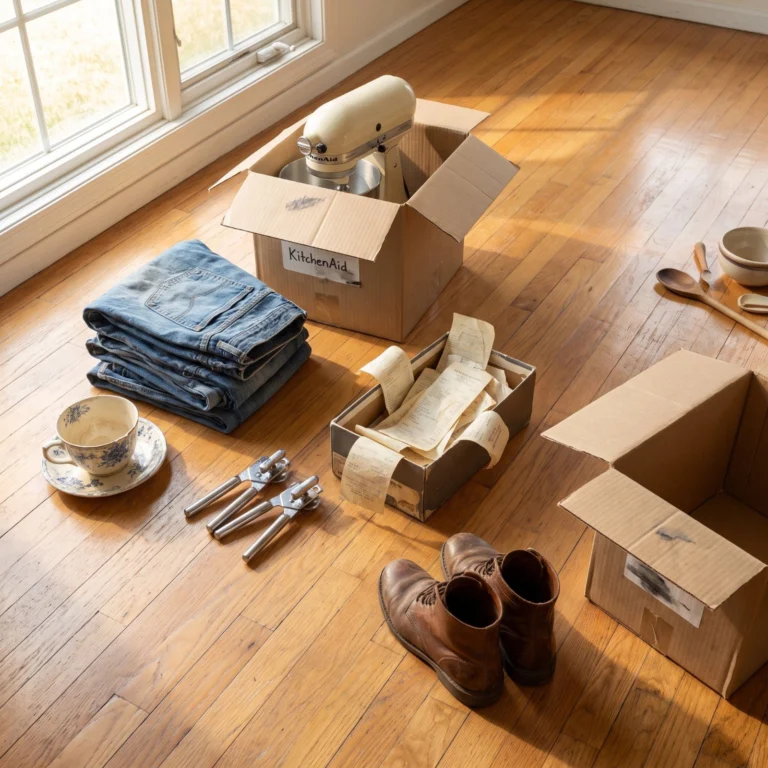
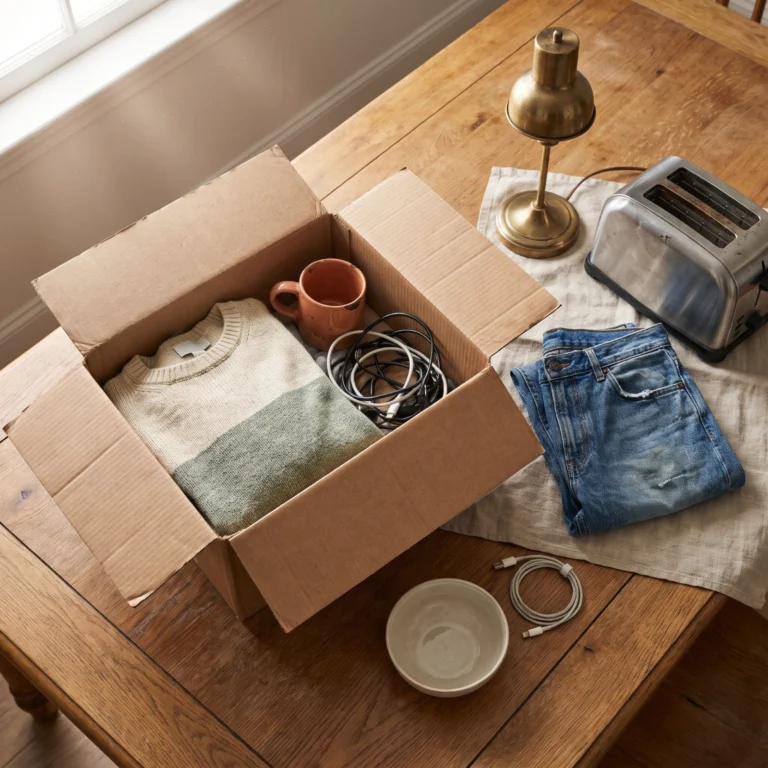
Donate, toss, keep, and the quietly cowardly fourth bag: maybe. You’ve built a decision system for your own belongings, with rules about what earns a reprieve. Worn it in a year? Keep. Haven’t thought about it in two? Out. You enforce these rules on yourself more strictly than you’d dare enforce them on anyone else.
We do the exact same thing with time, with commitments, with the pile of possibilities we call a life. Rules make hard choices feel less personal. “The rule says toss it” hurts less than “I’m letting this go.” That’s the trick, right there.
And the maybe bag? That’s where the rules go to be gently ignored. It fills up fast because keeping something undecided feels like keeping your options open, which feels like control, even though it’s the opposite. I have a maybe bag from two springs ago. I’m not proud of it.
8. Family Members Need Approval Before Throwing Anything Away

Here’s where the control gets honest about itself. The bags are packed, the donation box is by the door, and then comes the ritual: someone wants to toss something, and it has to be shown to you first. A verdict is required. You reach into the box and quietly rescue three things.
This is the household’s version of needing to sign off on every decision — the manager who can’t let the team ship without a final look, the one who insists on checking the directions even from the passenger seat. It feels like stewardship. Often it’s a fear of letting go of control over outcomes we’ve already handed to someone else.
And the stuff you rescued from the box? Half of it ends up in the maybe bag from a few items back. The whole machine runs in a loop, and I say that as a lifelong rescuer of perfectly fine things that nobody, including me, will ever use again.
7. The Label Maker Comes Out For Flour And Batteries
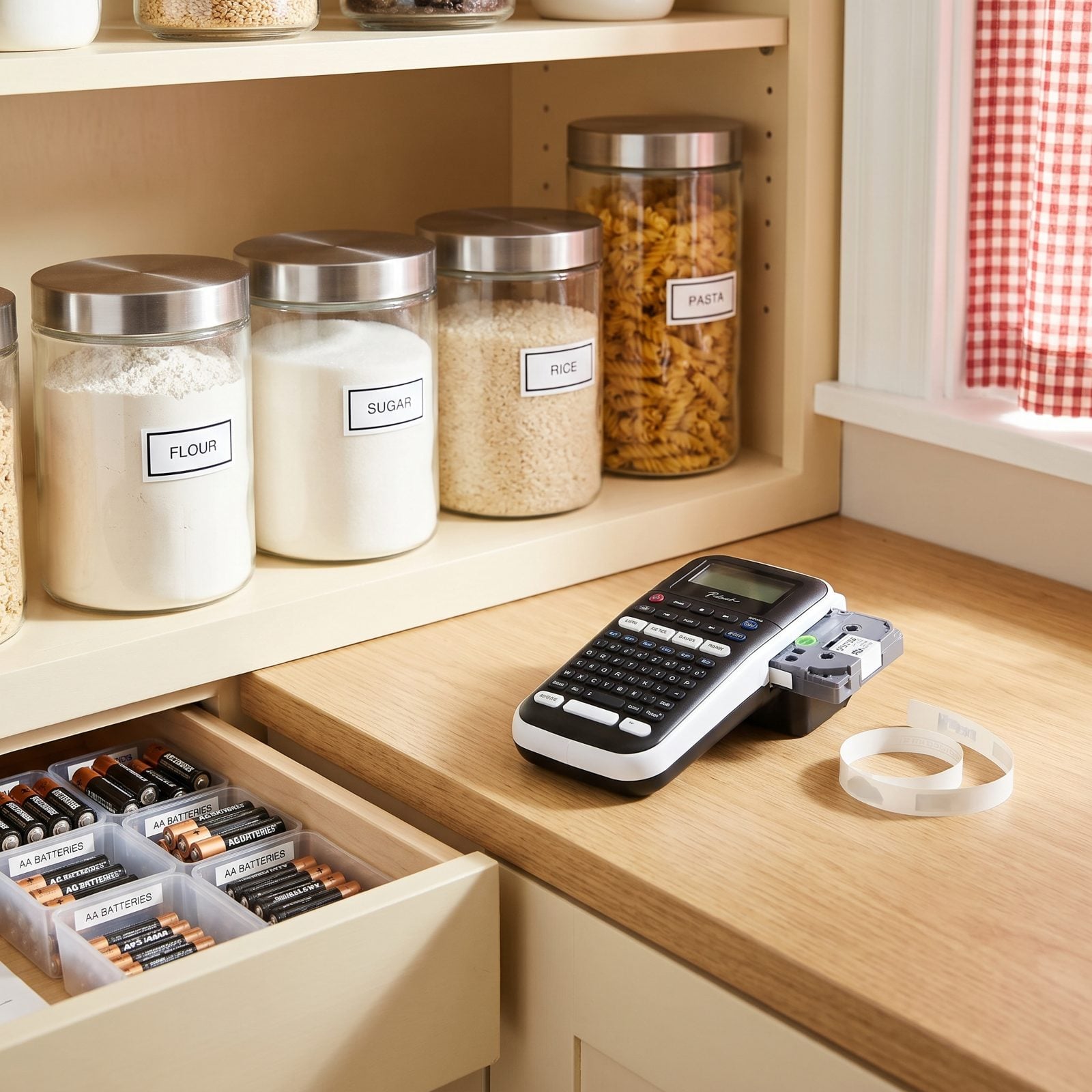
The flour didn’t ask to be labeled. It has been flour this whole time, sitting in the same bag, understood by everyone in the house. But somewhere around the second hour of spring cleaning the label maker appears, and now the flour has a name tag. So do the batteries, the rubber bands, the spare phone chargers nobody can identify.
Same instinct that makes people alphabetize the spice rack the week they decide to get their life together. Naming a thing feels like controlling it. Psychologists call the broader habit the illusion of control — that comforting belief that effort in one visible spot somehow steadies everything we can’t actually steady. You can’t fix the big stuff, so you fix the flour.
6. Every Pantry Jar Must Face The Same Direction
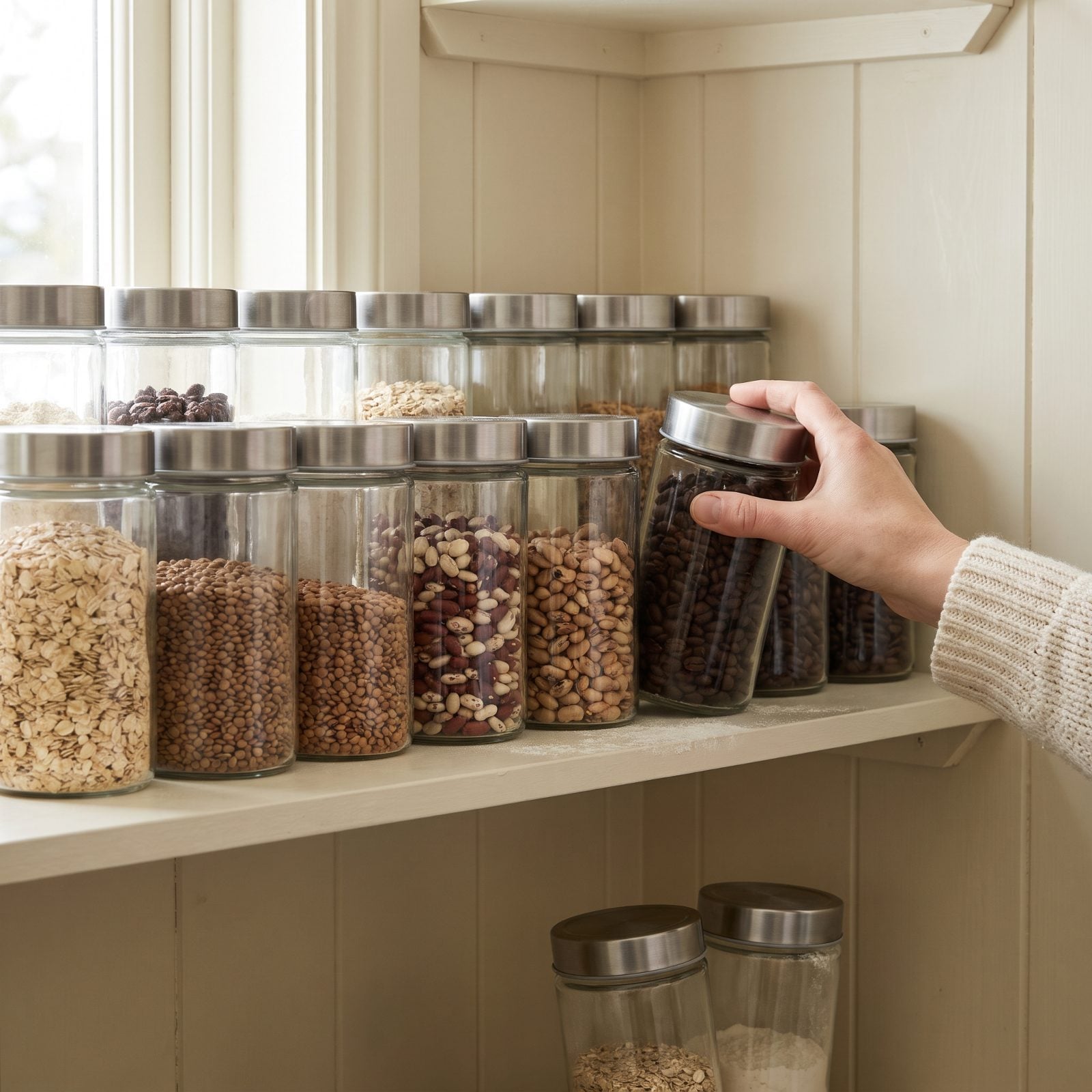
Nobody will ever see the back of the jar. The jar knows this. You know this. And yet every lid gets rotated until the seams line up like soldiers, because a shelf of matched fronts does something to the nervous system that a jumbled shelf refuses to.
Call it the showroom reflex. We arrange private spaces as if a photographer were on his way over — the way people stage a house for an open they’re not holding, or dress up for a video call that turns out to be audio-only. Symmetry reads to the brain as safety, and aligned objects whisper that a space is cared for, which whispers that a life is in order. That’s the quiet promise spring cleaning dangles in front of you.
I have turned jars a quarter-inch for no witness but myself. It is genuinely soothing, and also, I’ll admit, slightly deranged.
5. You Redo The Towels Because Their Fold Looks Wrong

The towels were folded. Someone in the house folded them, with care, and put them away. Then you walked by, saw the fold was halves instead of thirds, and now the whole stack is on the bed being redone the hotel way, rounded edges out.
What we don’t admit: redoing someone else’s good-enough work has nothing to do with the towels. It’s about the fold being yours. There’s a well-documented quirk called the IKEA effect, where we overvalue the things we assembled with our own hands. The towel you folded feels correct in a way the identical towel you didn’t fold never will.
4. Nobody Touches The Sink After You Polish It
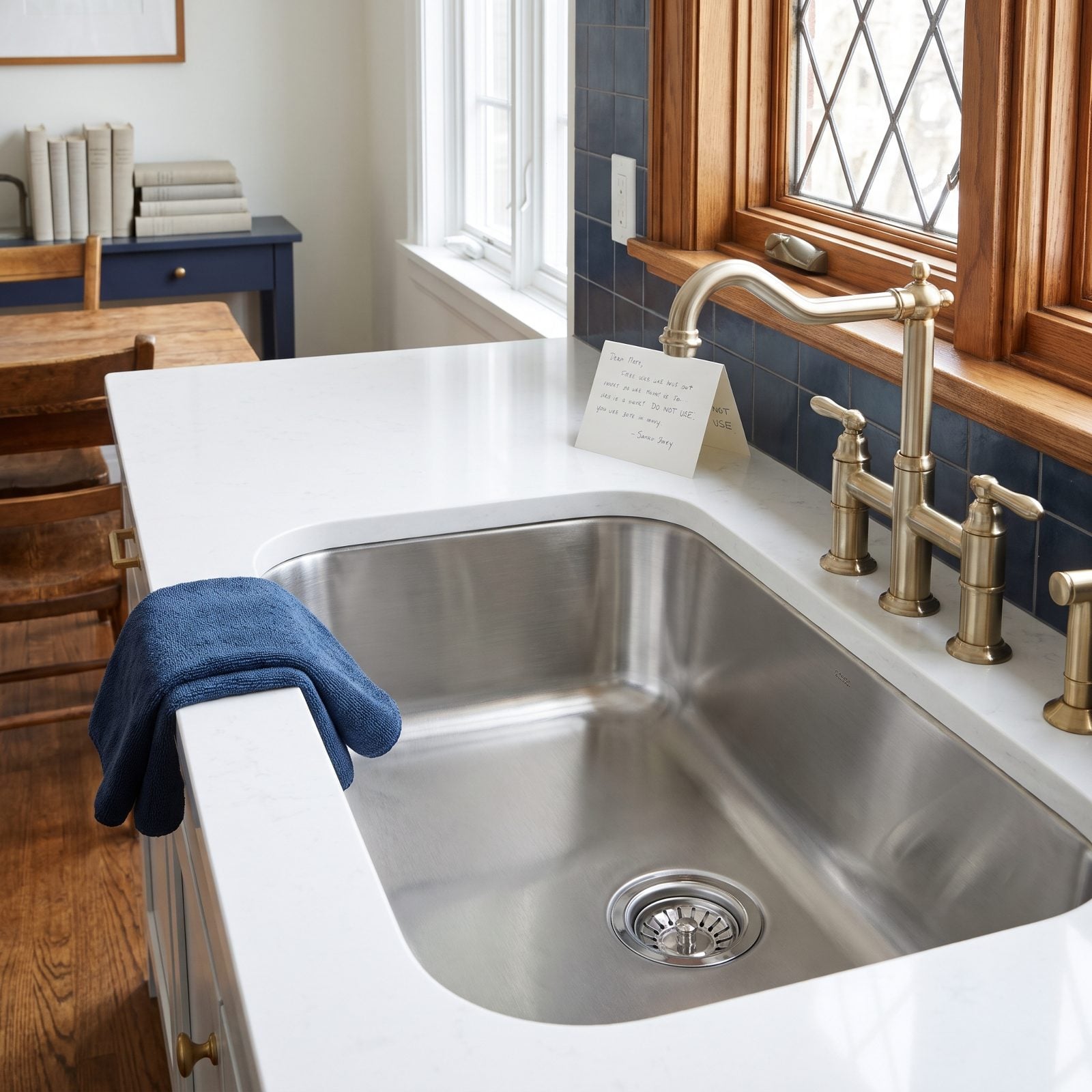
You polished the sink. Not cleaned — polished, buffed down to a finish you can see your own face in, every water spot chased off the stainless. And now a strange rule settles over the whole kitchen: nobody touches it. Dishes wait. Hands get rinsed elsewhere. The basin becomes a shrine to a moment that will never come again.
This is loss aversion wearing an apron. Once we make something, the fear of losing it outweighs the pleasure of actually using it, so the clean sink stays clean by staying useless. Same logic as the good dishes that never leave the cabinet, the sofa with the plastic still crinkling on it.
A sink is for washing things in. The polished one you refuse to use is a sink in name only. Somebody will break the spell by lunchtime, and honestly, good.
3. You Photograph The Mess So Progress Can Be Proven

Before a single thing gets moved, the phone comes out. You photograph the disaster — the overflowing closet, the junk drawer in its full chaos — framed carefully, because the after shot won’t mean a thing without a before to measure it against.
We’ve all done some version of this, the one that lives on a dating profile or a fitness app: proof. The spring-cleaning before photo is a small act of evidence-gathering, a receipt for effort that might otherwise go unwitnessed. Behavioral research keeps finding that we work harder when progress is visible and documented, which is exactly why trackers and streaks sink their hooks in so deep.
2. You Count Donation Bags Like They Are Scorecards

Three bags by the door. Then four. You catch yourself counting them, and the counting feels great — each bag a point scored against the past version of you who bought all this stuff in the first place. By bag five there’s a quiet thrill, like winning a game nobody else knows is being played.
Letting go is hard, so we gamify it. Turning a donation into a number converts a loss into a gain, which is exactly the trick the brain needs to part with things it’s irrationally attached to. The bags aren’t really measuring generosity. They’re measuring release, and release is the hardest part of any reset.
I’ve caught myself hoping for one more bag just to round up to a nicer total. That sweater I’d never wear again went in partly because five sounded better than four. Whatever gets it out the door.
1. You Time Each Room Like There Is Prize Money

The timer goes on. Fifteen minutes for the living room, then you’re racing it — cushions flung and fluffed, cords wrangled, surfaces wiped, one eye on the countdown like there’s cash waiting in the bedroom if you come in under.
There’s no prize. You know there’s no prize. But the clock pulls off something the chore alone can’t: it turns drudgery into a contest with yourself, and we work astonishingly harder when a boring task gets a finish line slapped on it.