The receipt is still in our coat pocket from last April. A hydrangea that wanted shade, planted in a bed that bakes until four. We knew better and bought it anyway, because the mophead was the color of a Sicilian sunset and we happened to be standing right there holding our wallet.
Please note that some of the images in this article were created with the assistance of AI.
We like to imagine we garden with our brains. We don’t. We garden with the same wiring that makes people fall for the charming one at the party, the house with the great light and the terrible roof, the car that costs a fortune to insure. A nursery is just a dating app with better smells. What follows are the quiet tricks your own mind plays on you, and why the plant always seems to win.
17. You Spot One Perfect Bloom and Assume the Whole Plant Is Easy
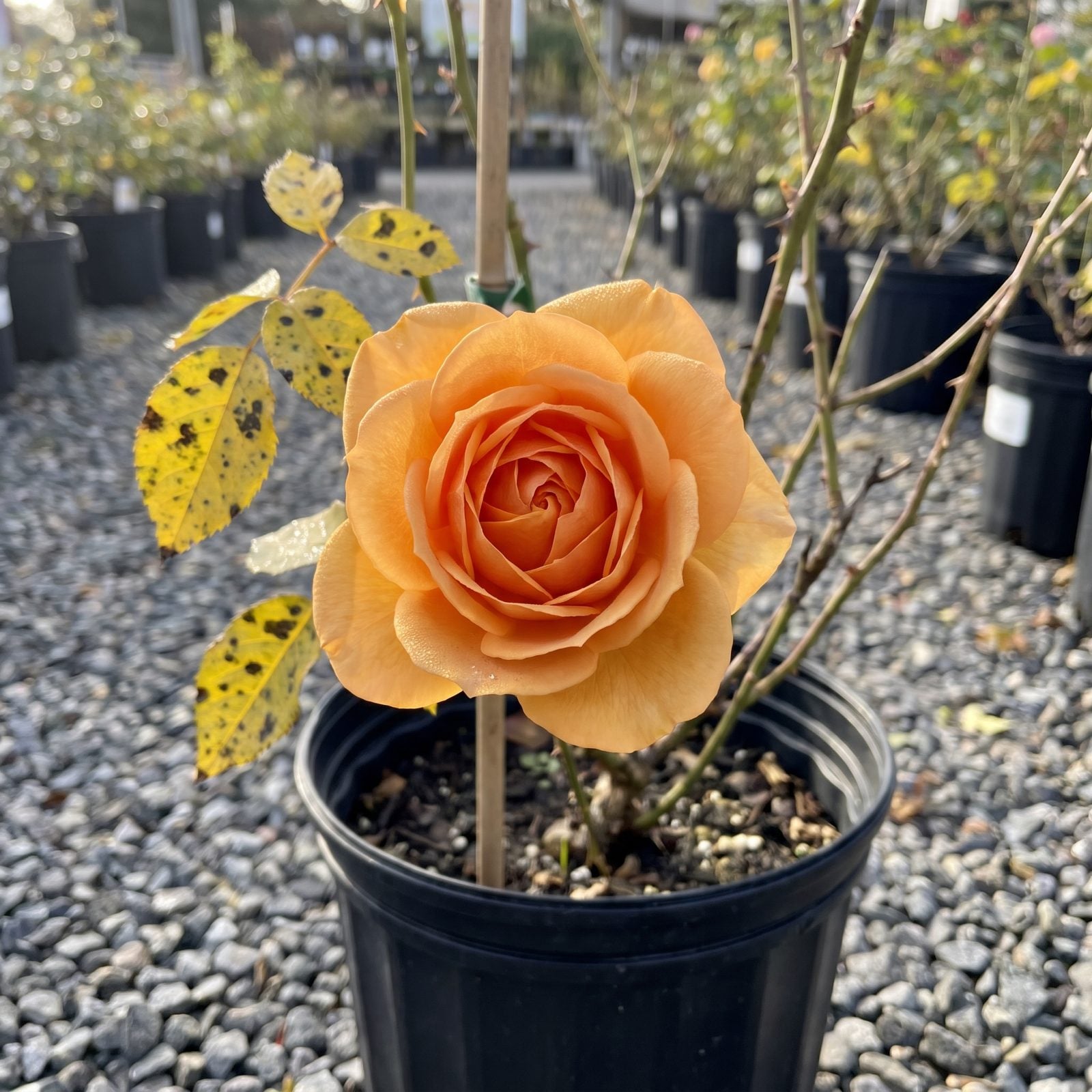
You lean in, you smell the one open rose, and some part of your brain files the entire plant under “lovely, unbothered, basically a houseplant that lives outside.” The other canes have blackspot. You didn’t look at the other canes.
This is the halo effect doing what it does best. One attractive trait bleeds outward until it coats everything. We meet someone charming and assume they’re also kind, honest, and good with money. Then we meet a gorgeous bloom and assume the plant is disease-free, low-fuss, and forgiving. The flower told us one true thing and we invented five more.
I’ve done this with roses more times than I’ll admit. The bloom is a sales pitch, not a résumé.
16. Nursery Lighting Makes Every Leaf Look Ready for Commitment
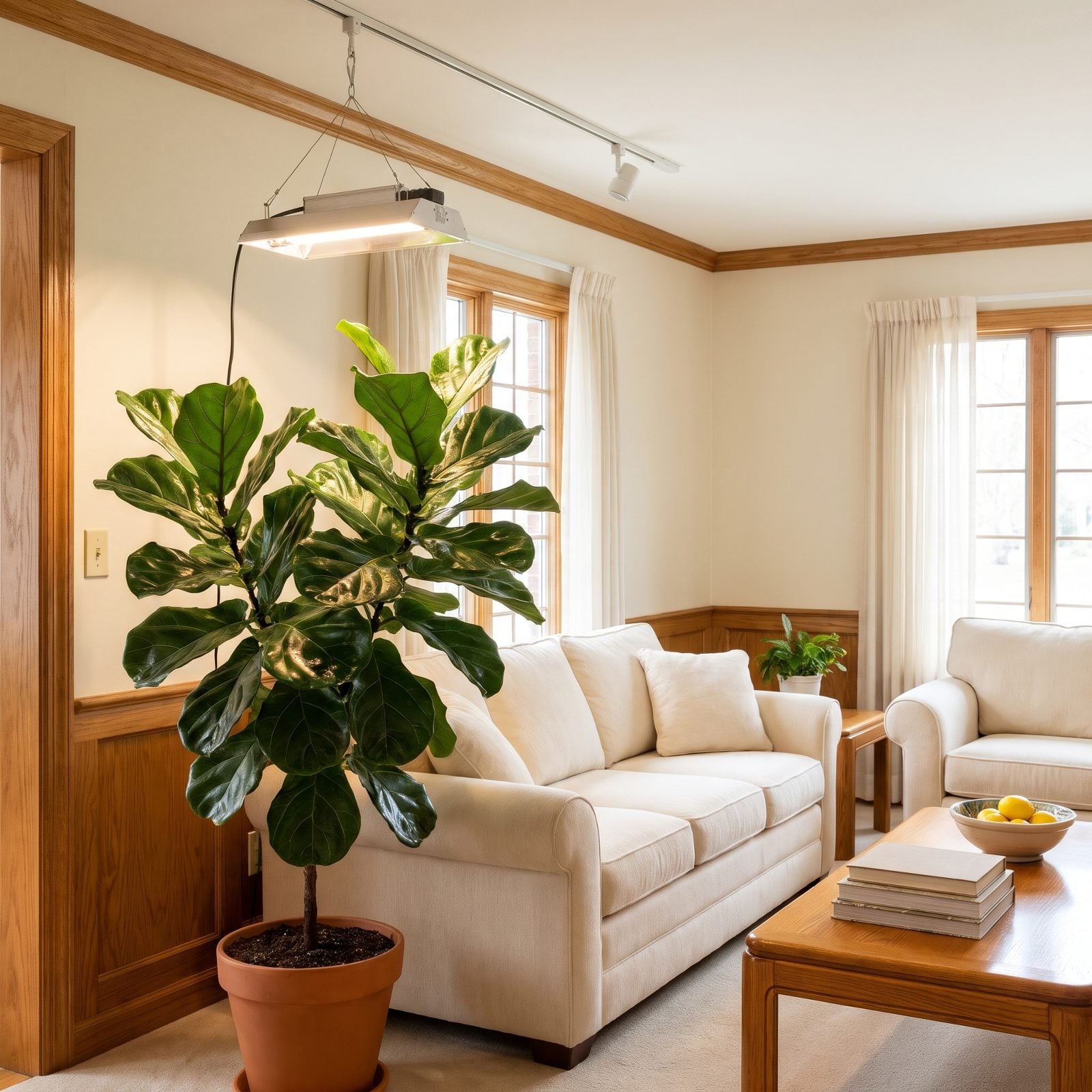
Grow-light glow is a liar and we love it for that. Hung from a ceiling track right above the canopy, the lamp pours a warm, even, nursery-style flattery straight down onto every leaf, the kind of shine plants get on a sales bench. This fiddle-leaf fig looks like it moonlights as a magazine cover.
Then the lamp clicks off, and even in a bright living room with big multi-pane windows on two walls, those glossy leaves look a little more ordinary. The plant didn’t change. The lighting did. We fell for the staging.
Same reason a restaurant’s first impression, dim and golden, feels like romance until the harsh reality arrives with the bill. The setting does the seducing, then vanishes the moment you commit.
15. You Ignore the Hardiness Zone Because Those Petals Are Gorgeous
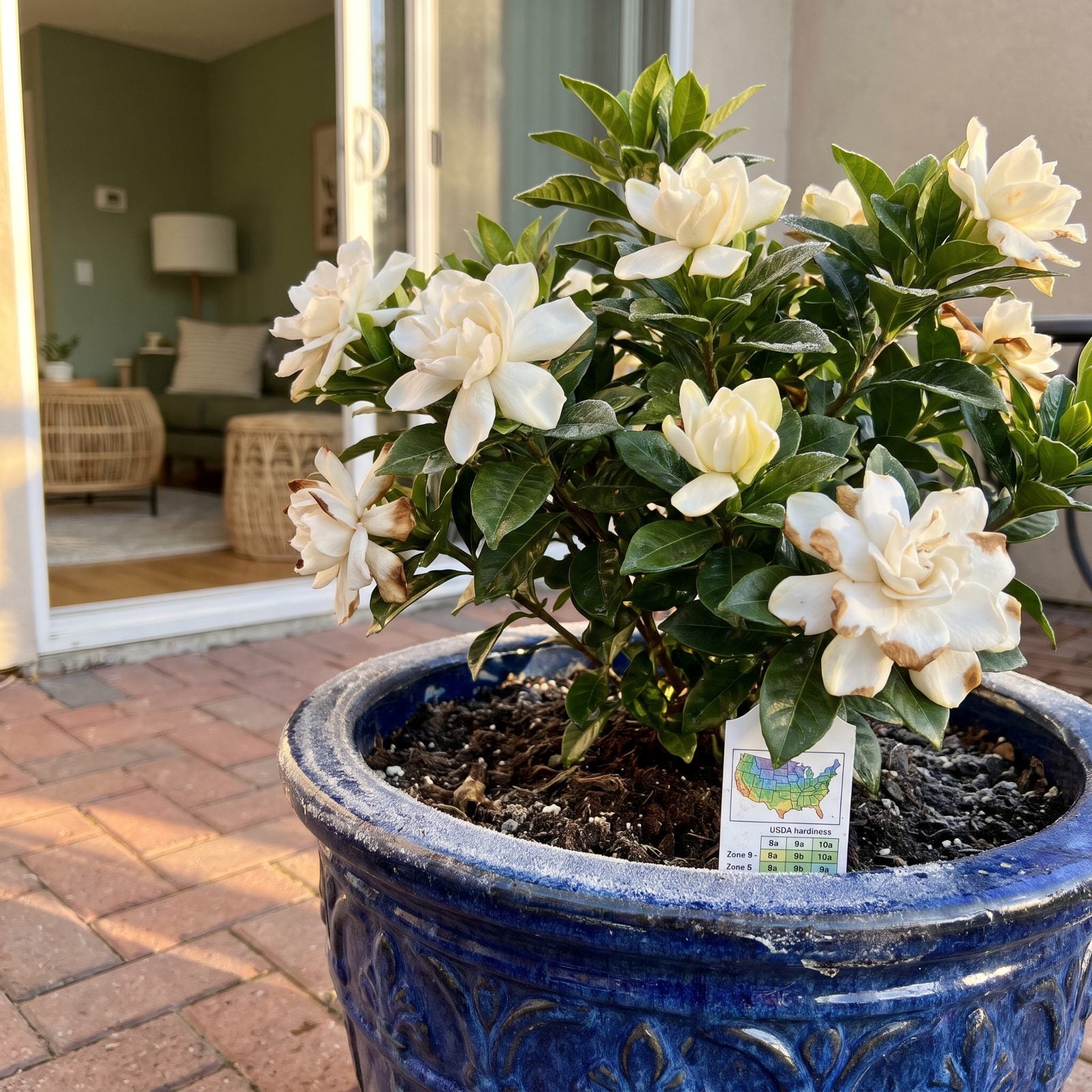
There’s a number on the tag. You saw it. A zone range printed right next to the price, telling you plainly this gardenia wants a warmer life than you can offer. And you looked past it, because the flowers smell like a honeymoon and your brain weighs beauty-now against regret-later with a very crooked scale.
Economists call it hyperbolic discounting. We hugely overvalue the immediate reward and shrug off the delayed cost. The blooms are the immediate reward. February is the cost, and February always loses the argument in April.
I keep a mental graveyard of borderline-hardy things I bought on exactly this logic. Zone ratings aren’t suggestions. They’re weather forecasts with a longer lead time.
14. A “Rare Variety” Tag Makes the Pot Irresistible
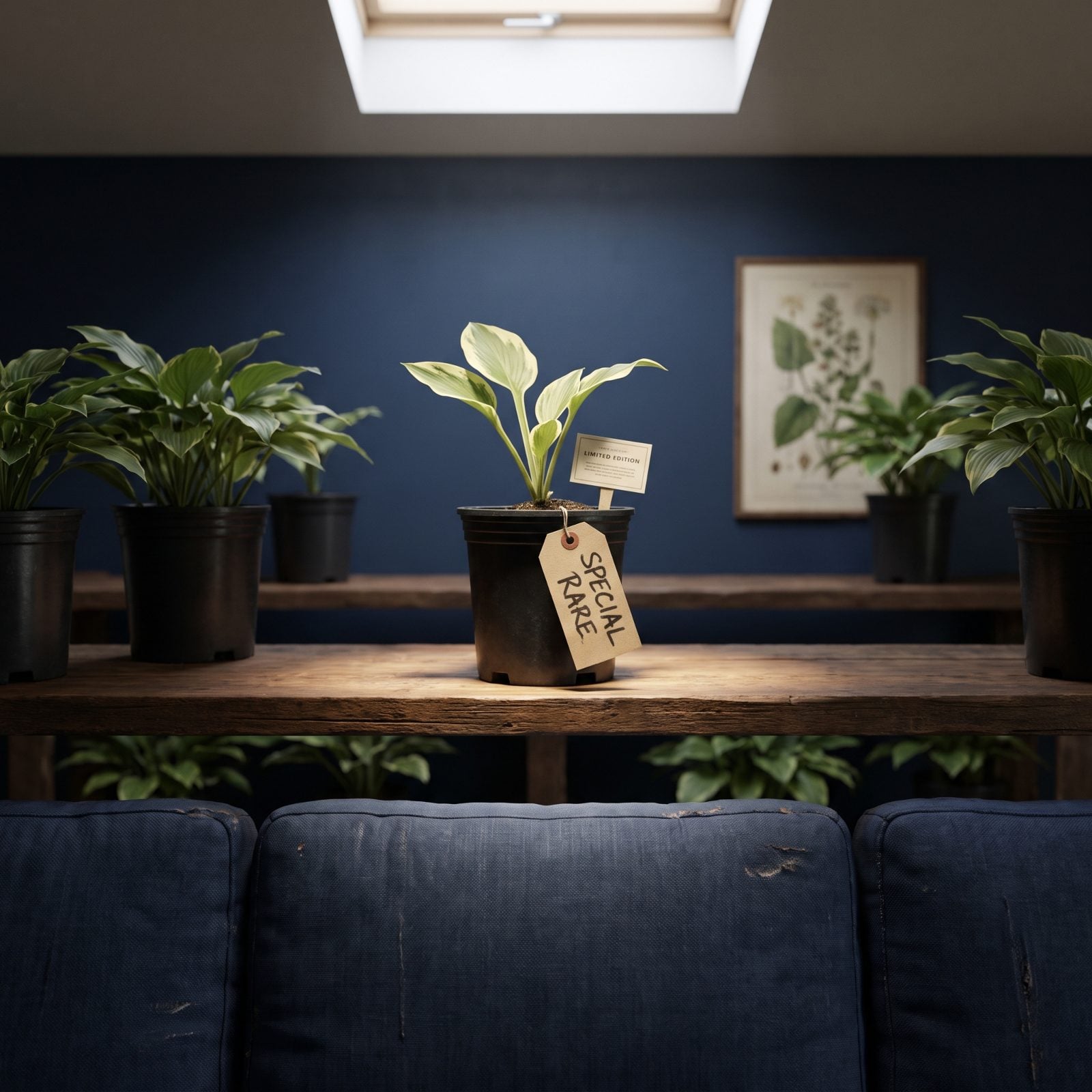
Put the word “rare” on a pot and watch a plain plant become a prize. The hosta is unremarkable. Six or seven cream-edged leaves, slightly sulky. But the little card promises limited stock, collector-grade, hard to find, and suddenly your pulse is up and your hand is reaching.
Scarcity hijacks judgment. We want the thing more because fewer people can have it, not because it’s any better. Same ache that makes a sold-out concert feel mandatory and a half-empty one feel optional.
Rarity measures how many exist, not how much you’ll enjoy it in your own border.
The honest question is never “is this rare?” It’s “would I want this if the garden center had a hundred of them stacked by the door?” Usually the answer is no, and the answer is free.
13. One Glorious Flowering Week Erases Eleven Plain Months
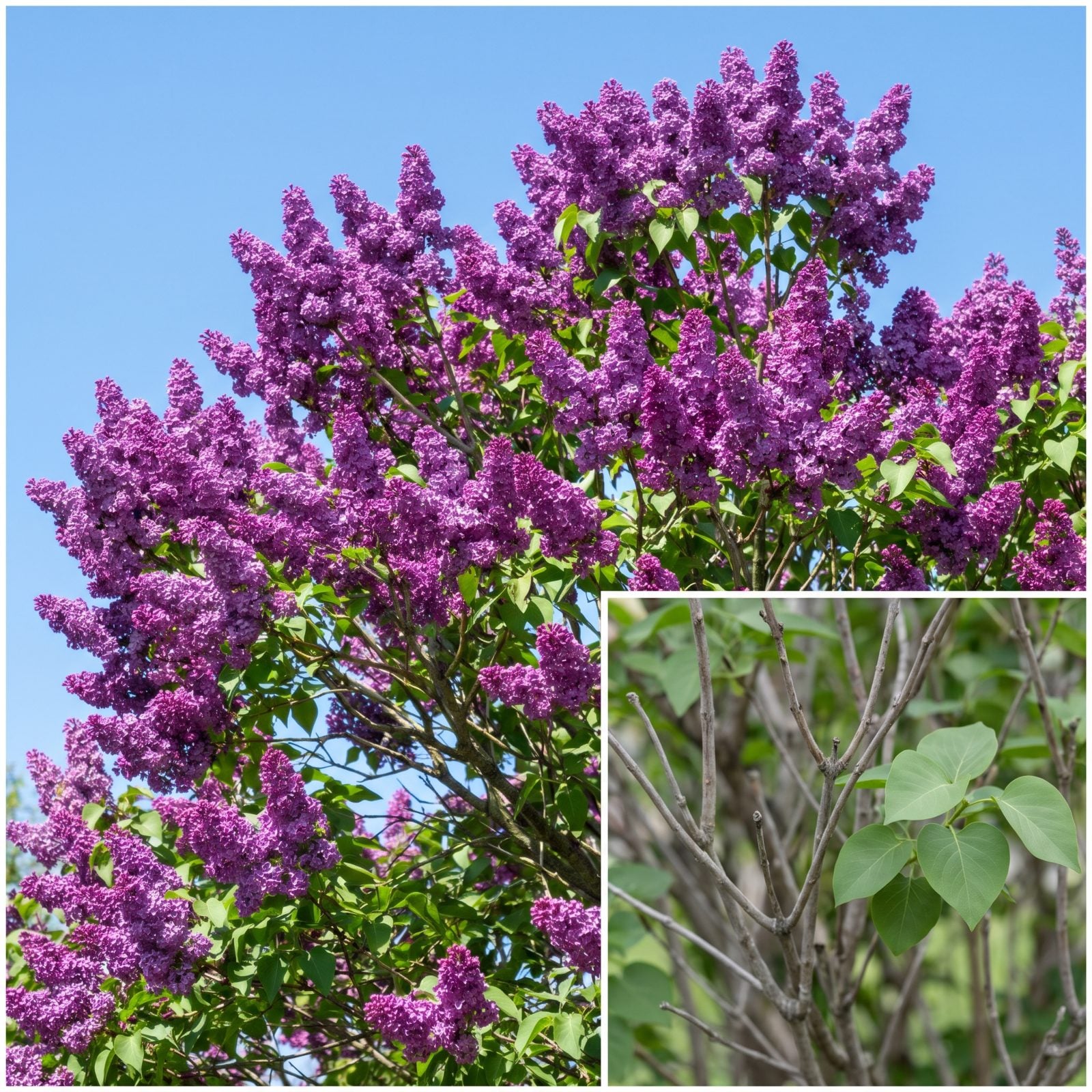
For one week in May the lilac is a religious experience. Panicles the color of a bruised sunset, scent you can taste, bees losing their minds. You plant it on the strength of that week, forgetting conveniently that the other fifty-one weeks it’s a gangly brown thug taking up a prime corner.
This is the peak-end rule at work. We don’t remember experiences by their average. We remember them by the best moment and how they ended. The lilac’s peak is so loud it drowns out the long dull stretch, so memory files the whole plant as “wonderful.”
The same math makes people reminisce fondly about brutal vacations and forgettable relationships. One golden afternoon rewrites a whole fortnight of rain.
12. You Picture the Finished Border Before Checking Mature Size
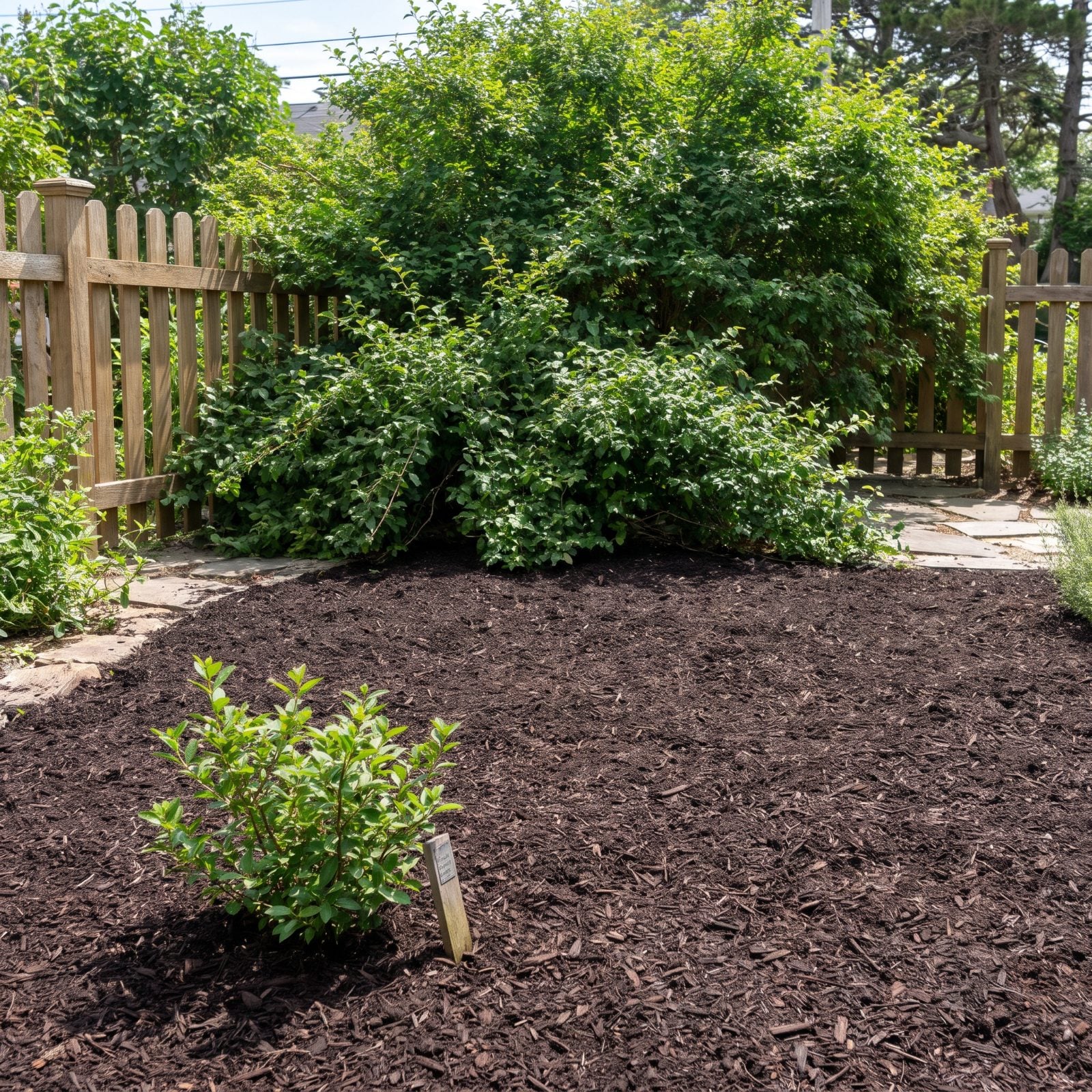
The gallon pot is small and sweet, and you’ve already seen the whole border in your head, tidy, balanced, magazine-ready. The tag says mature spread eight feet. You read it as a formality. Surely not your plant, not in your soil, not with your restraint.
That’s the planning fallacy, the same optimism that tells us the kitchen renovation will take three weeks and the shrub will stay polite. We plant for the picture in our heads, not the biology on the label.
Four summers later it’s eaten the path and shaded out the roses. I’ve dug out more “it won’t get that big” purchases than I care to count.
11. Everyone Wants That Dahlia, So Naturally You Do Too
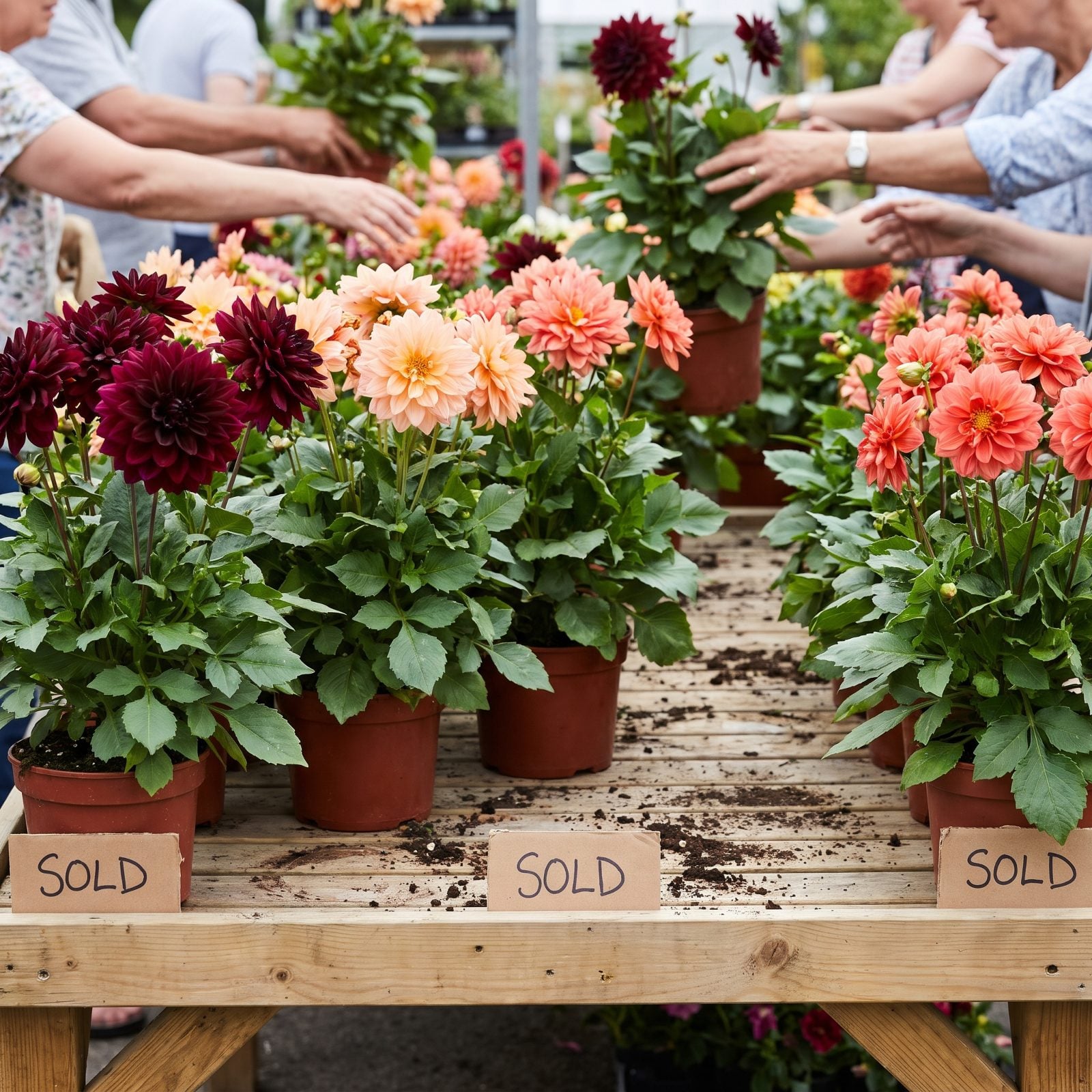
You weren’t thinking about dahlias. Then you noticed the table half-empty, the gaps where pots used to be, two other people reaching, and some ancient herd instinct lit up. If everyone wants it, it must be worth wanting. You took one. You’re not even sure you have the sun for it.
Social proof is why queues attract queues and empty restaurants stay empty. We borrow other people’s choices as a shortcut when we’re unsure of our own, and a picked-over display reads as endorsement.
Sometimes the crowd is right. Dahlias are genuinely wonderful. But “everyone’s buying it” tells you about the crowd’s taste, not your garden’s conditions.
10. Three Nursery Visits Make the Same Camellia Feel Destined
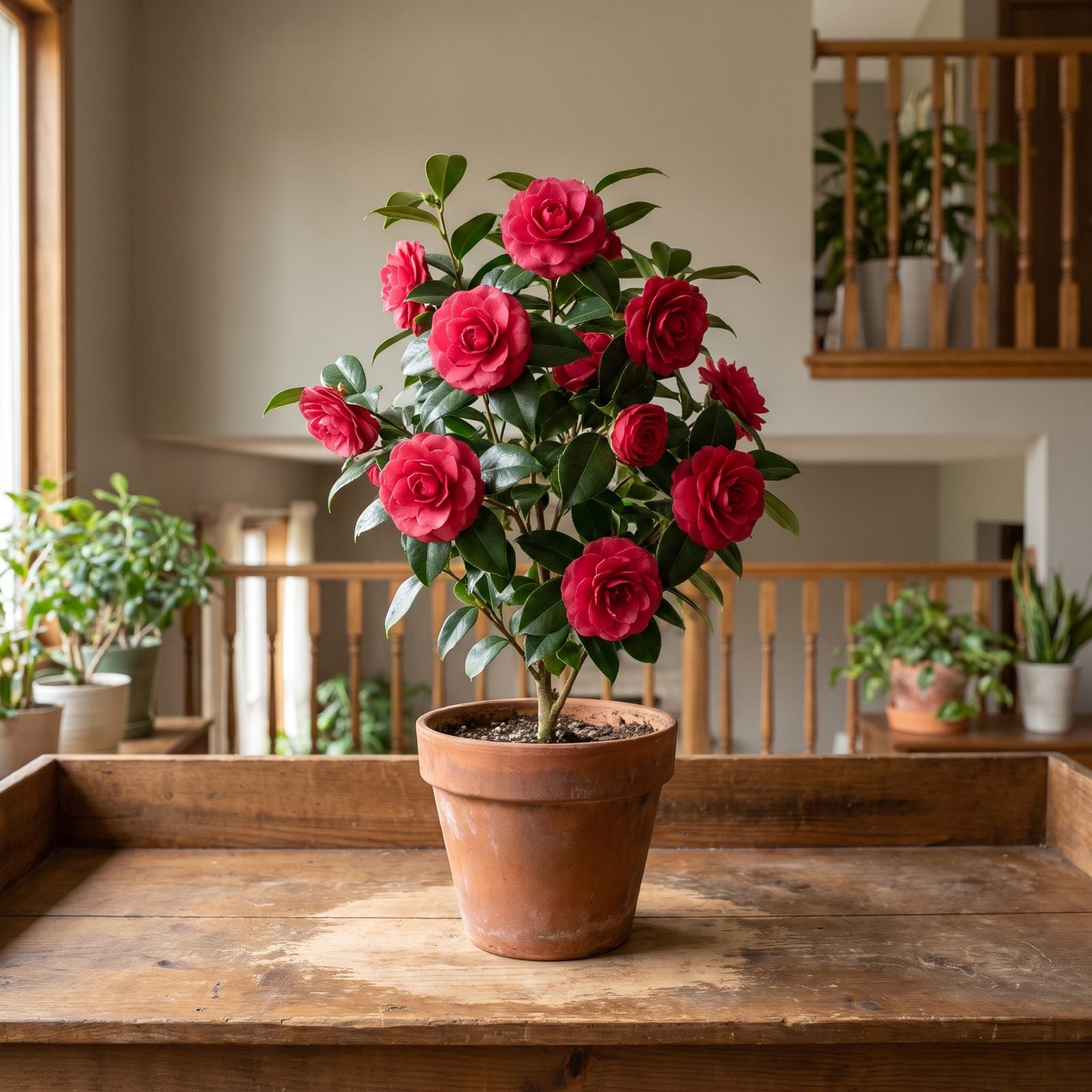
You saw it in March and walked past. April, still there, you lingered. By May it’s practically calling your name, and now it feels like fate, like you two were always going to end up together. You buy it with warm conviction.
Nothing was meant to be. That’s the mere-exposure effect, the simple fact that familiarity breeds fondness. Repeated contact makes almost anything more likeable, songs, faces, camellias. Each visit didn’t reveal the plant’s virtues. It just wore a groove in your preference.
Same reason the neighbor you ignored for years suddenly seems charming once you’ve waved enough times. Presence masquerades as destiny.
9. After Winter, the First Bright Primrose Looks Unreasonably Perfect
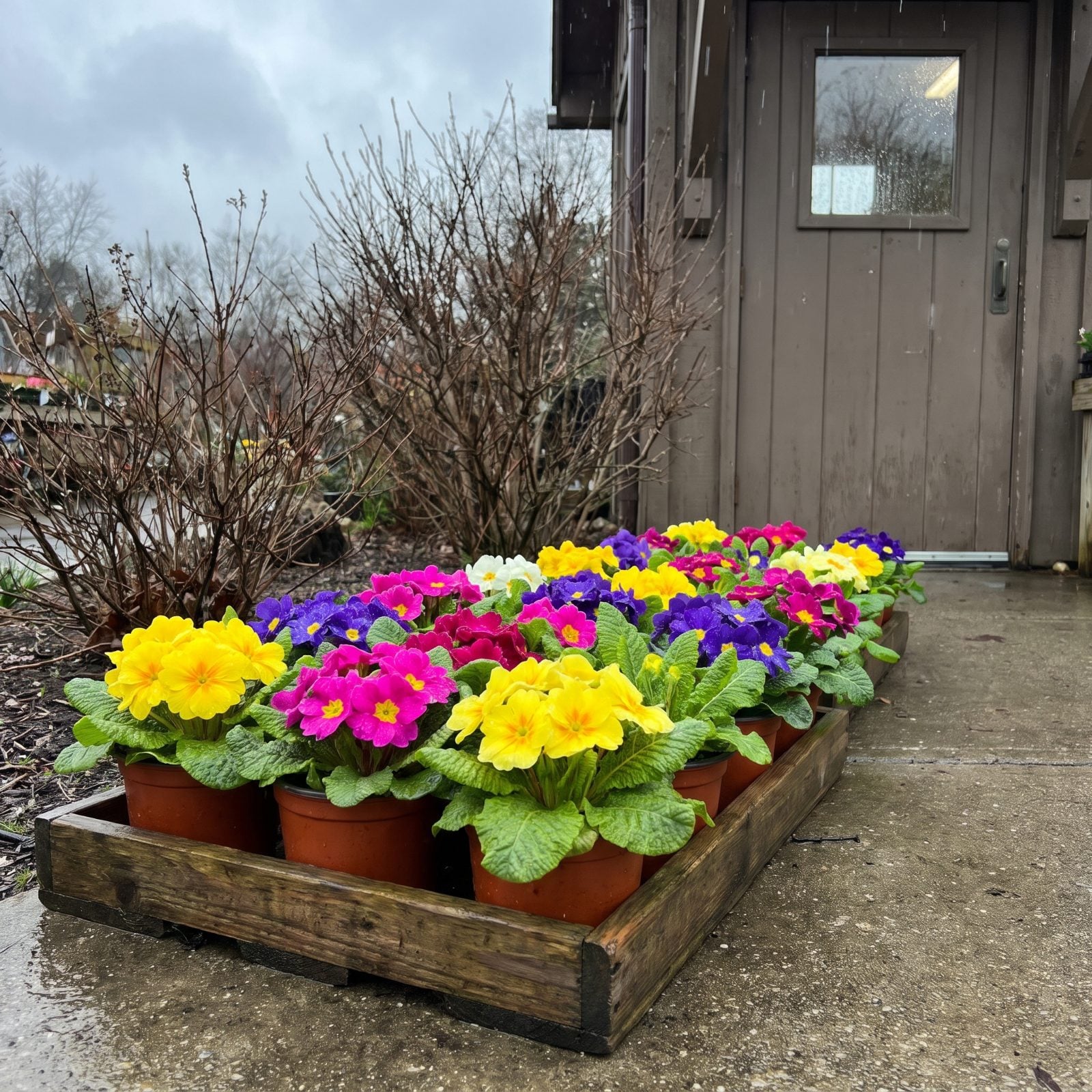
In February your eyes are starving. Weeks of gray pavement and bare twigs, and then a tray of primroses by the shop door, electric yellow and hot magenta, hits you like the first sip of coffee. They look like the finest plants ever grown. You buy four. By June you’ve forgotten their names.
Contrast is the whole trick. The same primrose in a riotous summer border would barely register. In the winter dead zone it’s a flare in the dark. Our judgment of a thing is wildly shaped by whatever sits beside it.
Nothing wrong with cheering up March. Just know the “perfect” is partly the backdrop, not the plant. Alright, go buy the primroses anyway. Some rules exist to be broken.
8. A Romantic Cultivar Name Does Half the Seducing
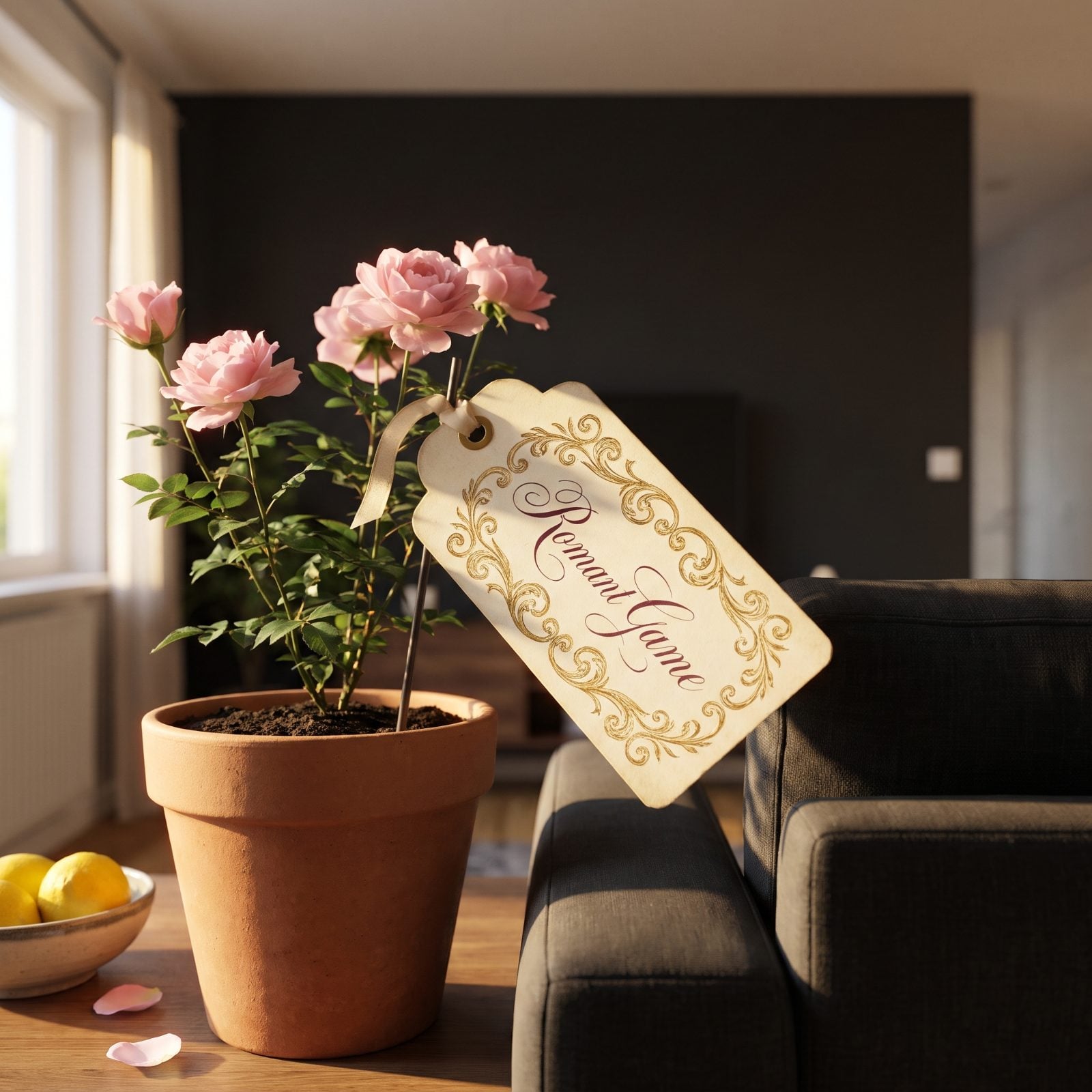
A single pink rose sits in a terracotta pot. It could have carried a plain code. Instead, its ornate gold tag christens it something like “Aurora’s Blush” or “Eternal Whisper,” and your hand goes straight to it. Under a code, the plant would be the same. The story wouldn’t.
Breeders and marketers know exactly what they’re doing. A name is a tiny narrative, and we buy stories far more readily than we buy foliage. The word attaches to the plant and makes it feel personal before you’ve grown a single leaf.
I’m as susceptible as anyone. Once bought a daylily almost entirely for its name and planted it somewhere it hated. The name couldn’t help it there. Names grow nothing. Roots do.
7. The Clearance Orchid Activates Your Entire Rescue Fantasy
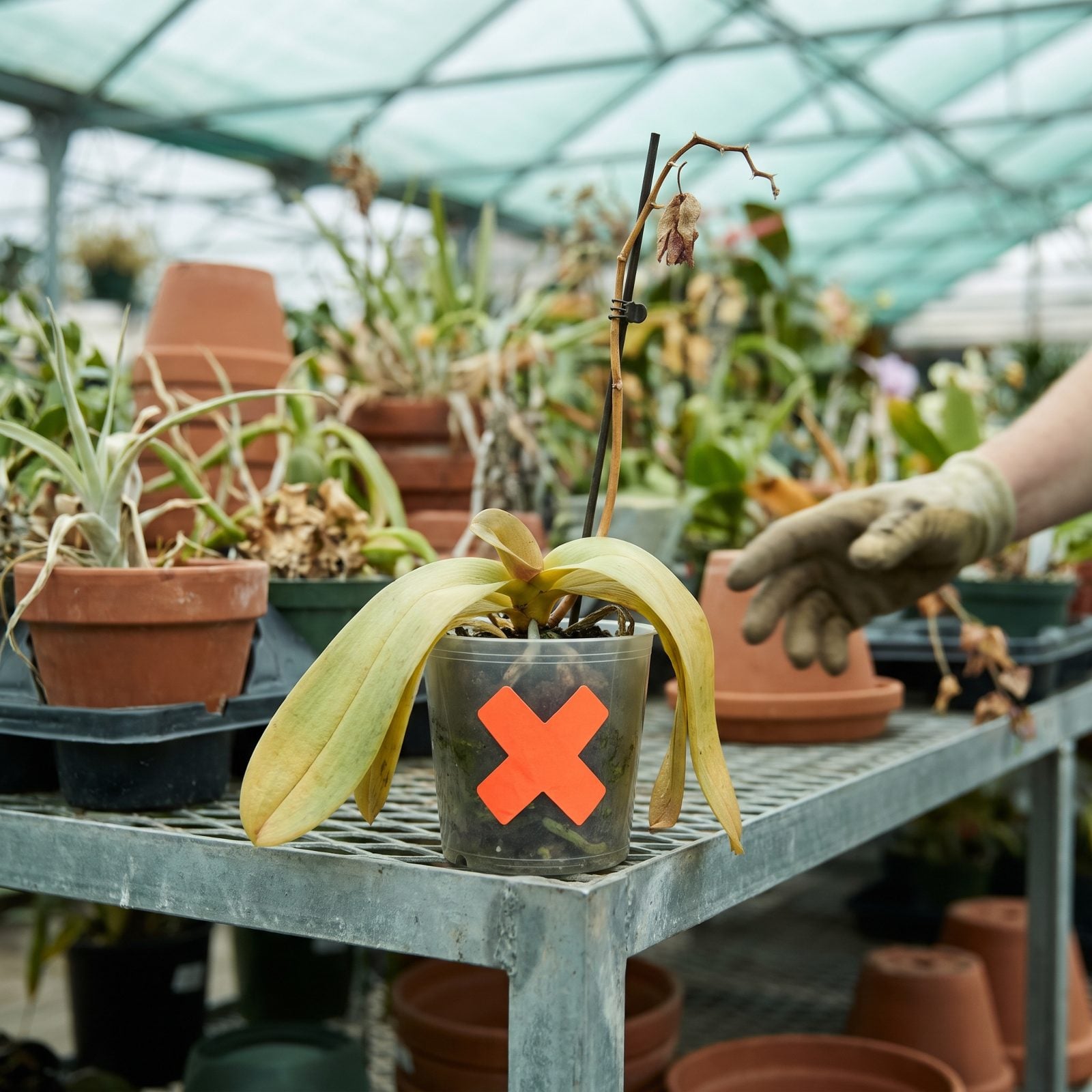
Full-price orchids sit on the shelf untouched. Put a sticker on a dying one, though, and suddenly it’s a cause. You tell yourself nobody else will take it, that it just needs a little attention, that you’re the only person in this whole store who sees its potential. You’re not buying a plant. You’re adopting a project.
This is the savior impulse, and it runs on the same current that keeps people in situations long past sense. We overvalue what we think we can fix because the fixing flatters us. A thriving orchid is just an orchid. A rescued one is proof you’re the kind of person who can bring something back.
I have bought three clearance orchids. One lived. I count that as a winning record and I will not be taking questions.
6. You Rearrange the Whole Bed for One Pretty Newcomer
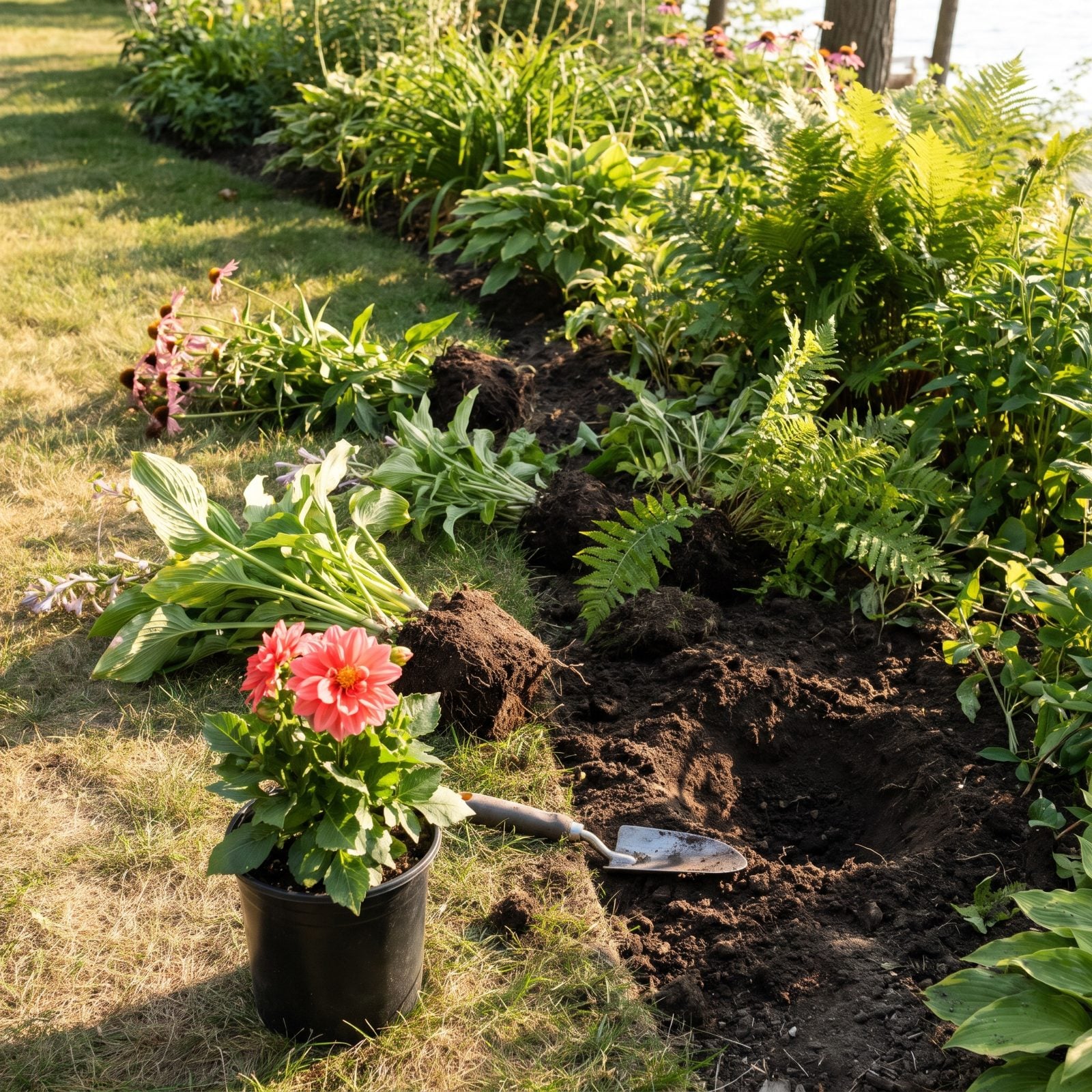
One appealing newcomer arrives and the entire bed goes into upheaval. The salvias get moved, the settled geraniums get yanked to make room, and a whole arrangement that was working fine gets torn up because something prettier showed up and demanded the best seat in the house.
We do this with people, too. A shiny new arrival reshuffles priorities that were perfectly stable until yesterday. The new thing gets the prime spot, the attention, the better light, and everything that was already thriving has to shift to accommodate it.
The bias at work is a kind of novelty preference. The brain assigns extra value to what’s new simply because it’s new, discounting the quiet reliability of what’s already earning its keep. The salvias never complained. That’s exactly why they got moved.
5. Once It Struggles, You Invest Even More Attention
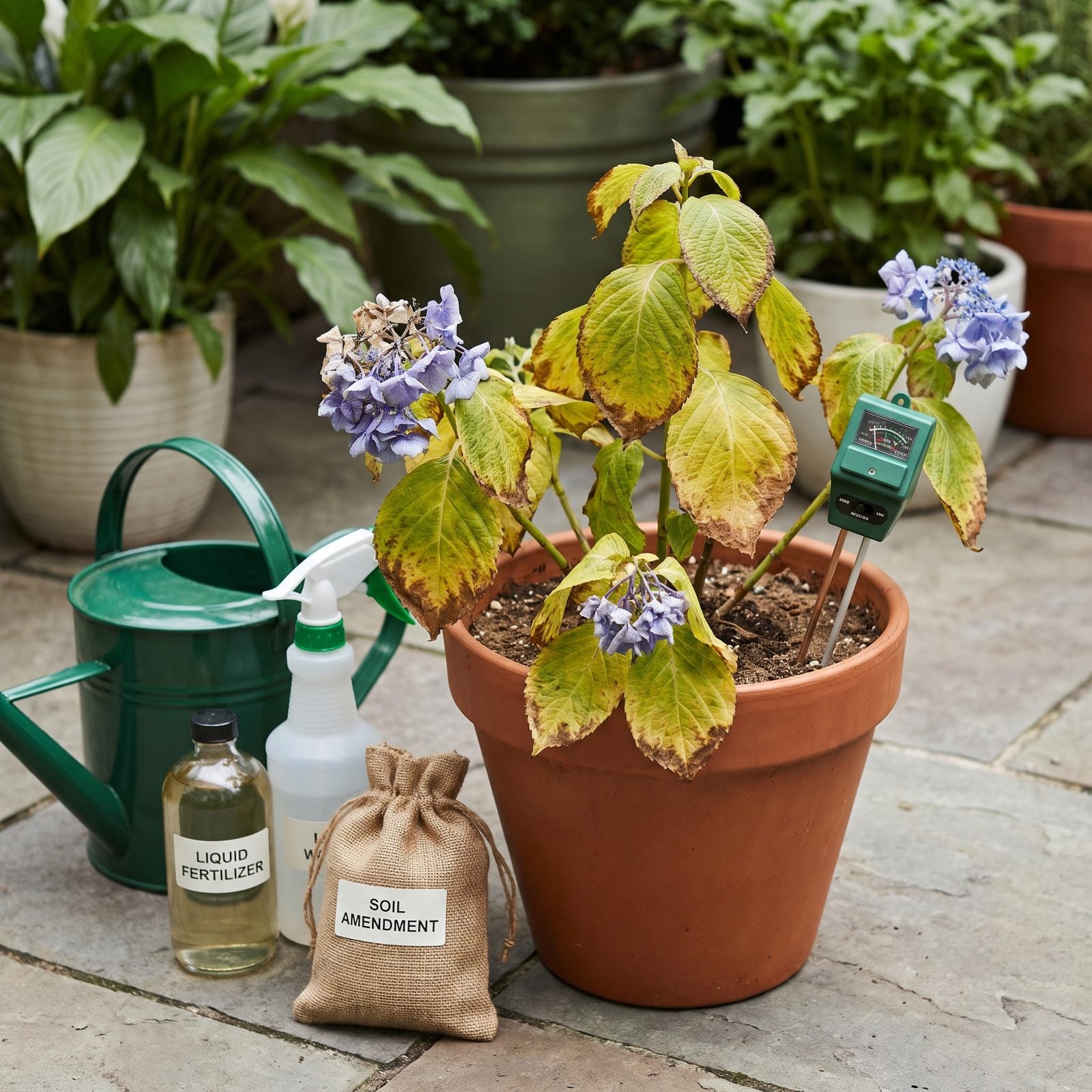
The more a plant falters, the harder you work on it. Extra water. A different feed. You move the pot twice in a week chasing the right light, while the easy plants that ask nothing get nothing, because they’re not giving you the drama.
This is sunk-cost thinking in a terracotta pot. Every hour you’ve already poured in makes it harder to walk away, so you pour in more, as though the next dose will finally justify all the previous ones. Economists call it throwing good money after bad. Gardeners call it Tuesday.
The struggling plant doesn’t get more care because it deserves it. It gets more care because you’ve already spent so much.
Here’s the hard truth. A plant that’s happy in its spot barely needs you, and if something demands constant intervention just to stay alive, that’s not devotion. That’s a mismatch you’re subsidizing.
4. You Pick the Plant That Matches Your Garden-Person Identity
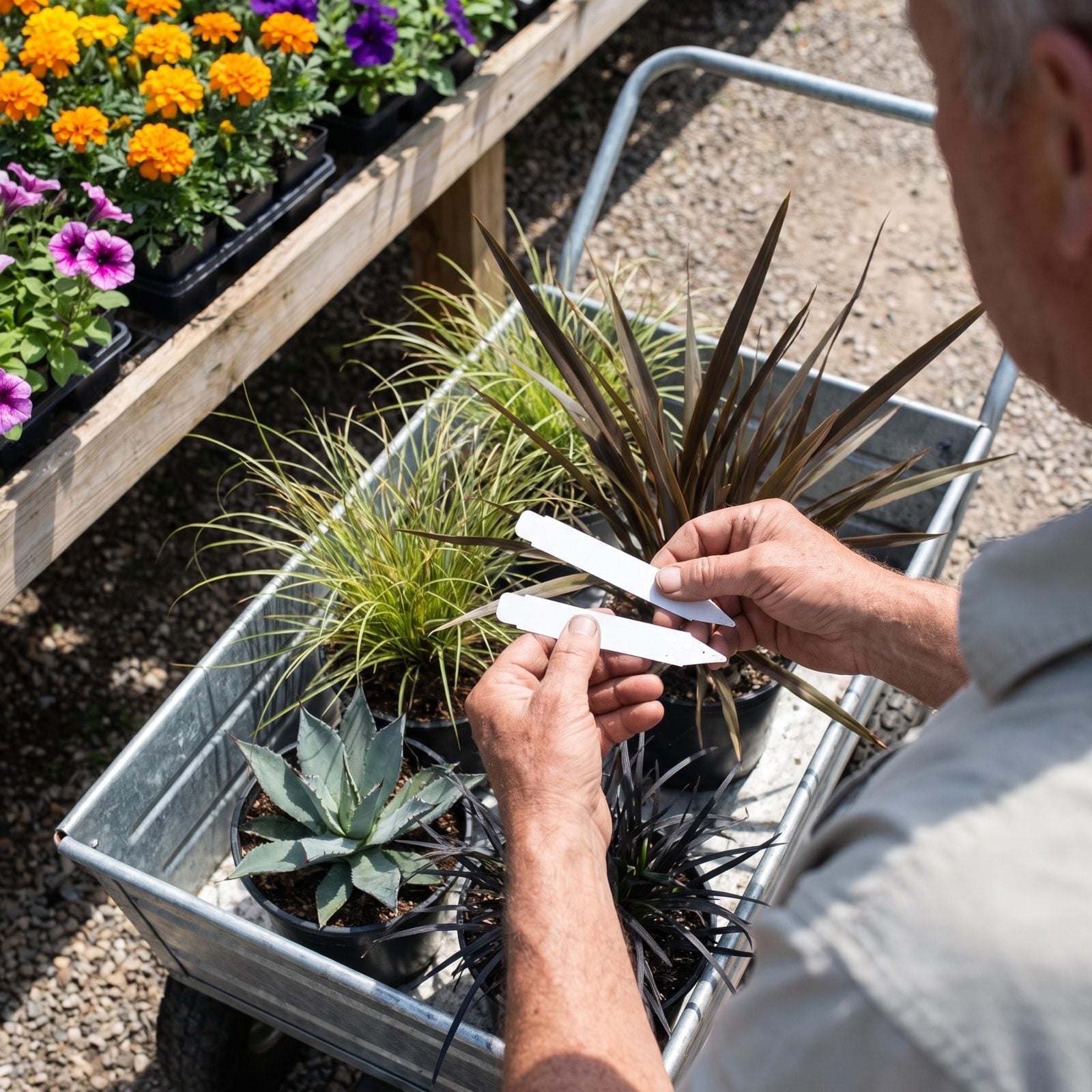
You didn’t buy that ornamental grass because your yard needed it. You bought it because it fits the version of yourself you’re gardening toward: the person with the loose, naturalistic, slightly wild beds, not the one with a row of orange marigolds along the path.
Plant choices are identity statements, same as the car in the driveway or the books on the shelf. We reach for what signals the kind of gardener we want to be seen as, which is often a wildly different person from the one who actually has time to maintain any of it.
The quiet cost is that identity-driven buying ignores the actual conditions of your plot. The plant has to live in dirt and weather, not in the image you have of yourself.
3. You Defend the Temperamental Gardenia After Friends Warn You
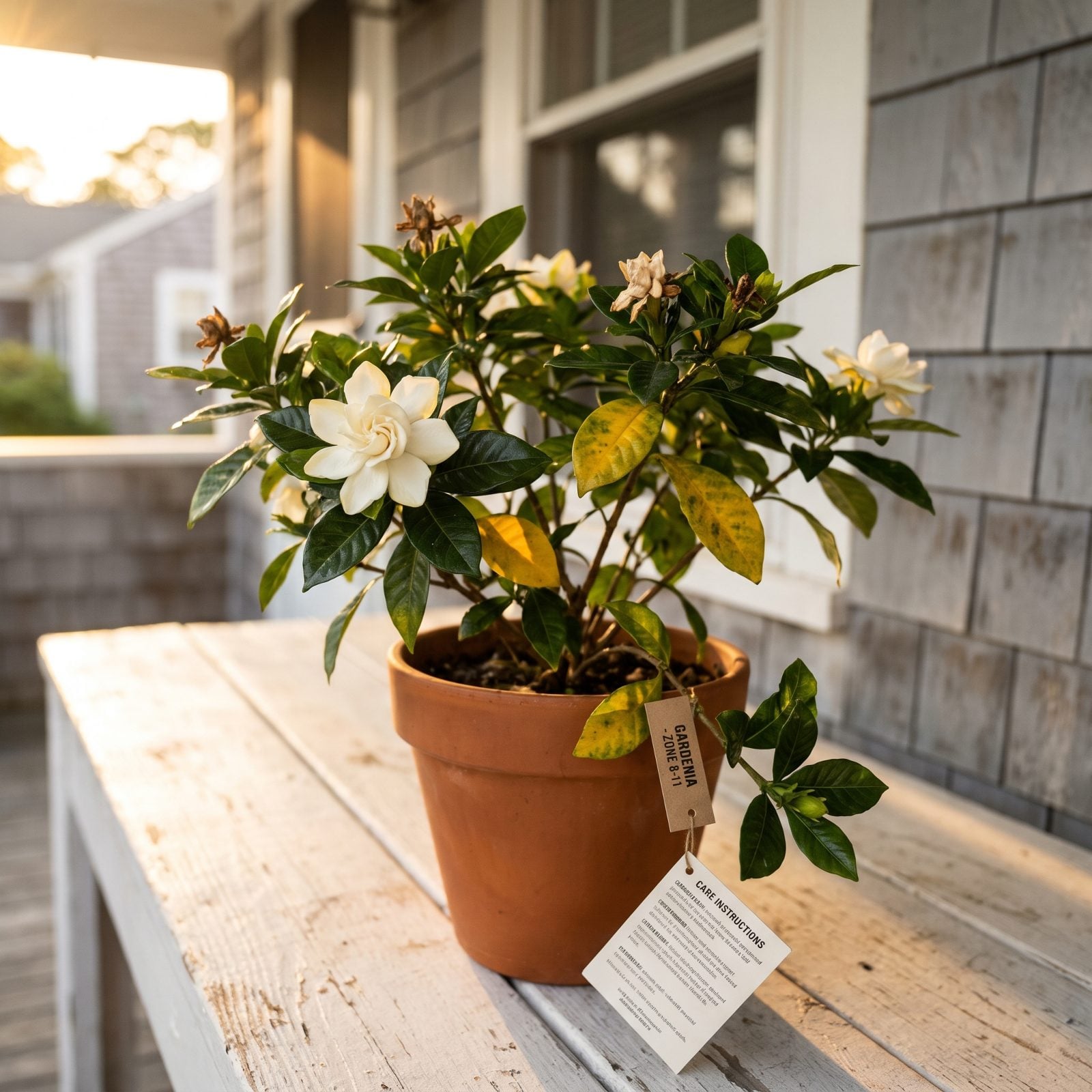
Everyone told you gardenias are fussy. Picky about soil pH, prone to dropping buds, allergic to drafts, cold snaps, and apparently your general vibe. You bought it anyway, and now when someone mentions the yellowing leaves, you hear yourself explaining that it’s just settling in.
The warning didn’t dampen the desire. If anything it hardened your resolve, because now there’s a point to prove. Call it the backfire effect: push against a strong attachment with facts, and the attachment often digs in deeper. You stop evaluating the plant and start defending your choice.
We do this with any decision we’ve committed to out loud. Once we’ve bought the thing and announced the plan, criticism feels like an attack on our judgment rather than useful information, so we marshal evidence for the gardenia and quietly file away everything that suggests we were warned.
The scent, when it finally blooms, really is extraordinary. That’s the trap. One perfect flower pays off a hundred small resentments.
2. The Pricier Japanese Maple Somehow Feels More Special
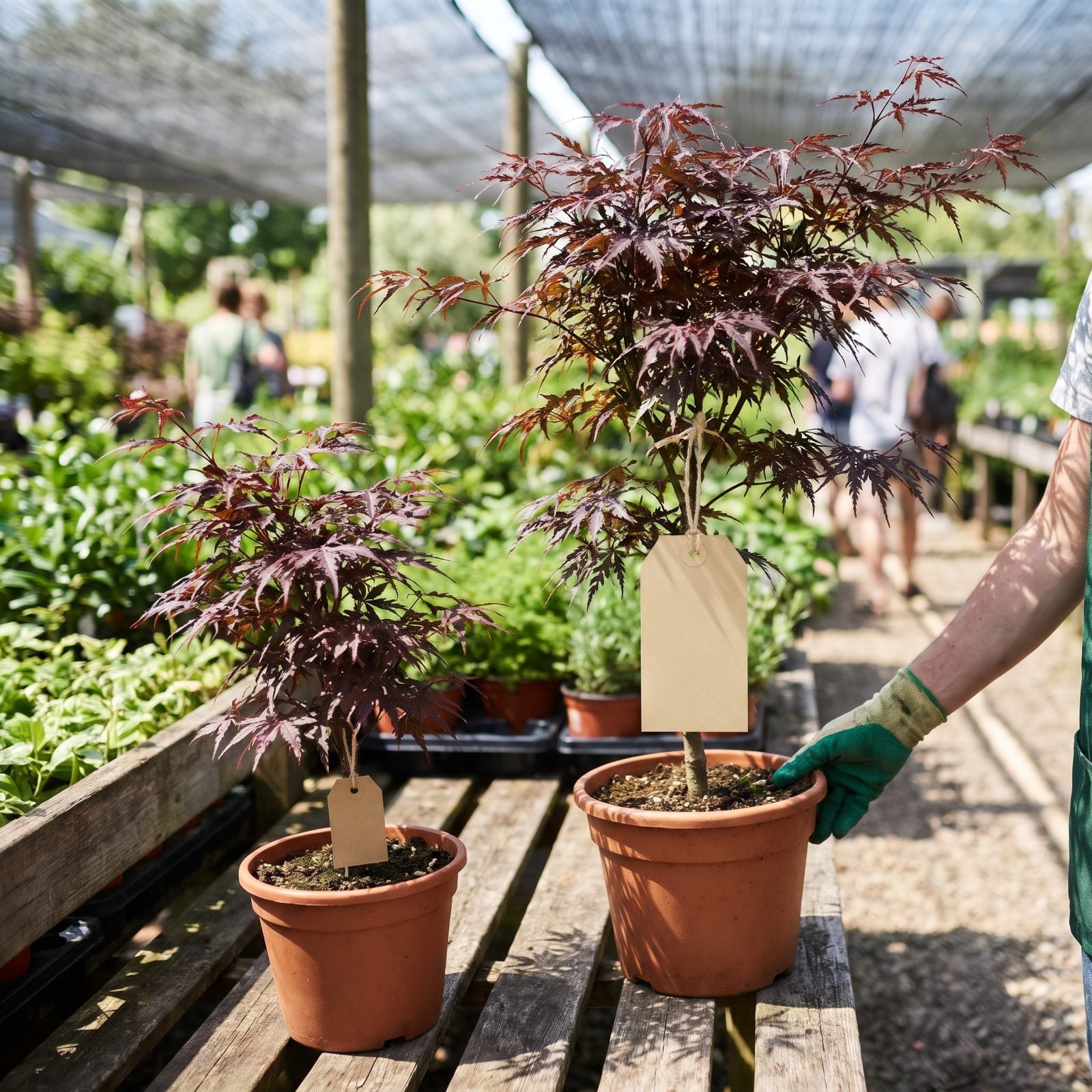
Put two Japanese maples beside each other and the dearer one feels classier before you’ve looked at a single leaf. The price does the thinking for you. Something that costs more must be better bred, more desirable, more worthy of the spot by the gate.
Call it the price-quality heuristic, a shortcut that mostly serves us when we genuinely can’t judge quality on our own. With plants, where a bigger pot or a trendier cultivar can inflate the number without improving the plant at all, it just quietly misleads us.
The smaller maple will likely catch up within a few seasons and cost you a fraction. But standing there in the aisle, the expensive one just seems to deserve your garden more.
1. The Jasmine’s Scent Makes You Forget Its Demands
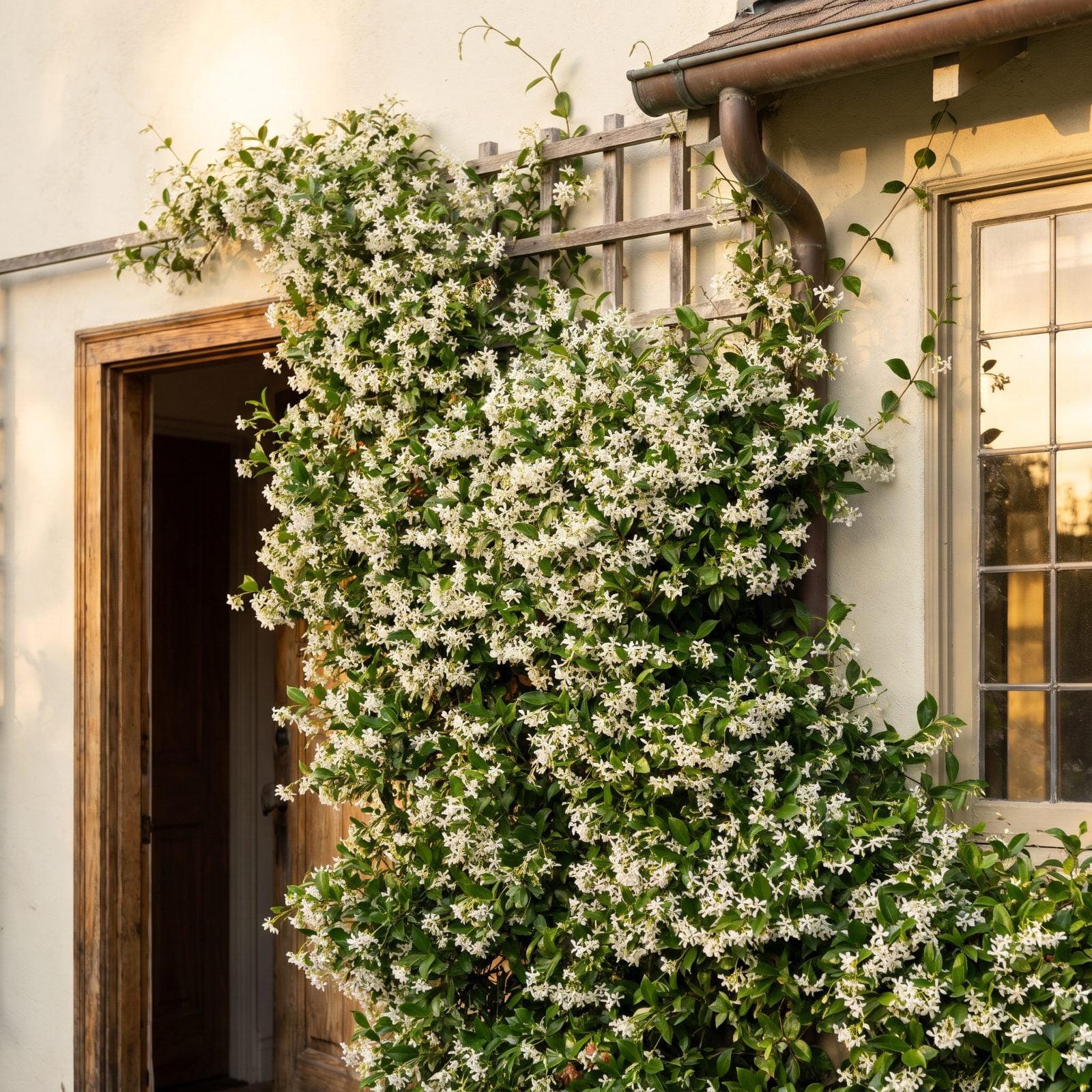
One warm evening the jasmine opens and the whole yard goes soft. The scent arrives before you reach the gate, and in that moment you forget everything the plant asks of you: the relentless growth, the tendrils reaching for the gutter, the yearly wrestling match to keep it off the windows.
Scent bypasses the reasoning part of the brain entirely. Smell routes straight through memory and emotion, which is why a single whiff can undo a whole season of annoyance in about two seconds. You’re not evaluating a vigorous climber anymore. You’re standing inside a feeling.
By morning the spell breaks and you’re back out there with the pruners, cursing it. Then evening comes again, and you forgive everything. That’s not a plant. That’s a relationship.