A Tokyo apartment the size of an American walk-in closet somehow holds a family’s winter coats, a week of laundry, a rice cooker, three futons and a vacuum. Nothing piles up on the floor. Nothing teeters. The secret isn’t minimalism, whatever the magazines keep insisting. It’s clever design — decades of living in tight square footage produced a quiet catalog of fixtures and habits that squeeze function out of inches most people never notice: the gap under the floor, the lip of the bathtub, the dead air above a kitchen cabinet. Here’s what actually makes those places work, and what you can steal for a cramped home of your own.
Please note that some of the images in this article were created with the assistance of AI.
32. Hide Seasonal Belongings Beneath a Raised Tatami Platform
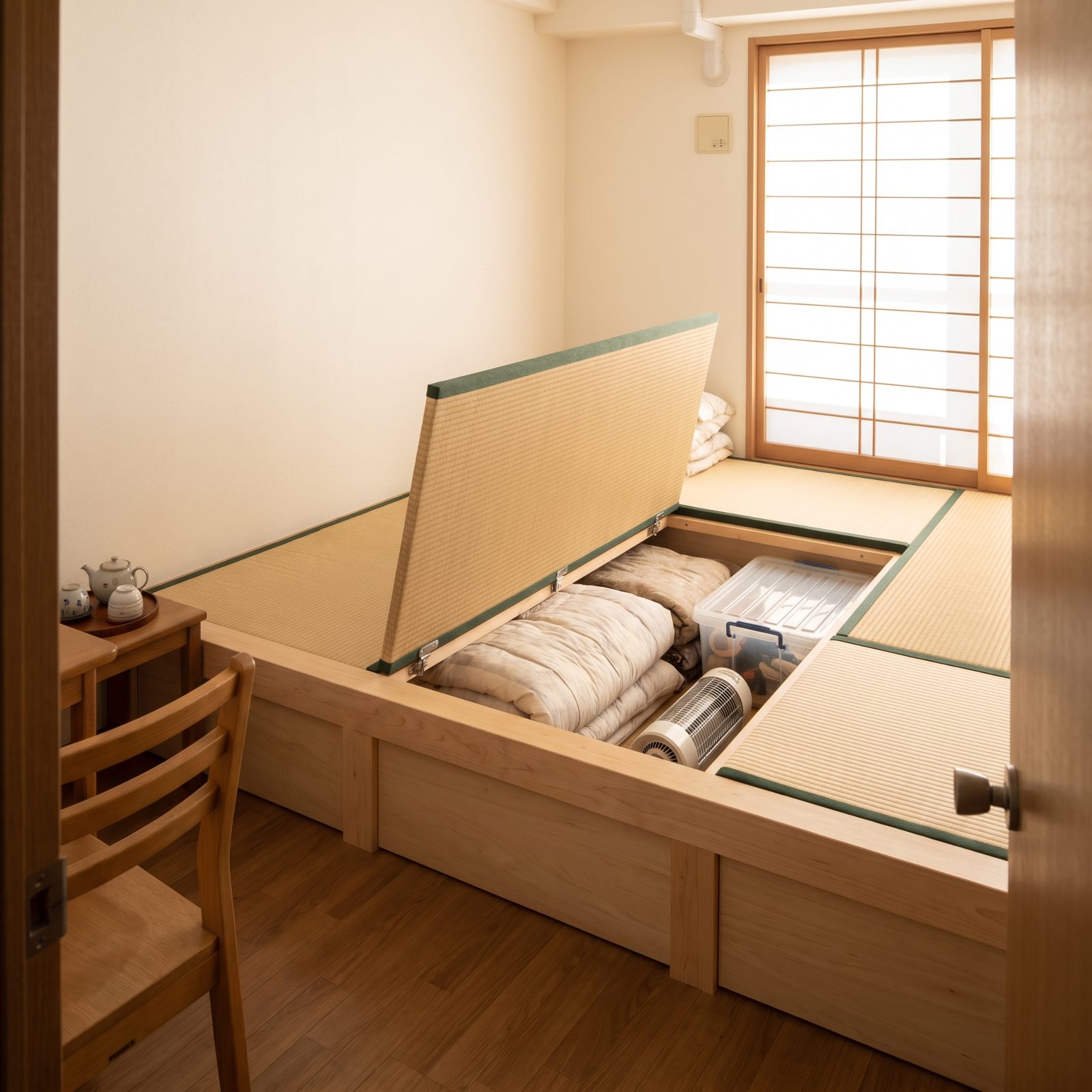
The floor itself is prime real estate, and a raised tatami platform turns the dead space beneath into a drawer the size of a small room. Lift a panel and you’re looking at winter bedding, the humidifier, the box of New Year decorations — everything seasonal, tucked away below the thing you walk on.
These go by koagari, and they pull double duty as casual seating, a reading nook, a place to perch and pull your socks off. The catch? Once something’s under the floor, it’s genuinely gone from sight. Great for the fan heater you won’t touch until December. Terrible for anything you’ll want on a Tuesday.
31. Turn the Genkan Step Into a Concealed Shoe Drawer
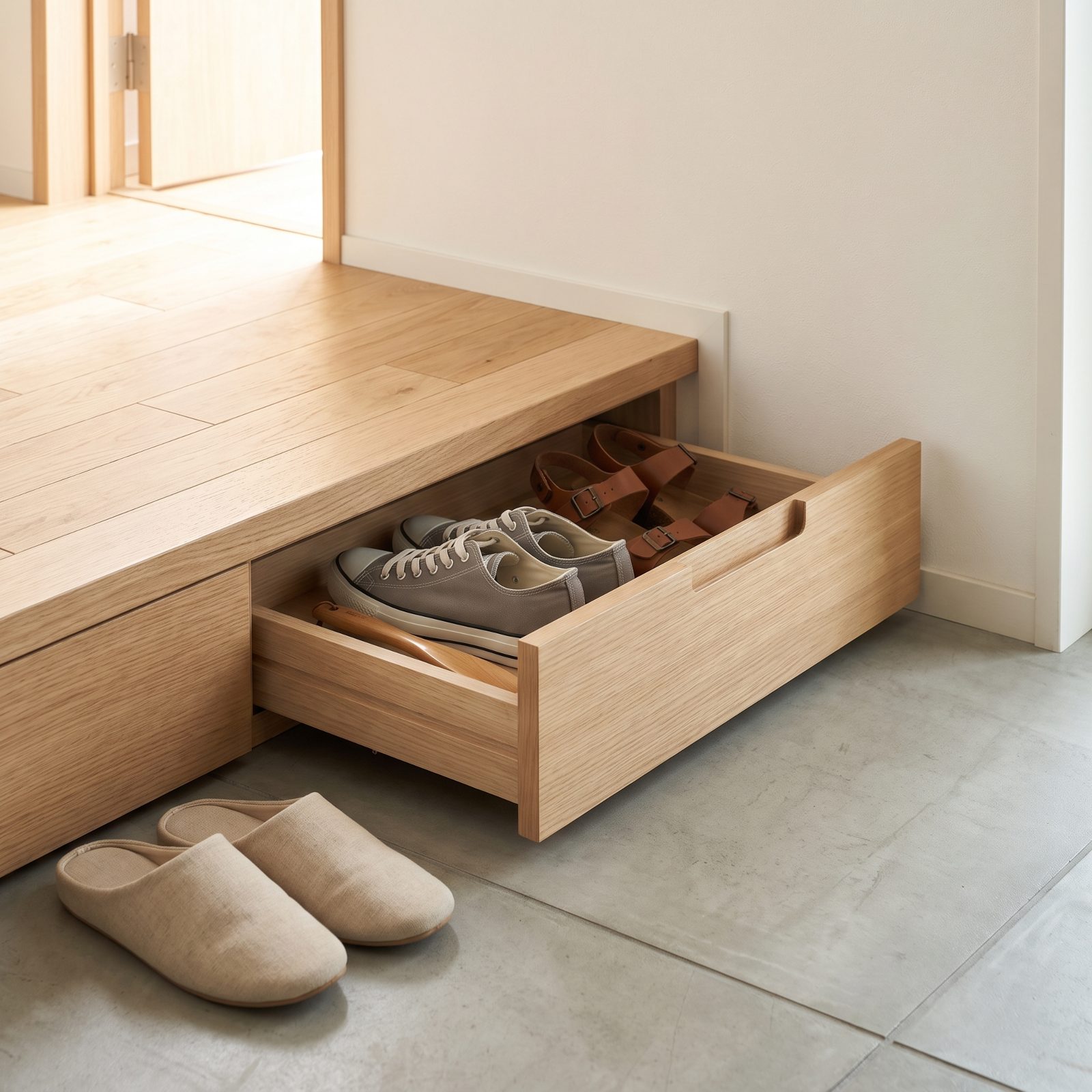
Every Japanese home has a genkan, the sunken entry where shoes come off before the floor rises into the living space. That rise is usually a solid, wasted block of wood. Smart layouts carve it hollow and fit a drawer into the riser, so the step you climb over is also where the sneakers live.
It solves the eternal entryway problem — shoes piling by the door because the closet is three rooms away. Here the storage sits exactly where you take them off. Honestly, it’s the kind of built-in that makes you wonder why the step was ever solid in the first place.
30. Store Futons Vertically Inside an Oshiire Closet
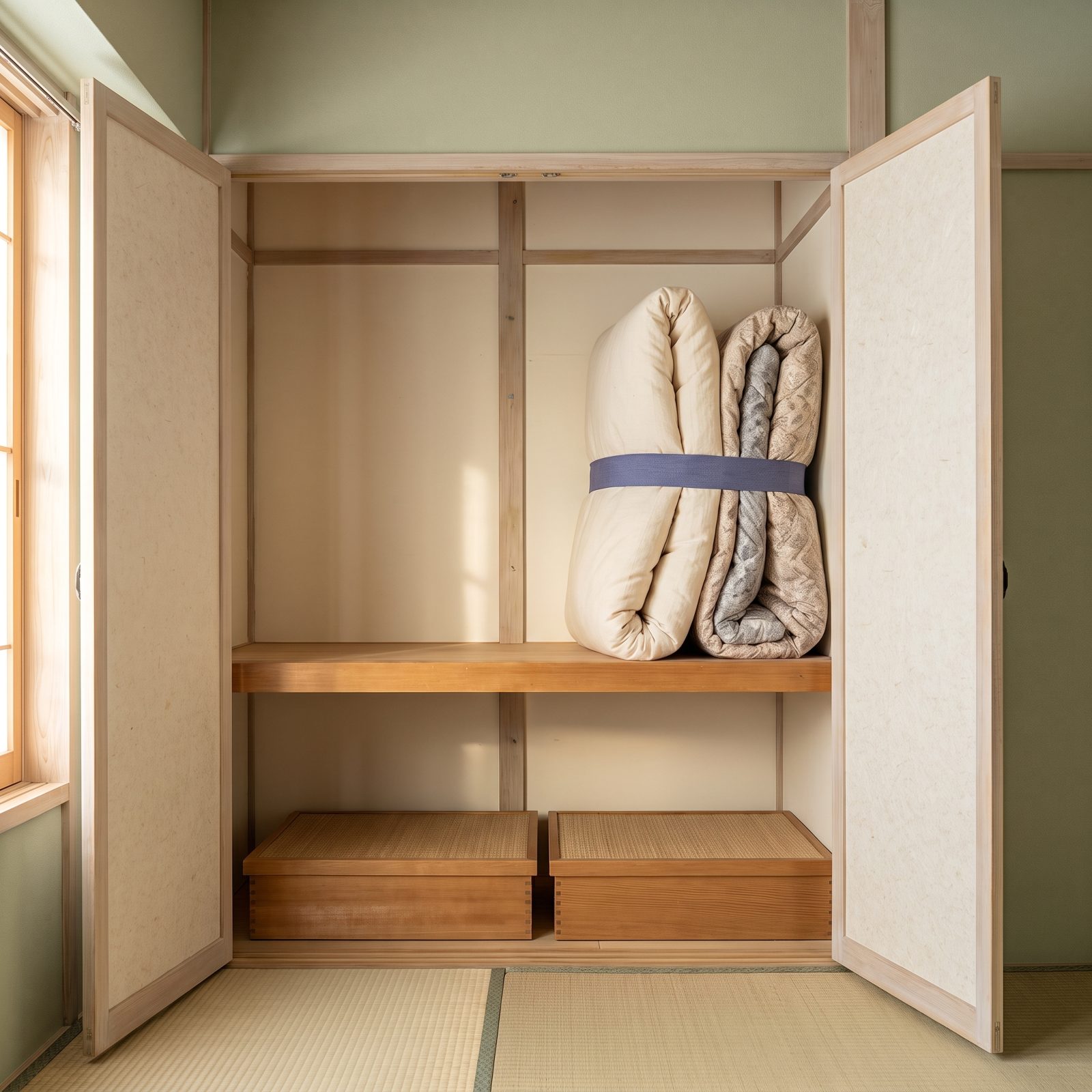
Futons sleep flat but store upright. Rather than leave a rolled bedding pile hogging the whole shelf, you stand the folded futon on its edge inside the oshiire, the deep closet built for exactly this. Cinch it with a band and it holds its shape like a book on a shelf.
The win is twofold. Vertical futons take a fraction of the footprint, and the airflow around a standing one keeps it from going damp and musty — something a flat heap sitting all day never manages. Anyone who’s unfolded a stale-smelling futon knows that difference matters more than it sounds.
29. Use Tsuppari Tension Poles to Build Shelves Without Drilling
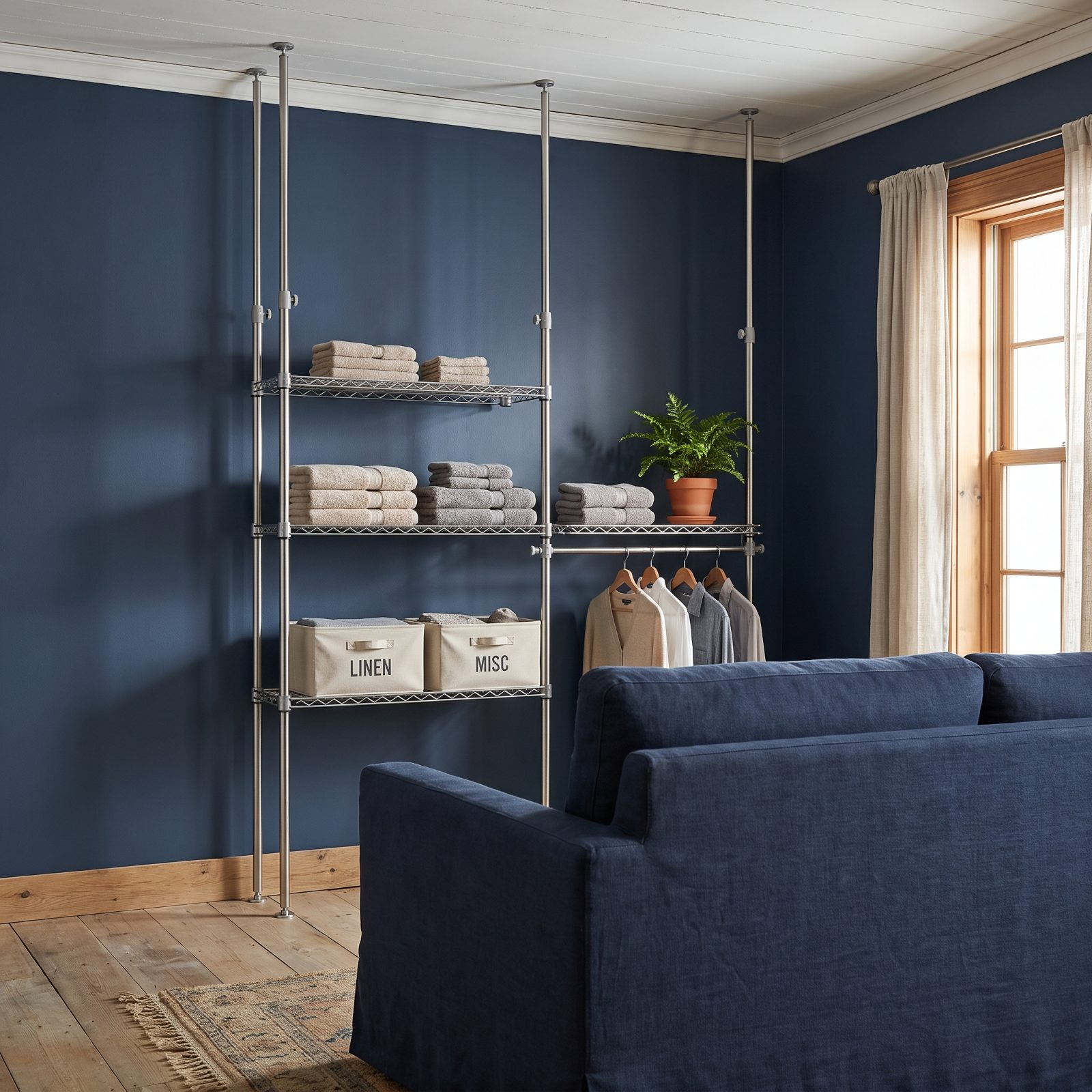
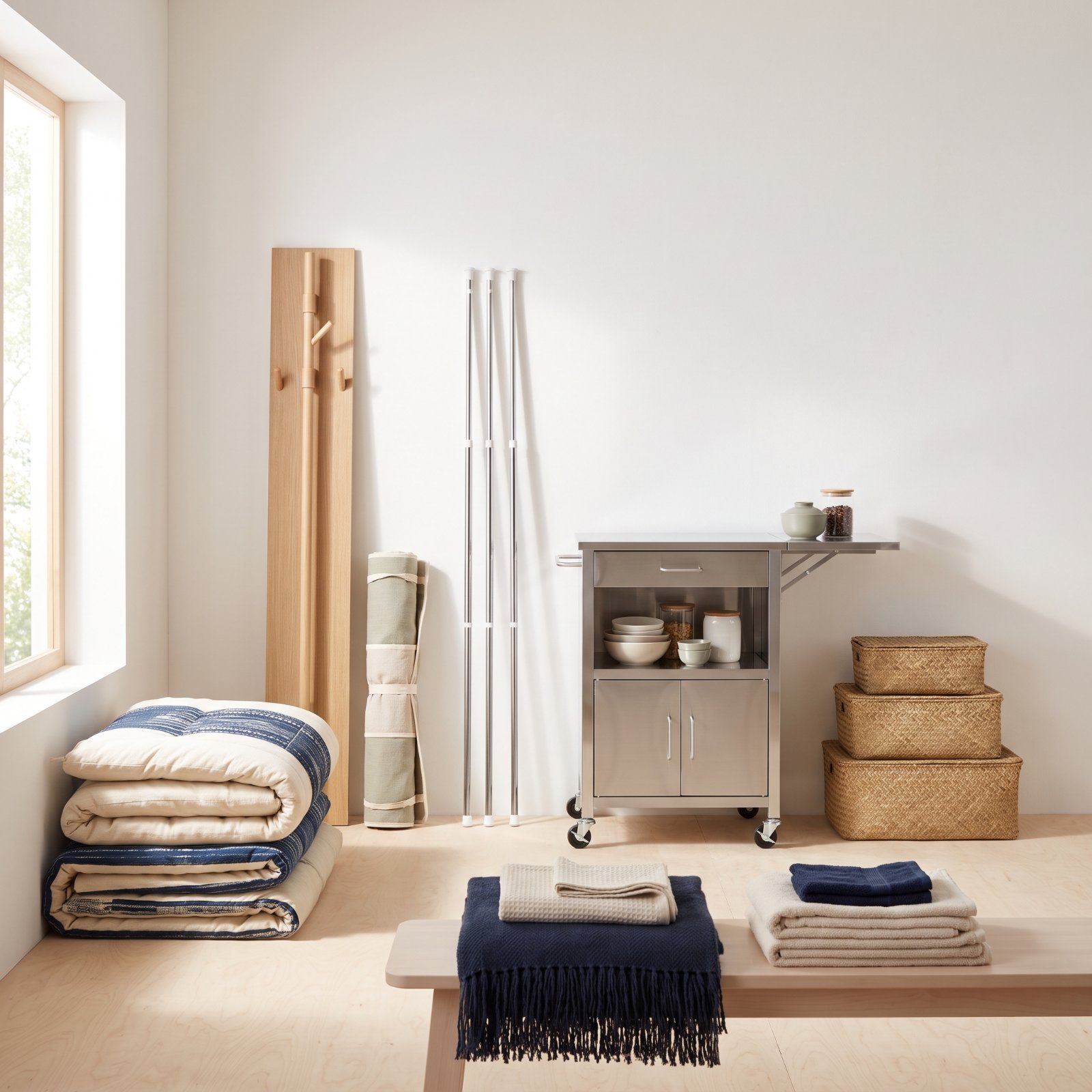
Renters can’t drill, so Japan built an entire storage economy around not needing to. Tsuppari tension poles jam floor-to-ceiling on a spring, gripping by pressure alone, and from there you hang shelves, rods, hooks, whole wire systems. No holes, nothing to patch, deposit intact.
The thing nobody mentions: the ceiling matters as much as the pole. A thin suspended ceiling can bow or crack under a loaded pole, so you want pressure against something solid. Keep the weight sensible and you’ve built a wall of storage that leaves no scar when you move out.
28. Hang a Narrow Rack From the Washing-Machine Drain Pan
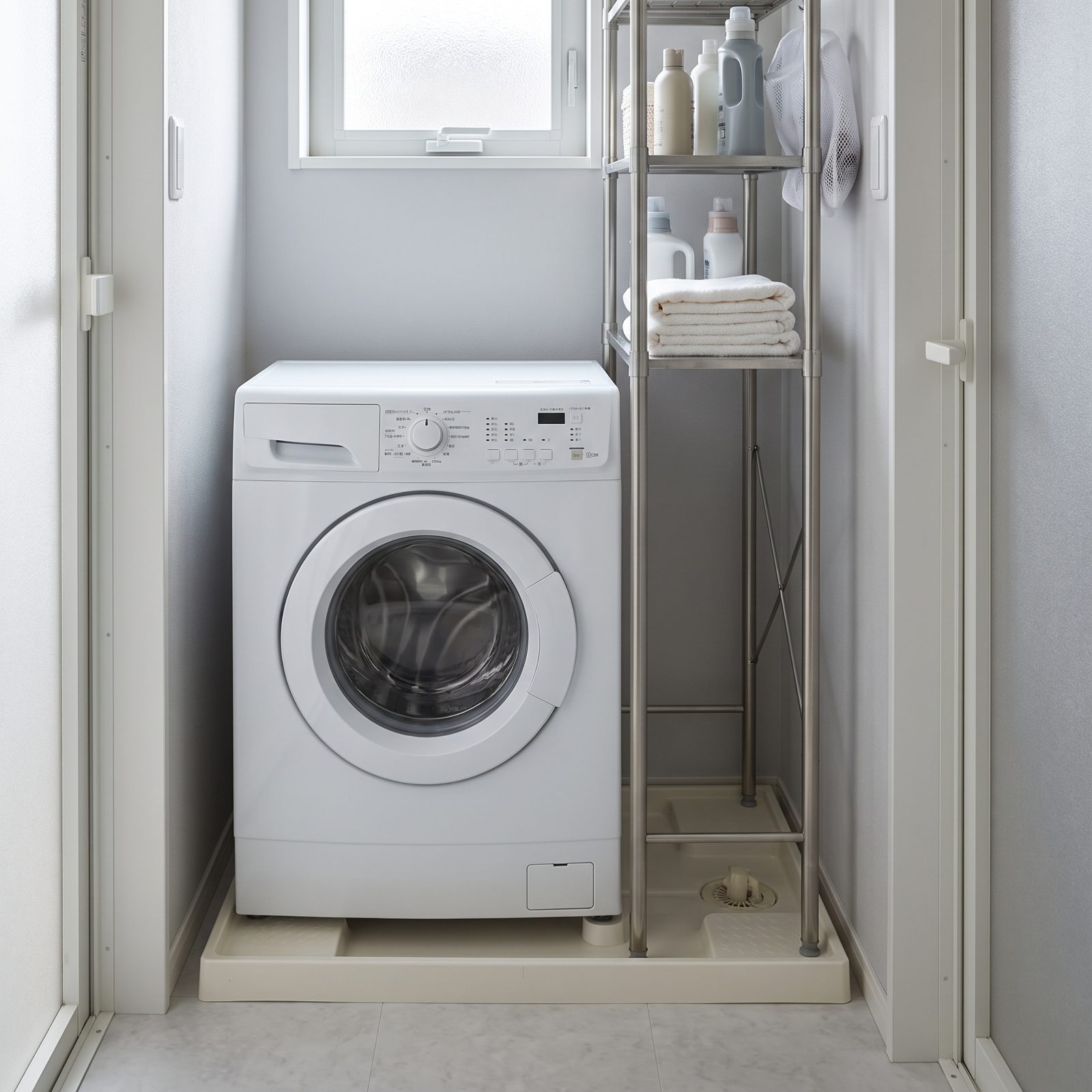
The washing machine sits on a shallow plastic drain pan, and the few inches around and above it are usually empty, awkward, wasted air. Size a slim rack to that gap and it becomes a tower for detergent, bleach, mesh wash bags and the towels you grab on the way out of the shower.
Everything you need for one task, stacked in a single vertical column at arm’s reach — no trekking supplies in from a cabinet. In a utility nook barely wider than the machine, that reclaimed vertical foot is the whole difference between cluttered counters and clear ones.
27. Use a Ceiling-Height Earthquake-Braced Cabinet Instead of a Wide Dresser
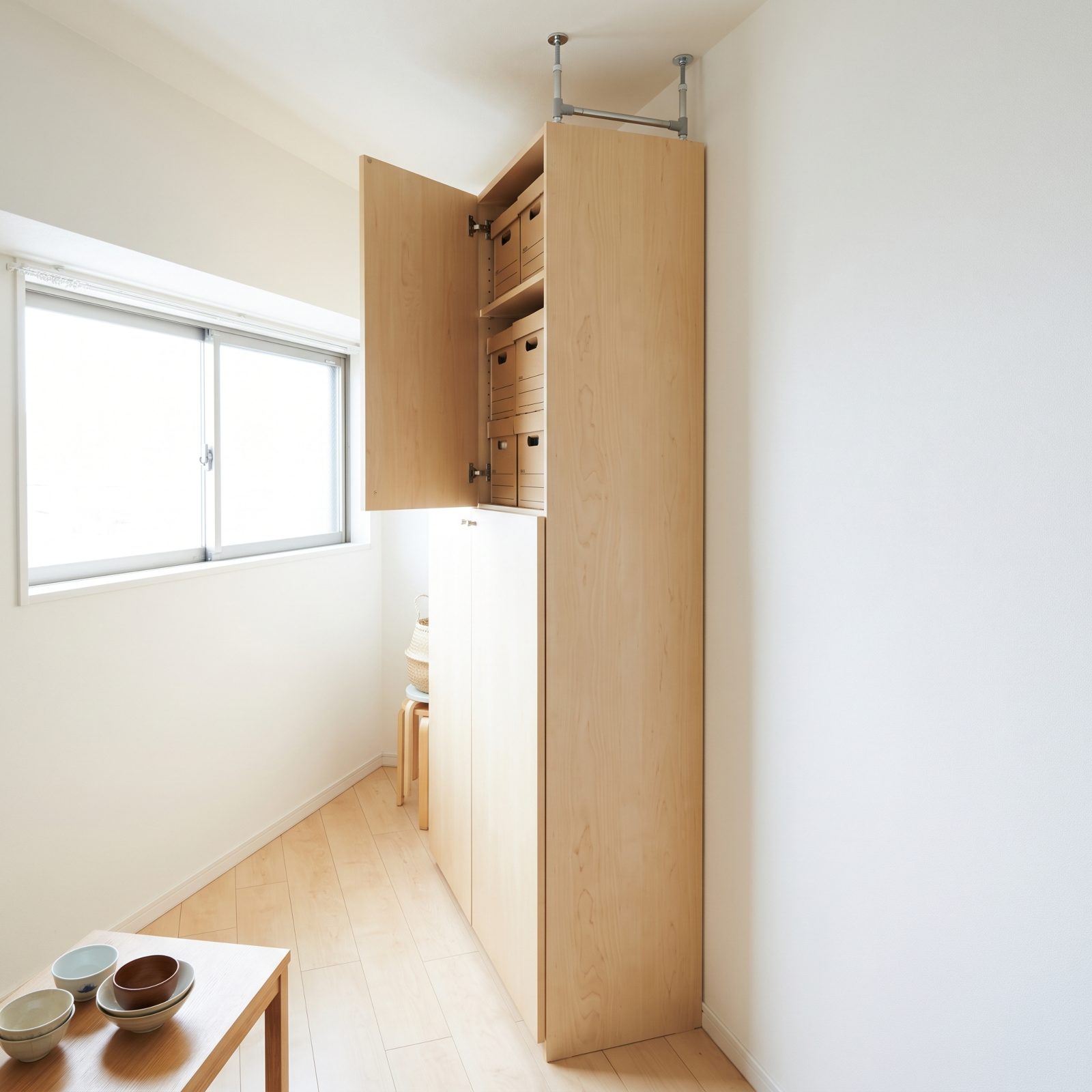
A wide dresser eats floor. A tall, narrow cabinet climbing toward the ceiling holds the same clothes while standing on a fraction of the footprint. You buy storage by the vertical foot, where it’s cheap, instead of the horizontal foot, where it’s precious.
In earthquake country this isn’t optional decor — it’s survival. These cabinets get braced to the ceiling or wall with tension fittings or brackets so a tremor can’t tip them over you. People overlook the bracing until the first quake rattles the dishes, and then they never skip it again. The tall cabinet only works because it can’t fall.
26. Use the Unit-Bath Drying Bar for Hanging Laundry Storage
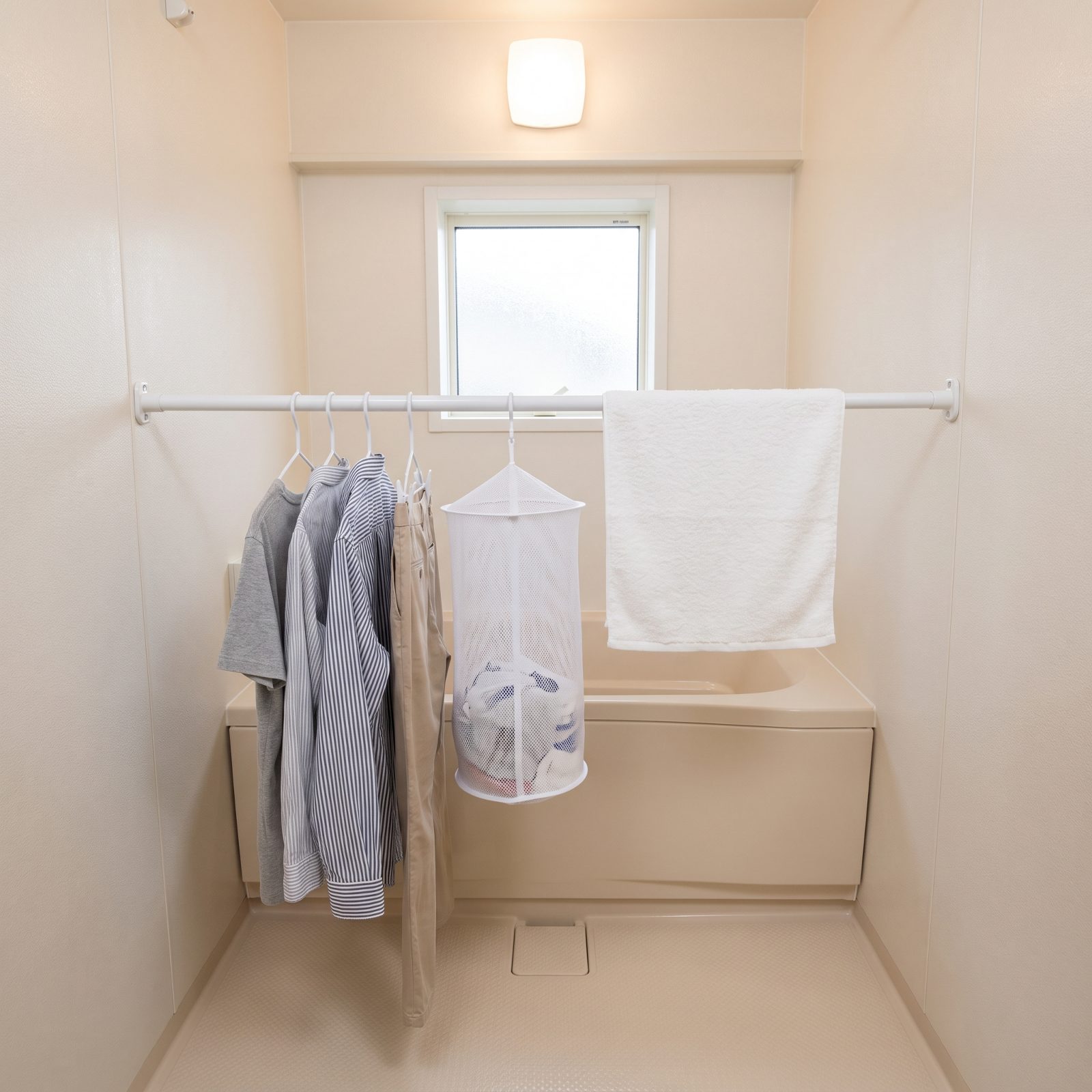
Japanese apartments cram the tub, shower and sink into a sealed plastic module called a unit bath, and most come with a sturdy horizontal bar overhead meant for hanging laundry to dry. Pair it with the bathroom’s built-in ventilation fan and the whole room turns into a drying closet.
On rainy weeks, when the balcony’s useless, that bar is where the shirts go. Clip a few baskets to it between loads and it moonlights as storage for washcloths and bath supplies too — one bar, doing the work of a dryer you’d have no room for anyway.
25. Cover a Washing Machine With a Removable Countertop
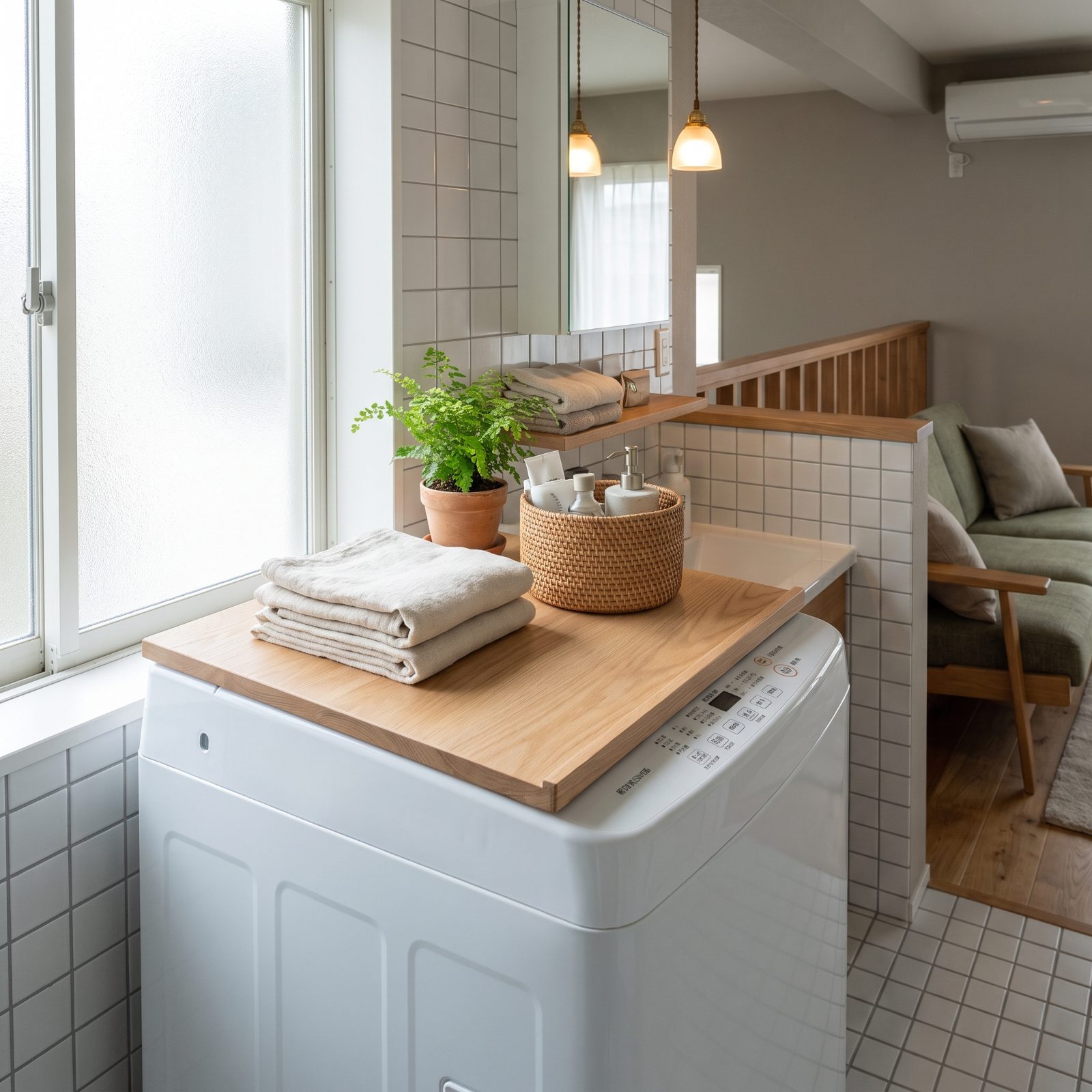
A top-loading washer gives you a flat lid and takes it right back the moment you need to open it. A removable wooden countertop board settles the standoff: rest it on top of the machine, lipped edges hooked over the lid, and the dead space above becomes a shelf for folded towels, toiletries, a basket of odds and ends. Wash day comes, you lift the board off, done.
It’s a small move that recovers a real surface in a room that has none to spare. Just don’t screw it to the wall. The whole trick is that the board simply sits on the washer and lifts away whenever you need the lid.
24. Fit a Pull-Down Basket Inside a High Kitchen Cabinet
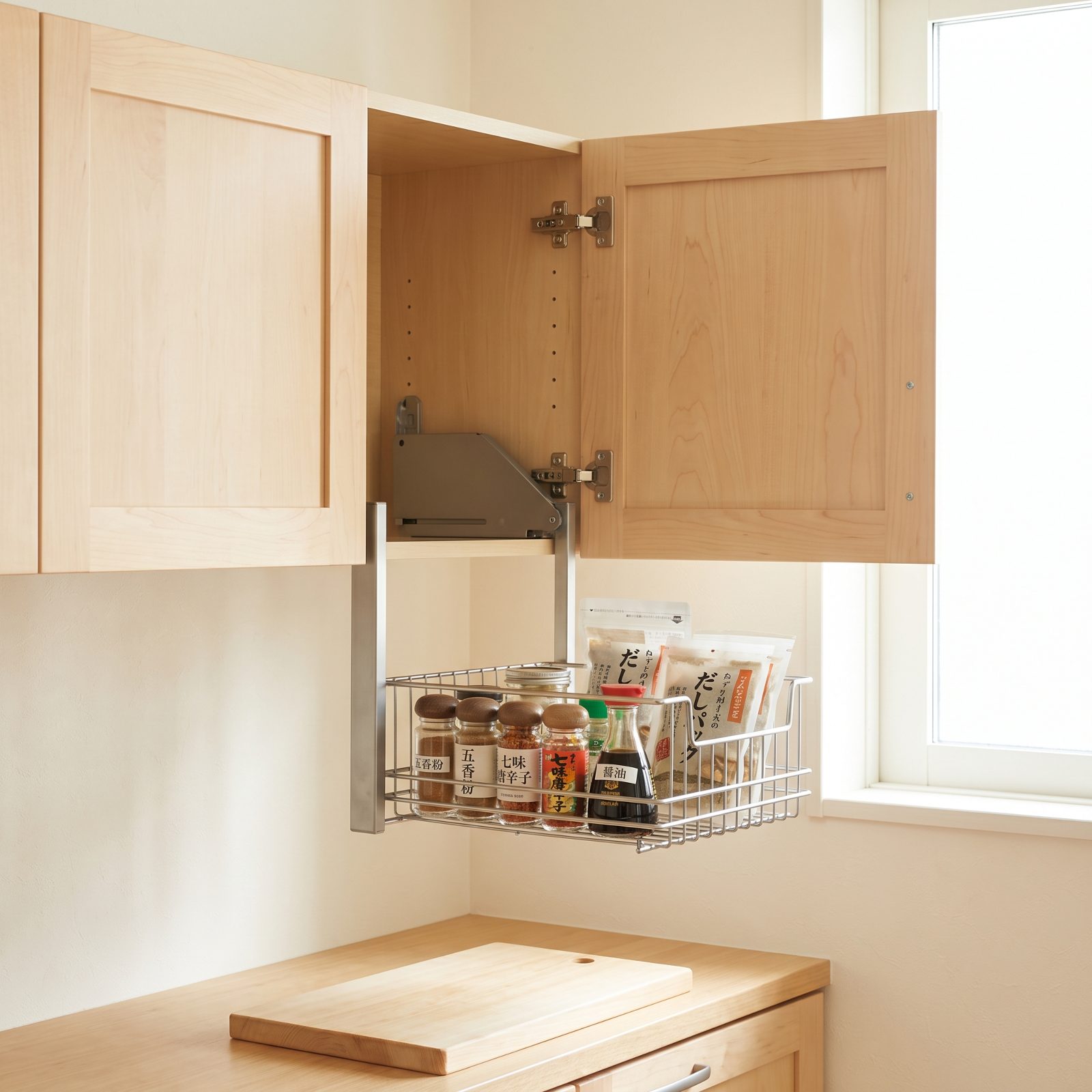
The top shelf of any kitchen cabinet is a graveyard — too high to see, too high to reach, so it fills with things you forget you own. A pull-down basket unit fixes that. Open the door and a single wire basket lowers out of the cabinet on a lift mechanism, carrying spice jars, soy sauce and bags of dashi packs down to easy reach, then lifts back up inside when you’re done.
Suddenly the high cabinet is real storage instead of a dusty shrine to expired spices. In a kitchen where every shelf counts, writing off even one hard-to-reach cabinet is a luxury nobody in a tiny apartment can afford.
23. Install a Sink-Spanning Rack That Rolls Away After Dishes Dry
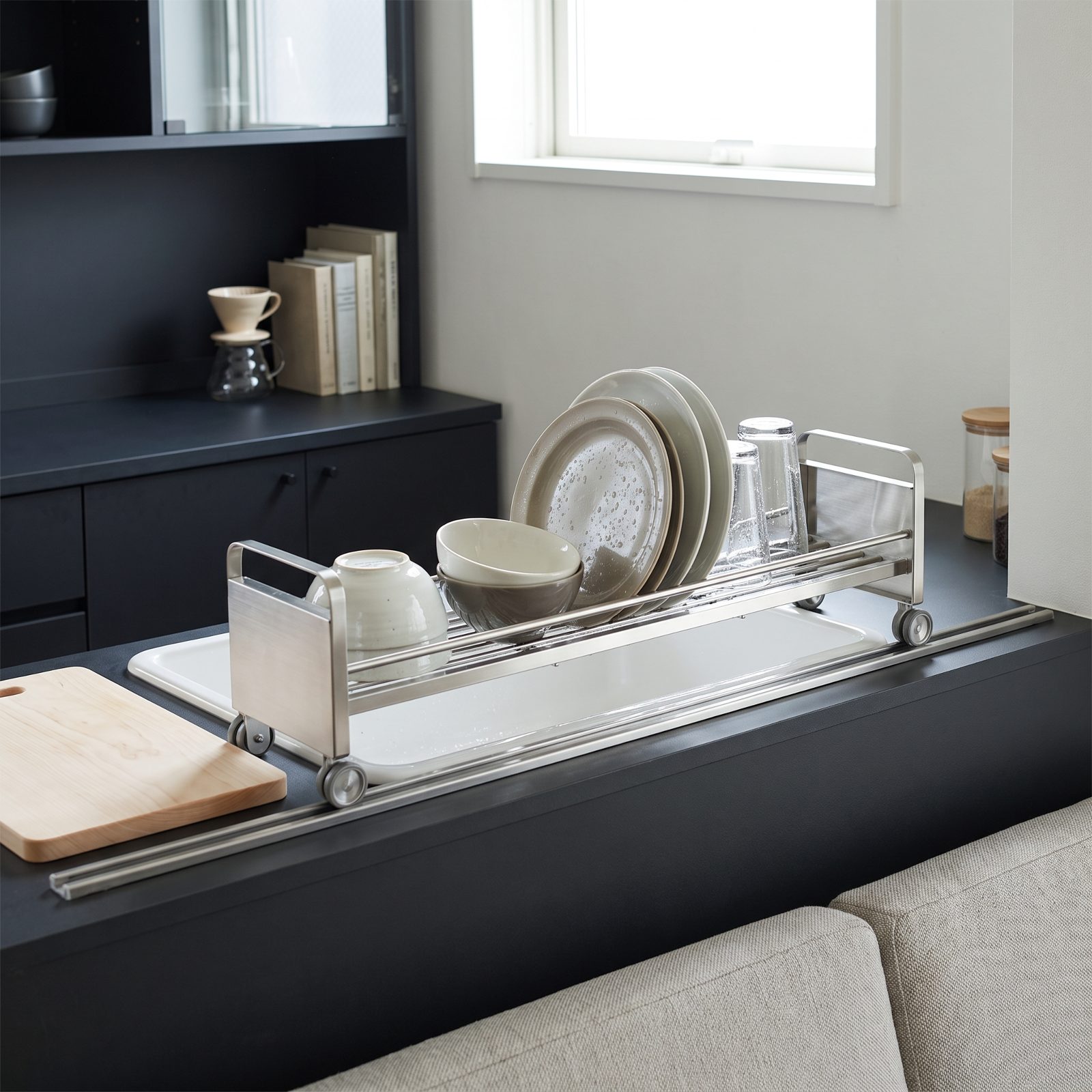
A dish rack parked on the counter claims permanent territory in a kitchen that has none to give. The fix is a slim rack that bridges across the top of the sink itself, so dishes drip straight back into the basin instead of onto a tray you have to keep emptying.
Better still are the ones that roll or slide aside once the dishes dry, clearing the sink for washing again. The counter stays open all day and turns into a drying station only when you actually need it. And that captures the whole philosophy of these apartments in one little rack: nothing permanent gets a space, every inch does two jobs, and the clever stuff vanishes the moment you’re done with it.
22. Add a Riser Shelf That Works Around Under-Sink Plumbing
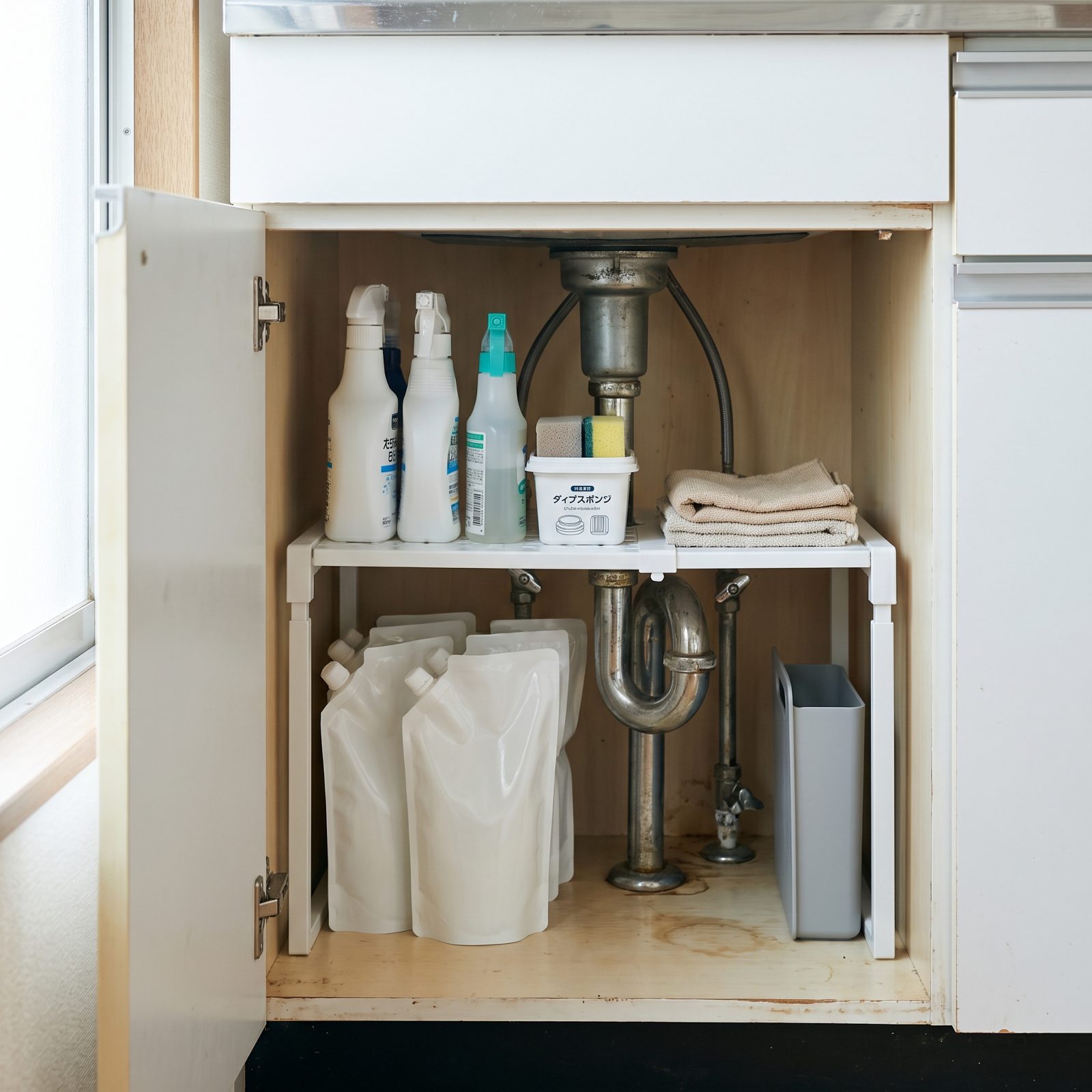
The space under a Japanese sink is mostly wasted air, broken up by that awkward drainpipe elbow that refuses to let you stack anything flat. A riser shelf steps right over the pipe, landing its legs on either side of the trap, and suddenly you have two floors where you had one.
Look for the adjustable kind with legs you can set at different heights, since no two sink cabinets put the plumbing in the same place. The rigid one-size models are a gamble.
21. Slide a Wheeled Storage Cart Into the Gap Beside the Refrigerator
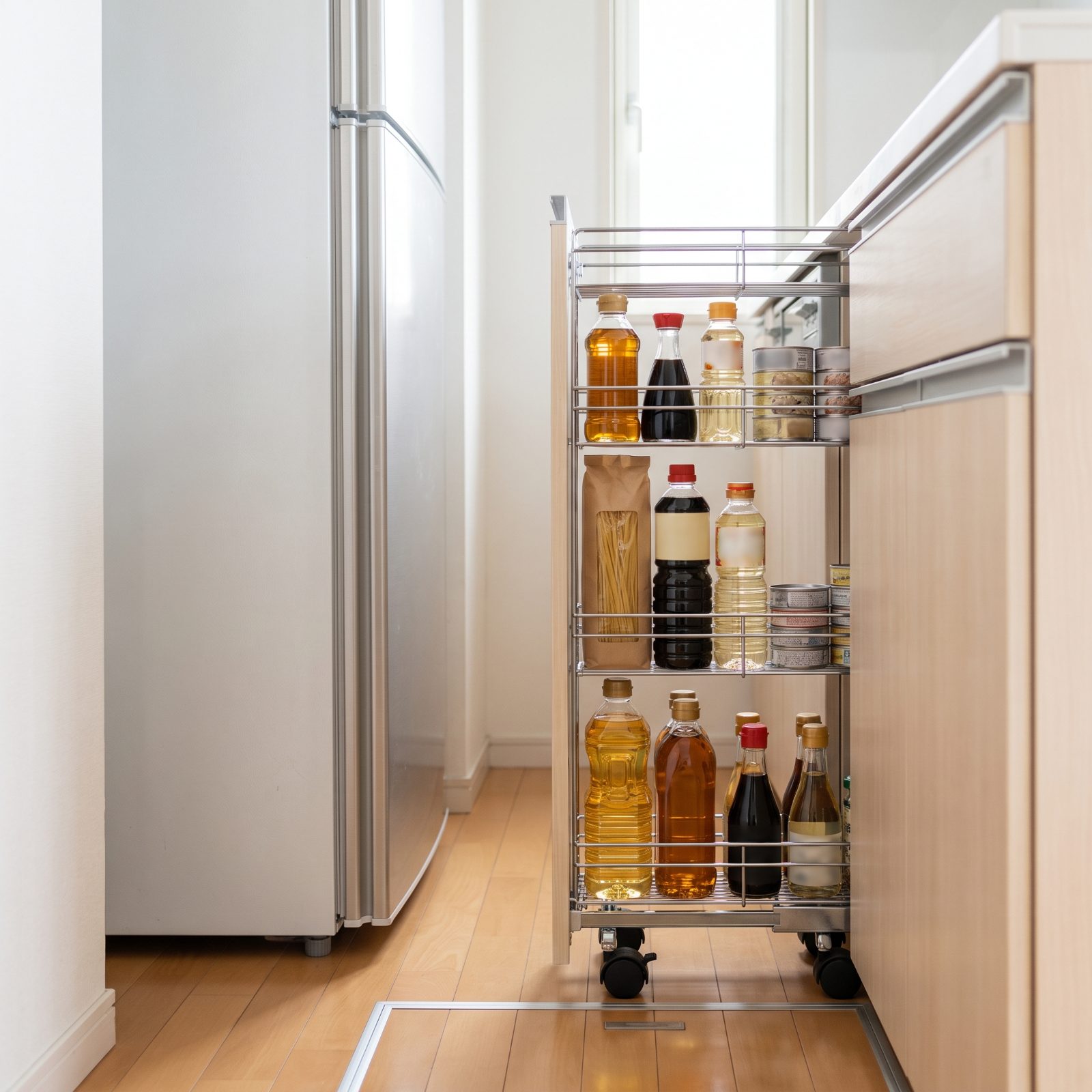
That narrow slot beside the refrigerator, often just a few inches across, turns into a pantry when you fit it with a slim rolling pull-out cart behind a matching wood front panel. Everything stores vertically, and the whole thing rolls out so you can reach the bottle hiding in the back instead of excavating.
The smart ones are barely wider than a cutting board and ride on casters that handle the slight lip where flooring meets the cabinet base. Oils, sauces, dry goods, all upright and visible. Roll it out, grab what you need, roll it back. Looks like nothing until it’s quietly doing the work of a full shelf.
20. Mount a Magnetic Spice Rack on the Range Hood
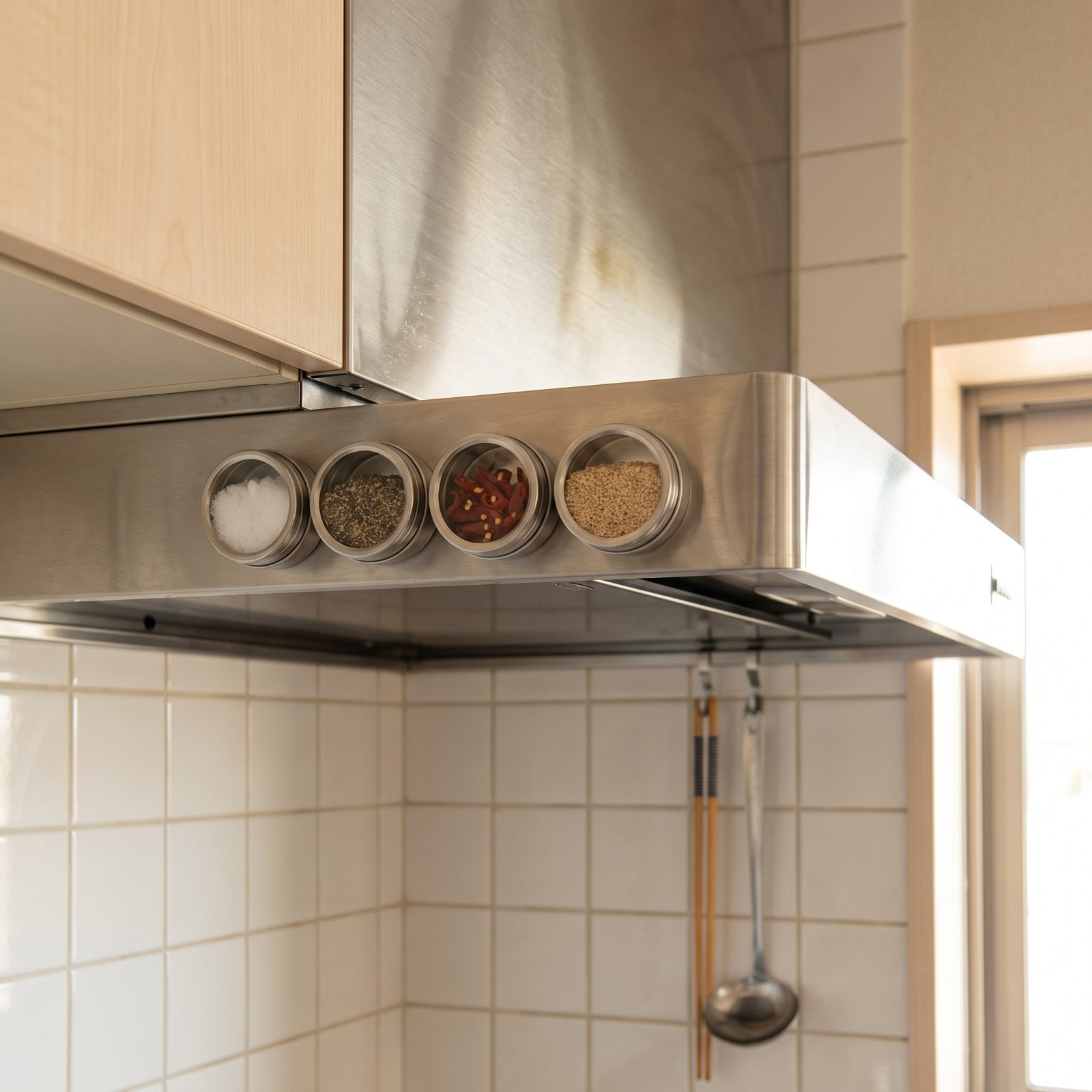
The flat steel face of a range hood is a magnet board waiting for a job. Stick small magnetic tins there and your most-used seasonings sit within arm’s reach of the burner, off the counter entirely.
What makes this one genuinely clever is that it uses a surface nobody thinks of as storage. Clear lids let you see what’s running low, and the hood stays cleanest right at the front, away from the steam, so the tins don’t get coated in grease as fast as you’d fear.
19. Fit a Rolling Rice Bin Beneath the Kitchen Counter
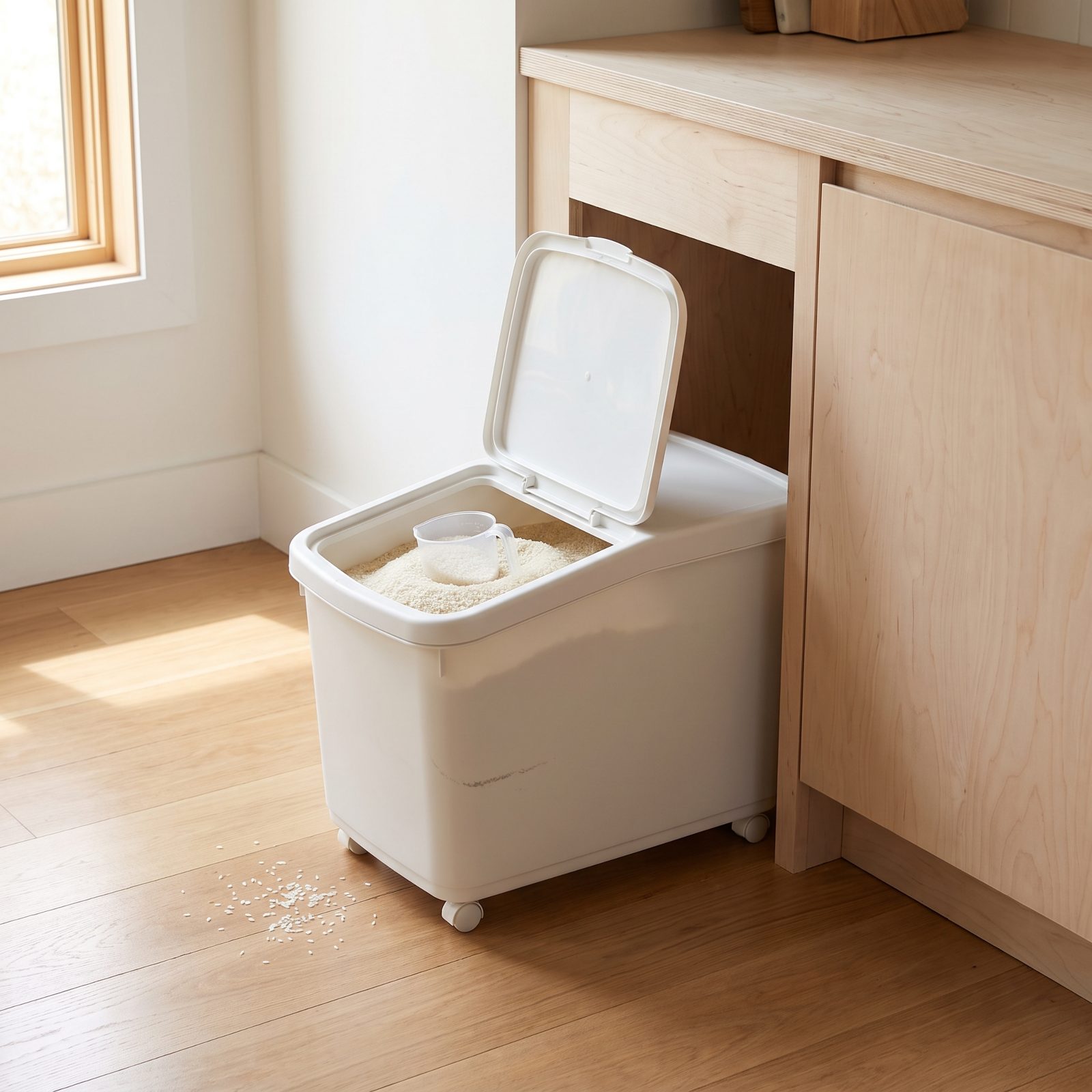
Rice gets bought in big bags and stored in bulk, which is a problem when counter space is measured in inches. The rolling bin lives in the gap under the counter and slides out at mealtime. Open the lid, scoop, done.
Flat lids matter here. A domed one steals the space above it, so the sleek low models win. They also seal against humidity, which keeps rice from going stale or inviting pantry moths, the uninvited guest of every warm kitchen.
18. Hang Umbrellas From the Inside of the Shoe-Cabinet Door
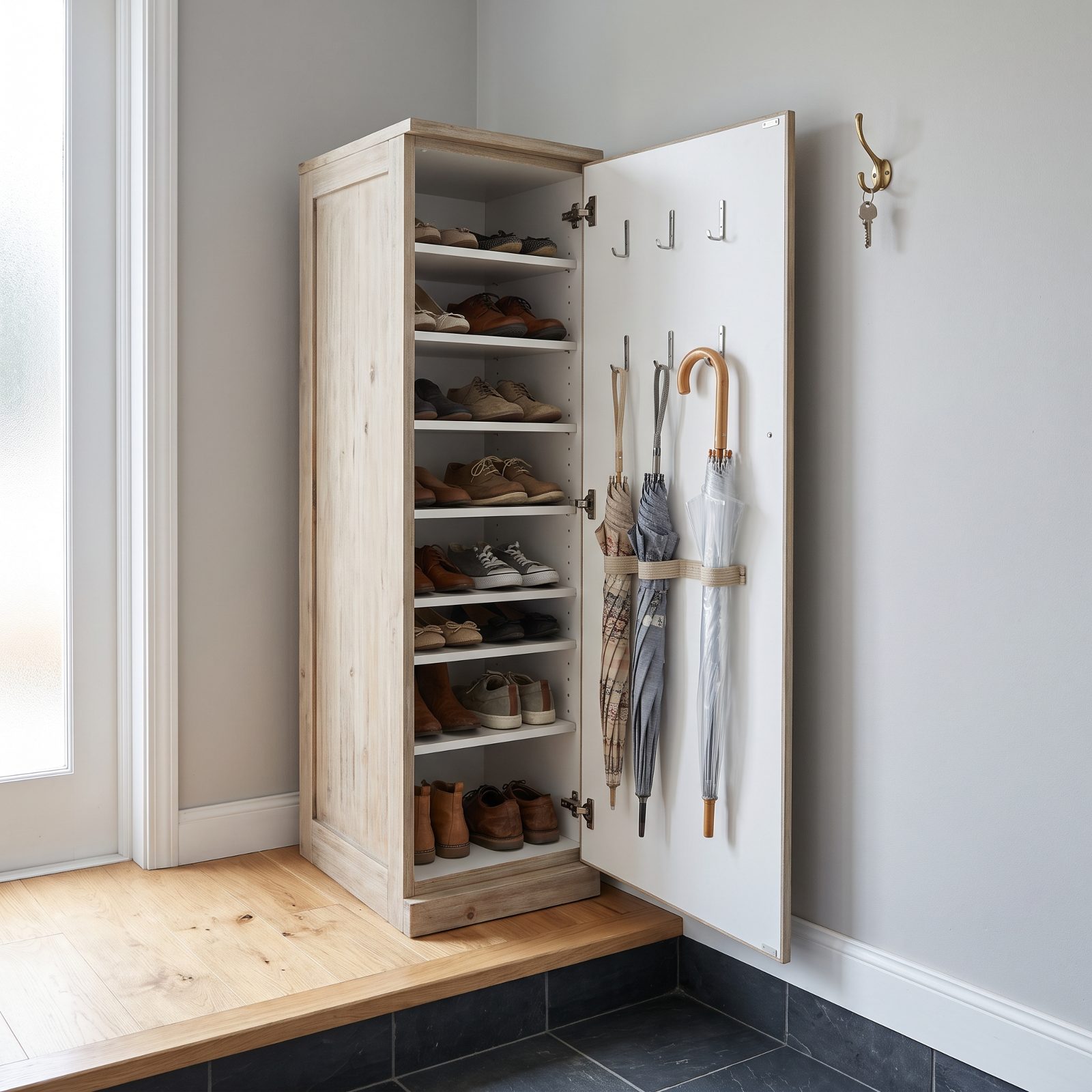
The umbrella problem is a wet one. They drip, they lean in corners, they slide down and clatter. Hang them inside the shoe-cabinet door instead and they stay upright, hidden, and off the floor you just stepped onto.
A couple of slim hooks or an elastic loop does it. Folding umbrellas clip in at the top, the big clear vinyl ones hang long, and once you shut the door the whole thing vanishes. The inside of a cabinet door is probably the single most overlooked storage surface in any home.
17. Store Slippers in a Slim Holder Behind the Entry Door
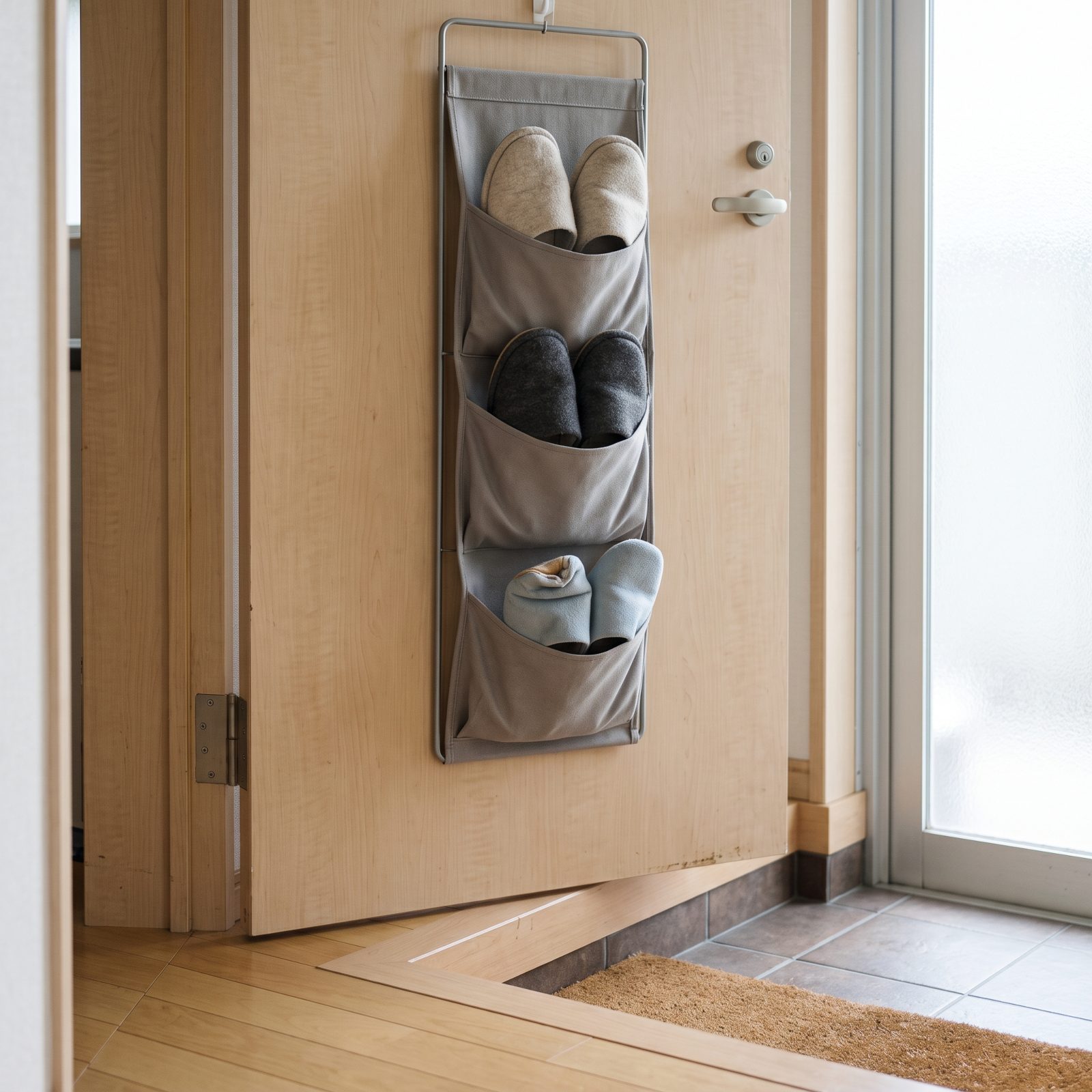
Slippers pile up fast in a home where everyone swaps shoes at the door. Guest pairs, house pairs, bathroom pairs. A slim pocketed holder on the back of the entry door keeps them sorted and off the floor of a genkan that’s already too small for the shoes.
Angled pockets hold each pair toe-up so nothing slides out. Costs almost nothing and makes the entry feel twice as tidy.
16. Mount a Folding Towel Bar That Collapses Against the Wall
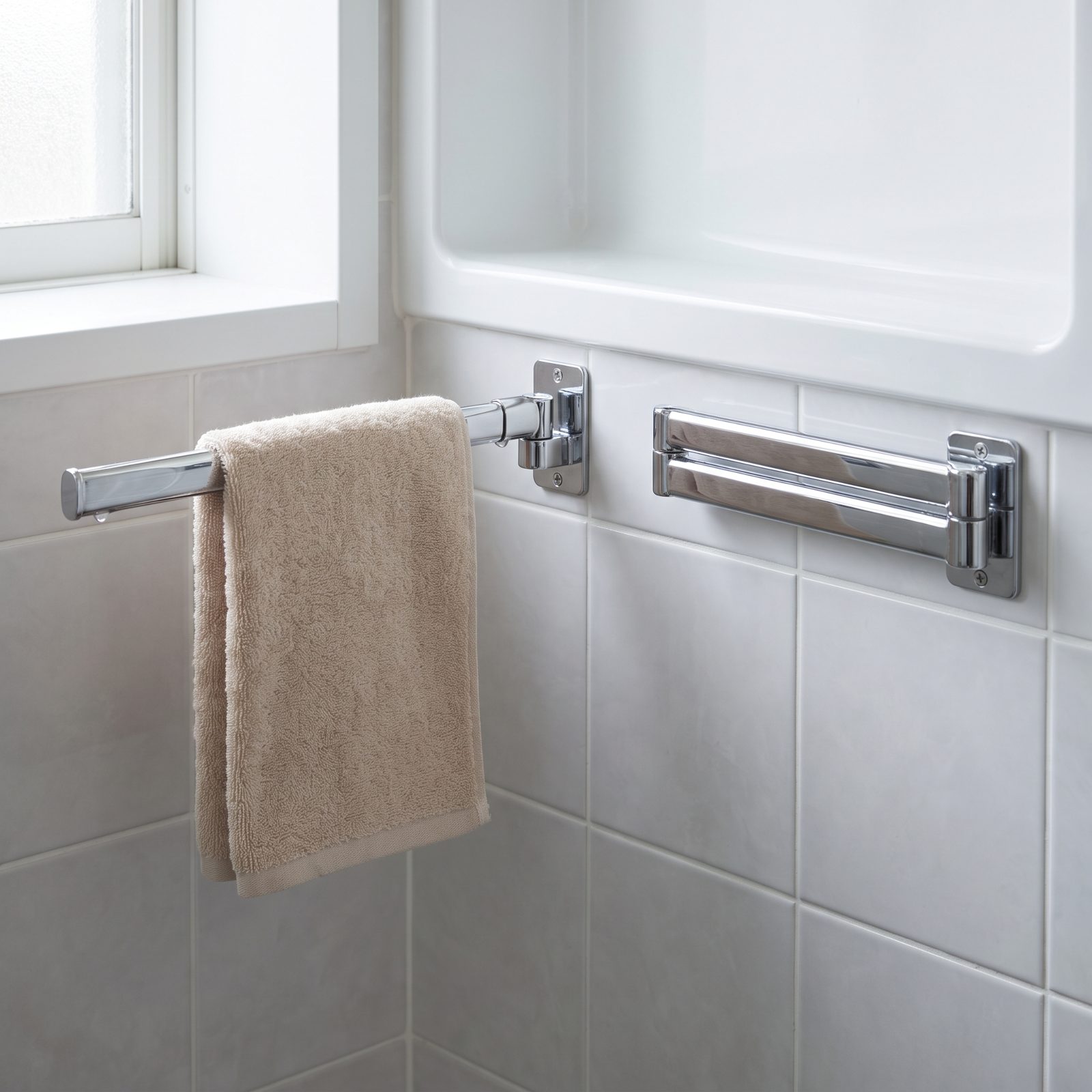
A fixed towel bar always sticks out, catching sleeves and eating the few inches a tiny bathroom can’t spare. The folding kind swings flat against the wall when it’s empty and drops down when you need to hang a towel.
This matters most in the molded plastic unit baths common in Japanese rentals, where the walkway between fixtures is narrow enough that anything protruding becomes a shin hazard. Fold it up and you get the clearance back.
15. Store Toilet Paper on a Shelf Above the Toilet Tank
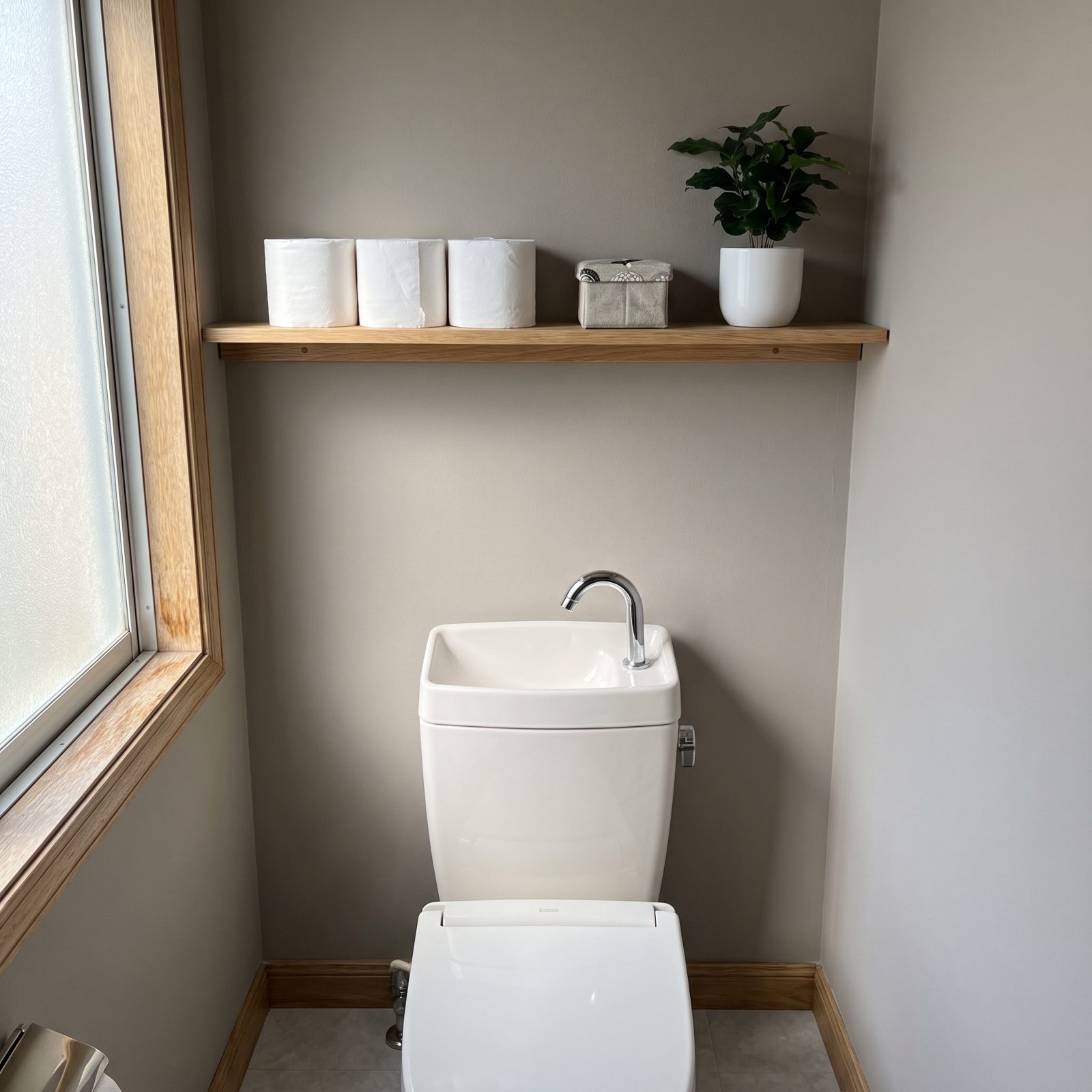
In Japanese homes the toilet is usually its own tiny room, barely wider than the fixture. Floor space for spare rolls simply doesn’t exist, so the storage goes up.
A single shelf bridging the wall above the tank holds a week of toilet paper plus a small box of odds and ends. It uses the one dimension these closet-sized rooms have plenty of, which is vertical. Set it high enough that nothing knocks your head when you stand, low enough to reach seated. That sweet spot is worth a minute of measuring.
14. Keep Bath Supplies in a Portable Caddy Outside the Tub Area
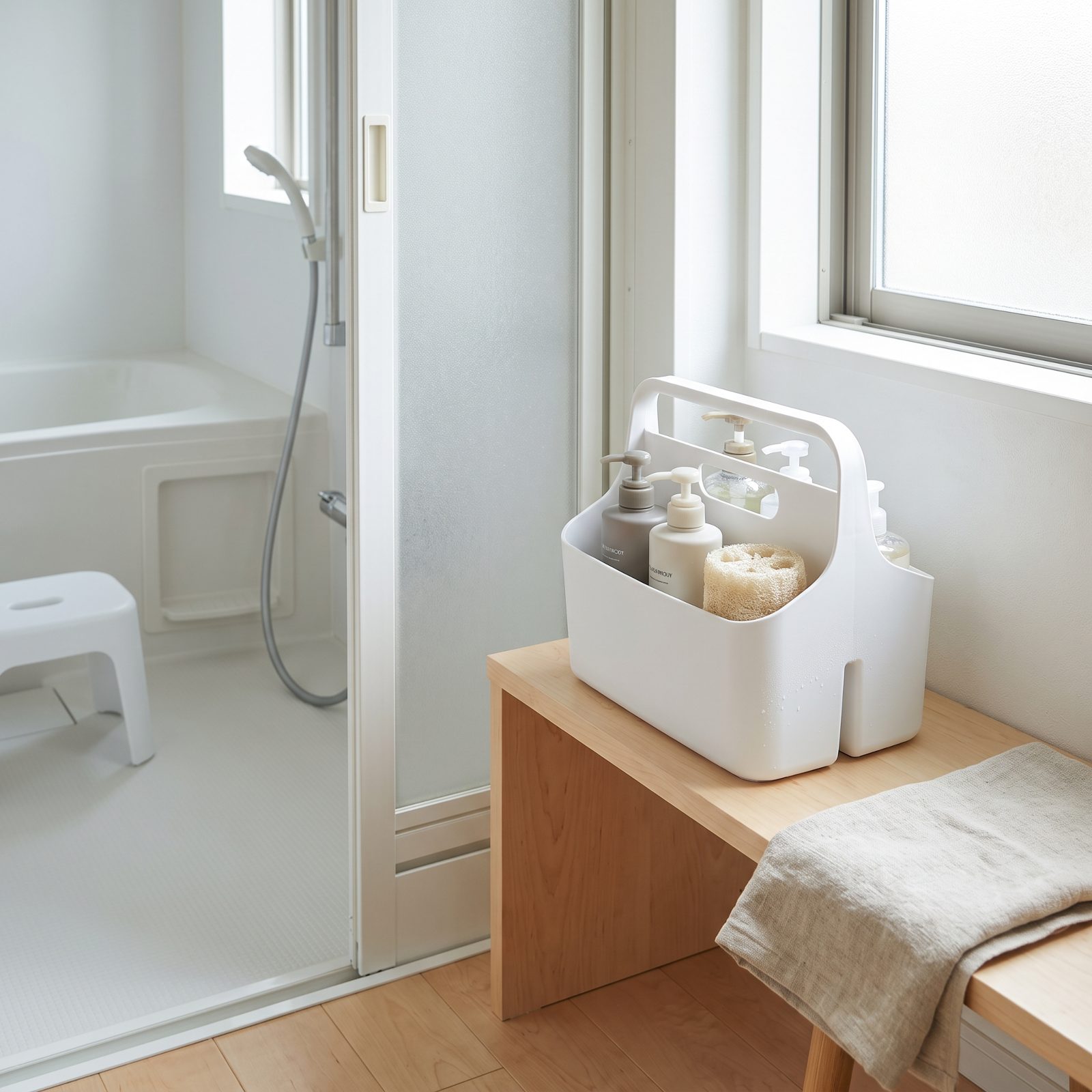
Leave bottles in the shower and you’ll be scrubbing pink mildew off their undersides every week. The Japanese fix is to not leave them there at all. A caddy with a handle holds everything upright and lives outside the wet zone between uses, carried in only when needed.
The washing area stays clear and dries faster without a shelf of grimy bottles collecting water. Pick it up, bring it in, take it out. Nothing sits in a permanent puddle.
The trick isn’t storing things better in the shower. It’s deciding the shower doesn’t store anything at all.
13. Use a Loft Bed to Create a Wardrobe Zone Below
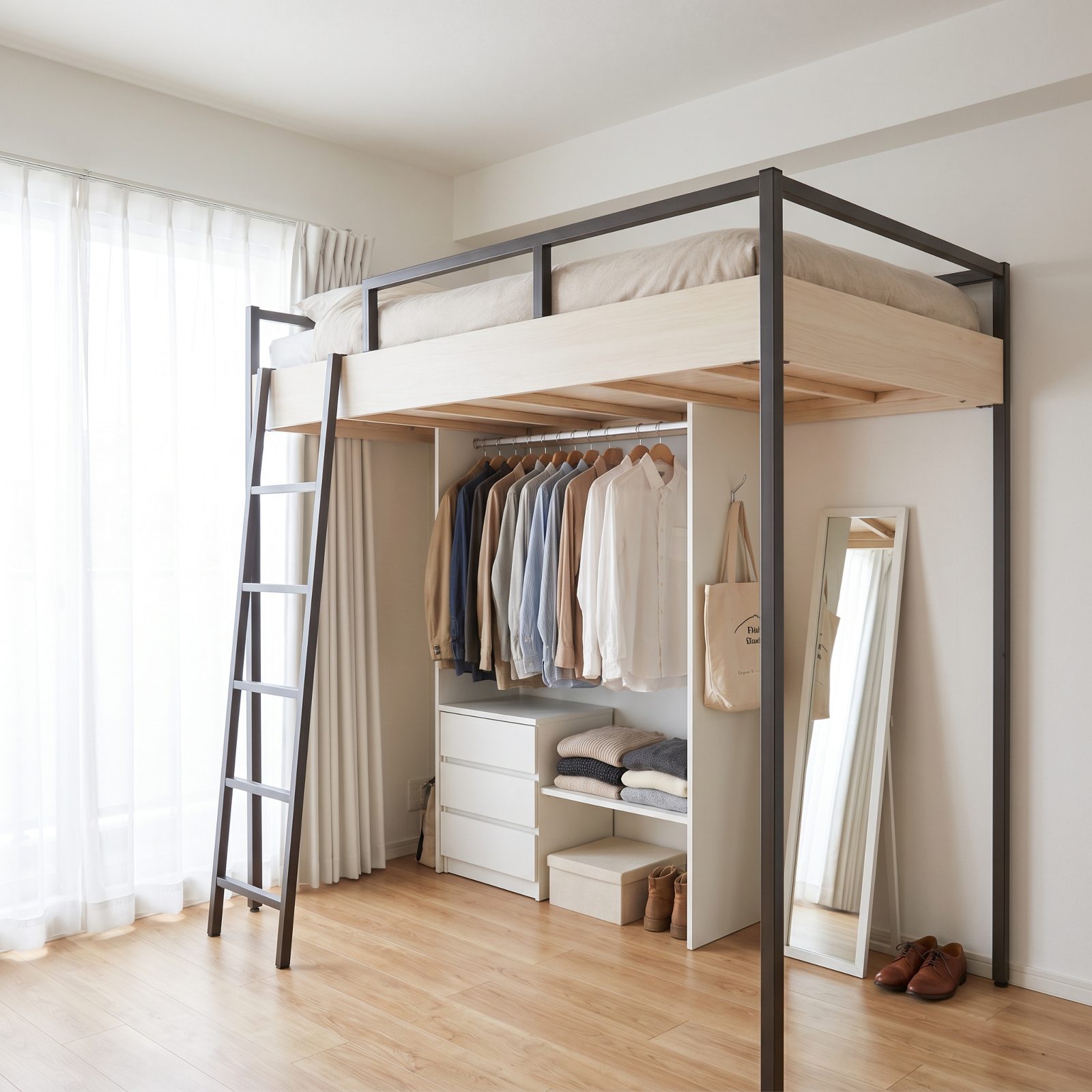
When the floor plan gives you one room, the only direction left is up. A loft bed lifts the sleeping area to head height and frees the entire footprint beneath it for something else, and in cramped studios that something is almost always a wardrobe.
A hanging rail, a low dresser, a leaning mirror, and the dead zone under the mattress becomes a dressing room. Here’s the catch: the ceiling heights in many Japanese apartments make this tighter than it sounds, so measure the gap between the platform and your actual standing height before committing. Sleeping with your nose eight inches from the ceiling gets old fast. Done right, though, a single bed frame buys you a whole closet’s worth of floor back.
12. Choose a Bed With Full-Depth Drawers Beneath the Mattress
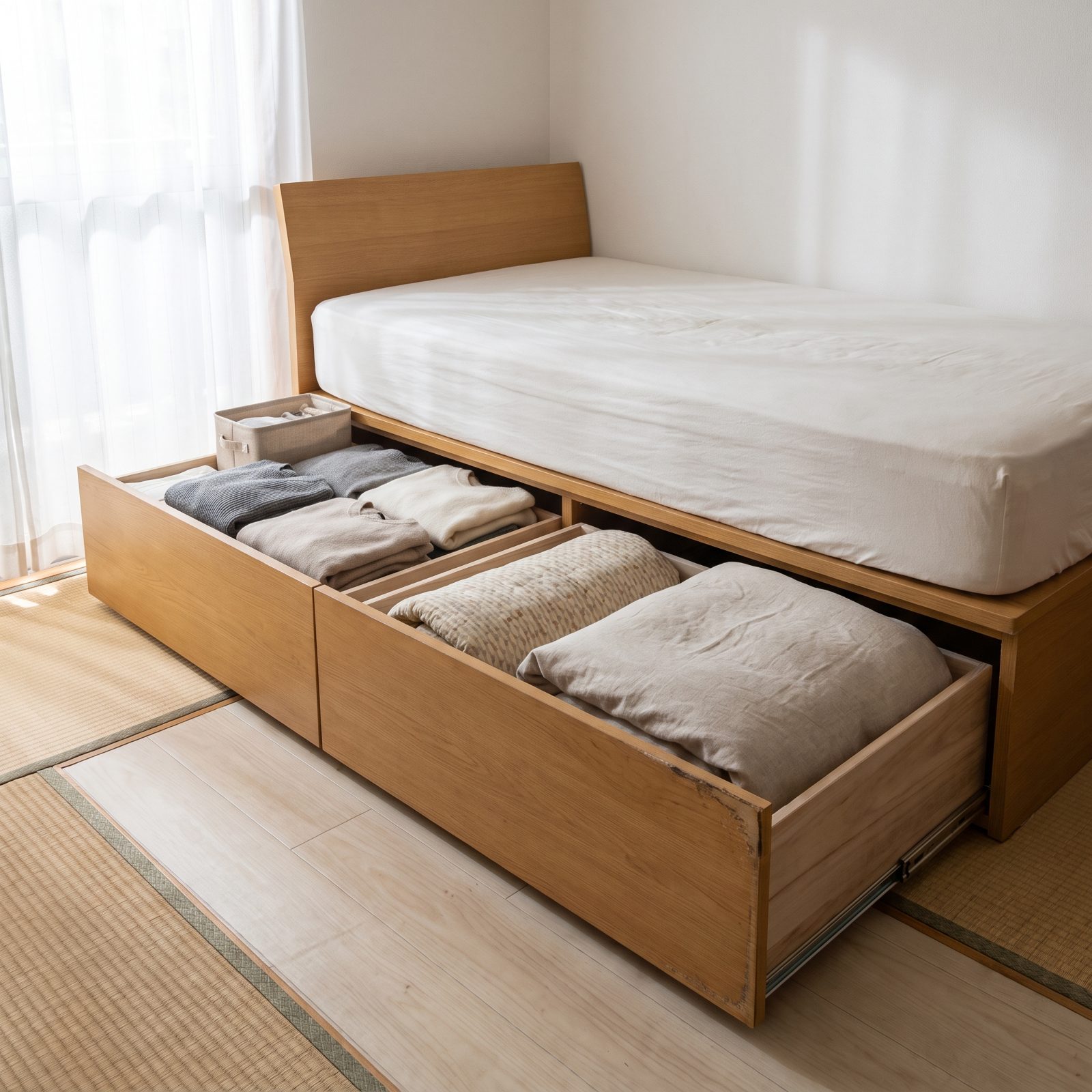
The space under a bed in a tiny apartment is the most wasted real estate in the whole place. Full-depth drawers claim it back without adding a single square foot to the room’s footprint.
Here’s where people trip up. They buy the bed with the shallow 15cm drawers, then wonder why the winter duvet won’t fit — go deep, at least 30cm, or the storage is purely decorative. In plenty of Japanese apartments this drawer bed pulls double duty, holding a spare futon for guests because there’s simply no closet to spare for one.
11. Use Cascading Hangers to Compress a Short Wardrobe
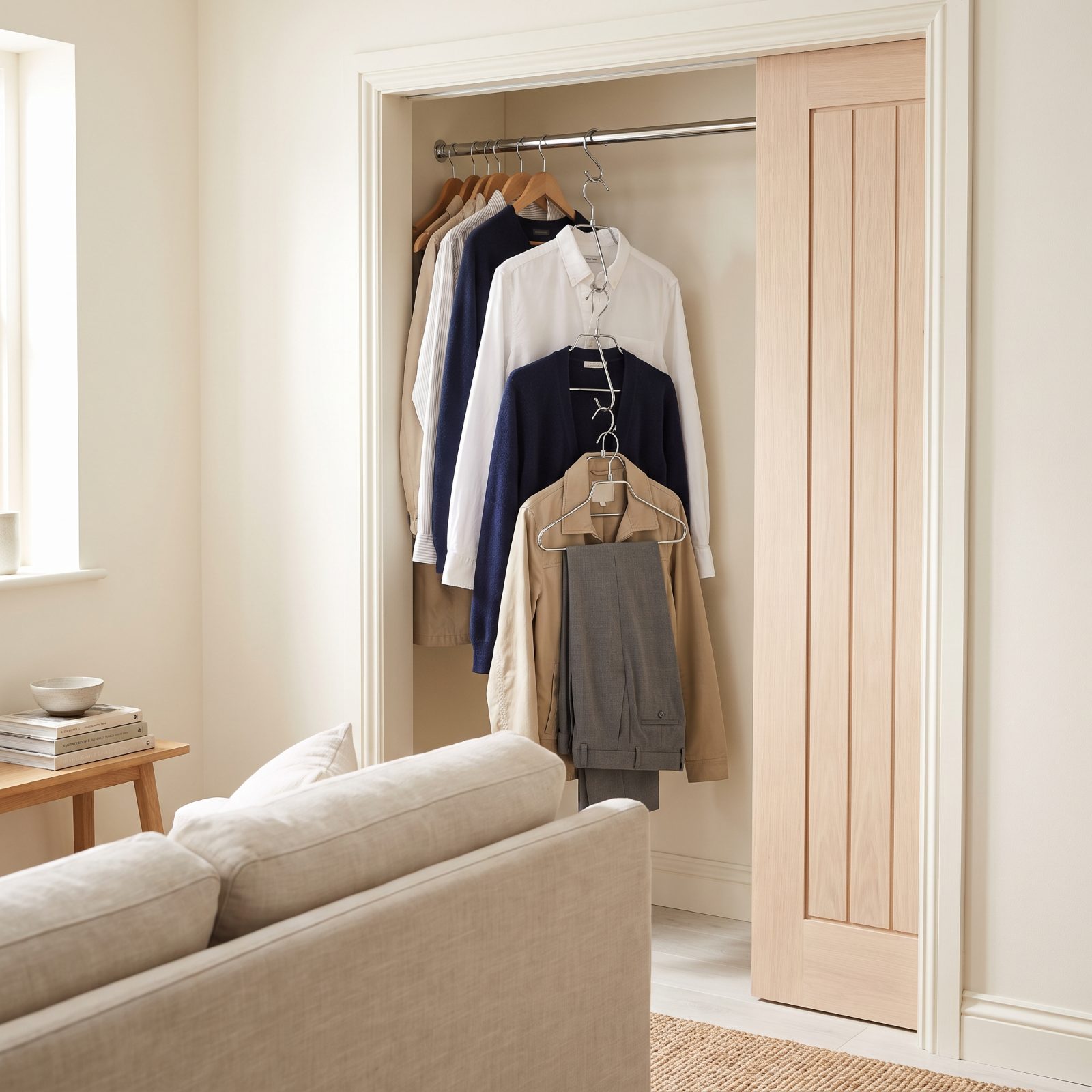
A short closet rail in a Japanese apartment might run barely a meter wide. Cascading hangers turn that horizontal shortage into vertical gain, stacking four or five garments down the height of a single rail position.
They shine with lightweight layers — shirts, cardigans, trousers. Load them with winter coats and the whole chain sags and slips right off the hook. And here’s the bit nobody mentions: hang the items you reach for daily on top, because fishing out the bottom garment means lifting everything above it first.
10. Mount Pegboard Above a Desk for Movable Vertical Storage
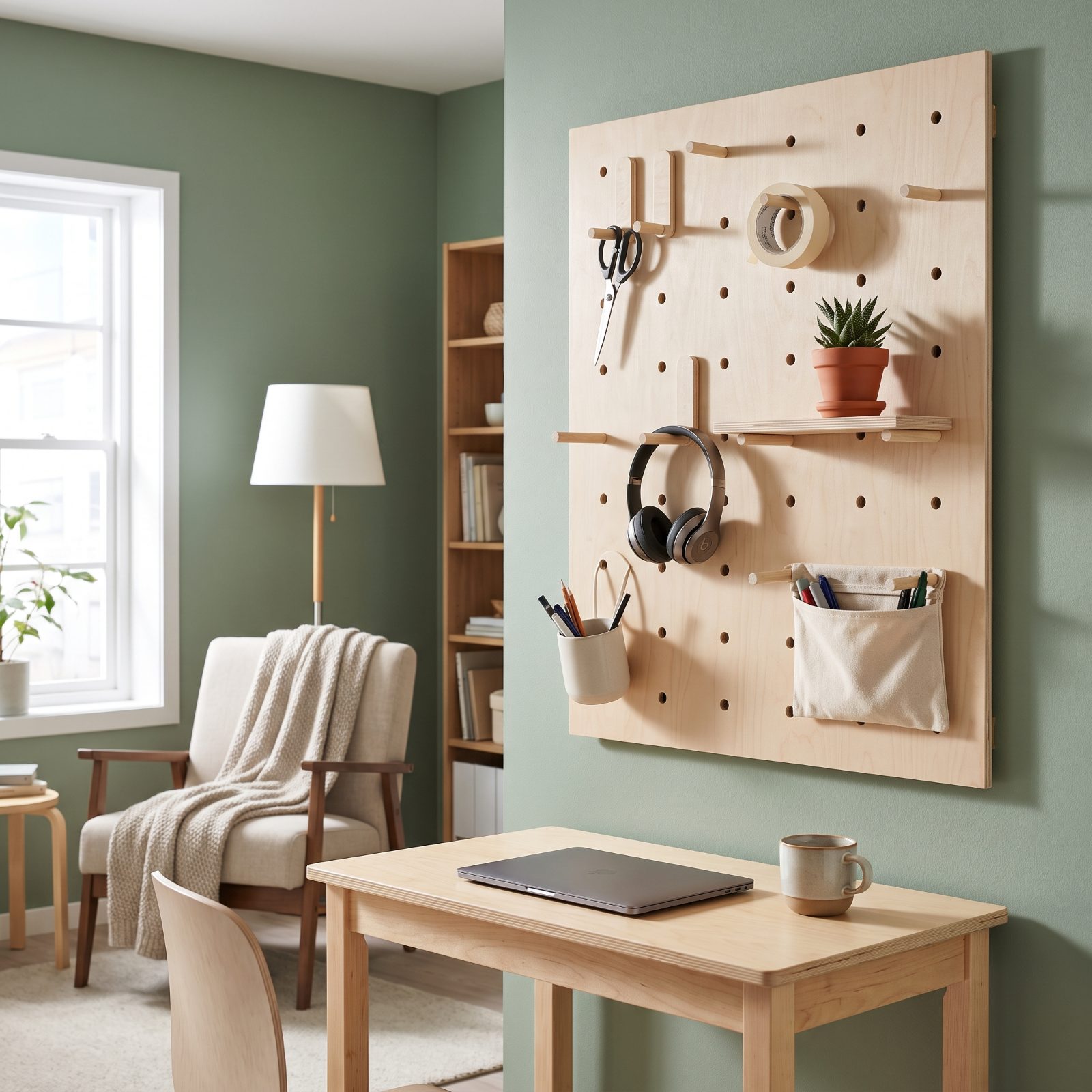
The wall above a desk sits empty in almost every home, and that’s a waste. Pegboard fills it with storage you can rearrange in seconds — no new holes drilled every time your needs shift.
Flexibility is the whole appeal. Hooks and little trays reposition on a whim, so the board grows alongside whatever project happens to be in front of you. Renters love it: one cleat or a pair of command strips holds the board, and the wall behind stays nearly untouched when you move out. Keep heavy things low, though. A fully loaded board pulling from a single high anchor is a slow-motion accident waiting to happen.
9. Choose a Desk With a Fold-Down Wall-Mounted Worktop
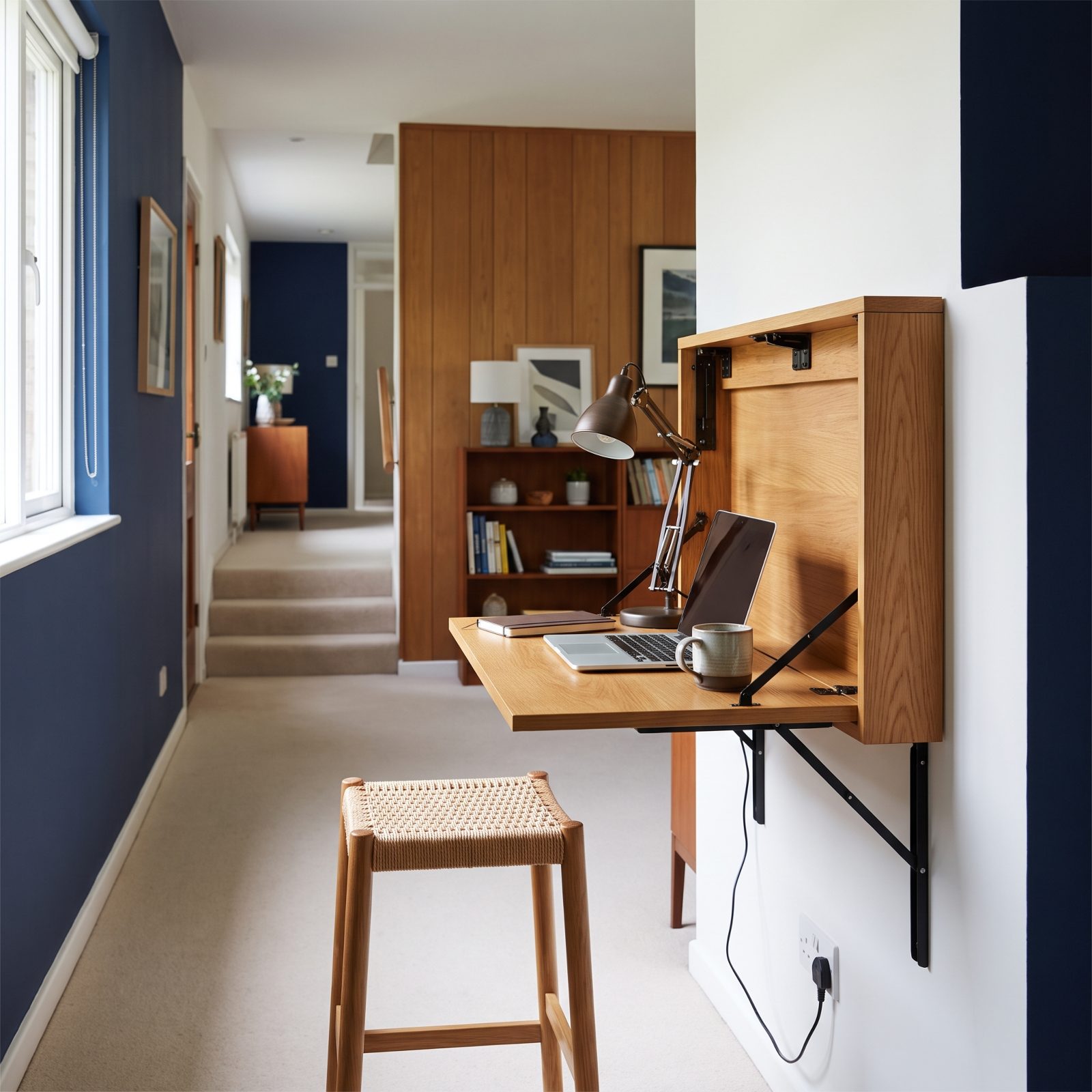
When the worktop hangs off the wall on brackets, the desk stops eating floor space — no legs, just open floor underneath. Pull up a stool to work. Tuck the stool away to get the room back.
This fixes a very specific tiny-apartment headache: the studio where the dining spot, the work spot and the walking path all crowd onto the same square meter. A wall-hung top lets one surface serve mornings and still leave the floor beneath it clear by evening. Mount it into a stud or a proper anchor — the whole thing hangs off that single line of fixings, and a laptop is heavier than it looks.
8. Build a Floor-to-Ceiling Bookcase Around a Doorway
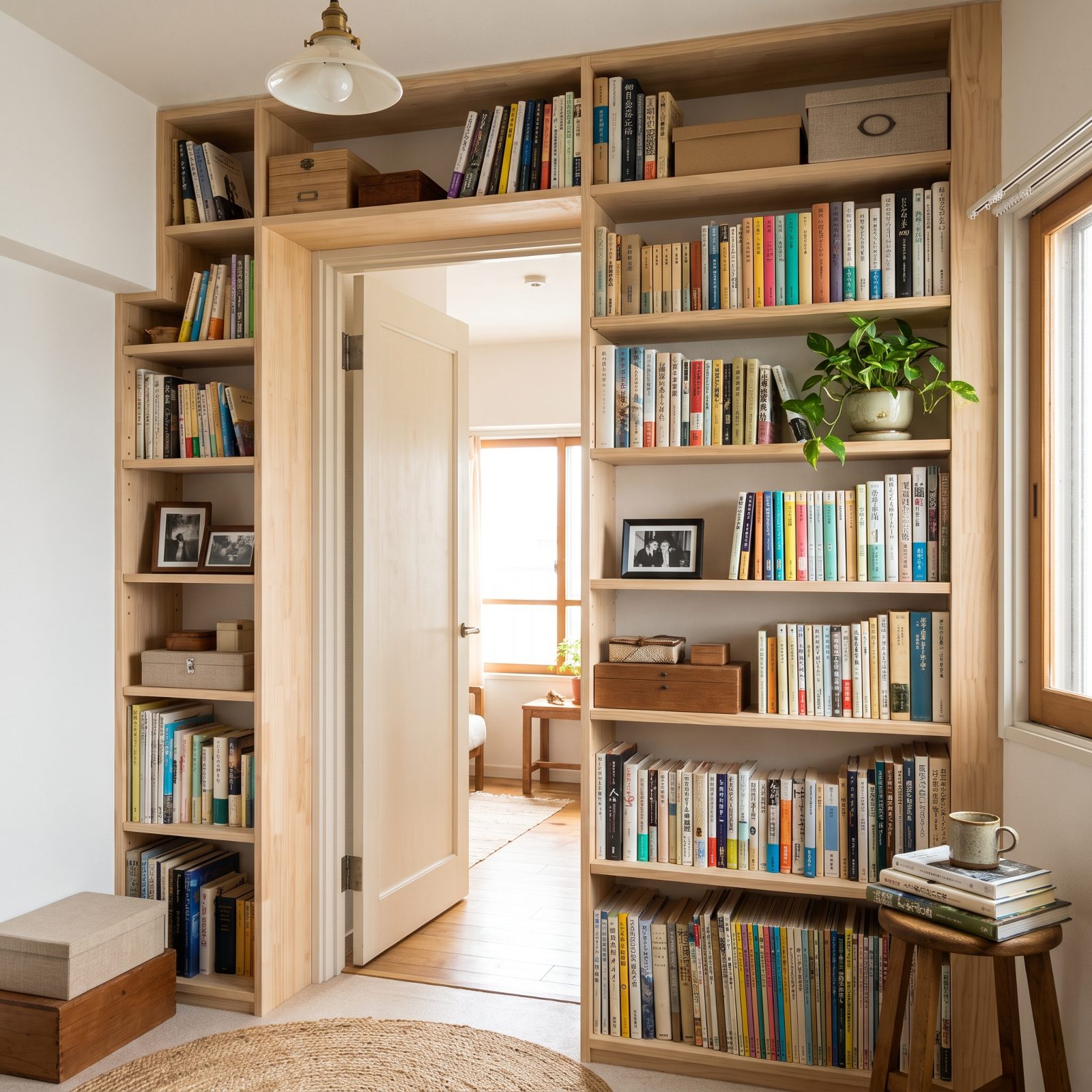
The band of wall above and beside a doorway is dead space in nearly every home. Wrapping a bookcase around the frame turns that forgotten margin into shelving that climbs clear to the ceiling.
In a Japanese apartment where a dedicated study is pure fantasy, this is how a whole wall of books squeezes into a room that already has a door it can’t move. Shelves over the lintel hold the things you rarely reach for; the side columns hold what you use. One caution — a heavy top section wants to tip, so bolt the frame to the wall before you load it.
7. Install Shallow Shelves Behind a Swinging Door
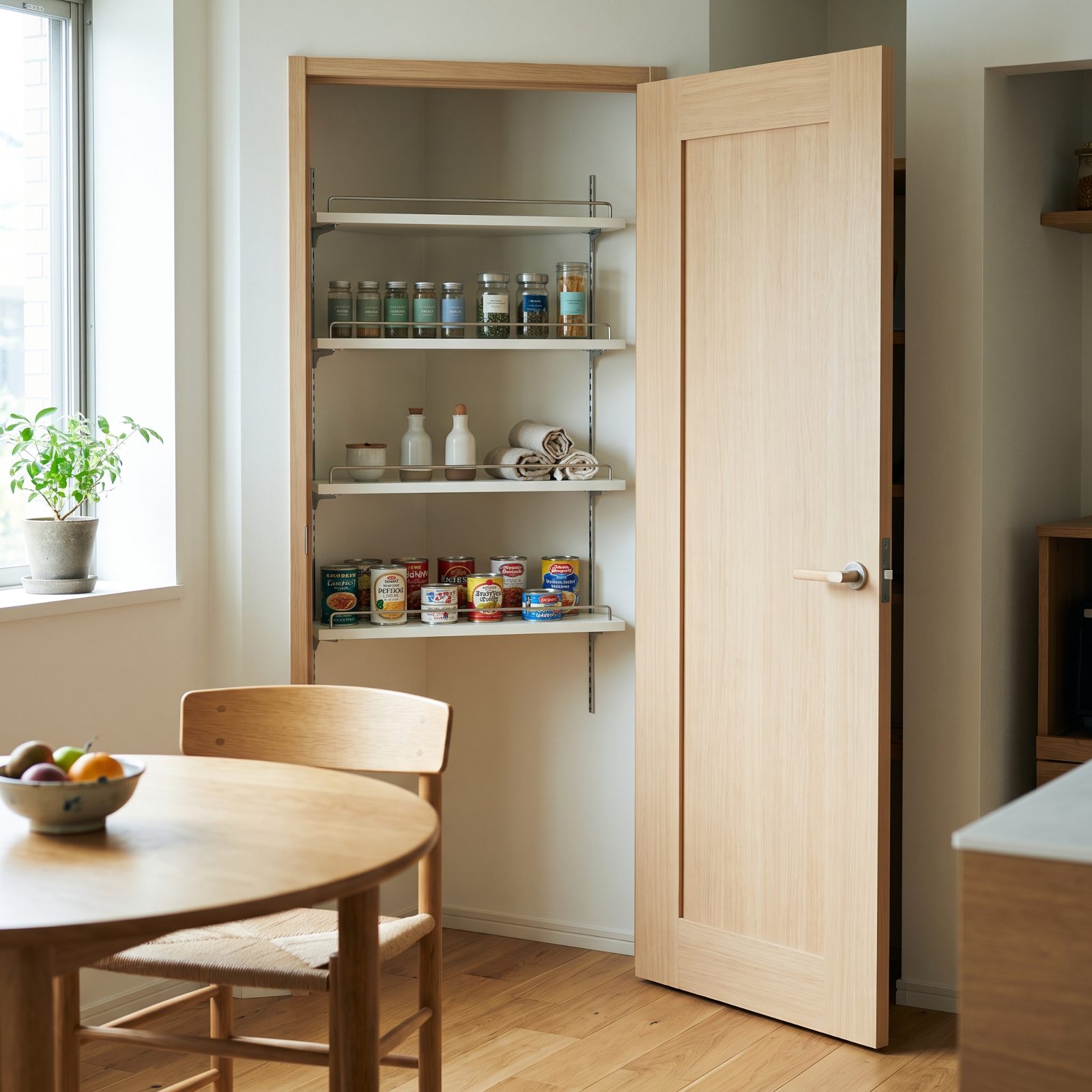
Every swinging door can hide a shallow recess or closet opening that rarely gets used well. Fit a few narrow shelves inside that opening and you get storage the door simply closes away out of sight.
Keep the shelves shallow so everything stays in a single visible row and within easy reach. Go any deeper and things get lost at the back where you can’t see them. Spice jars, small toiletries and single-row cans live well here; deep, bulky things don’t. Call it the overlooked nook — the one that conjures free storage in a kitchen or bathroom that swore blind it had none.
6. Use a Storage Bench to Divide the Living and Sleeping Zones
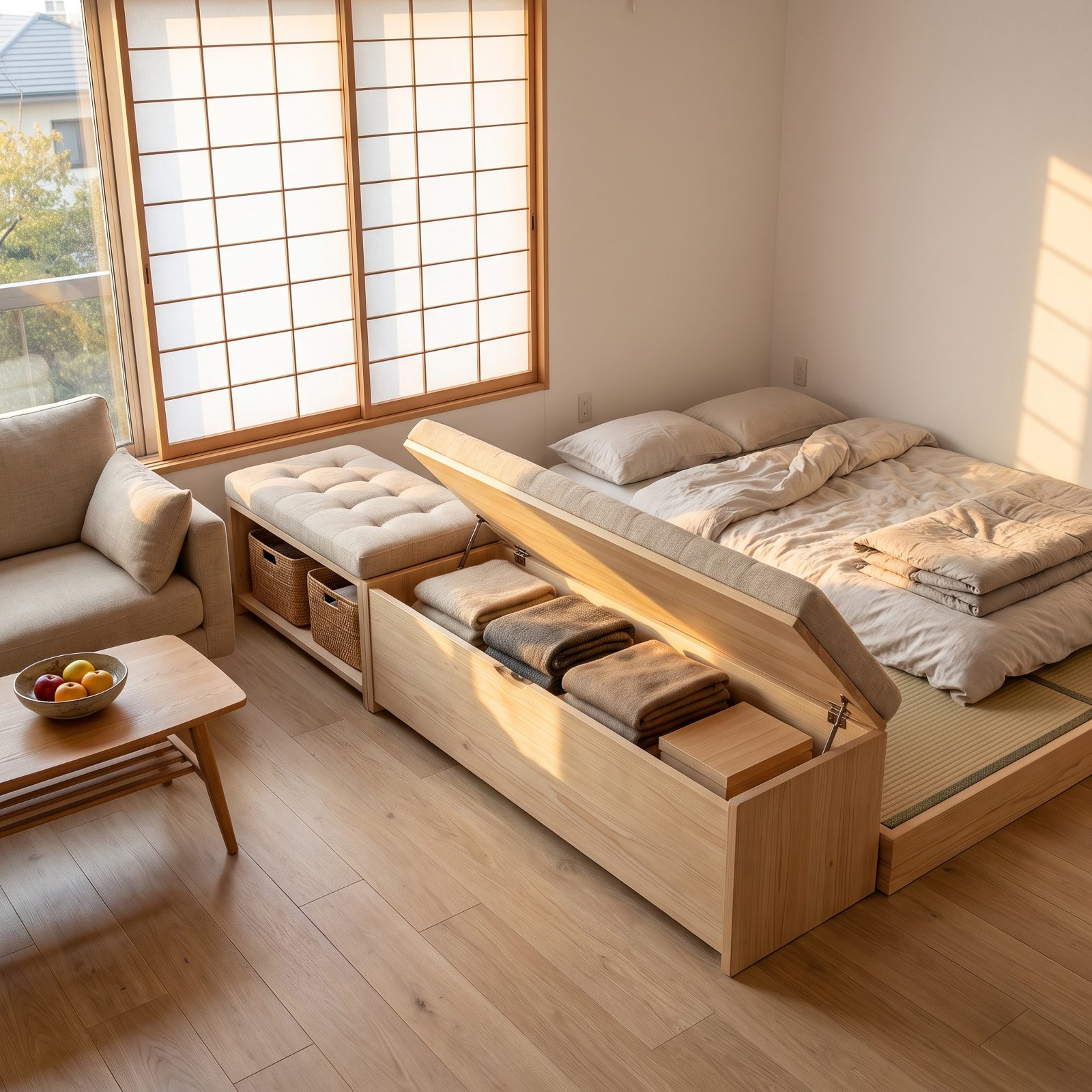
A storage bench set across a studio pulls off three jobs at once: it stores, it seats, and it draws an invisible line between where you live and where you sleep.
In a single-room apartment, that psychological divide matters more than most people expect. A low bench quietly announces that the sofa side is for day and the futon side is for night — even though, technically, it’s all one room. Inside goes the seasonal bedding and those flat boxes you dig out twice a year.
5. Hide Router Equipment Inside a Ventilated Cable Box
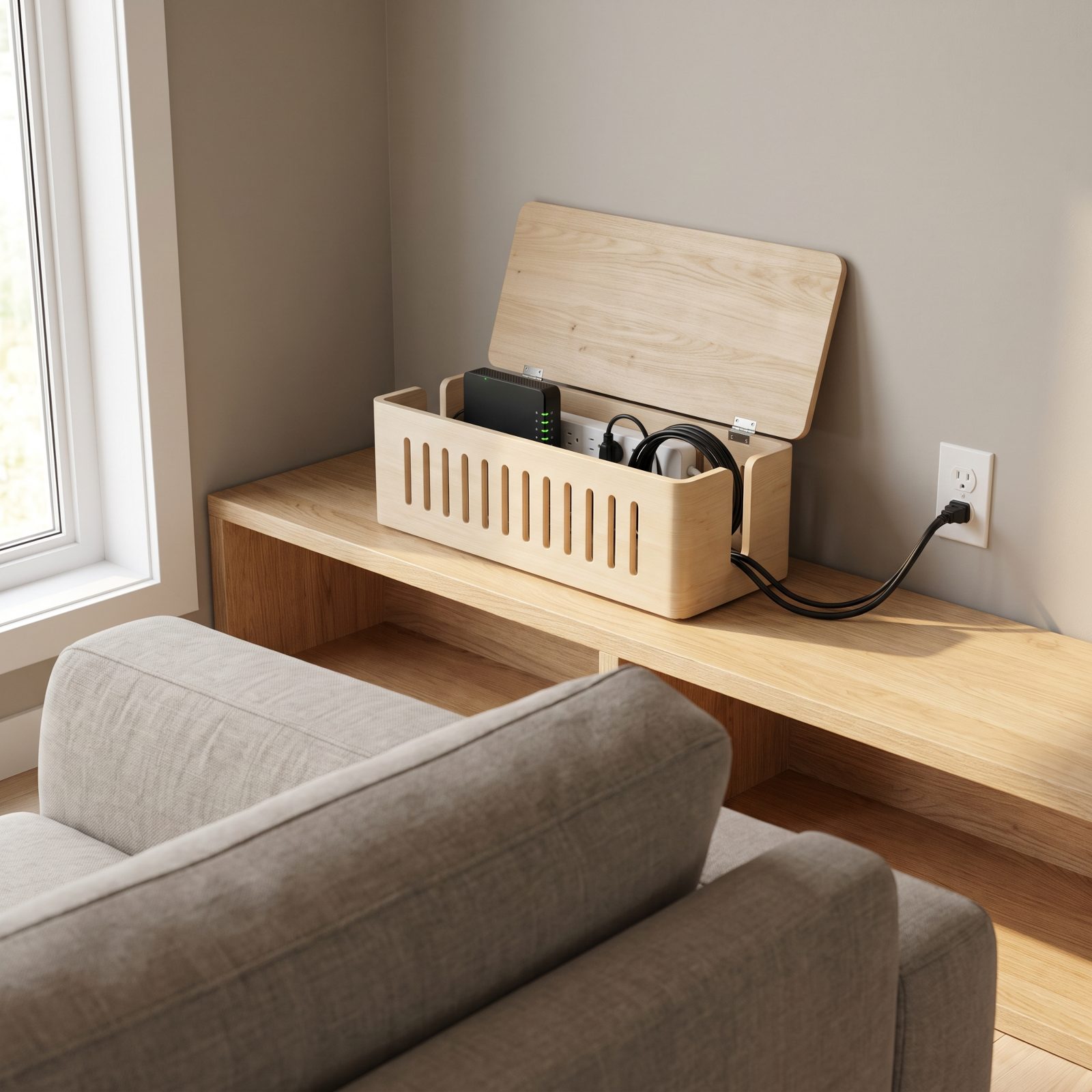
A router, a power strip and a snarl of cables is pure visual noise, and it makes a small room feel smaller and messier than it actually is. A ventilated cable box swallows the lot and hands you back a clean surface.
That word, ventilated, is doing heavy lifting. A sealed box cooks your electronics, and a hot router drops the connection right when you need it. Look for slots or mesh panels that let the heat escape, and set it where the cables reach the outlet without straining. Clear the clutter off one surface in a tight apartment and the whole room reads differently.
4. Store Wraps and Foils Vertically in a Narrow File Holder
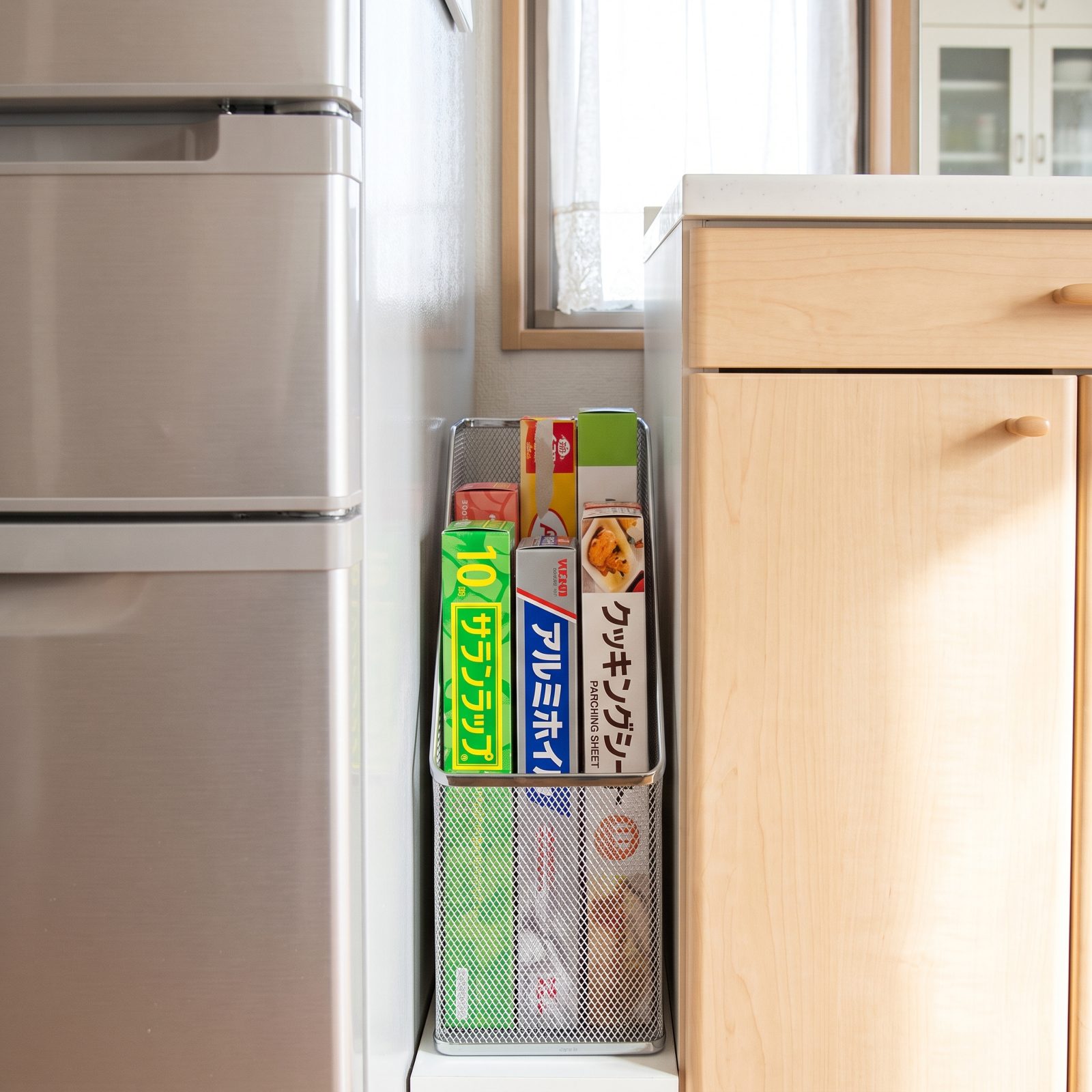
Plastic wrap, foil and parchment boxes slide around a drawer and refuse to stack. Stand them on end in a narrow file holder and they file like documents — every one visible, every one grabbable.
Location is the real stroke of cleverness. That slim gap between the fridge and a cabinet, too narrow for anything else on earth, happens to be exactly wide enough for a file holder turned sideways. A dead slot becomes a dedicated wrap station. It’s the kind of small Japanese kitchen fix that quietly solves an annoyance you’d long since stopped noticing.
3. Hang Frying Pans From a Rail Instead of Stacking Them
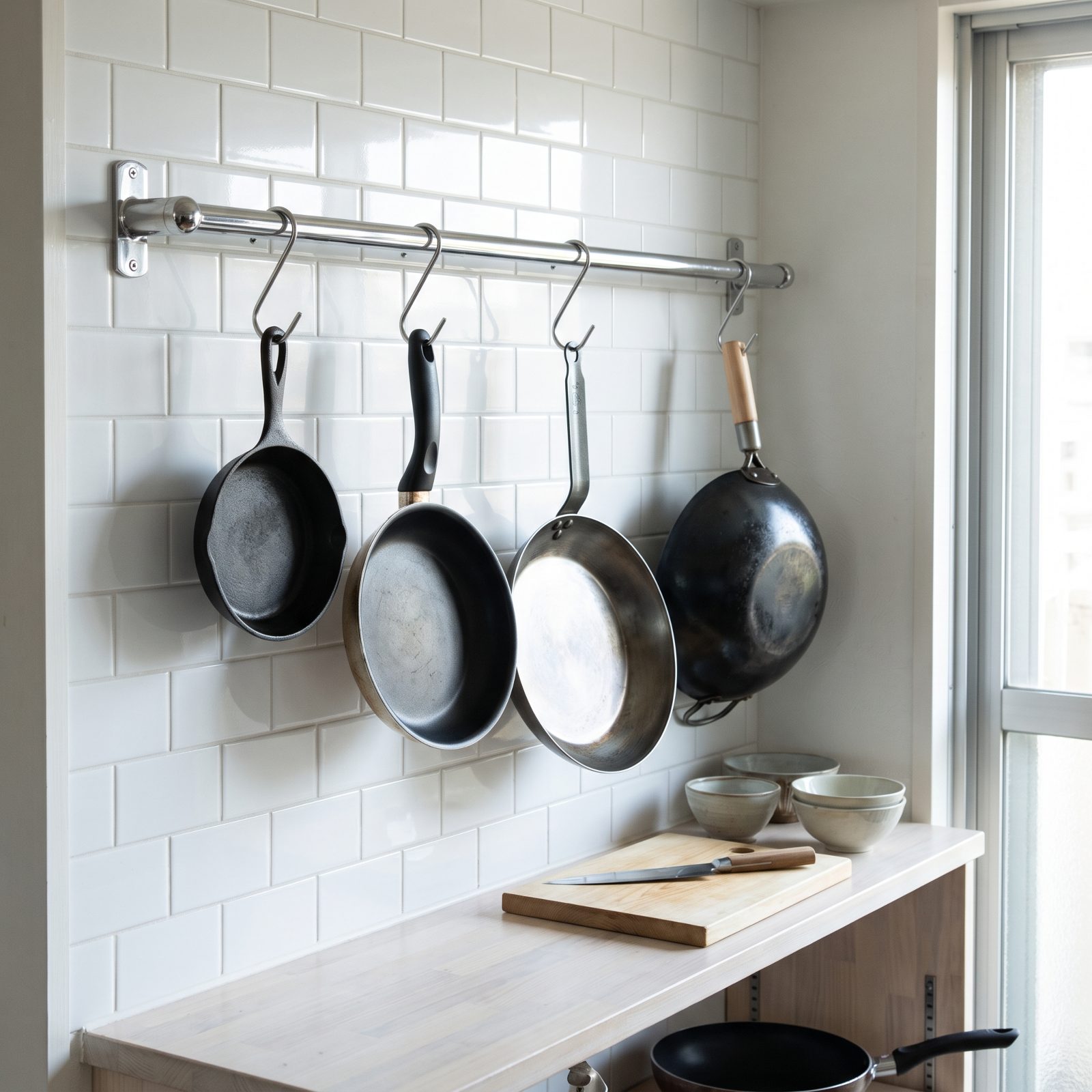
Stacking pans means lifting three to reach the one you want, scratching the coating every time. A wall rail hangs them in a row where each one is a single grab away.
Saving the nonstick surface is only half of it. Hanging pans frees up an entire cabinet in a kitchen that has, maybe, two to begin with — and vertical wall space is the cheapest storage any apartment owns. Cookware, frankly, is begging to use it.
2. Fit a Slim Drawer Beneath an Existing Kitchen Shelf
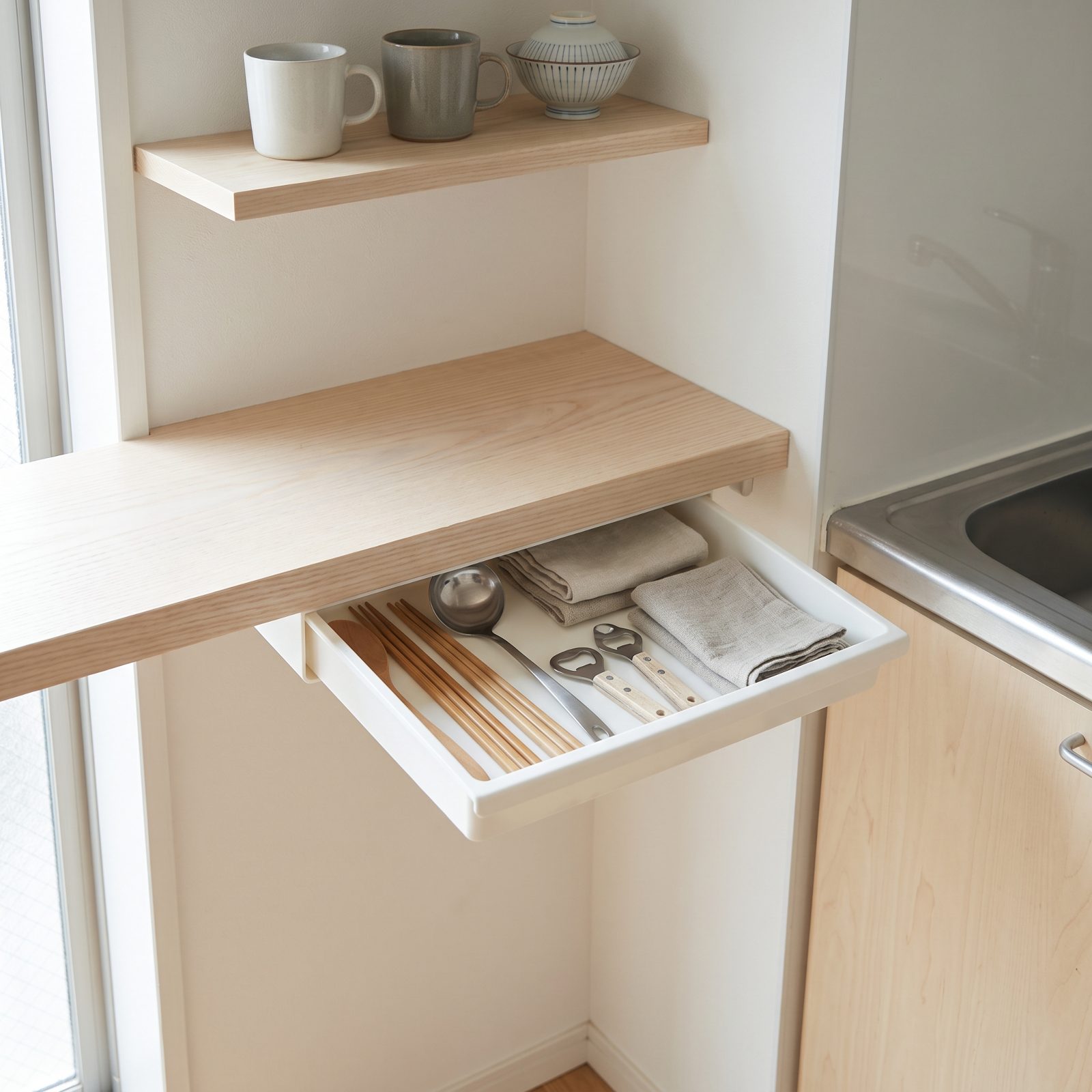
The gap under a kitchen shelf is dead air, and a slim clip-on drawer claims it. These adhesive-mounted trays stick to the countertop’s underside and slide out like a tiny file drawer, swallowing chopsticks, teaspoons, twist ties, and that one bottle opener that always ends up at the bottom of a jar nobody remembers filling.
Weight is where most people go wrong. Adhesive mounts handle light loads only, so think flat, featherweight bits rather than a drawer crammed with cans. Overfill it and you’ll hear that sad little peel of tape surrendering at 7am. Not a fun alarm.
1. Add Adhesive Pockets Inside Cupboard Doors for Small Packets
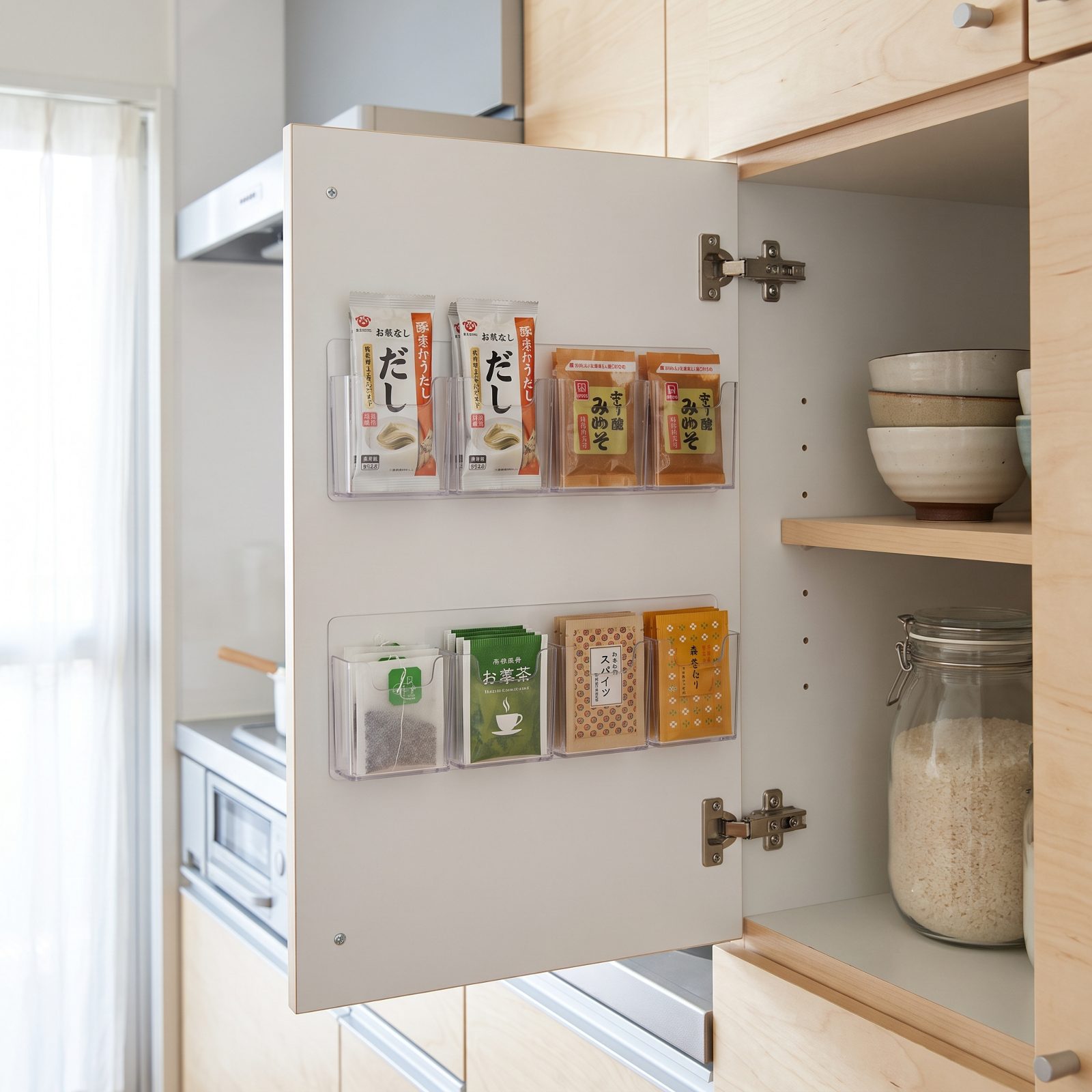
Small packets are the junk drawer of the pantry. Stock sachets, soy packets, loose tea bags, the spare yeast you bought once and forgot. Left loose on a shelf, they slide behind the rice and vanish for a year.
Stick-on pockets turn the inside of a cupboard door into vertical storage you weren’t using. Everything stands upright and faces out, so you spot it before it expires instead of digging under a bag of flour. The second the door swings open, there it all is, right at eye level.
Keep them to envelopes and sachets. The adhesive holds light stuff fine. Load a jar in there and it’ll slowly drag the whole strip down the door while you sleep — and you’ll find it on the floor by morning.