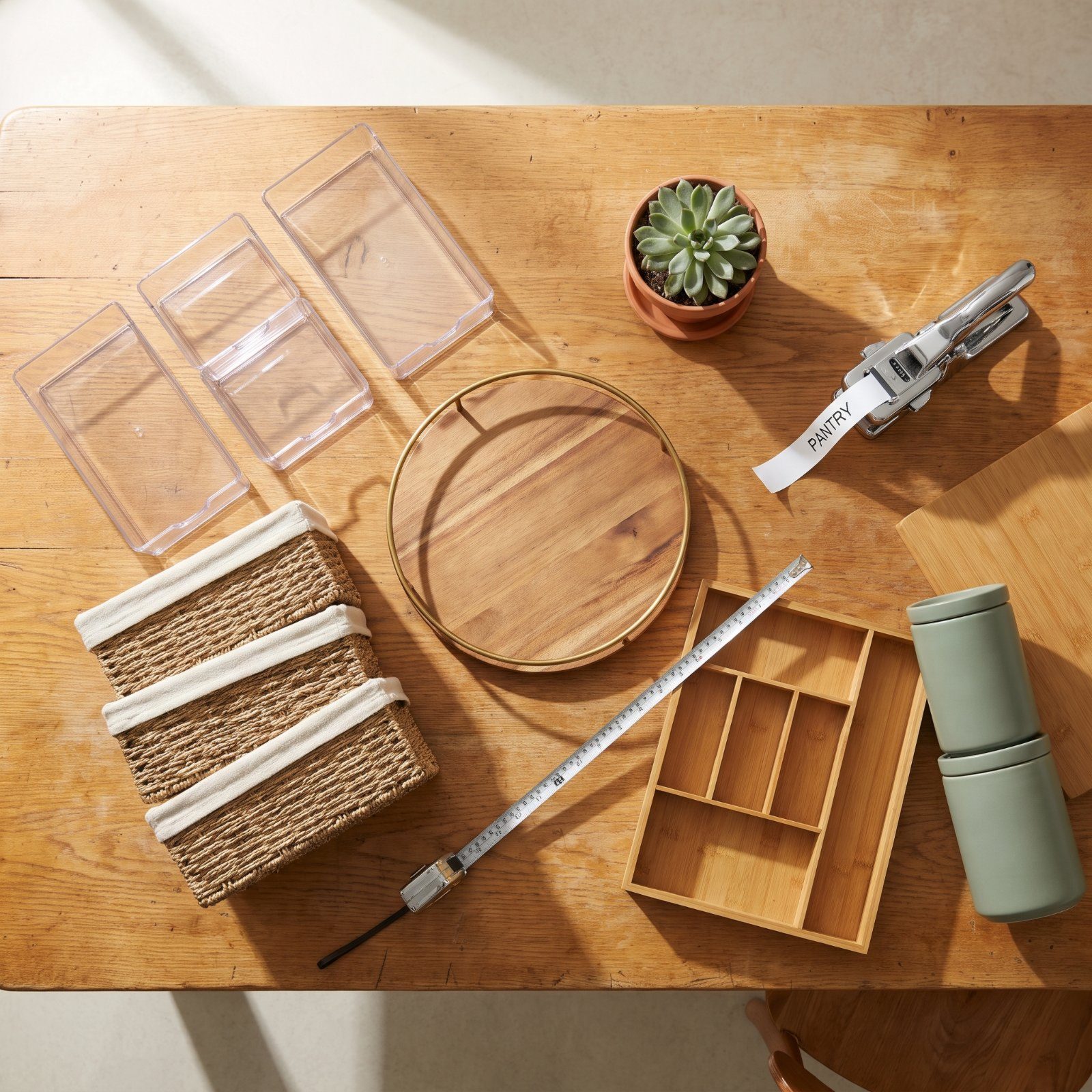
The lazy Susan is spinning and nobody is home. You bought it in a fit of optimism, pictured spices turning toward you like obedient little soldiers, and now it holds one bottle of soy sauce and a dead battery. Somewhere in a cabinet, a dozen matching bins you measured wrong sit empty, judging you.
Please note that some of the images in this article were created with the assistance of AI.
The uncomfortable part is that the way we fall for storage systems is the exact same wiring that keeps people in bad relationships. The pretty one over the practical one. The one everybody else is dating. The one we already spent too much on to walk away from. We talk ourselves into these things with the same brain that talks us into unsuitable partners, and we do it in the organizing aisle at Target. You’ll see yourself in at least one of these. Probably more.
16. You Choose Shelves for the Person You Plan to Become
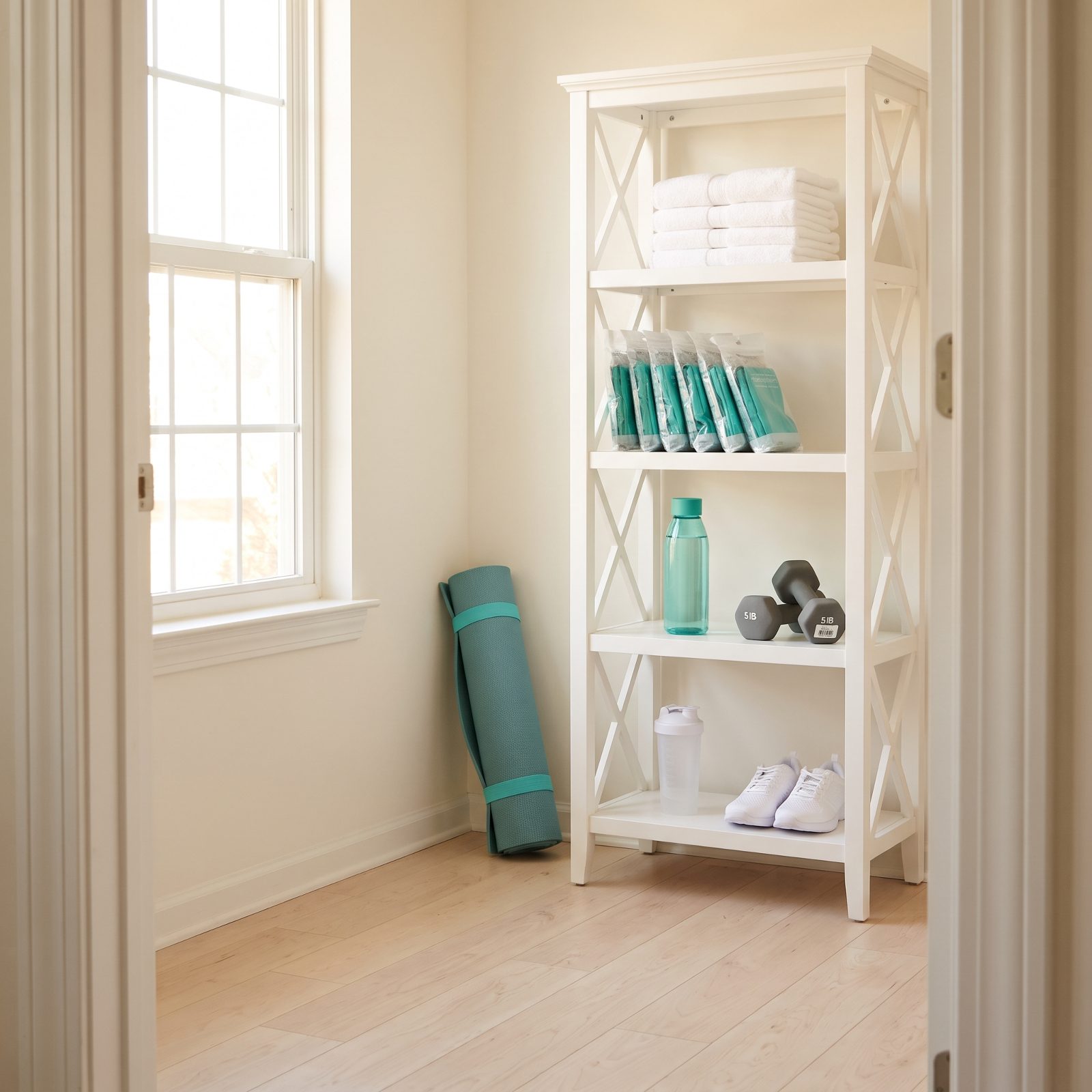
The shelf is built for the you who meal preps on Sundays, keeps a reading nook, and never leaves a dish in the sink. It’s gorgeous. It’s also a stranger’s house.
We organize for the idealized future self the same way people fall for someone’s potential instead of their reality. You don’t love who they are, you love who they could be if they just started therapy and answered texts. The system assumes a disciplined person who doesn’t exist yet, so when the real you shows up with laundry on the floor, the shelf starts to feel like a quiet accusation.
Psychologists call this the planning fallacy. We badly underestimate how our future selves will actually behave. Buy for the person you are on your worst Tuesday, not your best Pinterest fantasy. That person deserves a home too.
15. You Trust the System Because Every Influencer Owns It
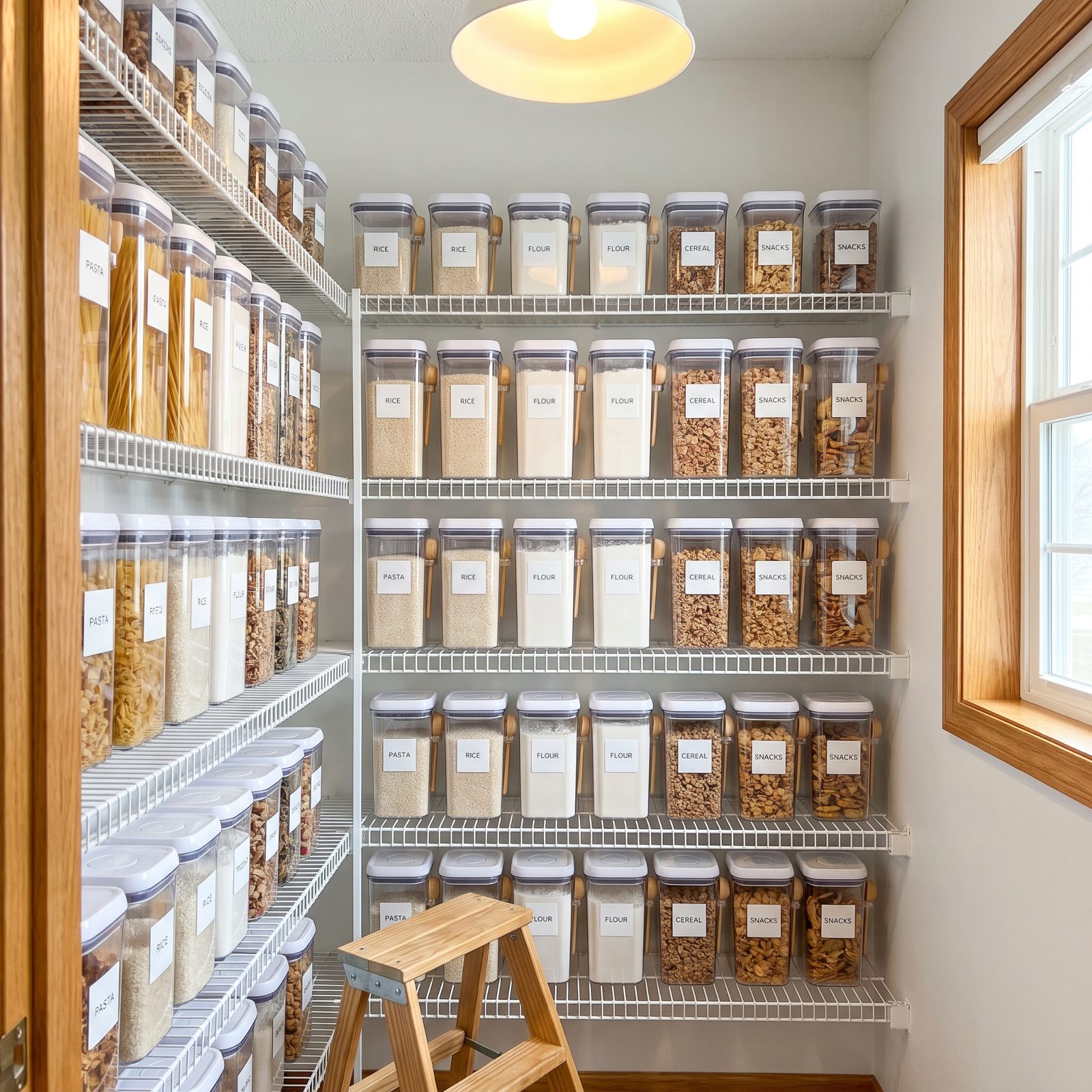
Thirty identical pantries scroll past your thumb in a single afternoon. The same clear canisters, the same bamboo scoops, the same satisfying click of a lid. By the fourth video you’re not evaluating anymore. You’re just nodding.
That nodding is social proof, the shortcut your brain takes when it decides that if everyone’s doing something, it must be right. Same reason people date someone mostly because their friends approve, or because the person seems to be universally liked. Popularity gets mistaken for proof.
What the reels never show: those canisters assume you decant a full grocery haul every single week, forever. Most people do it once, love it, then slide the cereal box in sideways by month two. The system’s fine. It just belongs to an audience, not to your actual grocery habits.
14. You Buy the Deluxe Closet After Seeing the Pricier One
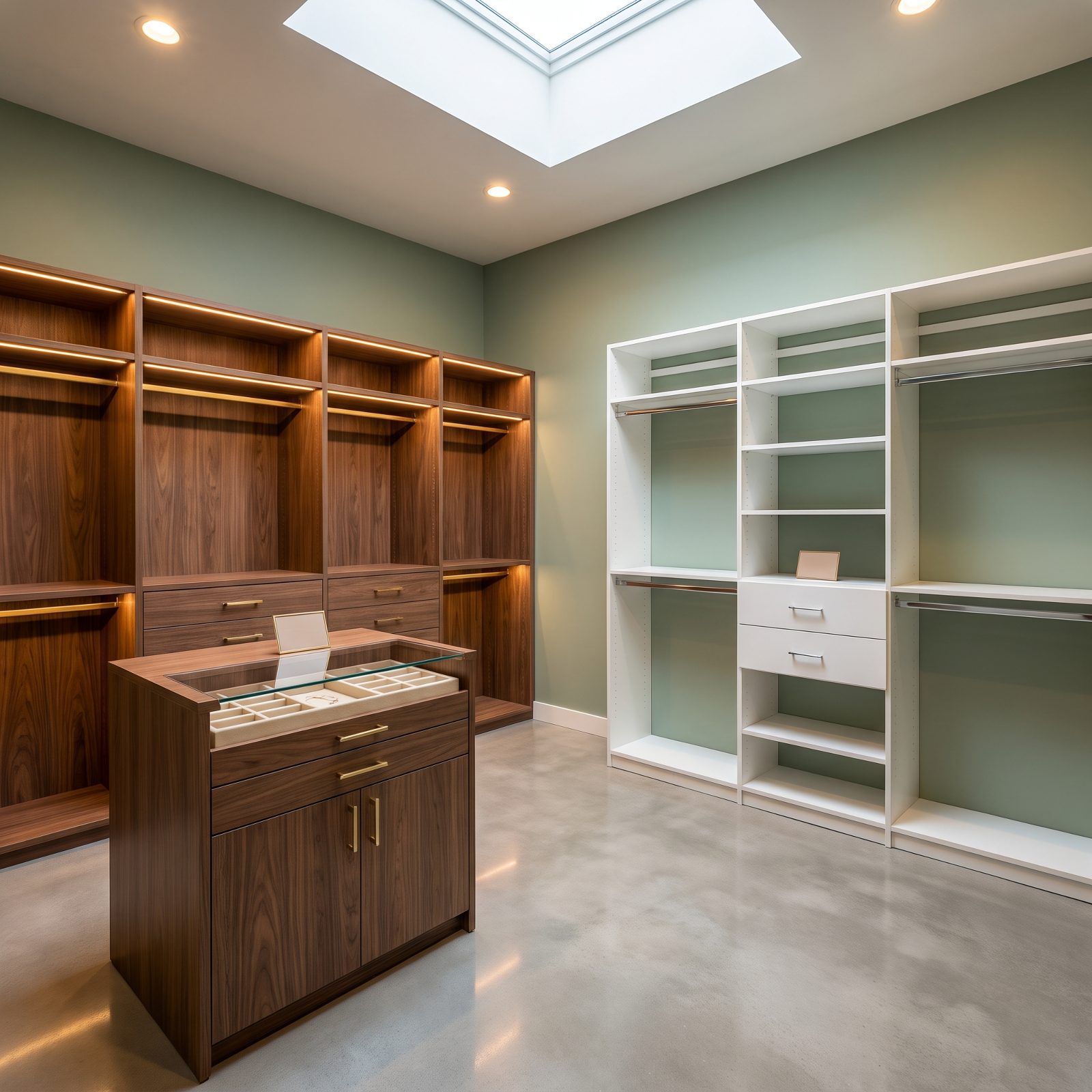
The salesperson shows you the top-tier system first. Walnut, soft-close everything, a little velvet tray for your rings. Suddenly the mid-range closet you came in for looks like a cardboard box. You walk out having spent far more than you planned and feeling like you got a deal.
That’s anchoring. The first number sets the reference point, and everything after gets measured against it. Show someone a lavishly priced closet and the cheaper one feels reasonable, even thrifty.
Same trick that works on the heart. The impossibly glamorous option makes the merely-expensive option feel like settling smart. But you never needed either. You needed somewhere to put your sweaters. The anchor did all the talking, and you just agreed.
13. You Commit Fast When the Container Color Is Discontinued
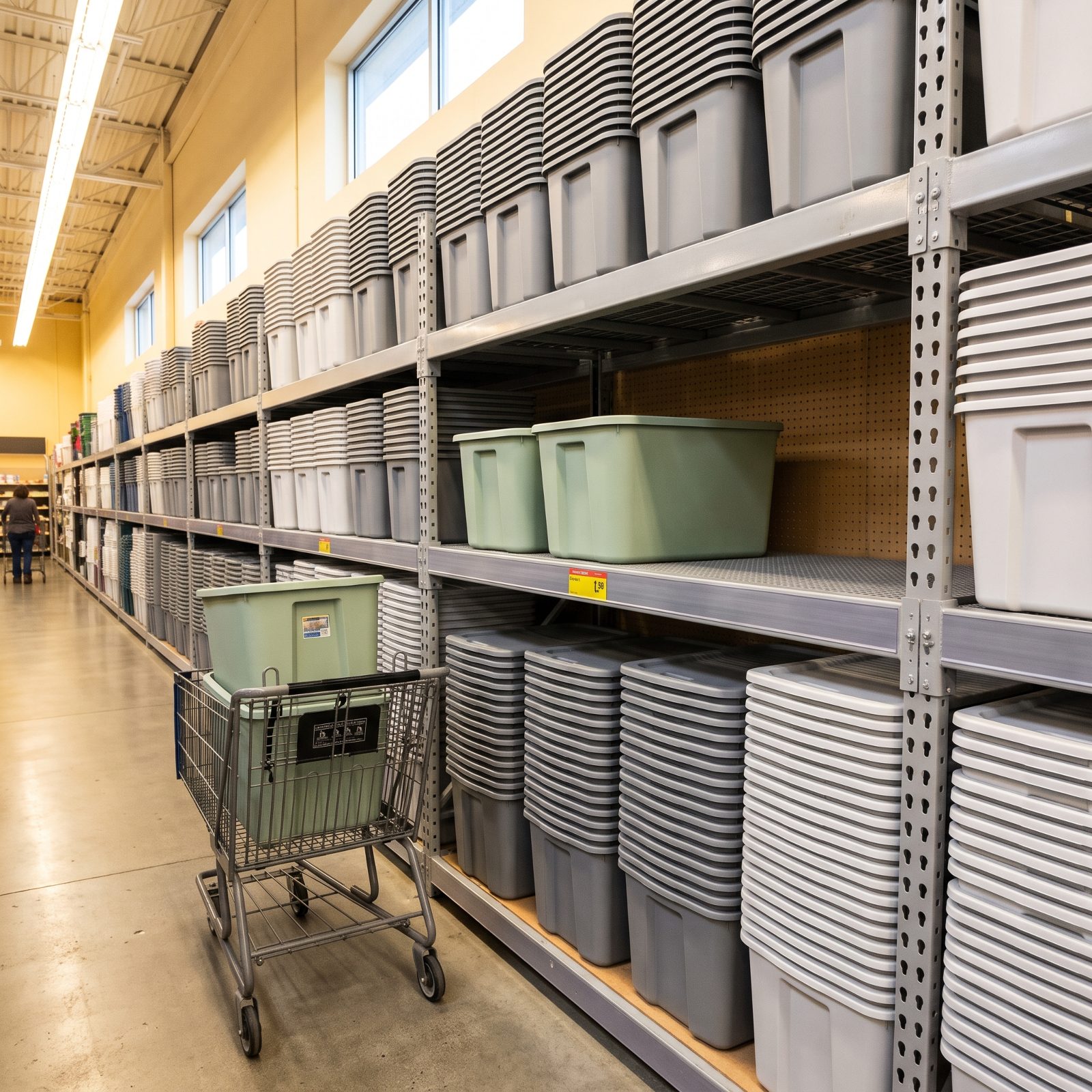
You weren’t even sure you liked the sage green bins. Then you saw the shelf nearly empty and a little clearance tag, and all at once you needed six of them, measurements be darned.
Scarcity rewires desire on the spot. The moment something might disappear, we want it far more than we did a second ago. Marketers know this cold, and so, apparently, does anyone who has ever panicked over a “last one left.”
It’s the exact urgency that makes people commit too fast in dating, afraid someone this good won’t come around again. The fear of missing out shouts louder than the question of fit. You buy the color, not the function. And a discontinued bin that doesn’t fit your shelf is still a bin that doesn’t fit your shelf.
12. You Want Acrylic Drawers More After Your Family Objects
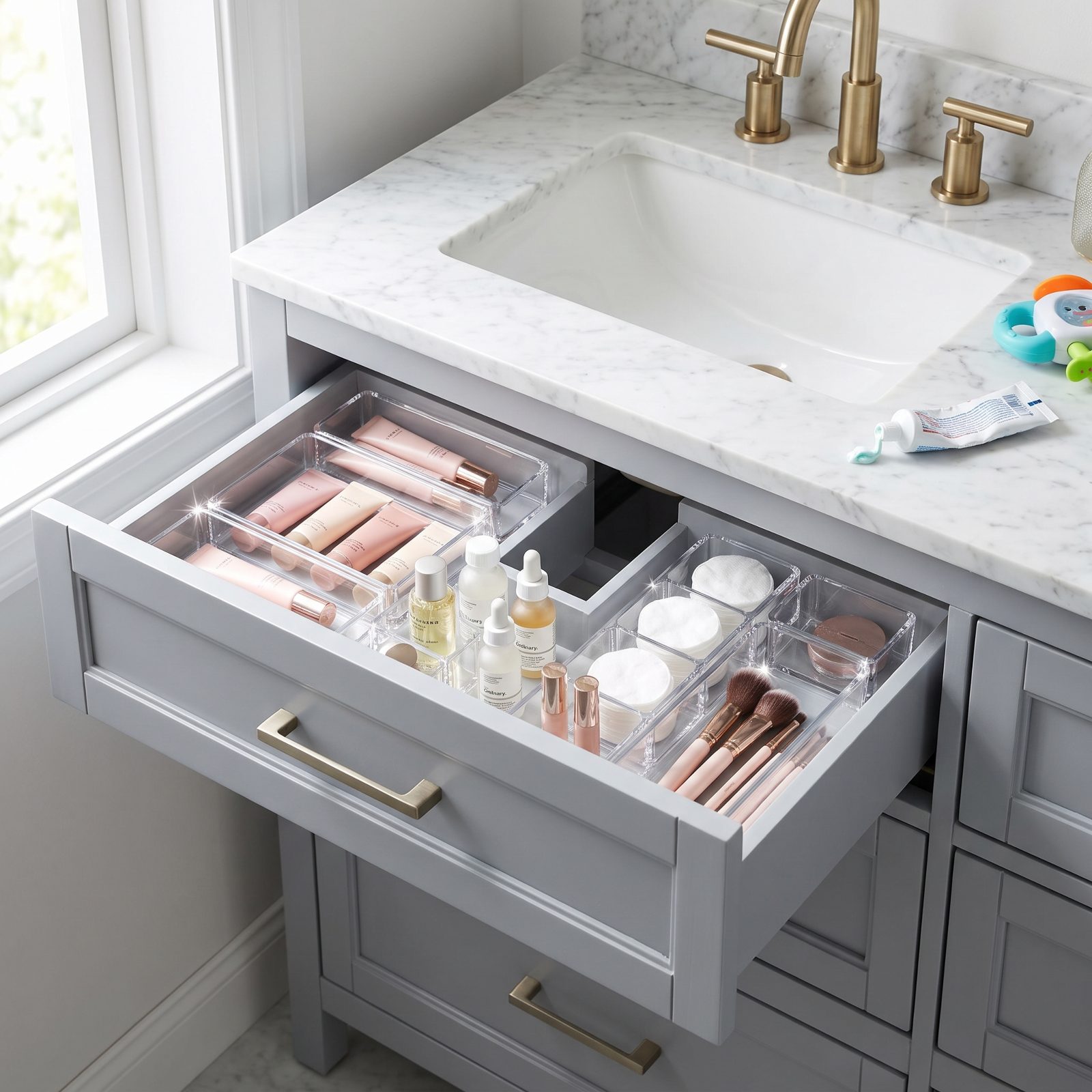
Someone in the house says the clear acrylic drawers look sterile, like a lab. And instantly you’re more sure you want them than you were an hour ago.
That’s reactance, the stubborn little engine that fires whenever a choice feels threatened. Tell a person they can’t have something, or shouldn’t want it, and their desire for it hardens like resin. Parents have been triggering it against their kids’ romantic choices for all of human history, usually with the opposite of the intended effect.
The objection stops being about acrylic drawers and becomes about your freedom to choose. Worth pausing here: are you buying the organizer, or winning an argument? Because one of those will still be in your drawer next year, and the other won’t.
11. You Take Free Design Help and Feel Obligated to Buy
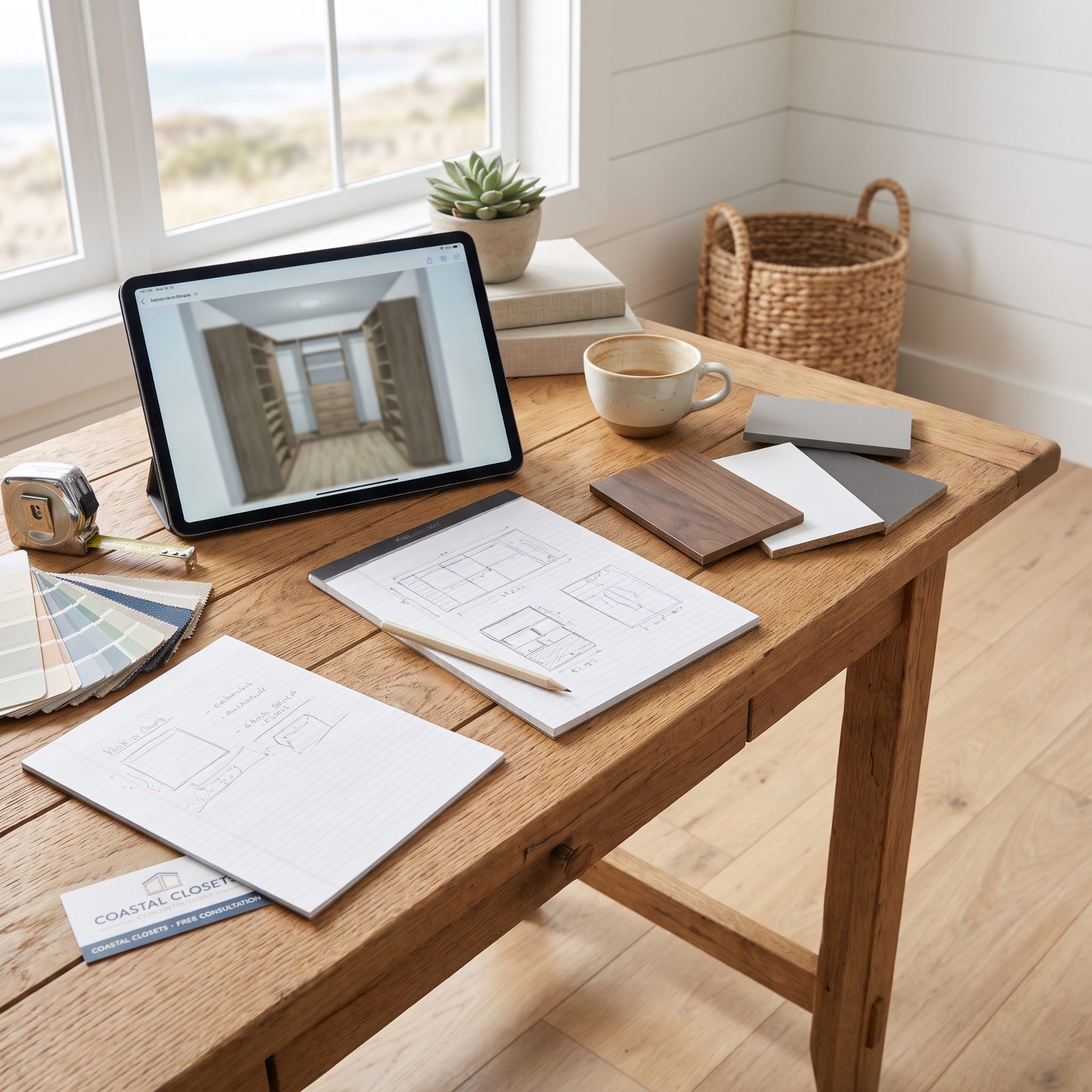
The design consultant spends a long afternoon in your home. Measures everything, draws up a gorgeous 3D rendering, brings samples. Doesn’t charge a cent. And by the end you feel something tightening in your chest that has nothing to do with the closet.
That tightening is reciprocity. When someone gives us something, we feel a debt, even an unspoken one, and we want to settle it. The free consultation is free the way a very good first date is free. Someone invested, and now walking away feels rude.
Reciprocity is one of the oldest social instincts we have, and it’s wildly easy to exploit. Nothing wrong with accepting help. Just know the warm obligation you feel at the end is a feature of the process, not a verdict on whether the design actually suits your house.
The consultation is free the way a very good first date is free. Someone invested, and now walking away feels rude.
10. You Buy Matching Bins Before Measuring the Cabinets
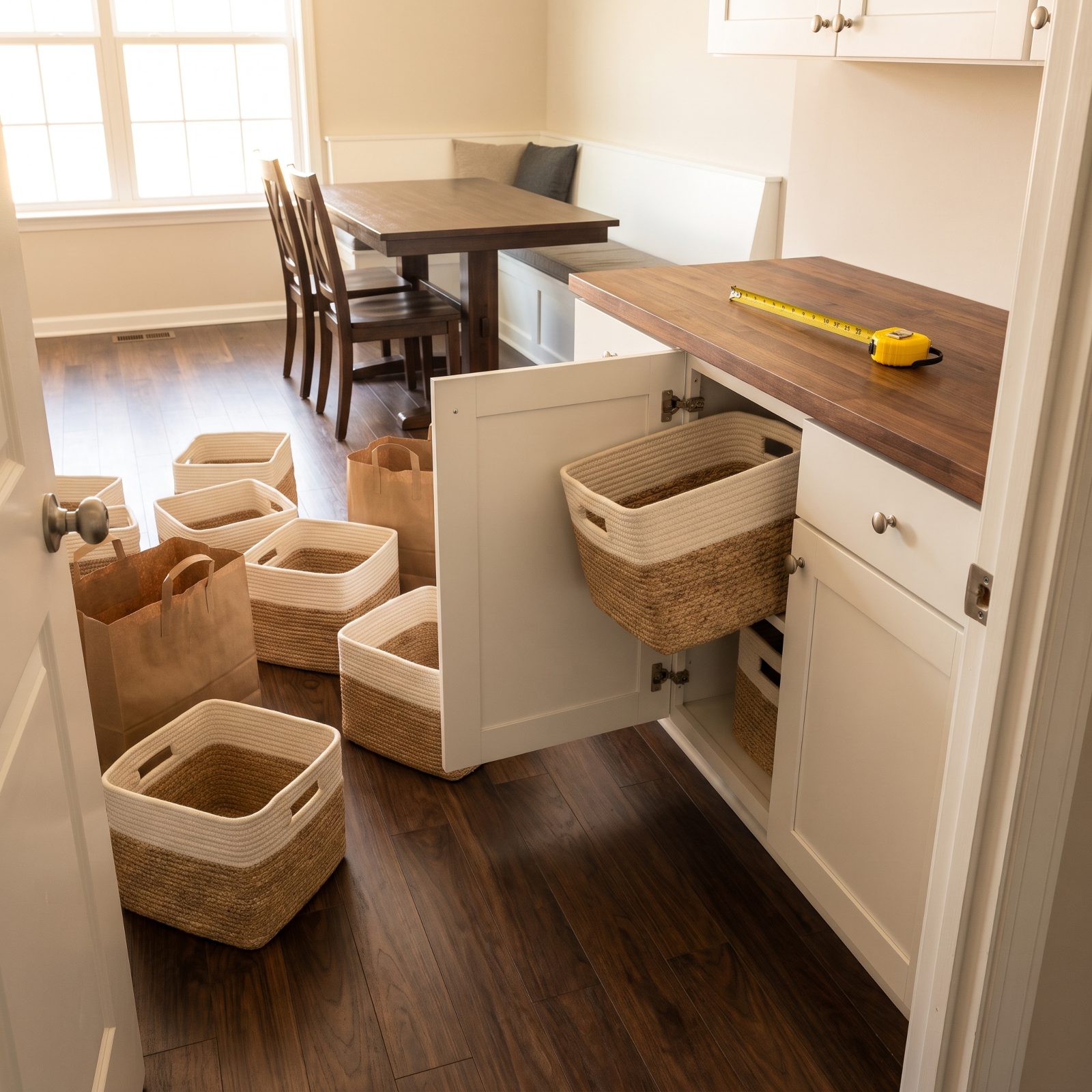
You fell in love in the aisle. Grabbed eight matching bins because they looked so right together, so calm, so coordinated. Got home. One dangles awkwardly from the inside of an open cabinet door, and the rest are still piled on the floor next to the shopping bags, because none of them fit.
The halo effect did this. One attractive quality, the matching look, convinced your brain the bins must be good in every other way too, including the one that actually mattered: whether they fit. We assume good-looking things are competent, kind, and well-made, which is why beautiful people get hired faster and matching bins get bought faster.
Most of us have made this exact mistake more times than we’ll admit, tape measure sitting in the drawer the whole time, mocking us. Measure first. Fall in love second. The cabinet does not care how photogenic the bin is.
9. You Fall Hard for the Pantry’s Perfect First Week
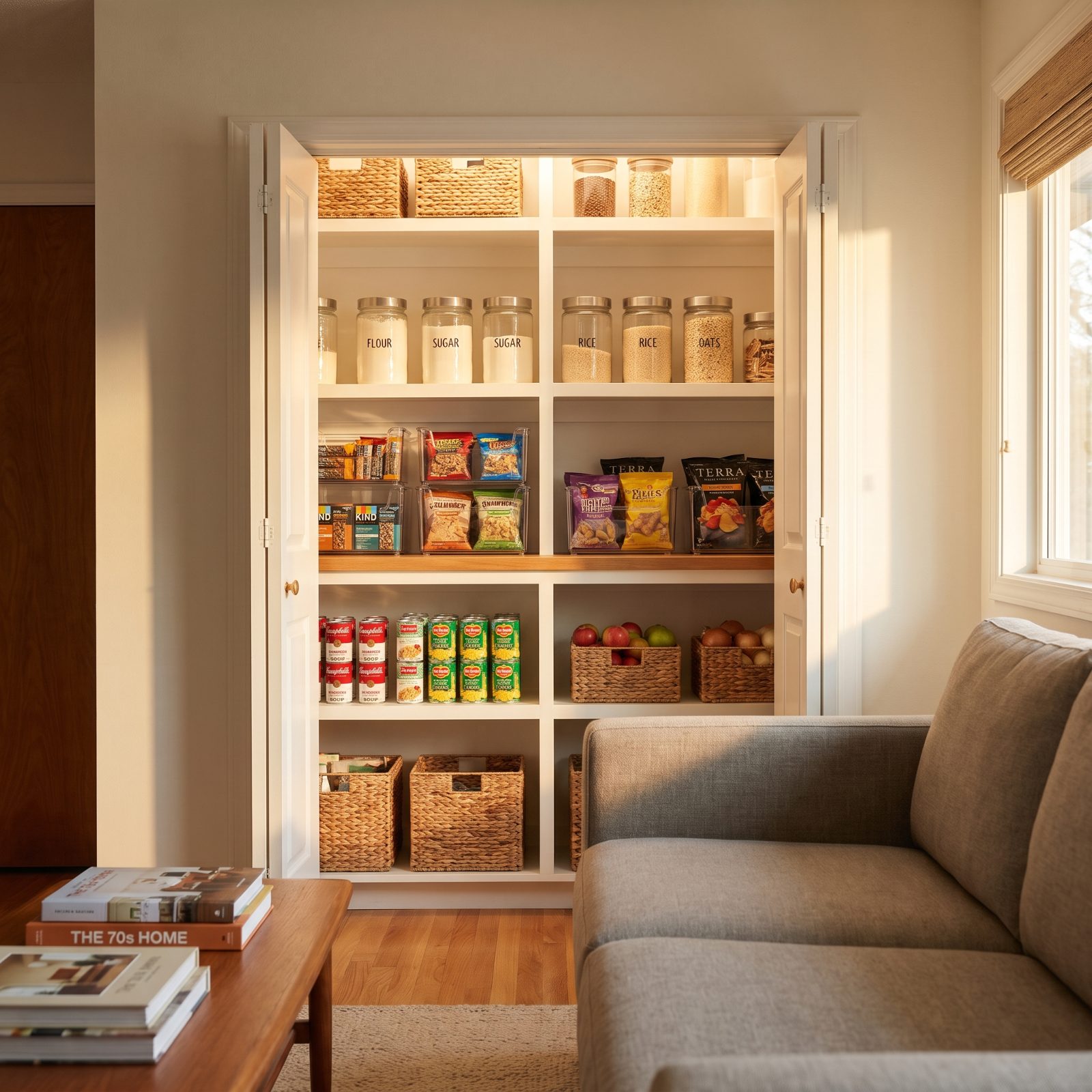
The first week, the pantry is magnificent. You open the door just to look at it. You show people. Every label faces front and the cereal lives in its anointed canister. You think: this is who I am now.
Then week three arrives and the magic has thinned. You know how this goes.
Hedonic adaptation is the quiet thief here. We get a burst of joy from anything new, then our baseline resets and the thrill fades, no matter how good the thing is. It’s why the honeymoon ends, why the new car stops smelling new, why the pantry stops feeling like a miracle and starts feeling like a chore. The system didn’t fail. Your dopamine just moved on. A system you can maintain on an ordinary day beats one that only sparkles when it’s brand new.
8. You Love Flat-Pack Storage More After Building You Yourself
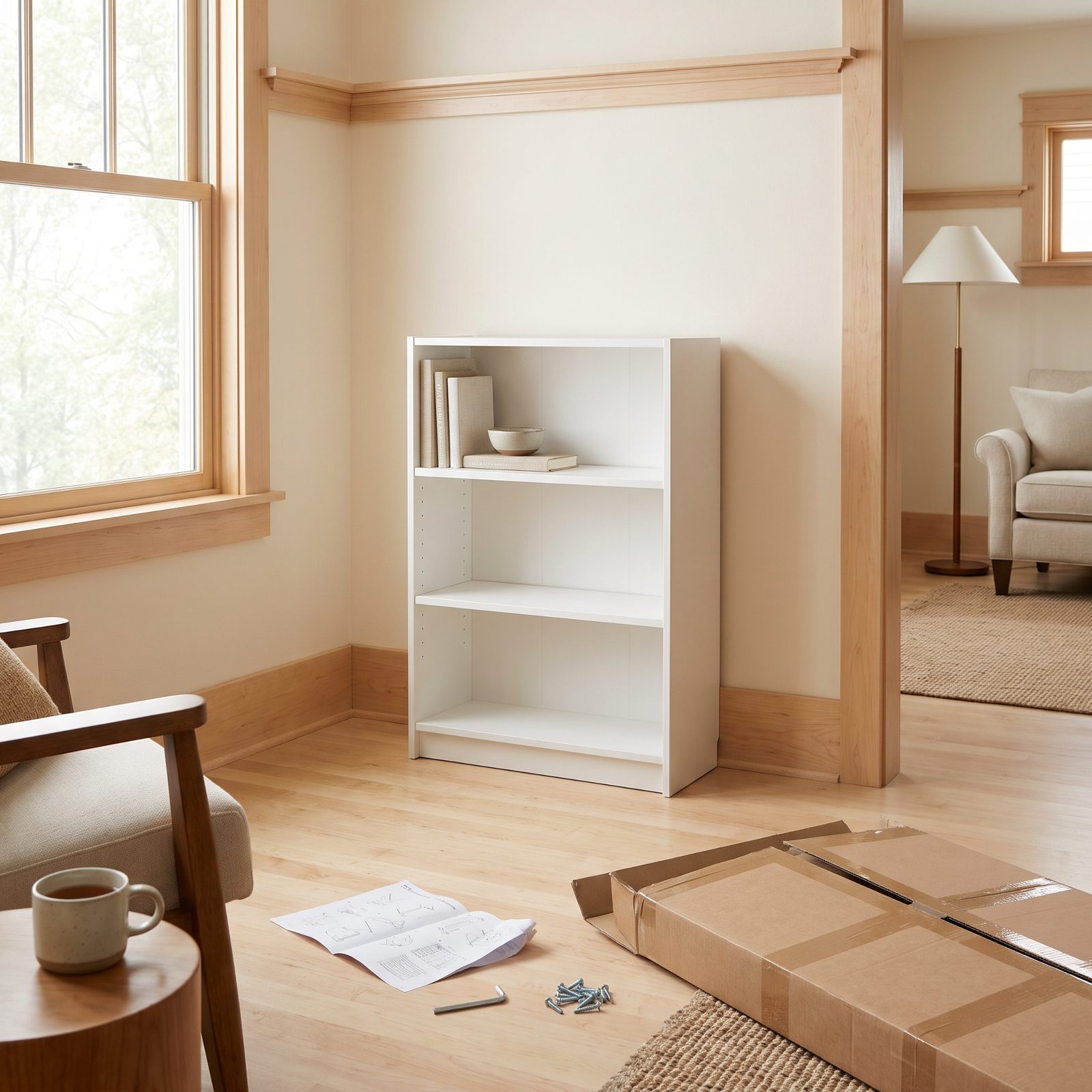
It’s a wobbly white laminate shelf. Objectively mediocre. But you spent an evening on the floor with an allen wrench and a confusing diagram, and now you’d defend it in front of a judge.
This is the IKEA effect, named for exactly this phenomenon: we value things more when we build them ourselves. The sweat gets baked into the worth. Researchers have shown people will pay more for furniture they assembled than for identical pre-built pieces.
The same sunk effort shows up in relationships we’ve poured years into, where the sheer work of building the thing makes us reluctant to question whether it was worth building. Effort is not the same as fit. Loving the shelf because you made it is a lovely feeling. It just isn’t evidence the shelf is any good.
7. You Expect a Label Maker to Fix Your Habits
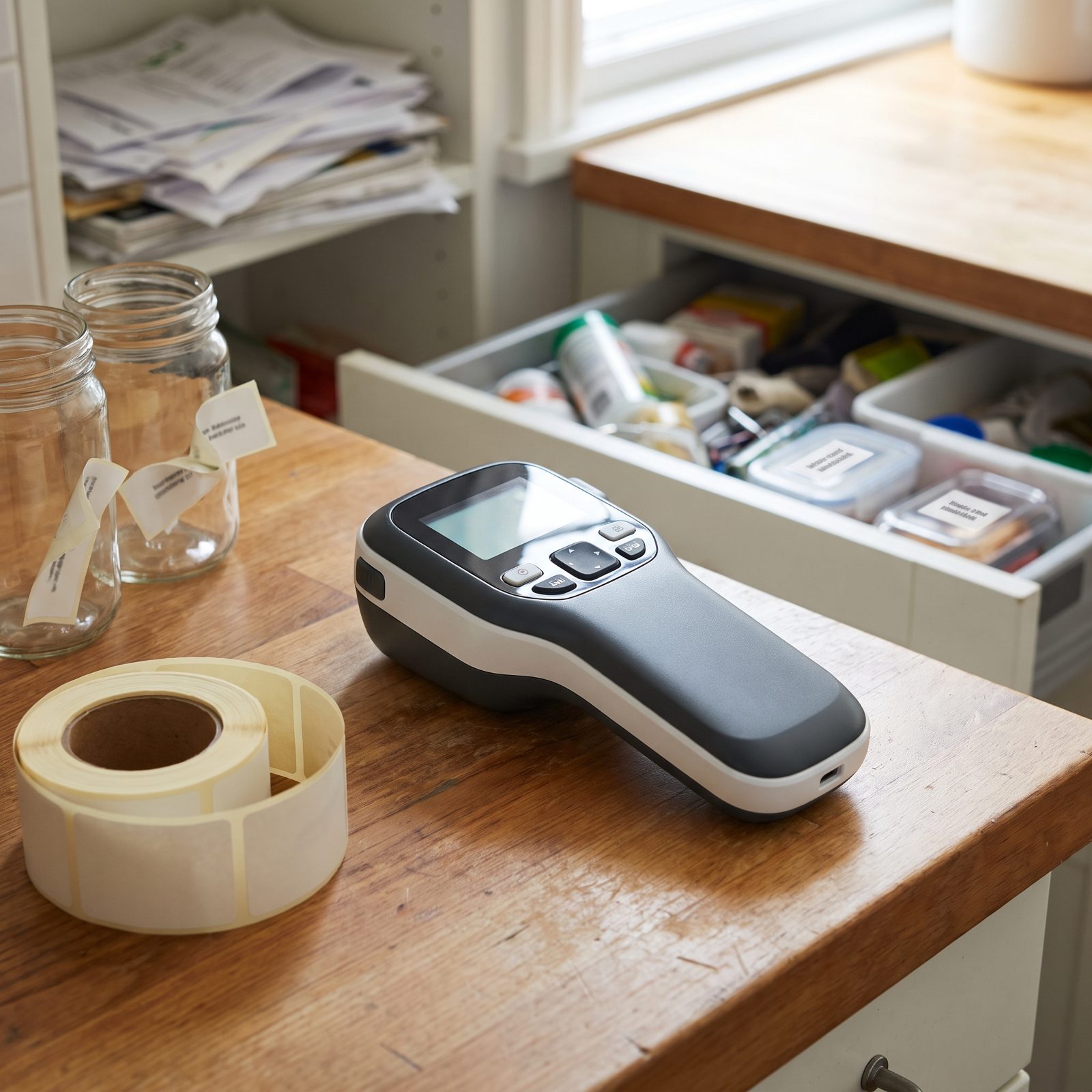
The label maker arrives and for one shining afternoon you believe a new life has begun. Flour. Sugar. Spare Batteries. Each word crisp and permanent. Surely now you’ll put things back where they belong.
You won’t. Not because the label maker failed, but because the mess was never a labeling problem. It was a habits problem, and no tool fixes a habit by being purchased.
Call it magical thinking, the belief that buying the object grants you the discipline the object implies. People do this in love too, hoping a ring or a shared lease will mend what talking never did. The label is a promise to your future self, and your future self did not sign anything. Still, plenty of us own two label makers and have organized almost nothing. Go figure.
6. You Overlook Daily Upkeep During the Showroom Demonstration

You watch the demonstration and you’re gone. The drawer glides shut on a whisper while the salesperson folds one cashmere sweater and slots it into a compartment built for exactly one cashmere sweater. It looks like a magazine spread. You picture your whole life this orderly, and your wallet is out before anyone mentions what keeping it that way actually costs.
Nobody demos the Tuesday night. You know the one — you’re exhausted, the laundry came out half-dry, and you shove it in wherever. A setup that only works when every item is folded to showroom standard isn’t a system. It’s an audition you have to keep passing.
The same wiring pulls people toward the wrong partner. We fall for the highlight reel, the first-date version, the self that shows up when everyone’s trying. Then real mornings arrive.
5. You Reshape Your Mornings Around Fussy Drawer Dividers
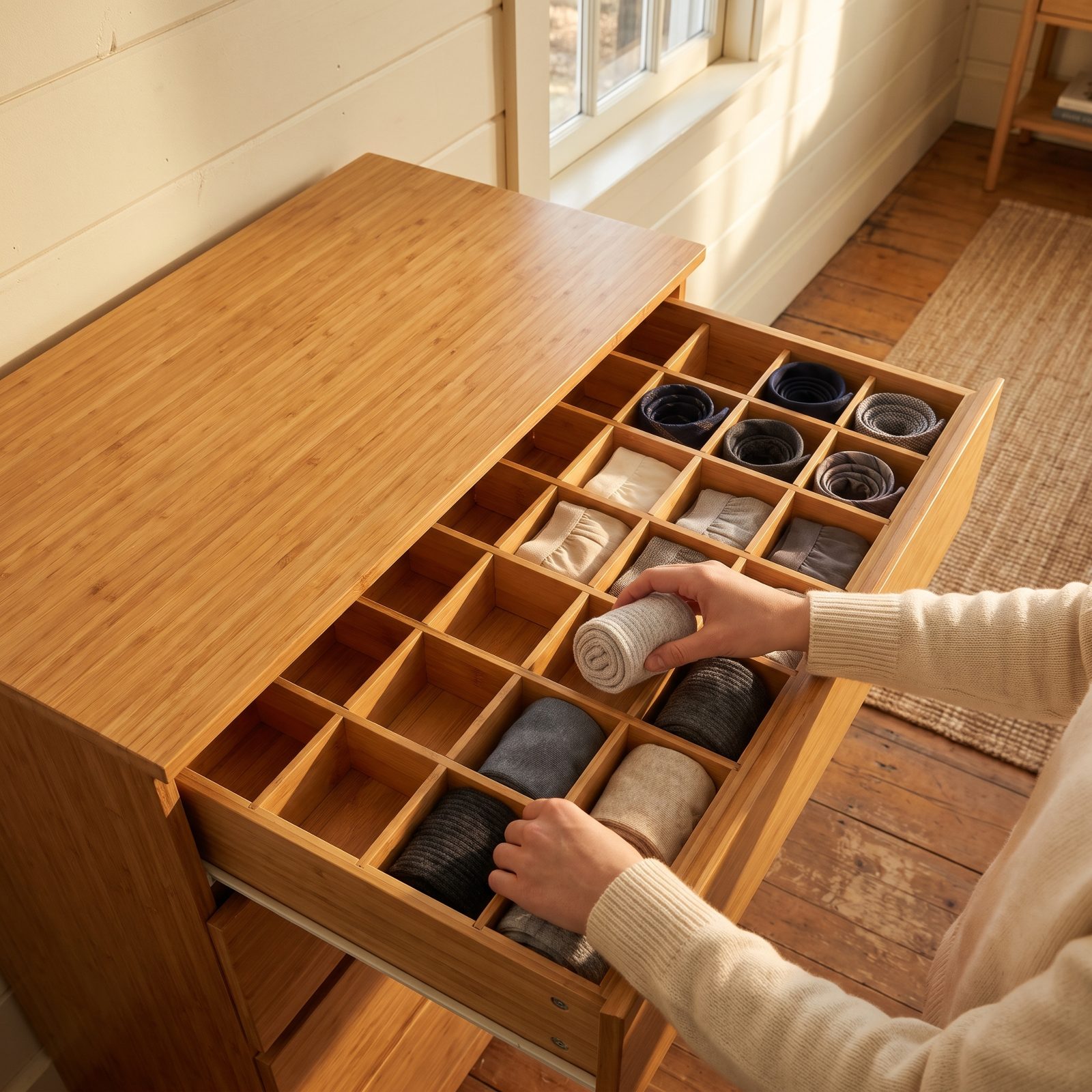
The dividers came with rules you never agreed to. Socks rolled, not folded, the white pair turning in your hand before it goes in. Ties coiled tight, each into its own square. Panels locked into a strict grid of little boxes, and if one roll sits wrong the whole arrangement looks wrong — and once you’ve seen it wrong, you can’t unsee it. So you start waking a little earlier, putting the shirt back three times until it sits flat.
You’ve reorganized your mornings to serve the furniture. The thing was supposed to save you time, and now you’re its maintenance crew.
People do this in relationships too. You begin walking on eggshells, learning which subjects to avoid, timing your moods to someone else’s. The accommodations creep in so slowly you mistake them for devotion.
4. You Blame Yourself When the Closet System Won’t Flex
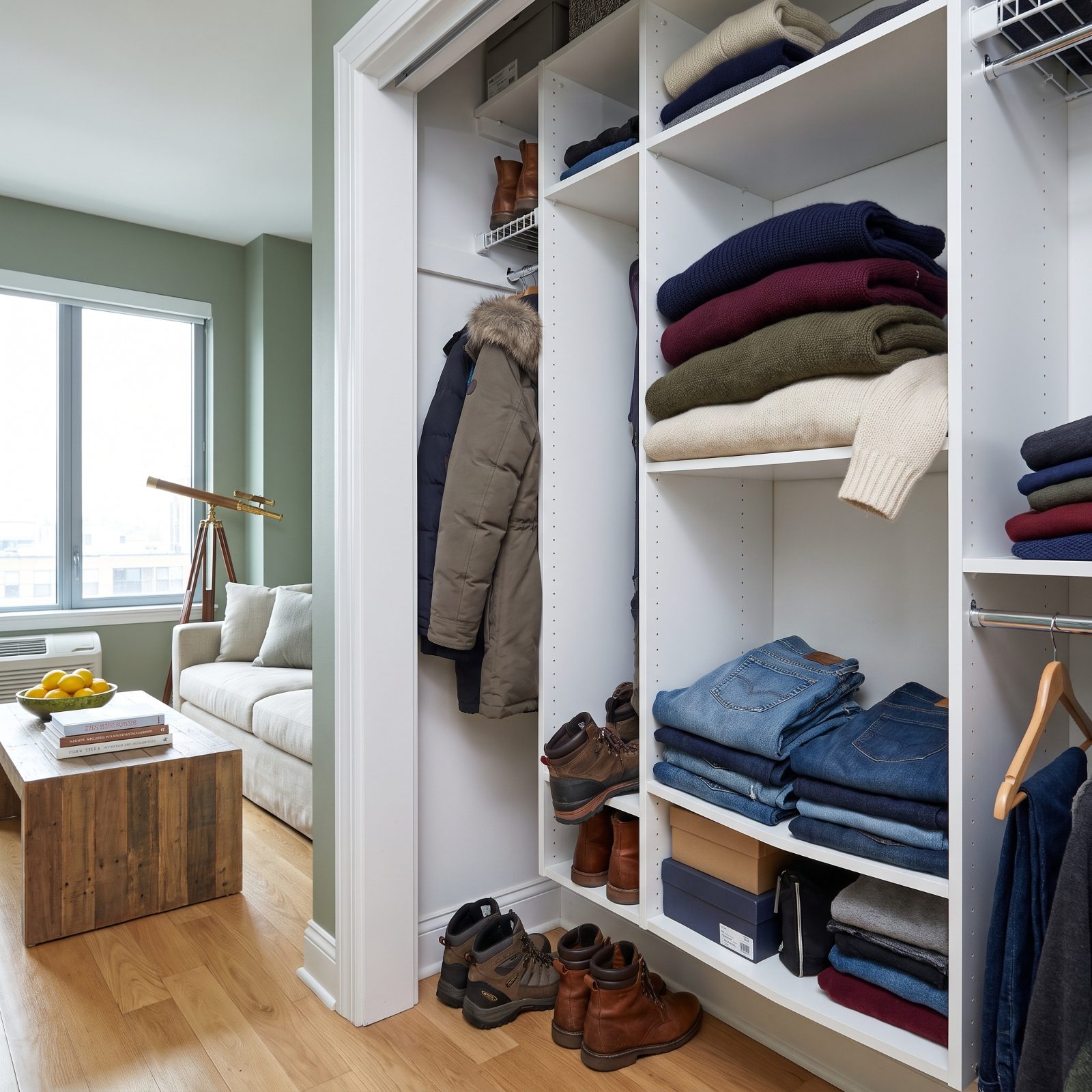
The coat hangs easily on the rod. The boots sit right in their cubby. That’s what a closet looks like when it’s built around you. When it isn’t, somehow your first thought is that you own too many coats. You start editing your life to match the shelving and calling it discipline.
A good system bends to the person; a rigid one asks the person to bend, and when you can’t, it hands you the guilt. A closet that can’t hold your things isn’t a verdict on you. It’s a design that was never built for an actual human with actual stuff.
We run the identical math with the wrong person. They’re cold, they’re inflexible, they can’t meet us — and we conclude we’re the problem. So we shrink to fit. The self-blame feels like humility. Really it’s just the system protecting itself.
3. You Hide Overflow Rather Than Admit the System Failed
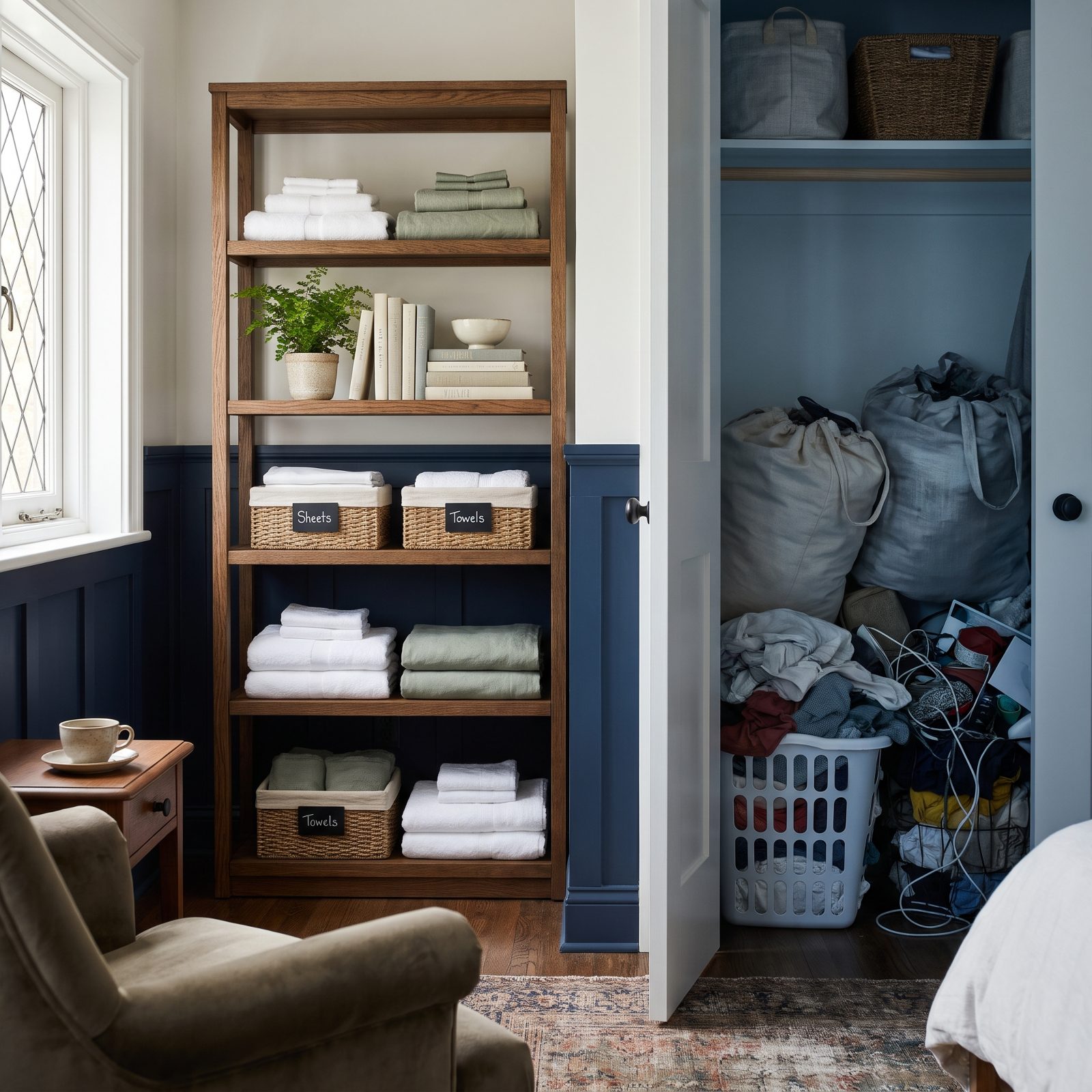
From the doorway, the shelves look incredible. Guests compliment them. What nobody sees is the closet beside them, jammed with everything that never found a home — that basket of homeless objects you relocate whenever someone comes over.
You’re not organized. You’re staging an organized life while the failure gets stuffed somewhere out of frame.
People make the exact same move in a relationship that isn’t working. You post the anniversary photo and tell friends it’s great, and the performance of fine becomes its own full-time job. Admitting otherwise would mean admitting you chose wrong.
2. You Defend Pricey Shelving Because Returning It Feels Worse
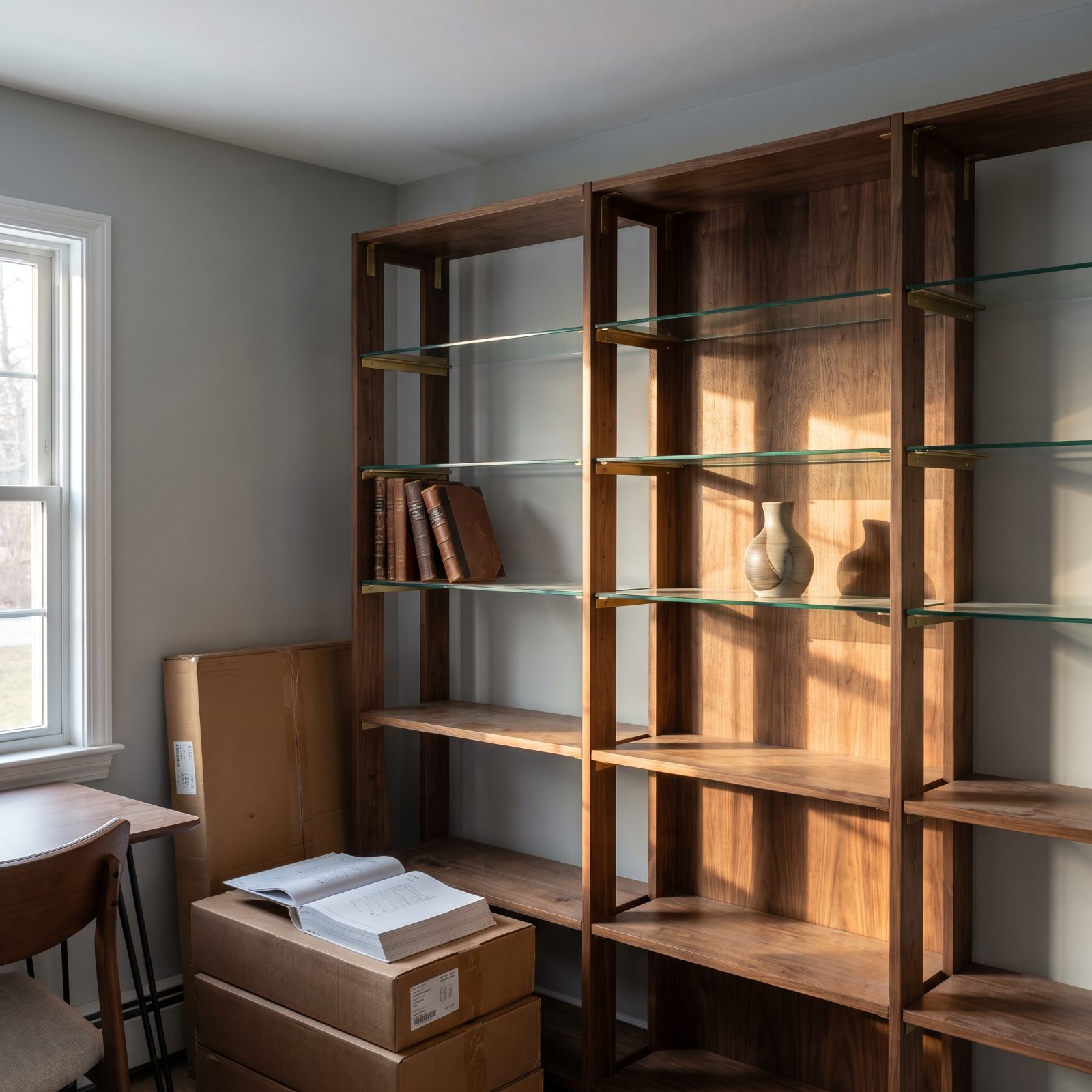
It cost more than you want to say out loud — walnut uprights, brass brackets, the works. And it doesn’t actually work for how you live. But you catch yourself defending it to your spouse, to yourself, listing its virtues like a lawyer, because the alternative is dragging it back and facing what you spent.
So it stays. Half-empty, half-wrong, fully paid for.
That ache has a name, and it’s the same one keeping people in relationships long past their expiration. You’ve already put in so much — the time, the money, the years — that walking away feels like admitting the whole thing was a loss. So you keep pouring in to justify what you already poured.
1. You Organize Clutter Instead of Breaking Up With It
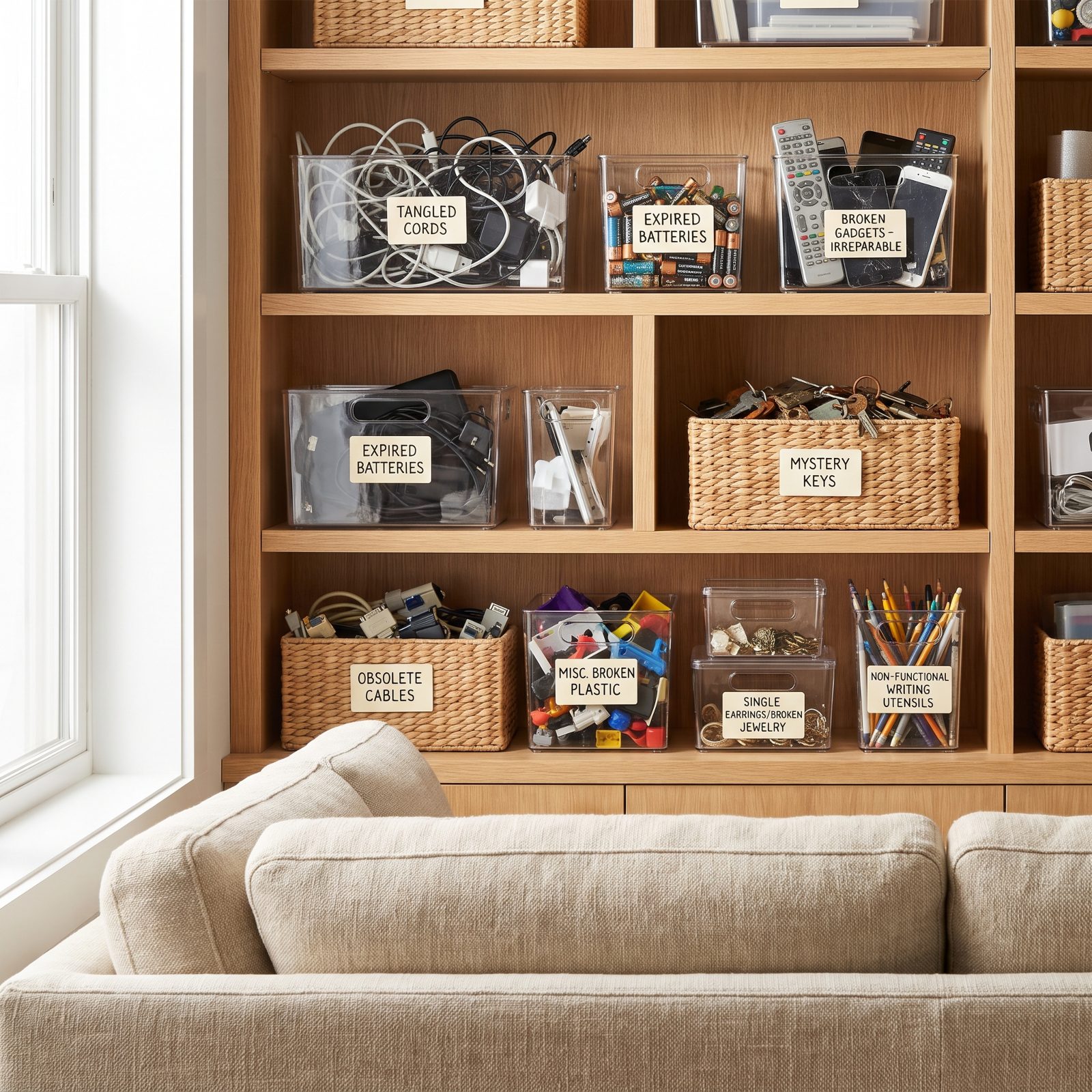
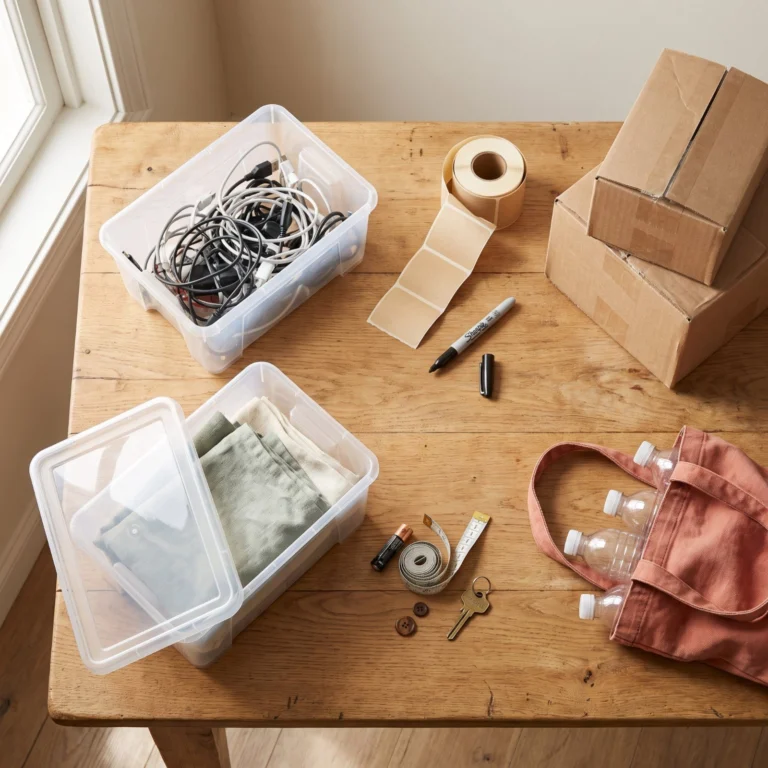
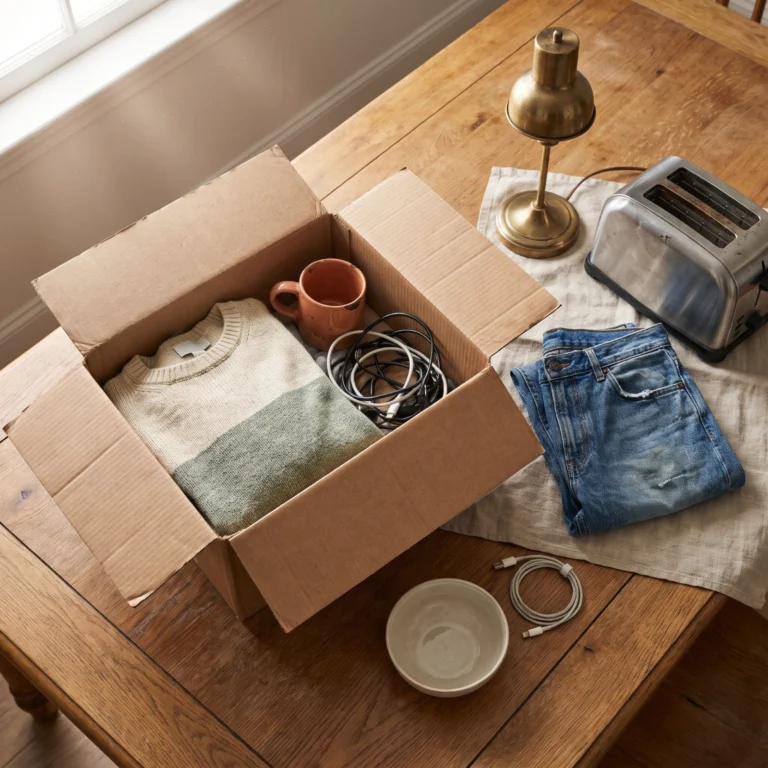
You spent a Saturday on it. Clear bins, hand-labeled baskets, every tangled cord heaped into its own big bin, the dead batteries grouped with the dead batteries, the mystery keys given a dignified home. It looks fantastic. And none of it should still be in your house.
You organized the thing instead of letting it go. Sorting felt like progress because it was work, and work feels like solving. But all you did was give clutter a nicer apartment.
This is the ghost haunting every doomed relationship. We’d rather manage the problem than end it. Managing is busy, visible, almost noble. Leaving is a cliff. So we rearrange and rename and reshuffle — anything but the one move that actually frees up the space.
I’ll die on this hill: the most organized thing you’ll ever own is the empty shelf. The best system in the house is the stuff you were brave enough to not keep.