You’ve mopped. You’ve wiped. You’ve run the vacuum until the bag begged for mercy. And still, the house looks a little tired, a little gray around the edges, like it’s keeping a secret. That nagging dinginess isn’t in your head, and it rarely comes down to effort. The problem is the spots regular cleaning skips, grime that builds so slowly your eye quietly gives up on noticing it. So we went looking for the real culprits, the ones that undo an hour of honest work in a single glance. Fix these and the whole place reads clean again, no extra scrubbing required.
Please note that some of the images in this article were created with the assistance of AI.
26. Countertops Buried Under Everyday Clutter
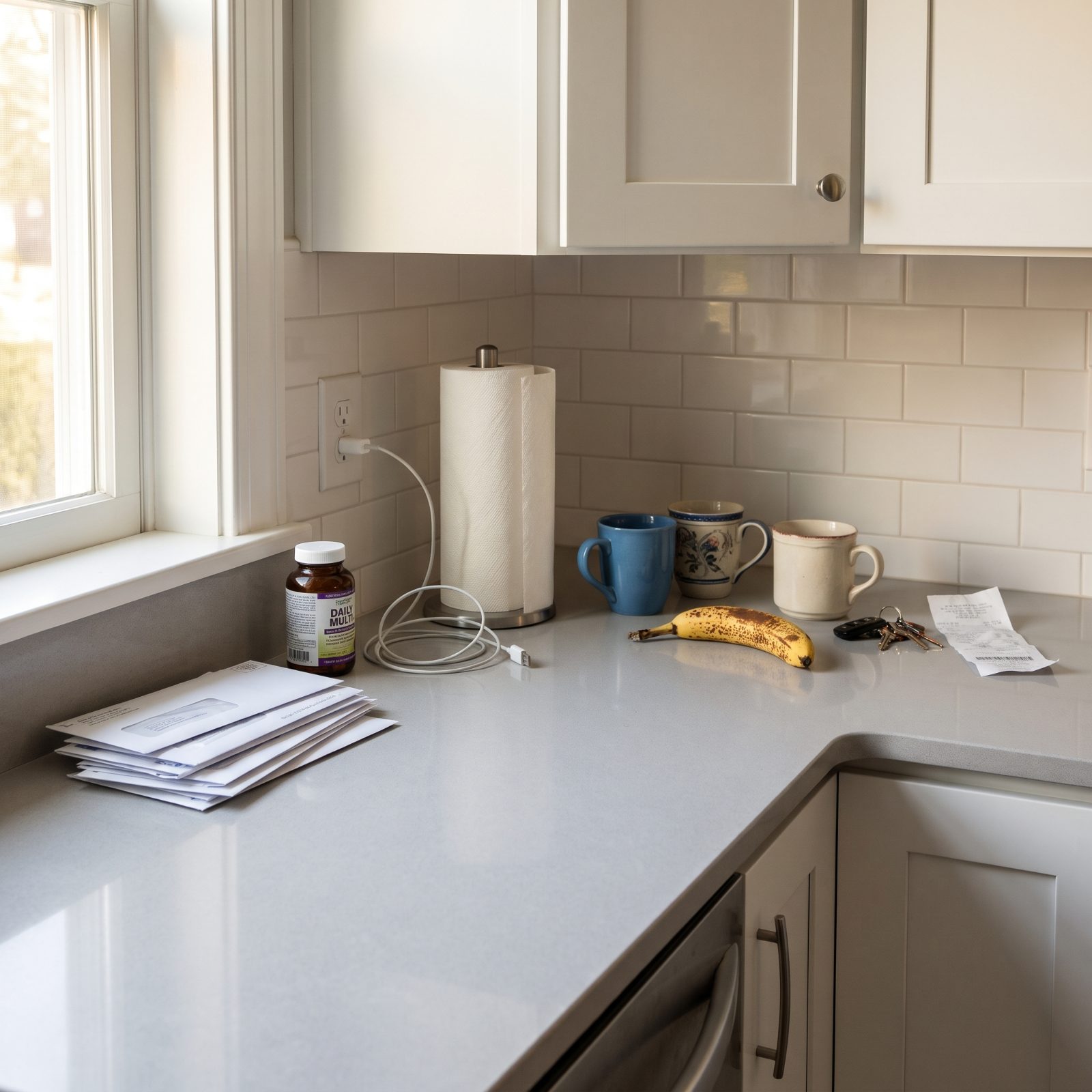
A spotless counter under a pile of mail still reads as mess. Your brain never registers the gleaming quartz; it registers the chaos sitting on top of it.
The fix isn’t more cleaning. It’s fewer objects. Pick three things that genuinely earn counter space (the coffee setup, maybe a fruit bowl) and relocate everything else, especially the junk mail that’s been breeding by the toaster since Tuesday.
25. That Faint Stale Smell You Stop Noticing

The cruel part is that you can’t smell your own house. Nose-blindness is real, and it means the musty undertone a guest clocks the second they walk in is completely invisible to you.
Vacuuming and wiping don’t touch it. Smell lives in soft things (upholstery, rugs, curtains) and in trapped stagnant air. So crack the windows for ten minutes even in winter, wash the throw blankets nobody thinks to wash, and sprinkle baking soda on rugs, leave it an hour, vacuum it up.
Skip the plug-in air fresheners. They just stack a fake smell on top of the real one, and your nose eventually learns to distrust both.
24. Windows Streaked and Dulling Your Daylight
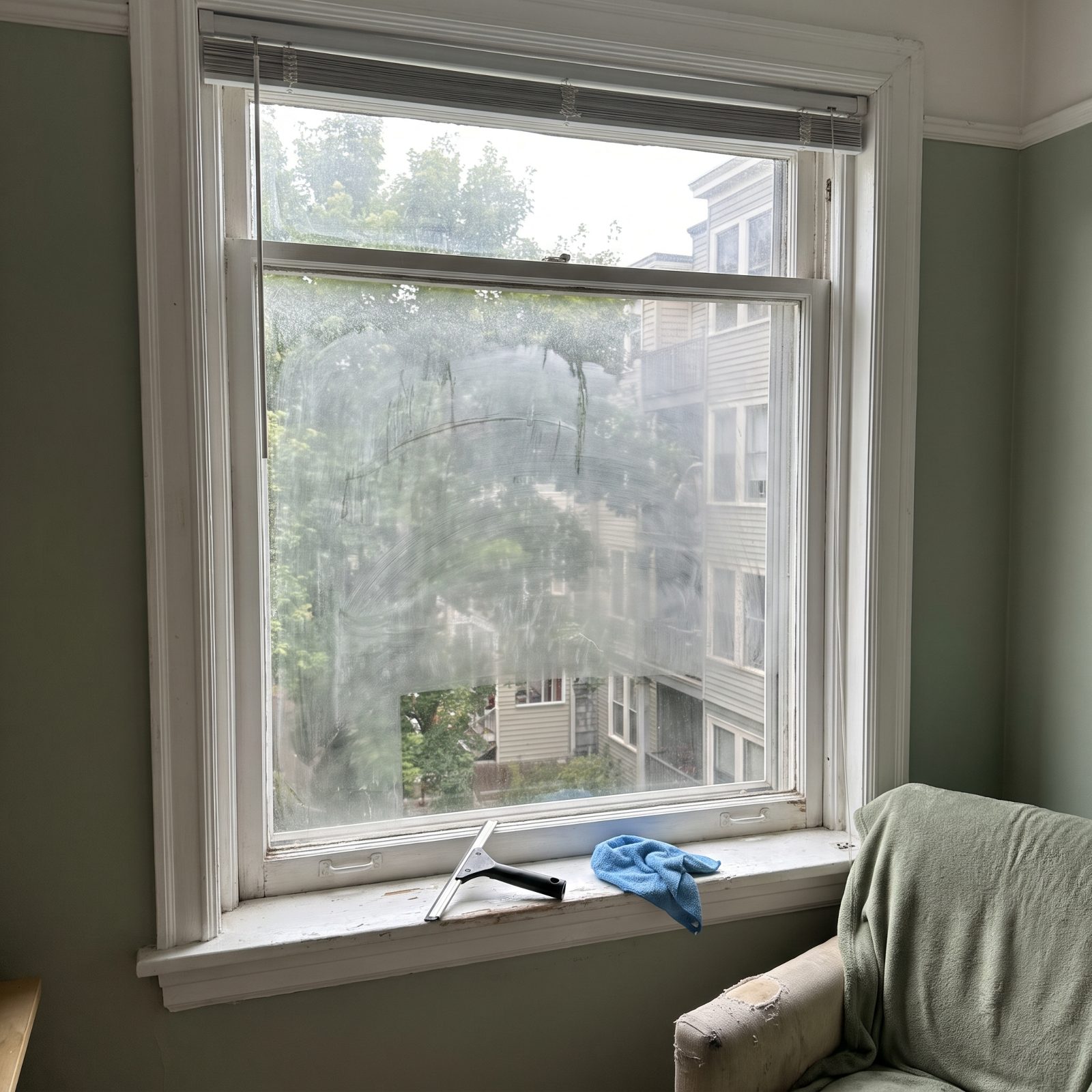
Streaky windows steal light you paid for. A home can be immaculate and still feel gloomy when every pane wears a hazy film that softens the daylight before it ever gets in.
The mistake? Cleaning on a sunny day, when the sun dries your solution before you can wipe it and bakes the streaks right in. Work in shade or early morning instead. Ditch the paper towels, which shed and smear, for a squeegee or a flat-weave microfiber cloth. One more trick: wipe the glass horizontally inside and vertically outside, so a stray streak tells you exactly which side it’s hiding on.
23. Stainless Appliances Wearing a Coat of Fingerprints

Stainless is a fingerprint magnet, and fingerprints are the fastest way to make a clean kitchen look neglected. Every handle, every door, smudged with the ghosts of a hundred hands.
The secret almost nobody follows: wipe with the grain, not against it. Run your cloth in the direction of those fine brushed lines and the smudges lift instead of smearing sideways. A dab of mineral oil (or even olive oil) on a dry cloth afterward leaves a thin layer that shrugs off the next round of prints.
Ignore the grain and the steel always looks cloudy, because you’re just polishing the dirt in circles.
22. The Milky Film Clouding Your Glass Shower Doors

You clean the shower top to bottom and the doors still look foggy. That milky haze is soap scum fused with hard-water minerals, and regular bathroom spray barely dents it.
A paste of baking soda worked in with a little white vinegar breaks the bond. Let it sit, then scrub and rinse. For really stubborn buildup, dissolve a tablet of citric acid in warm water and let that do the quiet work.
21. Grout Lines Gone Gray and Grimy
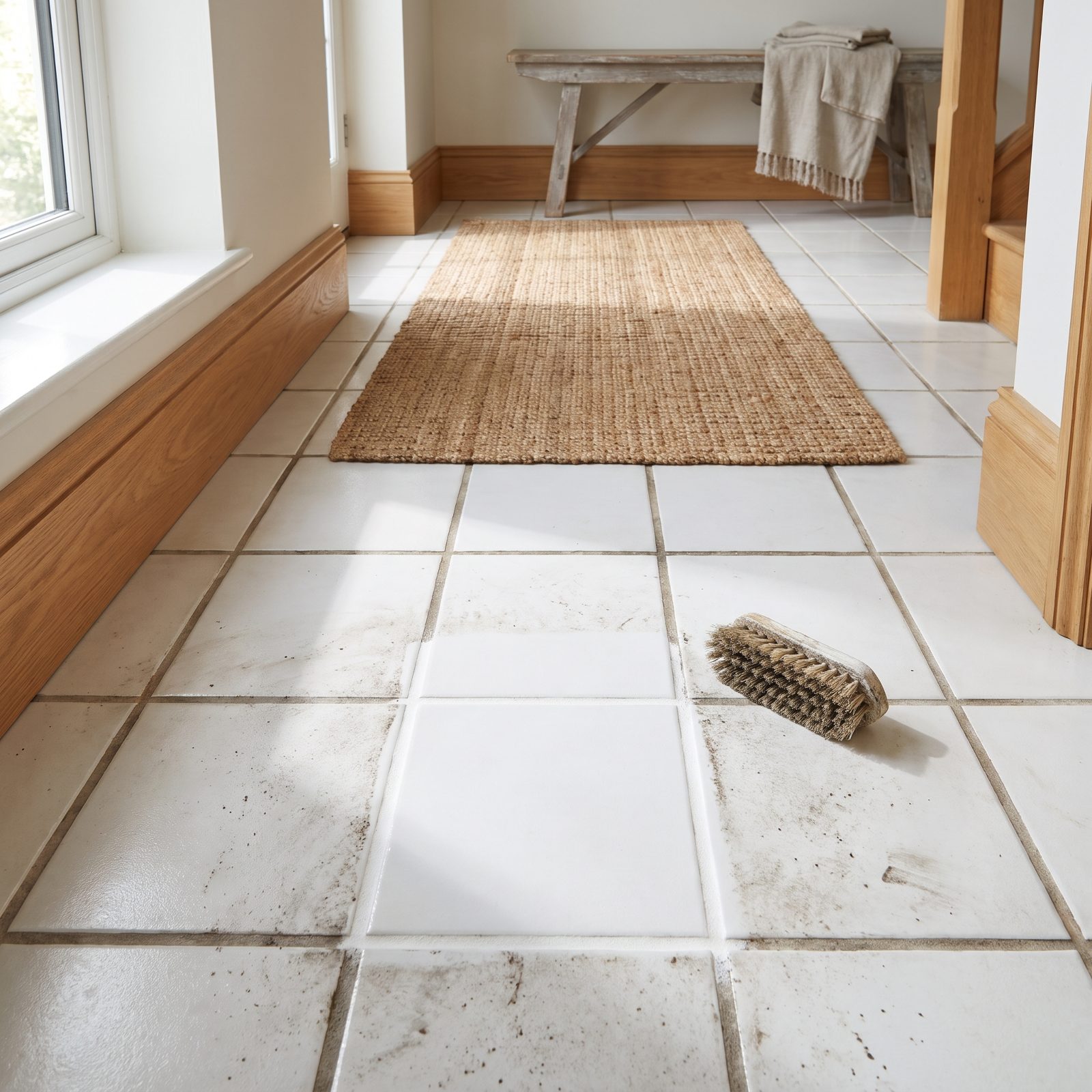
Clean tiles with dirty grout is the housekeeping equivalent of a nice shirt with a stained collar. Your eye goes straight to the dark lines running between every tile.
Mopping does almost nothing here. Mop water just drags grime back into those porous channels, which is why grout darkens even in a diligently cleaned home. You have to get into the lines by hand: a stiff brush, a baking-soda paste, a little patience, one section at a time.
And once it’s bright again, seal it. Grout sealer is the single most skipped step in any bathroom, and it’s exactly why your hard work doesn’t last.
20. Ceiling Fan Blades Furred With Dust

Nobody looks up, which is exactly the problem. Fan blades grow a shaggy gray fringe of dust along their edges, easy to miss from below until you flip the switch and it rains down over the whole room.
Here’s what saves your arms and your floor: slip an old pillowcase over each blade, then pull it back toward you. The dust stays trapped inside the case instead of scattering. Shake it out over a trash can. Done.
Do this before you dust anything else in the room, or you’ll just redo the shelves an hour later.
19. Cobwebs Lurking in High Corners and Crown Molding
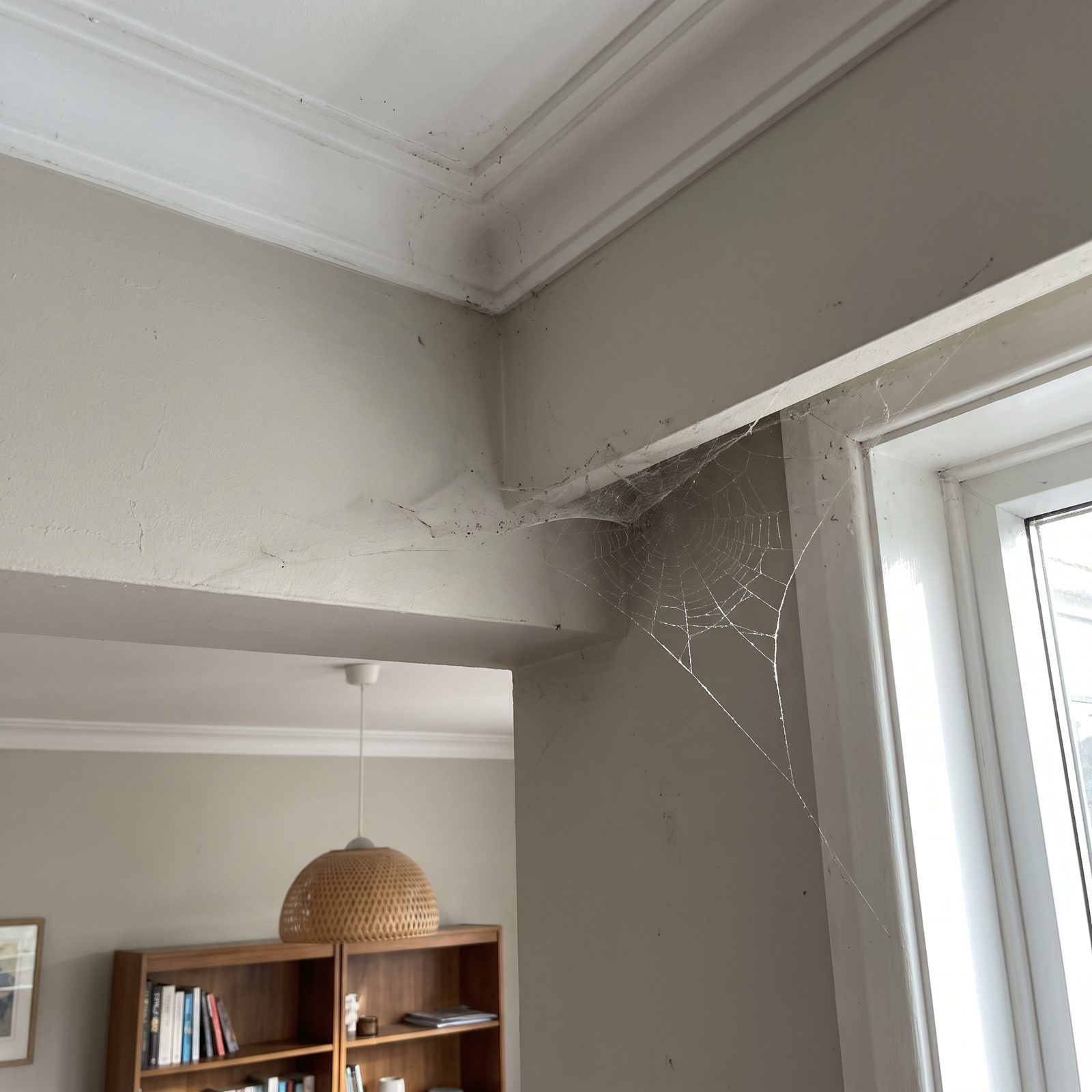
Cobwebs sit just above eye level, which is why they thrive. You never look there, until a shaft of afternoon light catches one dusty strand and suddenly you see all of them.
A microfiber duster on an extendable pole clears corners, molding, and the tops of door frames in about a minute and a half per room. Do it first and work downward, so whatever you dislodge lands on surfaces you’re about to clean anyway.
A room feels dingy from the ceiling down, not the floor up. We almost always clean in the wrong direction.
18. Hard-Water Spots Crusting Your Faucets and Fixtures
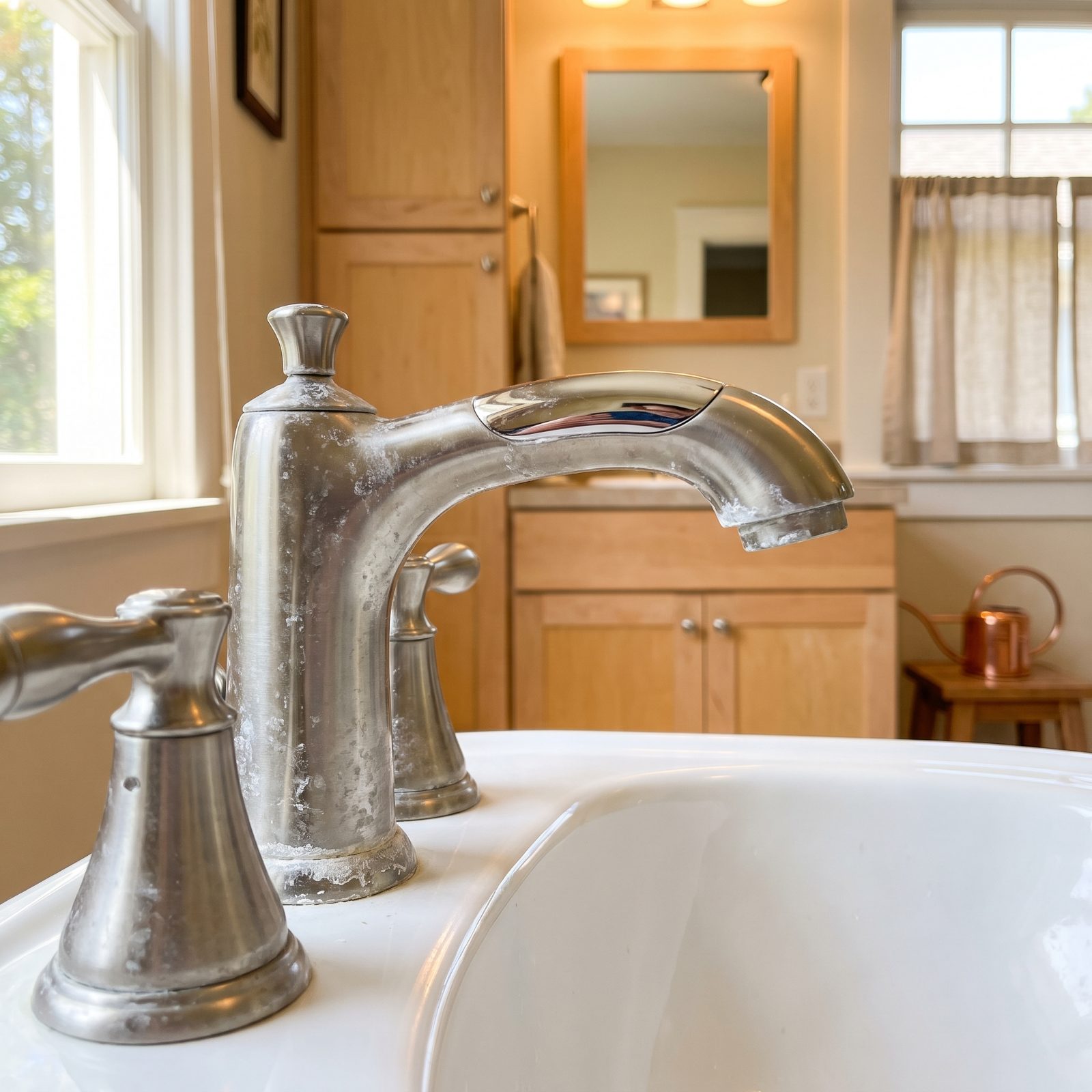
Those white speckles crusting your faucet aren’t dirt, so no amount of ordinary wiping shifts them. They’re mineral deposits left behind when hard water evaporates, and they laugh at your all-purpose spray.
Acid dissolves them. Wrap a vinegar-soaked paper towel around the faucet base, leave it half an hour, then wipe. The crust comes off like it was never fused there in the first place.
And the gunk clogging the aerator (that little screen in the spout)? Unscrew it and soak it in vinegar overnight. Your water pressure will thank you, and the faucet will finally shine.
17. Pet Hair Woven Deep Into Rugs and Upholstery

Vacuuming lifts the hair on top. It leaves the hair that’s worked its way down into the weave, and that buried layer is what keeps upholstery looking dull and fuzzy no matter how often you clean.
Rubber is the answer. Drag a damp rubber glove across a cushion, or work a stiff rubber pet brush over it, and the static pulls embedded hair up into clumps you can lift off by hand. A squeegee does the same on low-pile rugs. It’s weirdly satisfying, and it beats every pricey gadget I’ve ever bought.
Go over it with the vacuum afterward to grab the loosened fluff. Then, and only then, does the fabric read genuinely clean.
16. The Soap-Scum Ring Living in Your Bathtub
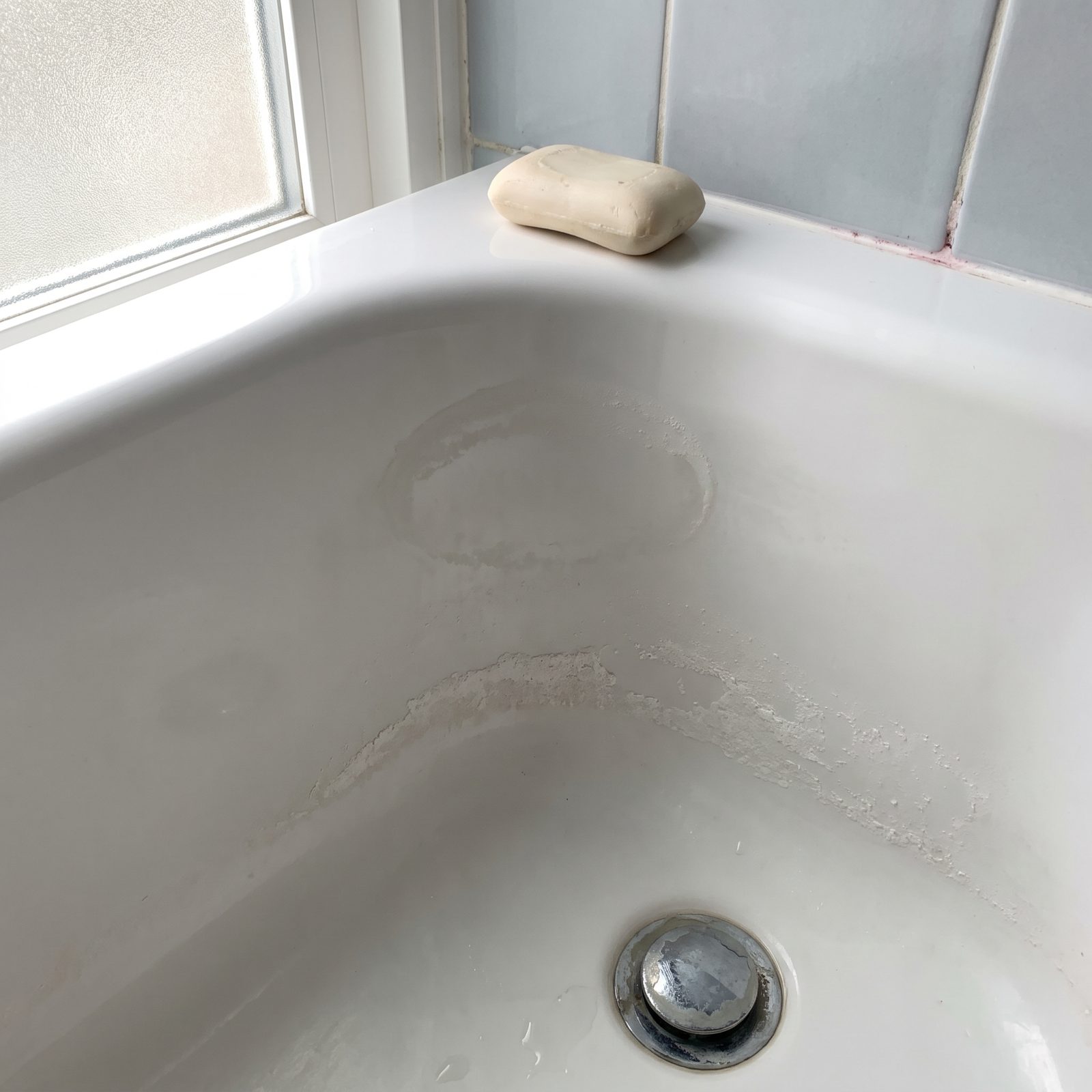
You scrub it, it looks clean when wet, then it dries and the ghost of a ring reappears like it’s taunting you. That’s not really grime. It’s soap scum — the leftover handshake between your soap’s fatty acids and the minerals in hard water — and plain all-purpose spray barely touches it.
You need a mild acid. Warm white vinegar does most of the heavy lifting, or reach for a dedicated lime-and-scale remover when the mineral buildup gets stubborn. Let it sit ten minutes before you go near it. And switch from bar soap to a liquid body wash — the bar is the main culprit feeding that ring, so you’re starving the problem at its source.
15. That Sticky Grease Film on Your Cabinet Fronts
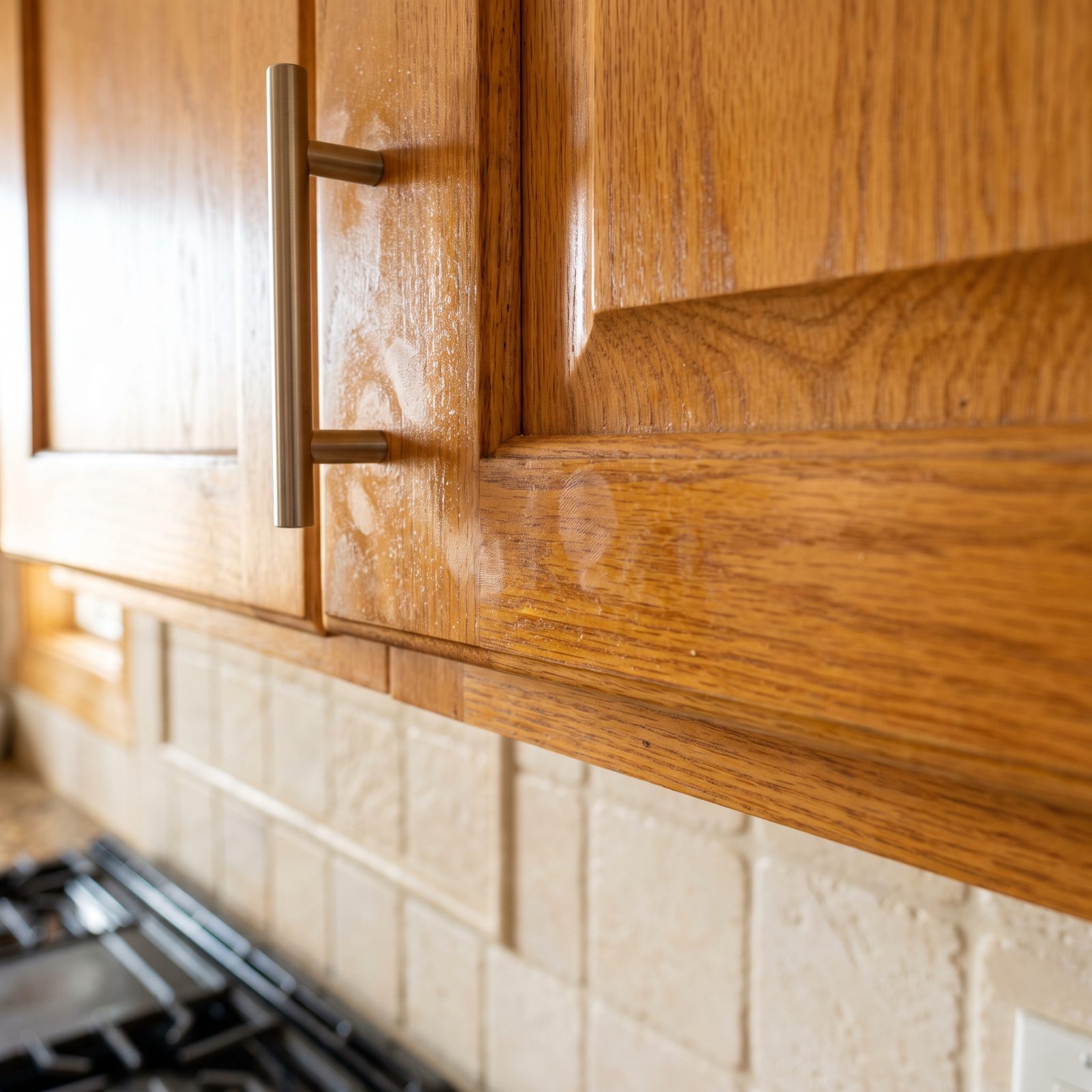
Run a finger across the cabinet door next to your stove. Feel that? The faint tackiness, like a sticker that never quite peeled off. That’s airborne cooking grease, invisible until it grabs dust and turns your cabinets a shade dingier than everything around them.
A regular wipe just smears it. What you want is a grease-cutter — a few drops of dish soap in warm water, or a proper degreaser for the heavy spots — worked along the wood grain, then chased with a damp cloth so you don’t leave your own film behind.
14. The Matted Traffic Path Worn Into Your Carpet
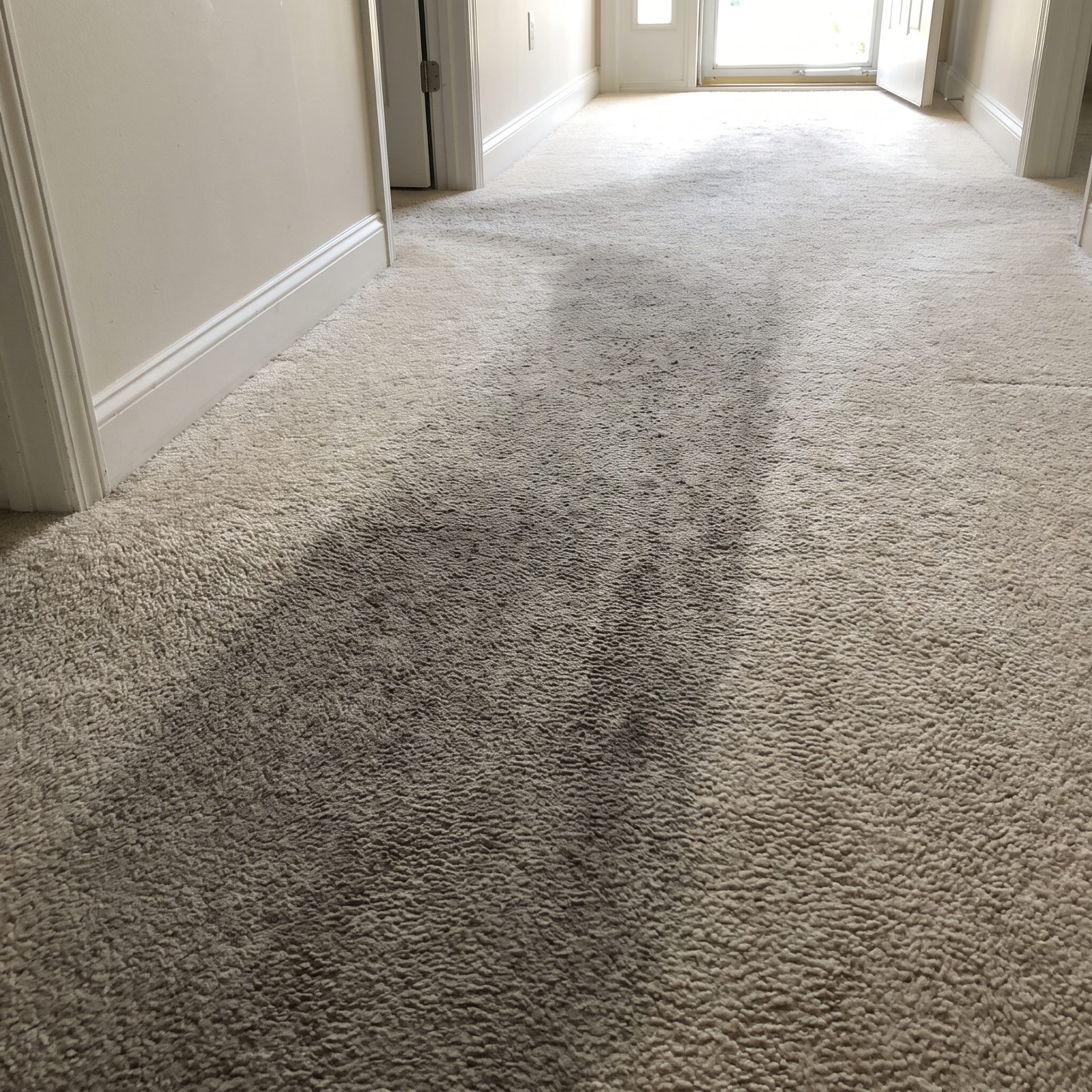
The dark lane running down your hallway isn’t necessarily dirtier than the rest of the carpet. It’s crushed. Foot traffic mats the fibers flat, and flat fibers catch light differently, so they read as a dingy shadow even right after you vacuum.
Here’s what people miss. Vacuuming pulls up loose dirt but it does nothing for matted pile. That needs a deep clean to flush out the ground-in soil, then something to stand the fibers back up — a stiff carpet brush or a grooming rake, worked against the matted direction, brings a surprising amount of that path back to life.
13. Scuffed, Scraped Baseboards and Door Trim
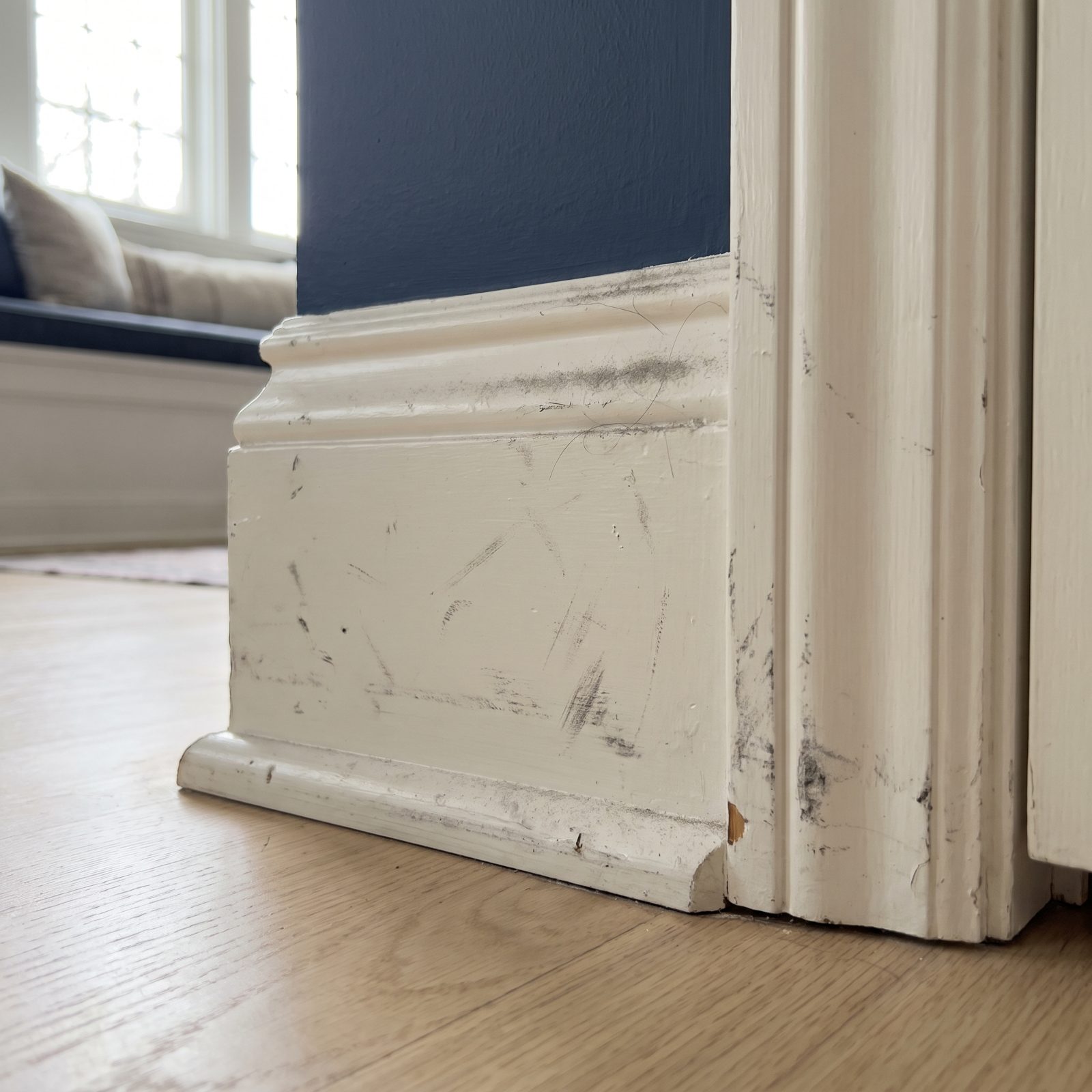
Baseboards live at ankle height, which is exactly why nobody looks at them and exactly why they drag the whole room down anyway. Scuffs from shoes, vacuum bumpers, and the mop you keep whacking into them pile into a grey band that makes the wall above look tired.
A Magic Eraser knocks out most black scuffs in seconds — honestly feels like cheating. For the greasy dust line along the top ledge, a damp microfiber cloth does it. And those fingerprints on the door trim near the handle? That’s dirt from a hundred hands a week, settling in.
12. Yellowed Switch Plates and Grimy Door Handles
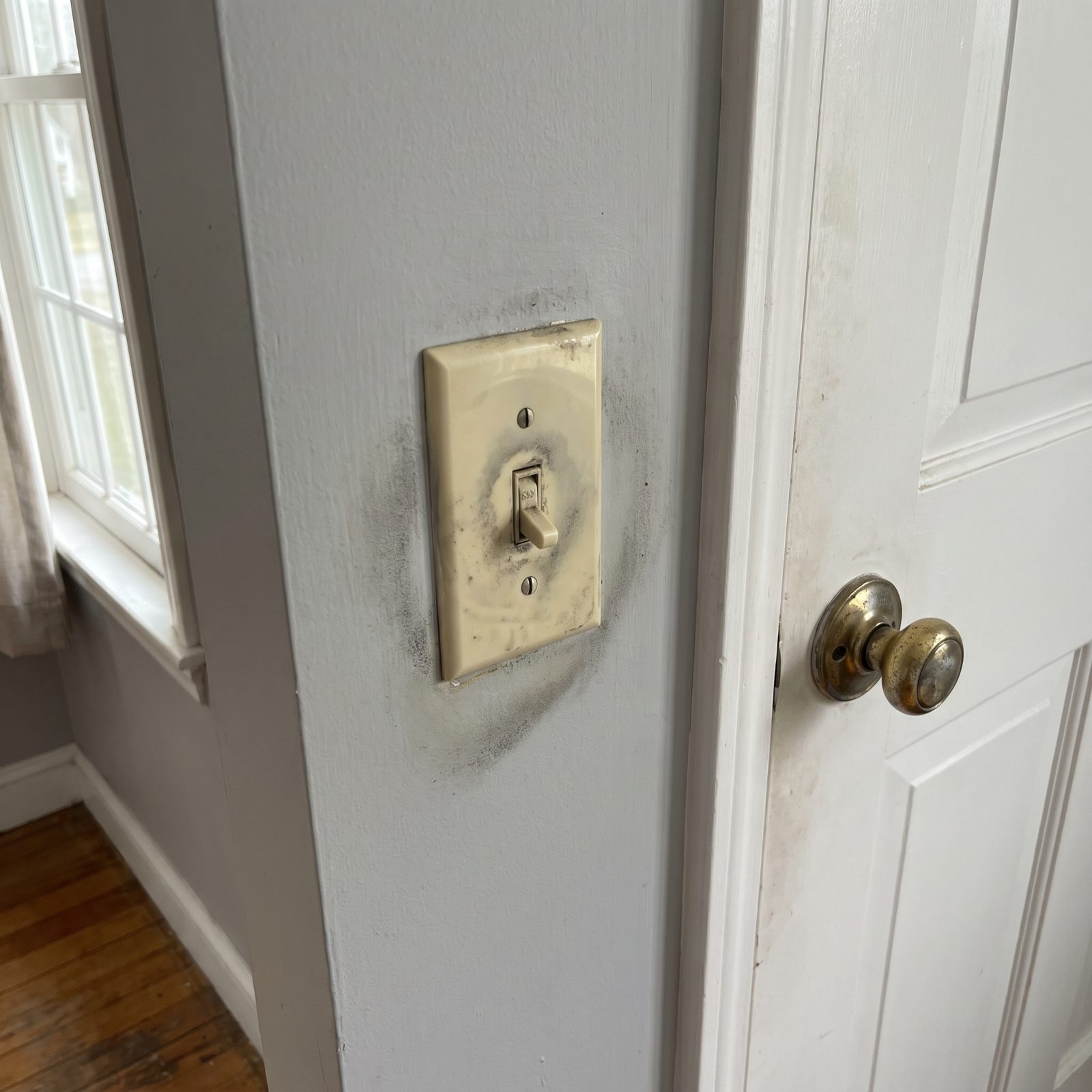
This is the one almost everybody skips. Switch plates and handles get touched dozens of times a day, usually by hands fresh off something greasy, and that hand oil builds into a dark, speckled smudge that spreads across the wall around every switch. You stop seeing it because it creeps in so slowly.
Wipe them down with a slightly damp cloth and a drop of dish soap. Never spray cleaner straight onto a plate near live wiring — dampen the cloth instead. White plates that have gone permanently yellow from age and sun are cheap to swap, and replacing a two-dollar part feels oddly satisfying for how little it costs.
11. The Splattered, Crusted Microwave Interior

Open the microwave and you remember. Every splatter from every uncovered bowl of soup is still there, baked back on by the next thirty uses. This is the appliance nobody touches until it crosses into genuinely horrifying.
Skip the scrubbing entirely. Fill a bowl with water and a few slices of lemon or a splash of vinegar, run it until it steams, then let it sit a couple more minutes with the door shut. The steam loosens everything, so dried-on crust surrenders to a single wipe of a cloth. Easiest win on this whole list — and your reheated leftovers stop smelling like last week’s dinner.
10. The Trash Can That Smells Clean Isn’t
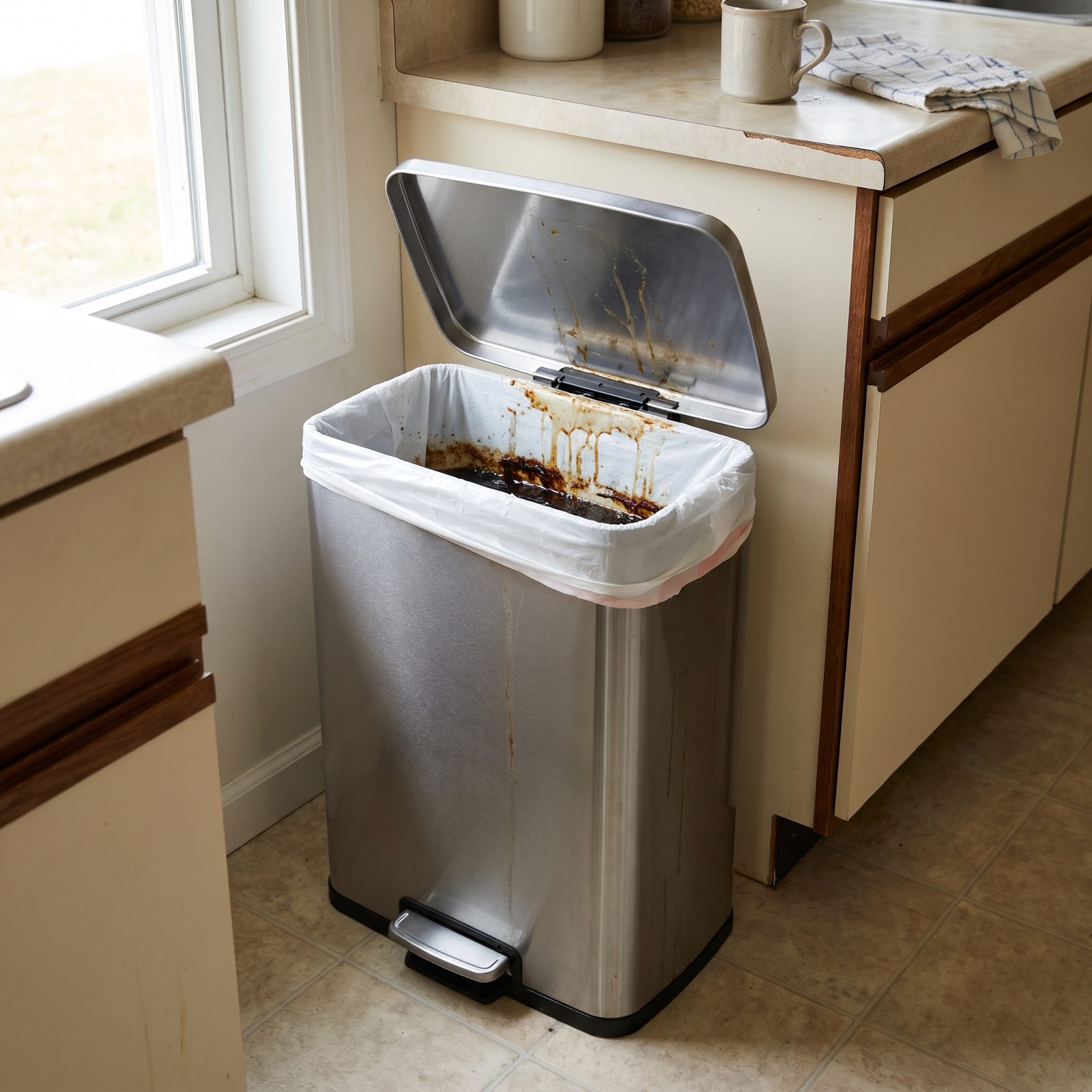
You wait until the bag is full. Doesn’t matter. Liquids splatter and drip down the liner walls, pool at the bottom of the bag, and rot into a black sludge that quietly perfumes your whole kitchen. A stained, half-empty bag left sitting in the can is a shirt worn through a week of sweat.
Once a month, haul it outside, hose it down, and scrub the inside with hot soapy water. Dry it completely before the new bag goes in, because trapped moisture is what breeds the smell. A sprinkle of baking soda in the bottom keeps things honest between washes. It’s a small fix that helps more than you’d expect.
9. Dust-Furred Blinds and the Windowsill Graveyard
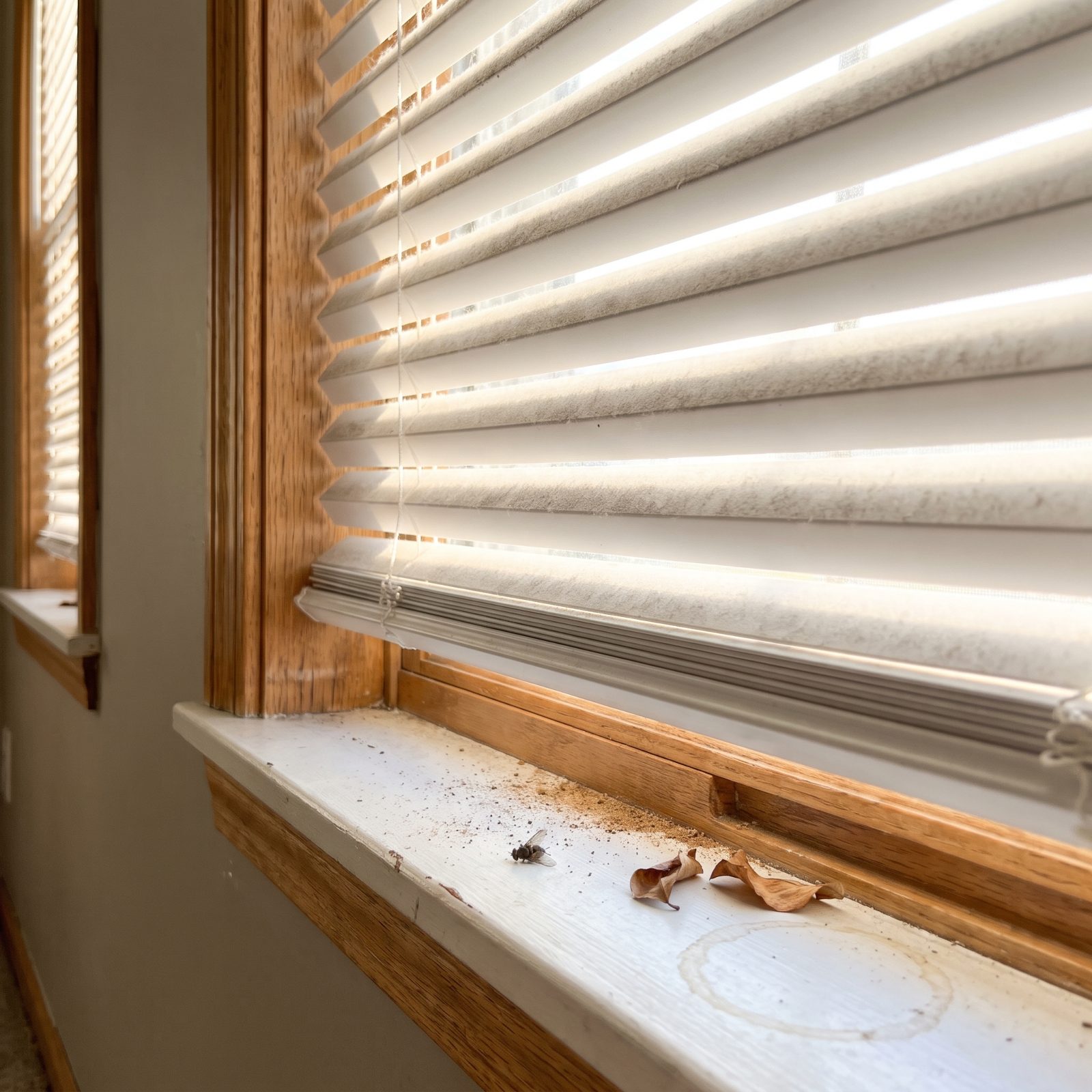
Blinds are dust magnets you only notice when the afternoon sun backlights them and suddenly every slat is wearing a grey coat. Below them, the windowsill keeps its own little graveyard — grit, a dead fly or two, that mysterious fuzz nobody can source.
For the slats, close them one way and wipe, then flip and wipe the other side. An old sock pulled over your hand beats any gadget they sell you. Damp microfiber for the sill. Vacuum the track with a crevice tool first, or you’ll just push mud around in the corners.
8. The Clouded Light Fixture Full of Shadows
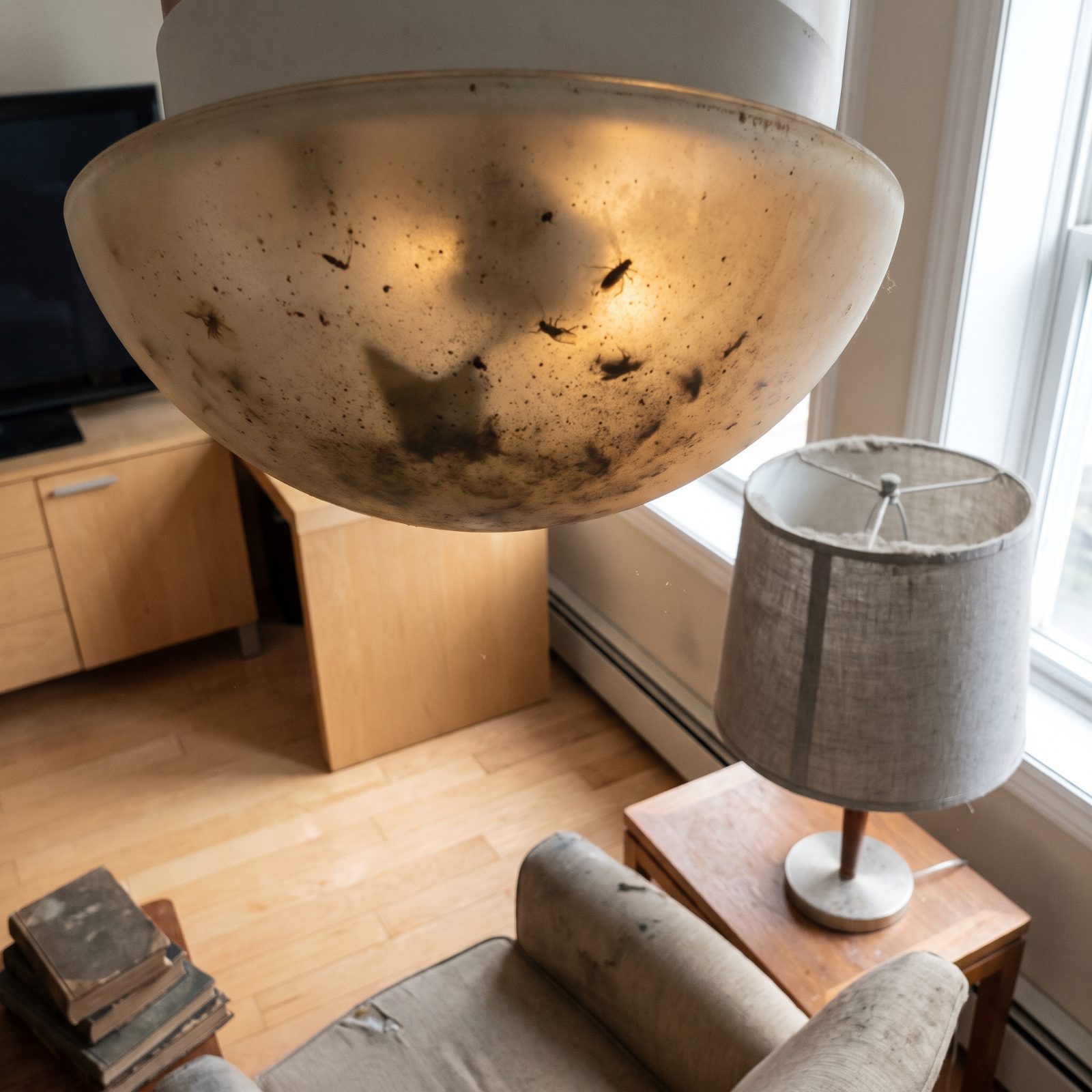
Look up at your ceiling fixtures. See the shadowy clumps inside the glass? Dust, and — more often than anyone cares to admit — a small morgue of dead bugs. They dull every bulb in the house and tint your light a tired grey-brown.
Flip the switch off and let the glass cool. Most domes unscrew or twist free. Wash them in warm soapy water, dry completely, reinstall. For fabric lampshades, a lint roller or a vacuum brush attachment lifts the surface grime without flattening the weave.
7. Mirrors and Glass That Dry Streaky Every Time
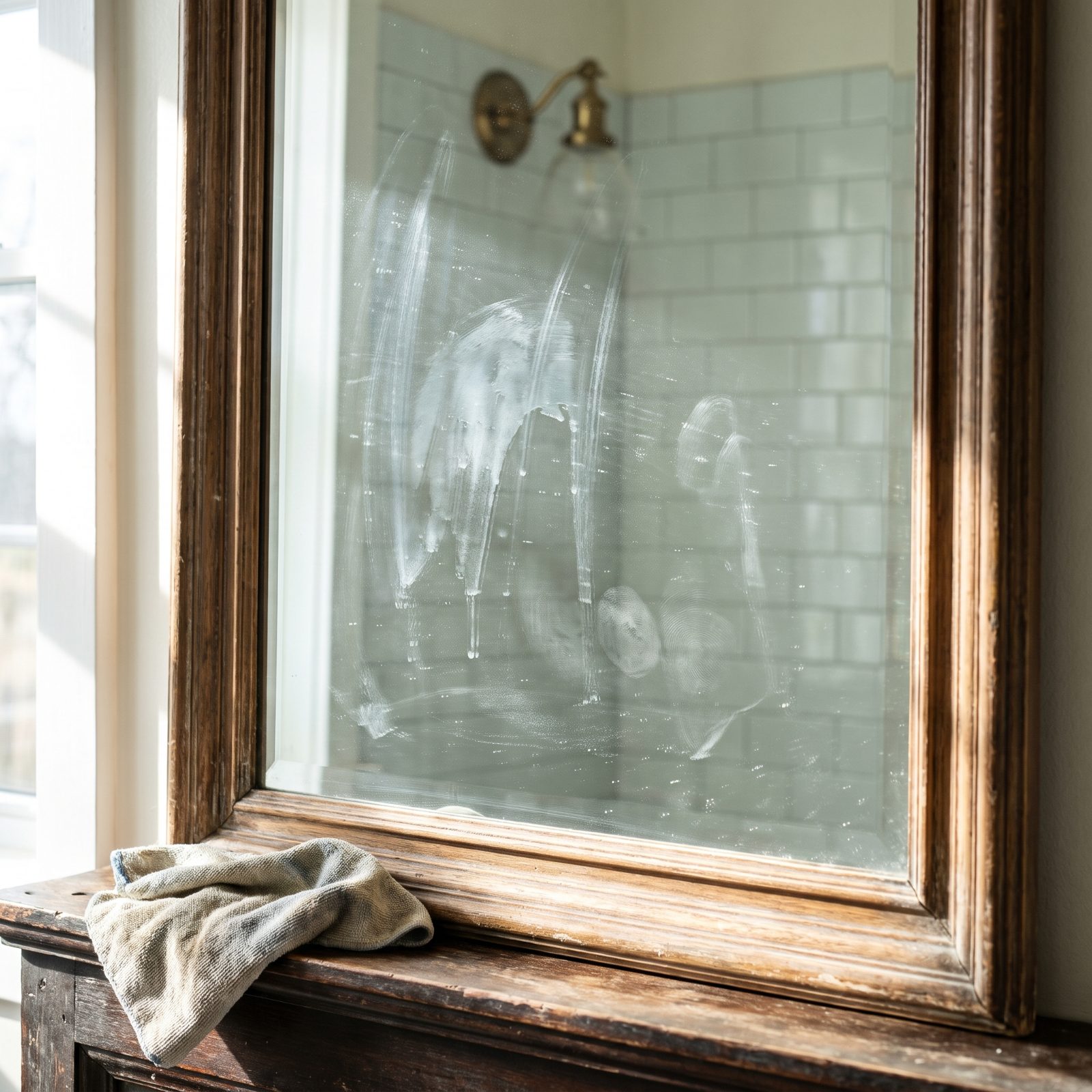
Nothing says “gave up halfway” like a mirror that dries into streaky ghosts the moment the light hits it right. And here’s the irony — the streaks usually come from too much cleaner, not too little. The excess can’t evaporate fast enough, so it dries into a film.
Spray lightly, or spray the cloth instead of the glass. Then switch to a clean, dry microfiber and buff in circles until it squeaks. Skip paper towels, which leave lint, and half your streak problem is solved. I will die on this hill about microfiber over newspaper, which never worked half as well as everyone’s grandmother swore it did.
6. The Gray Fur Nobody Sees: Dust on Top of the Fridge and Cabinets
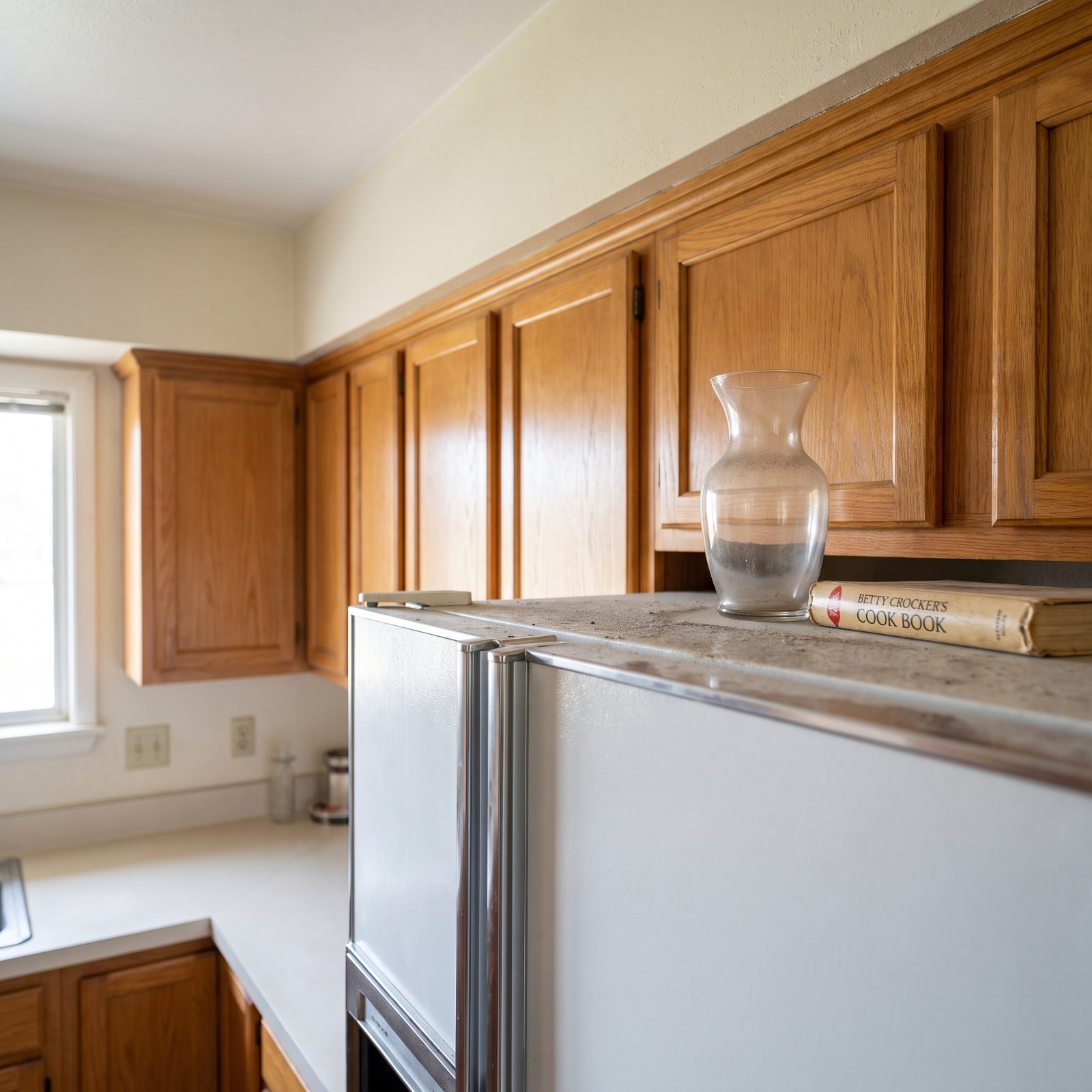
Leave a kitchen alone long enough and the gray fuzz stops hiding. It collects along the top of the fridge and the cabinets, the places nobody ever looks. This stuff is dry and loose, almost sandy, so a wet cloth just turns it into gritty mud you push around.
A vacuum with a brush attachment is the fix. Lift the loose piles first, then follow with a lightly damp cloth for the fine film left behind. Do the ledge on top of your cabinets while you’re at it.
5. The Welcome Mat That Quit: Your Graying Entry Rug
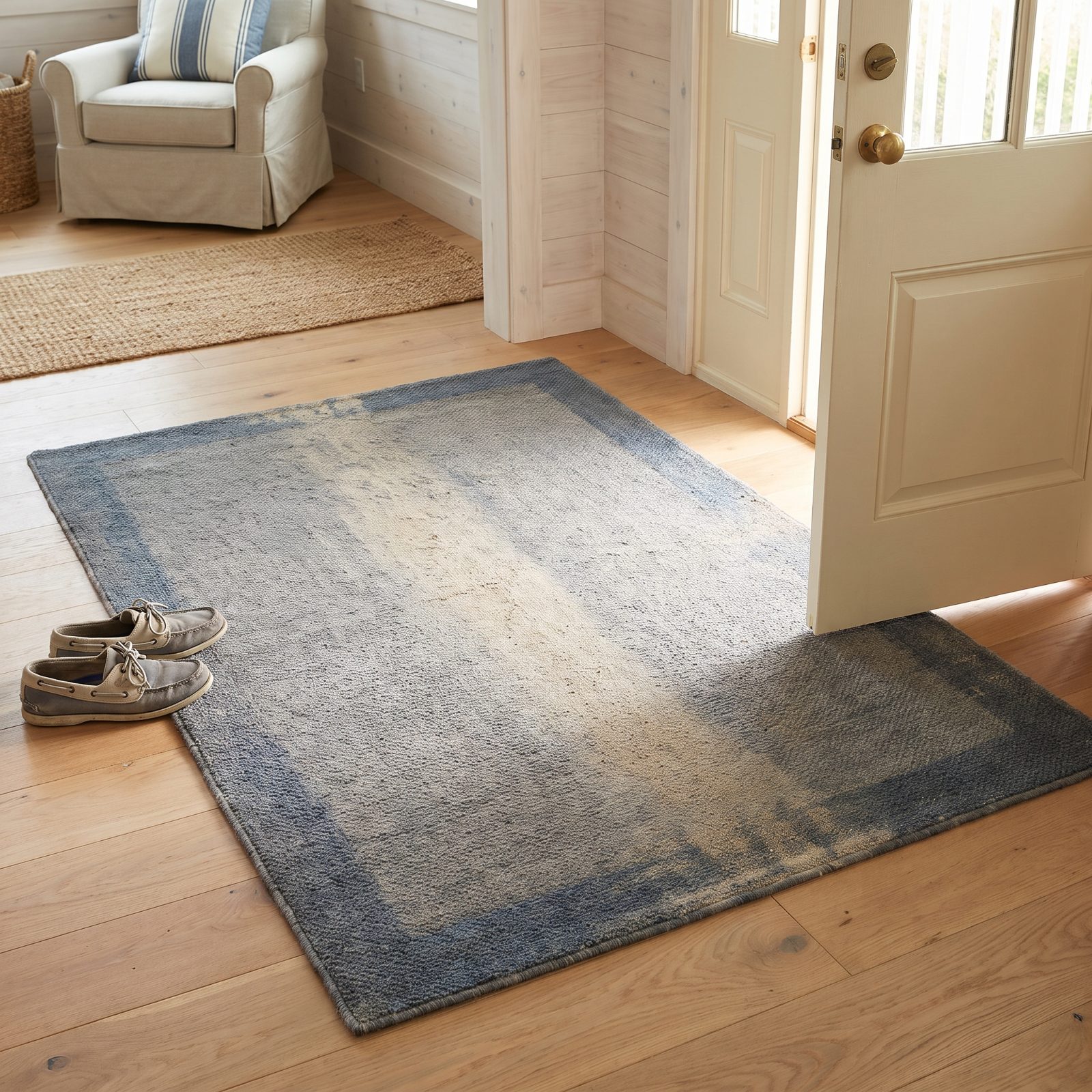
The welcome mat is the first thing a guest sees and the last thing you ever actually look at. It can go gray for a solid year before anyone notices.
A flat, matted mat stops trapping grit and starts spreading it around instead. Most are machine washable, so check the tag and run it cold. Rubber-backed ones you shake hard outside, then vacuum both sides. And if it still looks tired after a wash? It’s done its job. Replace it. Fifteen dollars buys you a crisp first impression, which is cheaper than almost anything else you could change about the house.
4. The Return Vent Wearing a Sweater of Dust
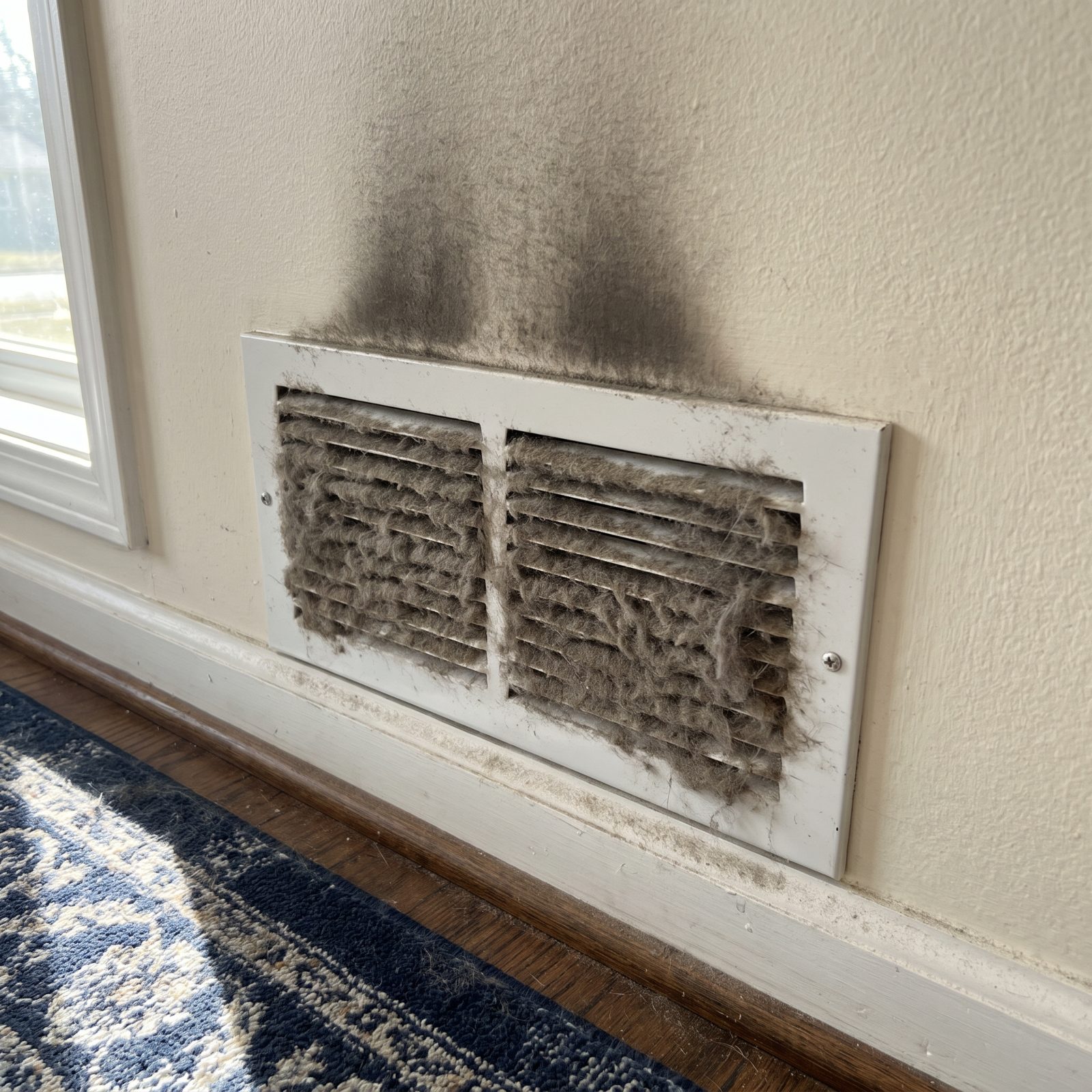
Vents are the quiet culprit. They pull air through the house all day, and every slat turns into a little comb snagging dust out of it. A clogged return grille doesn’t just look grimy — it hauls that dust right back into the rooms you just finished cleaning.
Pop the grille off if it’s screwed in, or just vacuum it in place with the brush attachment. A dry microfiber or a dusting glove slides between the fins fast. Pair it with changing the furnace filter so you actually remember the thing exists.
3. The Crumb Graveyard Under the Fridge and Stove
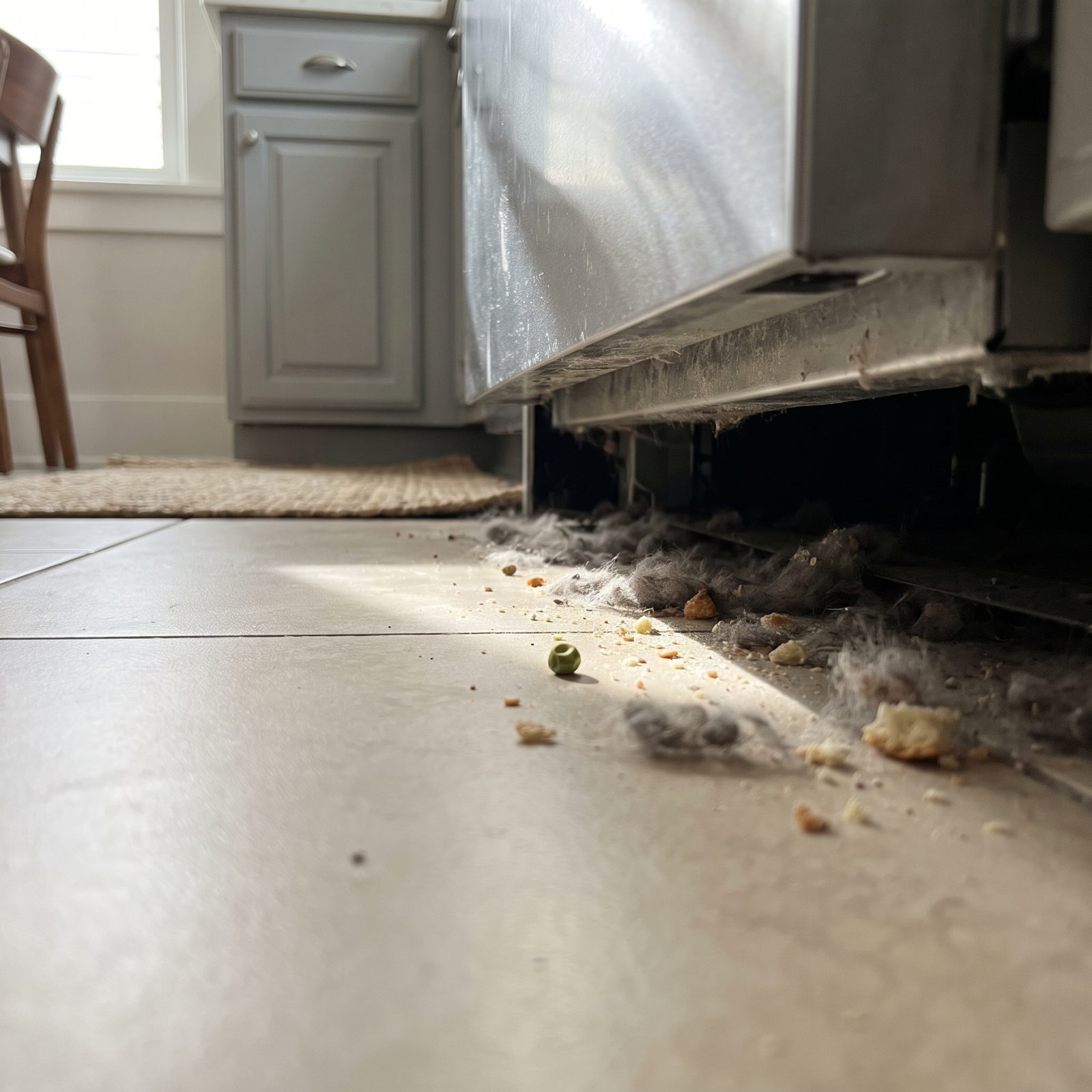
Out of sight, out of mind, slowly out of control. The gap under the fridge and stove collects crumbs, grease, and dust that bake down into a sticky gray crust. You’ll smell it before you see it, and on a bad day you’ll meet the pests it invited over.
A flat vacuum attachment or a dryer-vent brush reaches most of the mess. While you’re down there, look at the black coil under the fridge — it wears a dust coat too, which makes the appliance run harder and costs you money.
2. Smudged Picture Glass and a Fingerprinted TV Screen
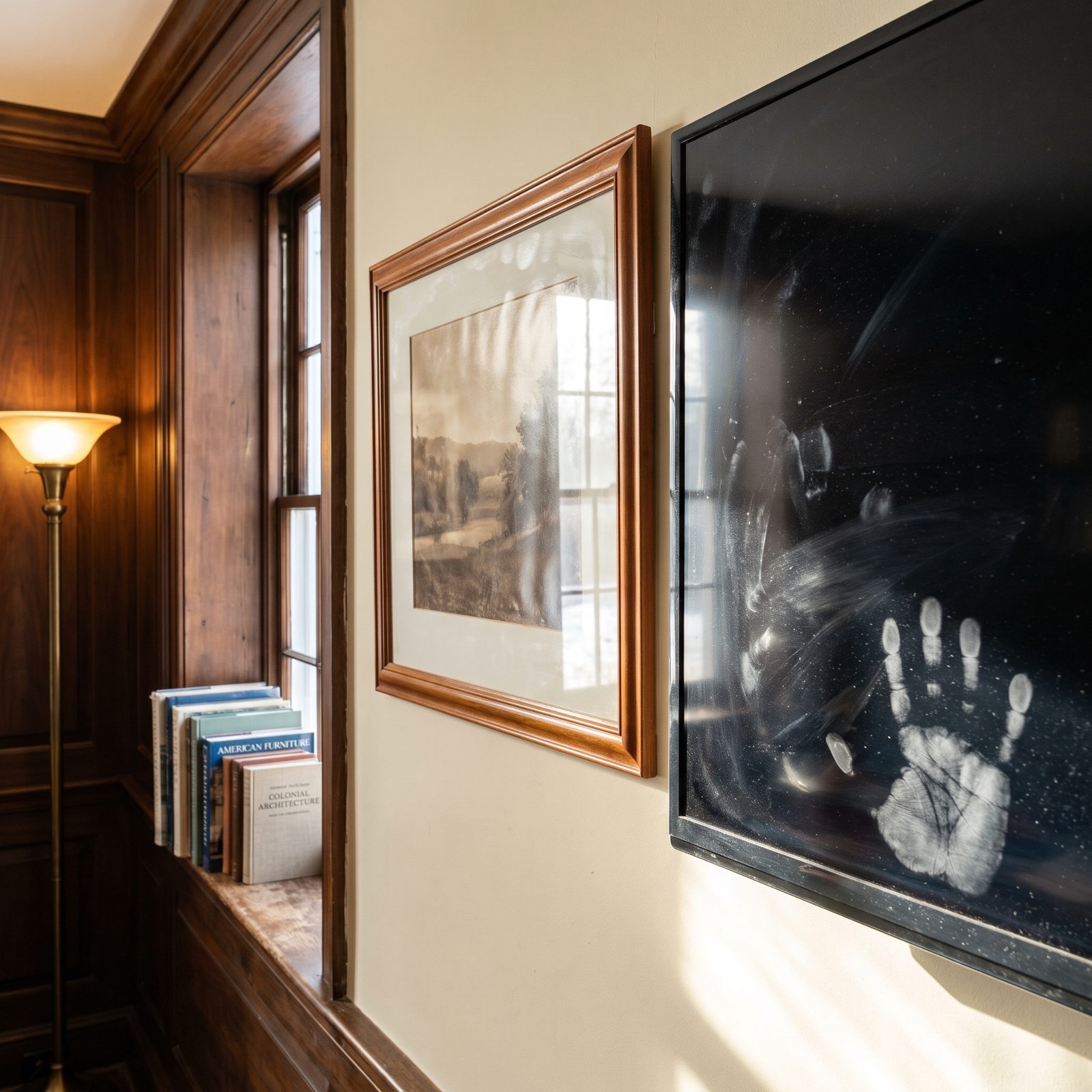
Glass is a traitor. In certain light it looks spotless, and then the afternoon sun swings around and every fingerprint and dust smear shows up like a confession you didn’t mean to make.
Frame glass takes any streak-free cleaner — but spray the cloth, never the frame, so liquid doesn’t seep behind the glass and ruin the print. The TV is a different animal entirely. Glass cleaner can wreck the coating, so keep the ammonia away from it. A dry microfiber lifts the dust, and a barely damp one takes fingerprints off a powered-down, cool screen.
1. Dusty Houseplant Leaves and the Crusty Pot They Sit In

A dusty plant makes a corner read as neglected even when the rest of the room sparkles. The leaves lose their shine and the whole spot goes flat and tired.
Wipe each leaf with a soft damp cloth, cupping it from underneath so you don’t snap the stem. Small, fuzzy-leafed plants would rather have a soft brush. That white crust ringing the pot? Not dirt — it’s mineral and fertilizer salt building up on the ceramic, and a damp cloth clears it right off.