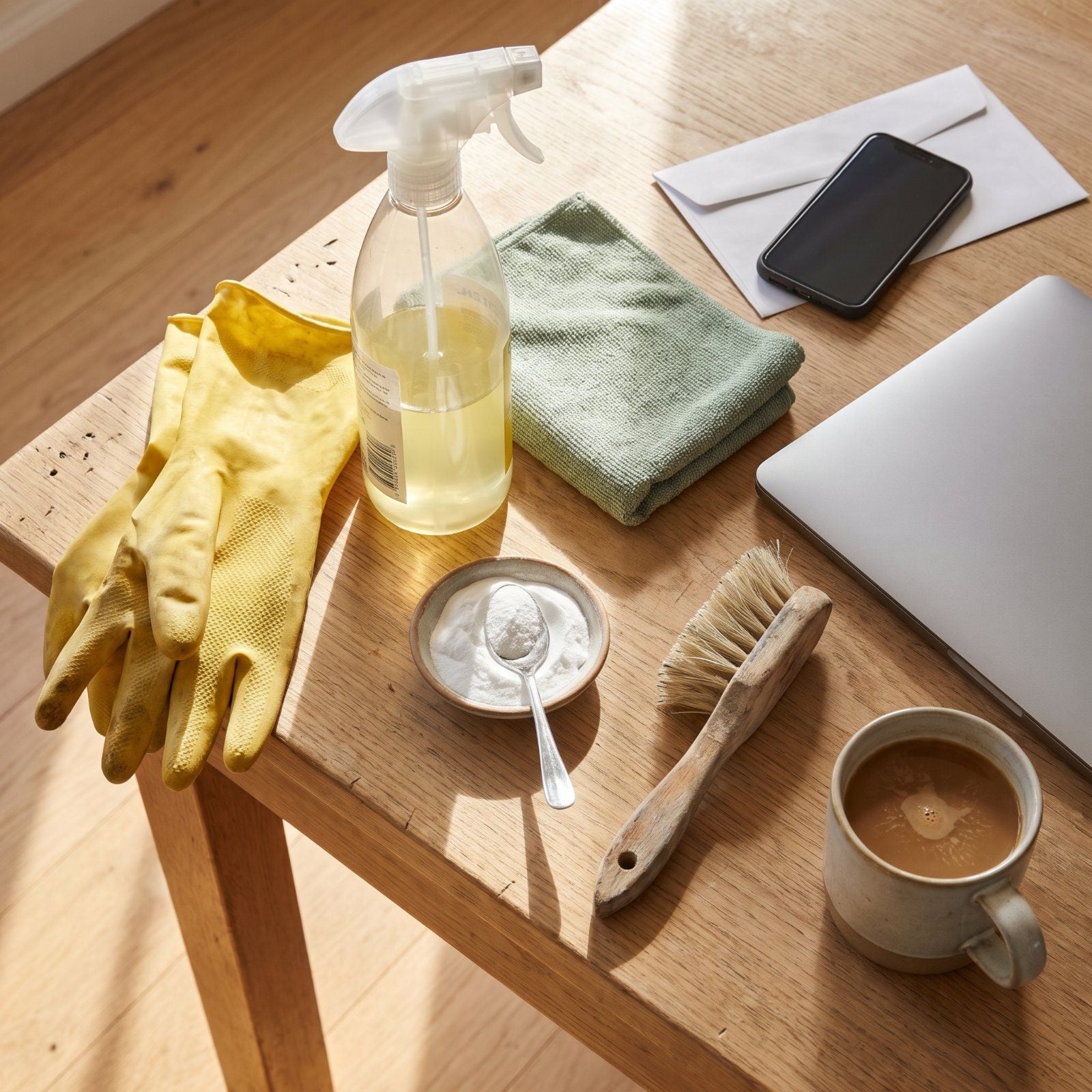
The hardest email of the week has been sitting in your drafts since Tuesday. And somehow you’re on your knees with an old toothbrush, going after grout you haven’t noticed in four years. Nobody asked you to. The grout wasn’t bothering anyone. But there you are.
Please note that some of the images in this article were created with the assistance of AI.
Cleaning does something sneaky. It looks like responsibility while it functions like escape, paying out the same little hit of relief you get from clicking ‘buy now’ on something you don’t need. Both give you a visible result and let you feel capable without touching the thing that’s actually hard. What follows are the exact moments where a sponge becomes a dodge, a mood fix, a control knob, and a reward all at once. You will recognize at least half of them.
15. You Scrub Grout When the Hard Email Is Due
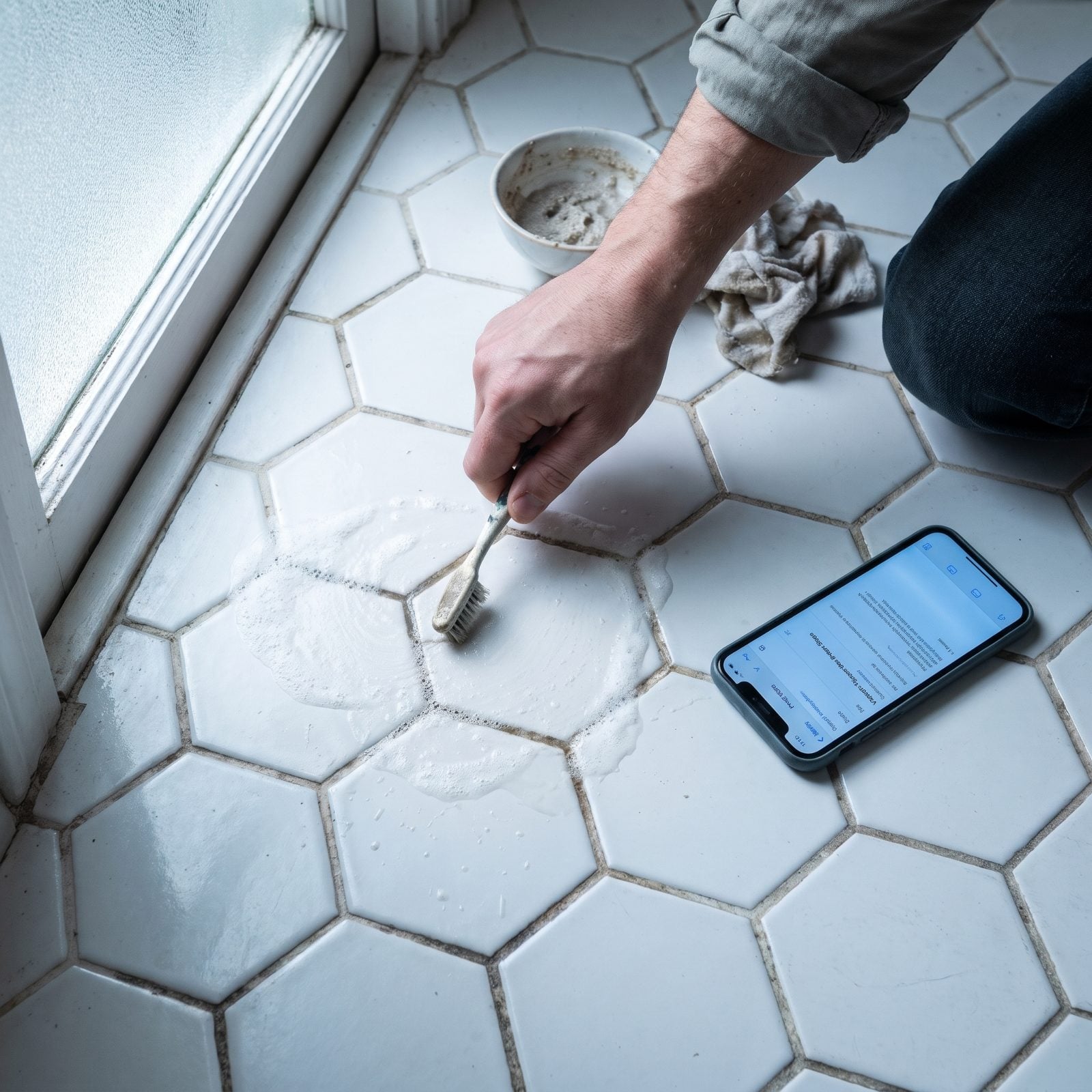
Grout is what you clean when you’ve decided, on some level, not to do the actual task. It’s slow, it’s visible, it has an obvious before and after. And crucially, it does not require you to write the sentence that starts with “Unfortunately.”
Psychologists call this productive procrastination, and it’s a clever trap because it doesn’t feel like avoidance. You’re working. You’re sweating. The tile is getting cleaner. Your brain gets to keep the identity of “responsible person” while sidestepping the one task that carries actual emotional weight. The hard email stays hard precisely because it involves another human, judgment, possible conflict. Grout involves none of that.
I’ve lost whole mornings this way and called it spring cleaning. The tell is simple: if you suddenly care deeply about something you ignored for years, ask what you’re supposed to be doing instead.
14. One Shiny Sink Can Rescue a Rotten Afternoon
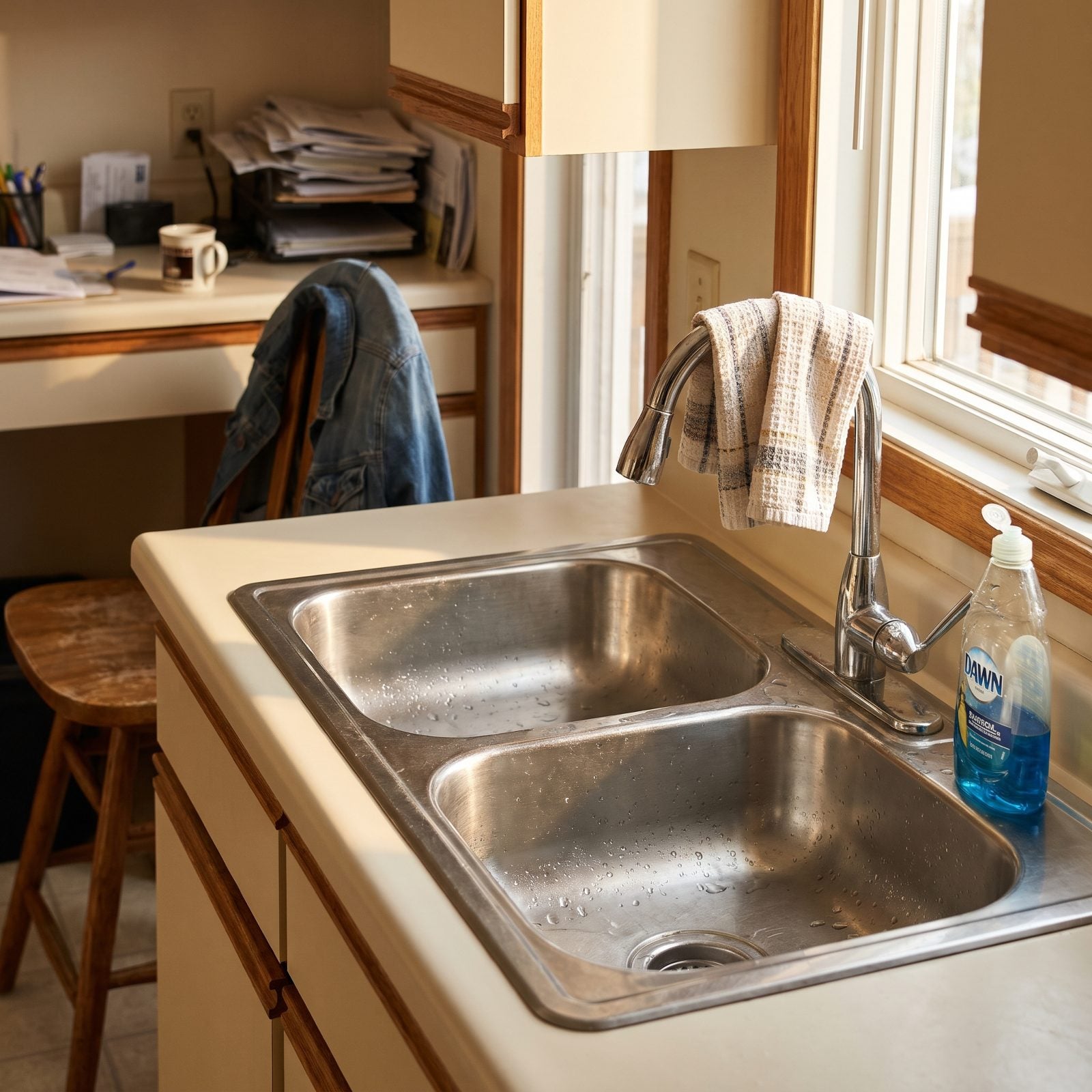
There’s a specific kind of bad day where nothing is solvable, and the sink becomes the one thing you can fix. You scrub it, buff it, and stand there looking at your own reflection in the steel feeling, for about ninety seconds, like a functional adult.
This is the mood boost at work, and it’s real. Finishing a small physical task gives you a dopamine nudge and a sense of agency when the larger situation offers neither. The shiny sink becomes proof that your effort still produces results somewhere in your life.
Same loop as buying a candle because the week went sideways. Small, immediate, controllable. The difference? The sink doesn’t cost twelve dollars and it doesn’t sit in a drawer making you feel foolish later.
13. You Attack the Oven When You’re Angry at Someone
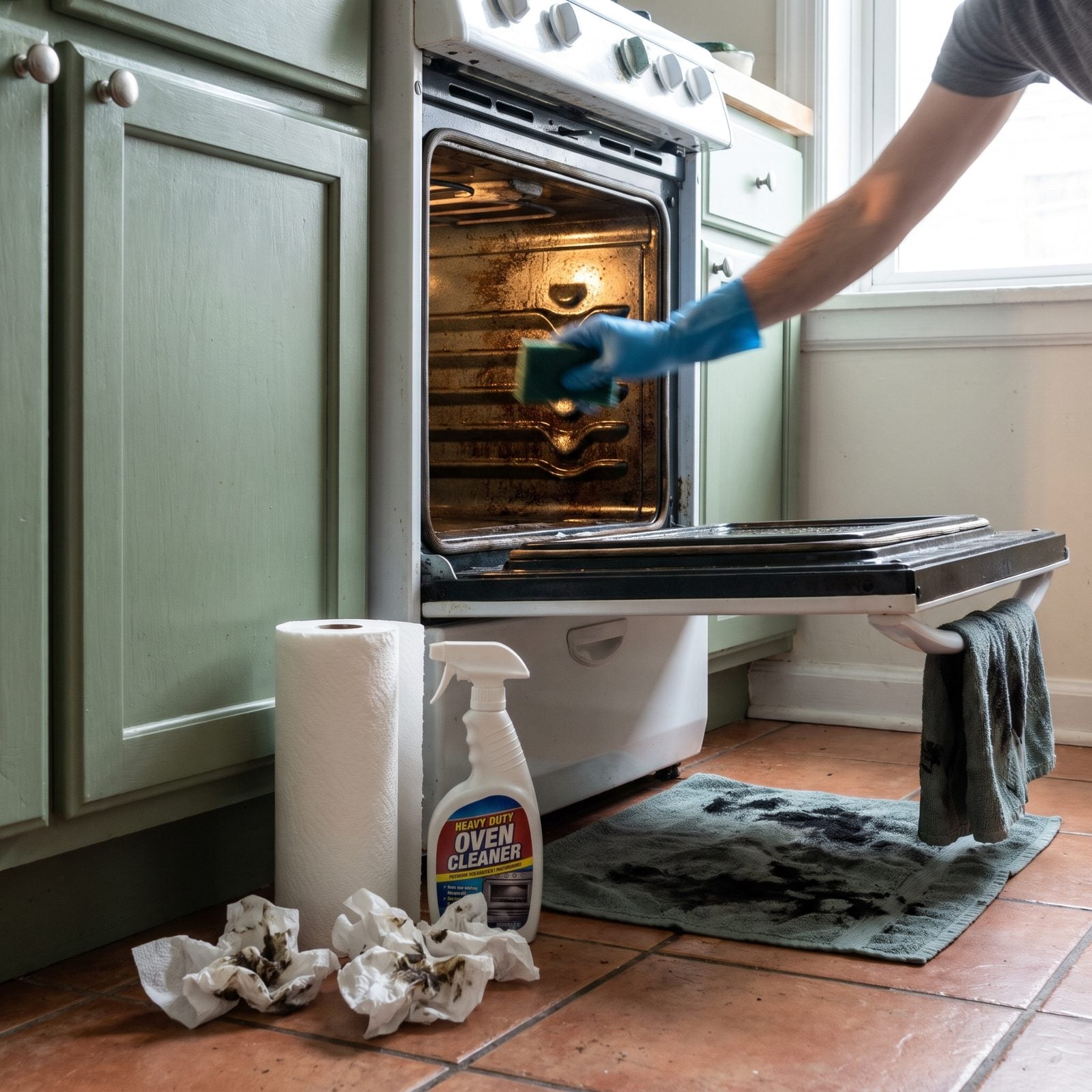
Nobody deep-cleans the oven out of calm. The oven gets attacked. It’s the filthiest, most physical job in the house, which makes it the perfect place to dump a feeling you can’t say out loud to the person who caused it.
This is displaced anger finding a legal outlet. The frustration has nowhere to go, so your body hands it to the nearest thing that can absorb it. Scrubbing burnt residue is repetitive, demanding, and satisfying in a way a tense conversation never is. The grime surrenders. The person did not.
What’s interesting is how the aggression leaves your body through your arms. By the time the oven is clean, the heat has usually dropped a few degrees, and that’s no accident. Hard physical work metabolizes stress hormones, which is why you feel calmer afterward even though nothing between you and the other person has changed.
12. You Rearrange the Pantry Whenever You’re Waiting for News

Alphabetizing the spices. Grouping the cans by type. Checking expiration dates on things you’ll never eat. The pantry gets organized when you’re waiting for a result you can’t influence: a test, a callback, a decision that’s already out of your hands.
This is a control ritual, plain and simple. When the big uncertainty is unbearable, you reach for a small system you can completely control. Lining up jars gives your anxious brain a task with a start, a middle, and a clean finish, which is everything the real waiting isn’t.
The phone stays close the whole time. You’re not fooling yourself. You’re just giving your hands something to do so your mind doesn’t spiral.
11. A New Mop Somehow Promises a More Capable You
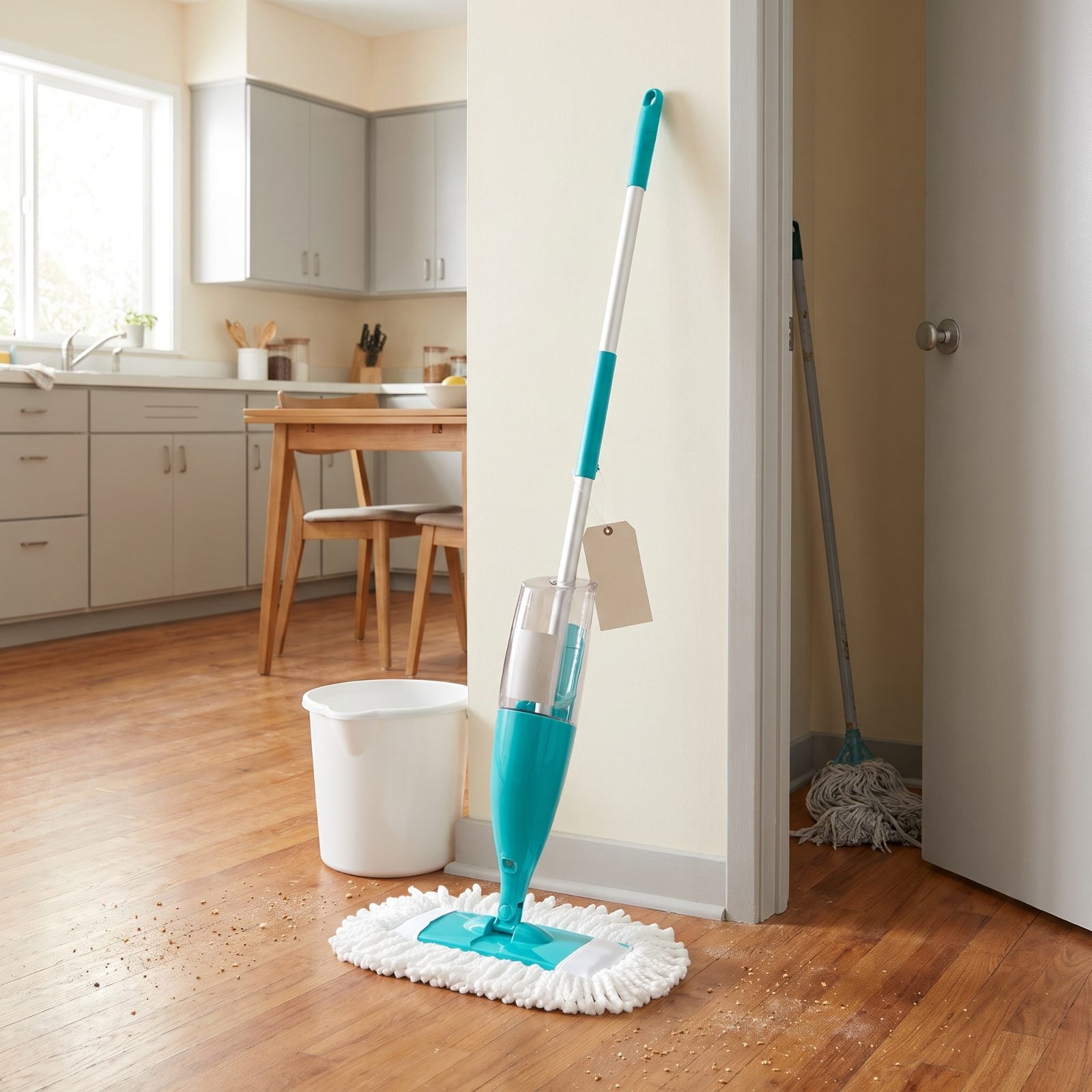
You bought the bright teal spray mop with the fluffy white microfiber pad and the clean white plastic bucket, and for a glorious moment you believed you had become the kind of person who mops. Not just today. Forever. Weekly, even. With a system.
That fantasy is baked into every cleaning purchase, and it runs on the same engine as comfort shopping. You’re not really buying a mop. You’re buying a better version of yourself, the one who has it together. The object stands in for the habit you wish you had.
I own, at last count, three different mops bought during three different bursts of optimism. The floors look the same. The capable future person never quite showed up. But I understand her appeal.
10. You Polish What Guests See and Hide the Rest

The coffee table is immaculate. The throw pillows are karate-chopped into perfect dents. And every closet, drawer, and spare room has become a landfill of everything you shoved out of sight an hour before the doorbell rang.
This is impression management, the same instinct that makes you tidy your face before a video call. You’re curating the version of your home you want witnessed and burying the version you actually live in. The guest sees the front stage. The mess is backstage, where no one’s invited.
Here’s the honest part. The hidden mess doesn’t stress you nearly as much as the visible mess would. What you’re managing isn’t disorder, it’s being seen in disorder. The judgment, not the clutter, is the problem.
We don’t clean for ourselves nearly as hard as we clean for the people about to walk in.
9. You Start With One Shelf and Chase the High

It was going to be one shelf. Just the one. Three hours later you’ve emptied the entire bookcase onto the floor, you’re committed now, and you’re vaguely wondering what happened to the afternoon.
That pull is the reward loop tightening. The first finished shelf hands you a little jolt of satisfaction, and your brain, liking that jolt, immediately wants another. So you keep going, chasing the same hit with each small completion. It’s the exact mechanism behind one more click, one more purchase, one more tab open in the cart.
The problem is the high fades faster than the task finishes. Somewhere around shelf four, the thrill is gone and you’re just a person surrounded by books, too deep to quit. Been there. Many times.
8. Folding Everyone’s Laundry Beats Asking for Help Yourself
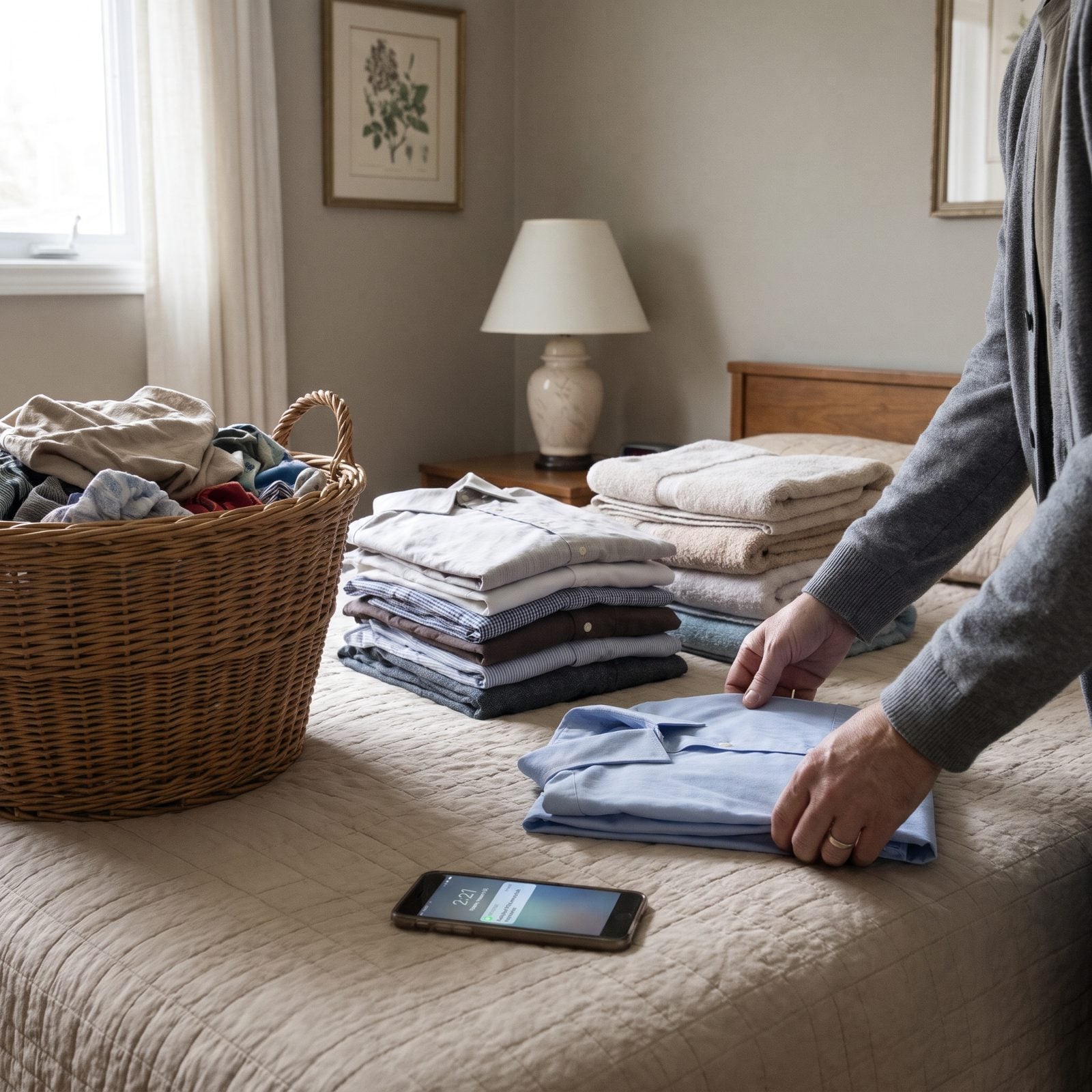
You’ll fold four people’s laundry into bakery-neat stacks, match every sock, and never once say the sentence that actually matters: “I need some help around here.”
Caretaking through chores is easier than asking, because asking means admitting a need, and admitting a need means risking a no. Folding feels safe. It’s love you can perform without exposure. You give and give and quietly hope someone notices and offers back, which, let’s be honest, they usually don’t.
This is where cleaning stops being avoidance of a task and becomes avoidance of a conversation. The laundry is a message you’d rather send with your hands than your mouth. And the resentment that builds up in those perfect towel stacks? It’s real, and it has a shelf life.
7. You Declutter After Rejection Like You’re Deleting Evidence

After something falls through, a relationship, a job, a plan you’d counted on, you go through the house with a trash bag and a cold eye, purging. Out go the reminders. Out goes the stuff. It feels less like tidying and more like scrubbing a scene.
Call it identity reset by way of the donation box. When your sense of self takes a hit, clearing physical space becomes a way to clear emotional space, to signal to yourself that you’re moving on, becoming someone new, shedding the version of you that got hurt. The empty drawer is a fresh start you can actually see.
It works, a little. There’s genuine relief in less stuff. Just go gently on the things you can’t rebuy, because the mood that fuels a purge can mistake your favorite sweater for evidence.
6. Before-and-After Photos Prove You Got Something Done
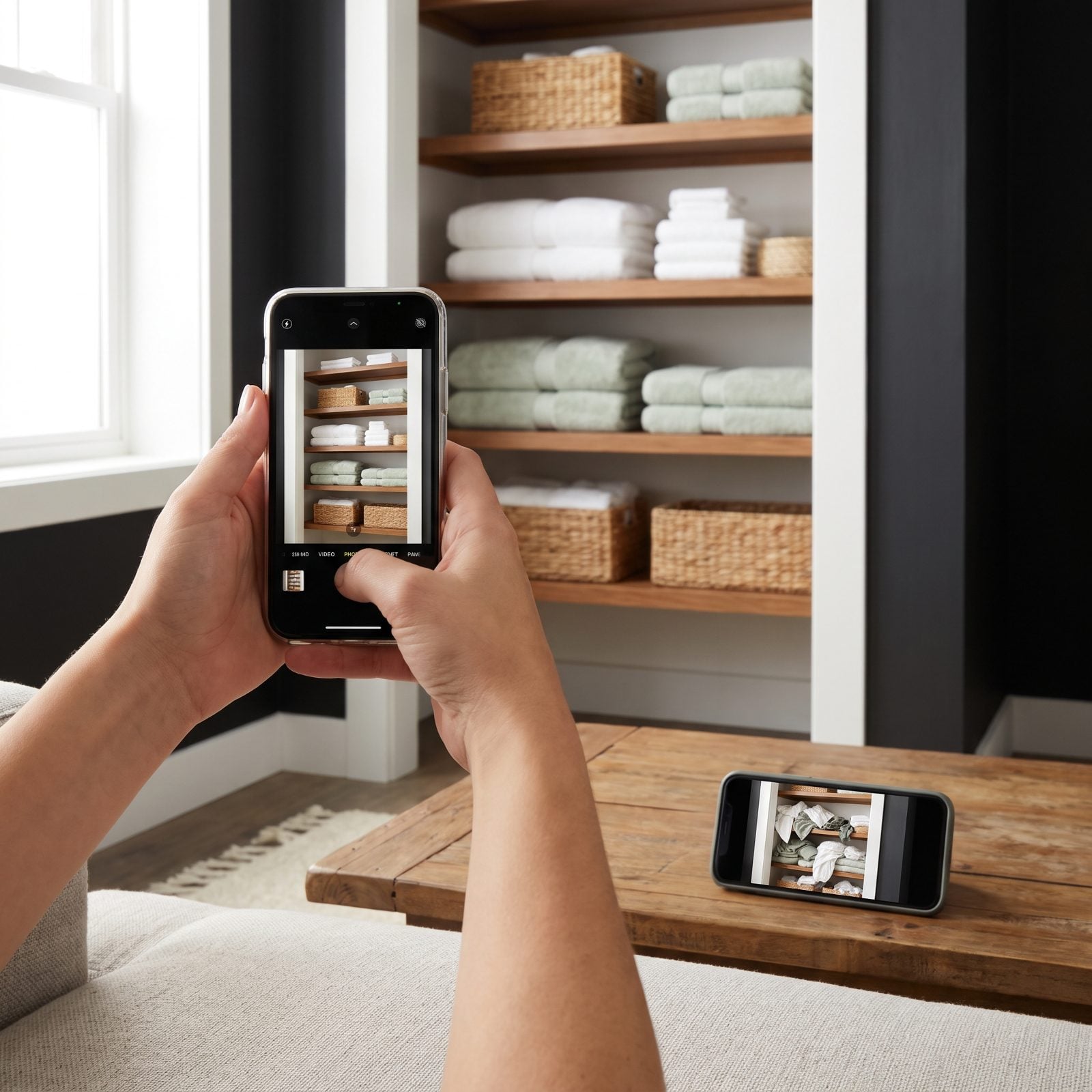
The closet is done, and before you’ve even put the ladder away, you’re photographing it. Maybe you post it. Maybe you just keep it. Either way, the photo is the real reward, and the closet was kind of beside the point.
This is the need for evidence. When a day feels shapeless and unproductive, a before-and-after is hard proof that you accomplished something, that the hours went somewhere. The documentation turns effort into a trophy you can look at, or show, when you doubt yourself.
Then there’s the social layer. Sharing the transformation invites that little hit of validation, the likes, the “wow,” the proof that others see you as capable too. Same reward as the haul photo after a shopping spree. You made a thing, you want it witnessed, and the witnessing feels almost as good as the doing.
Nothing wrong with any of it. Just notice what you’re actually after. Half the time it isn’t a tidy closet. It’s the quiet reassurance that your day counted for something.
5. You Clean Past Bedtime to Avoid Being Alone With Thoughts

There’s a specific kind of clean that only happens late at night, long past when you meant to be in bed. The dishes were done hours ago and the counter was already fine, yet here you are wiping it again, because the alternative is sitting still with whatever you’ve been not-thinking-about all day.
Comfort shoppers know the online version. The cart fills at 1 a.m. for the same reason the sponge comes out: motion is easier than stillness. Keep the hands busy and the mind never gets a turn.
Psychologists call this experiential avoidance — the quiet habit of staying occupied so an uncomfortable feeling never fully lands. Cleaning is near-perfect for it. Productive, socially approved, and nobody questions a tidy kitchen at 1 a.m. the way they’d question a shopping spree.
4. Compliments on the Kitchen Feel Better Than They Should
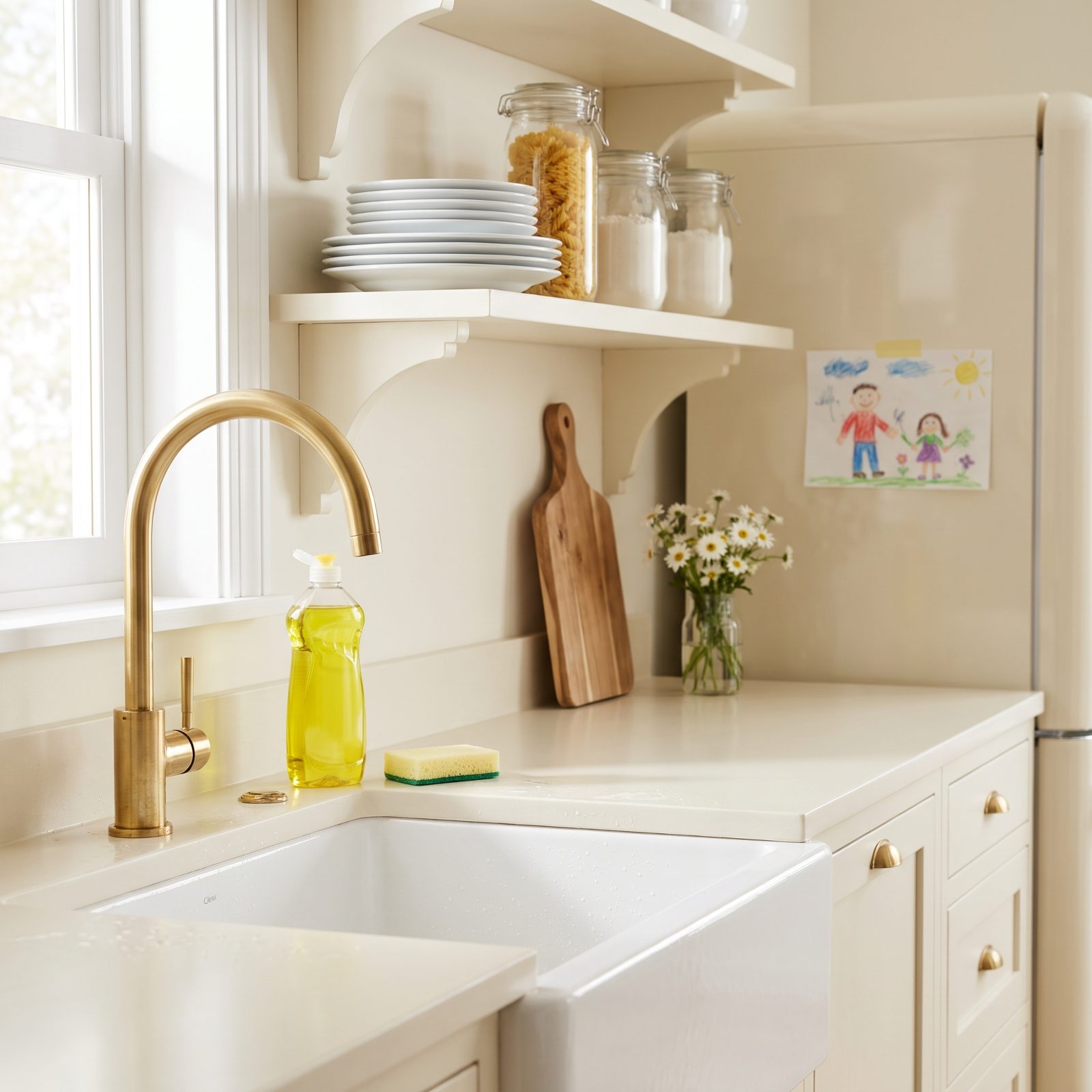
Someone walks in, glances around, says the kitchen looks great. Something in your chest lifts way out of proportion to the comment. It was just a kitchen. You just wiped a counter. So why does it feel like being told you’re a good person?
Because for a second, it is. We fold the state of our homes into the state of ourselves, so a clean room reads as a well-run life. The compliment lands on the counter and ricochets straight to your self-worth.
Comfort shopping runs on the same circuit. The friend who notices the new coat delivers a hit the coat alone never could — external approval, borrowed briefly, patching a feeling that was running low.
We don’t just want the room clean. We want to be seen as the kind of person who keeps it clean.
The trouble is the half-life. One compliment fades faster than the coffee goes cold, which is partly why we keep performing the clean for the next person who might notice.
3. The Vacuum Comes Out When Life Feels Unmanageable
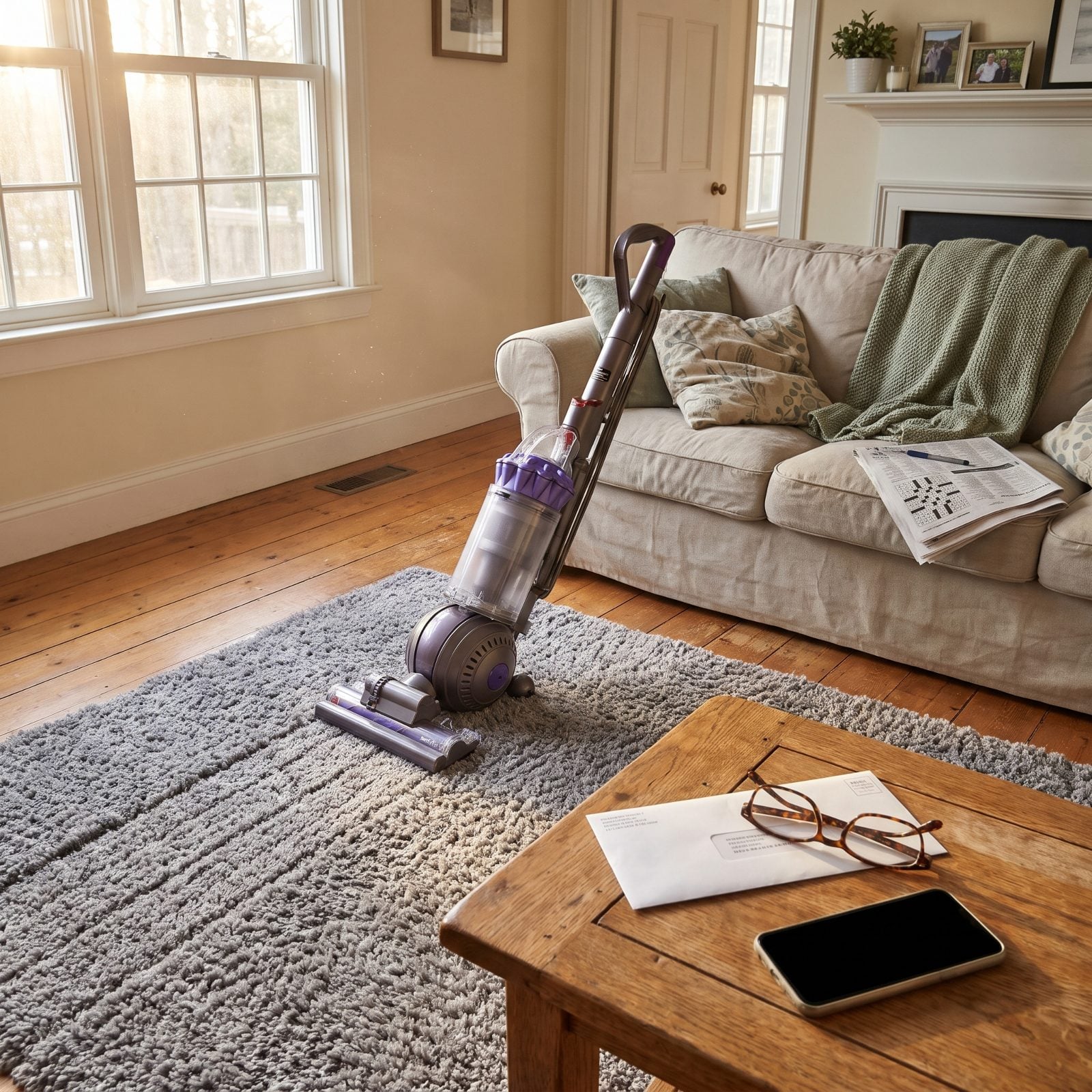
Big news lands — the kind you can’t fix — and twenty minutes later you’re vacuuming. Not because the floor was dirty. Because the vacuum is a thing you can absolutely control while the actual situation sits there, unmanageable, on the coffee table in an unopened envelope.
This is the control ritual, one of the oldest comforts there is. When the large levers won’t move, you grab the small ones you can. The lines in the carpet are proof that at least one part of the world responded to you today.
Comfort shopping scratches the same itch from the opposite side: choosing something, deciding, completing a transaction when nothing else will resolve. Both are the hands reaching for the one dial that still turns.
2. You Cancel Plans Because the House Suddenly Needs You
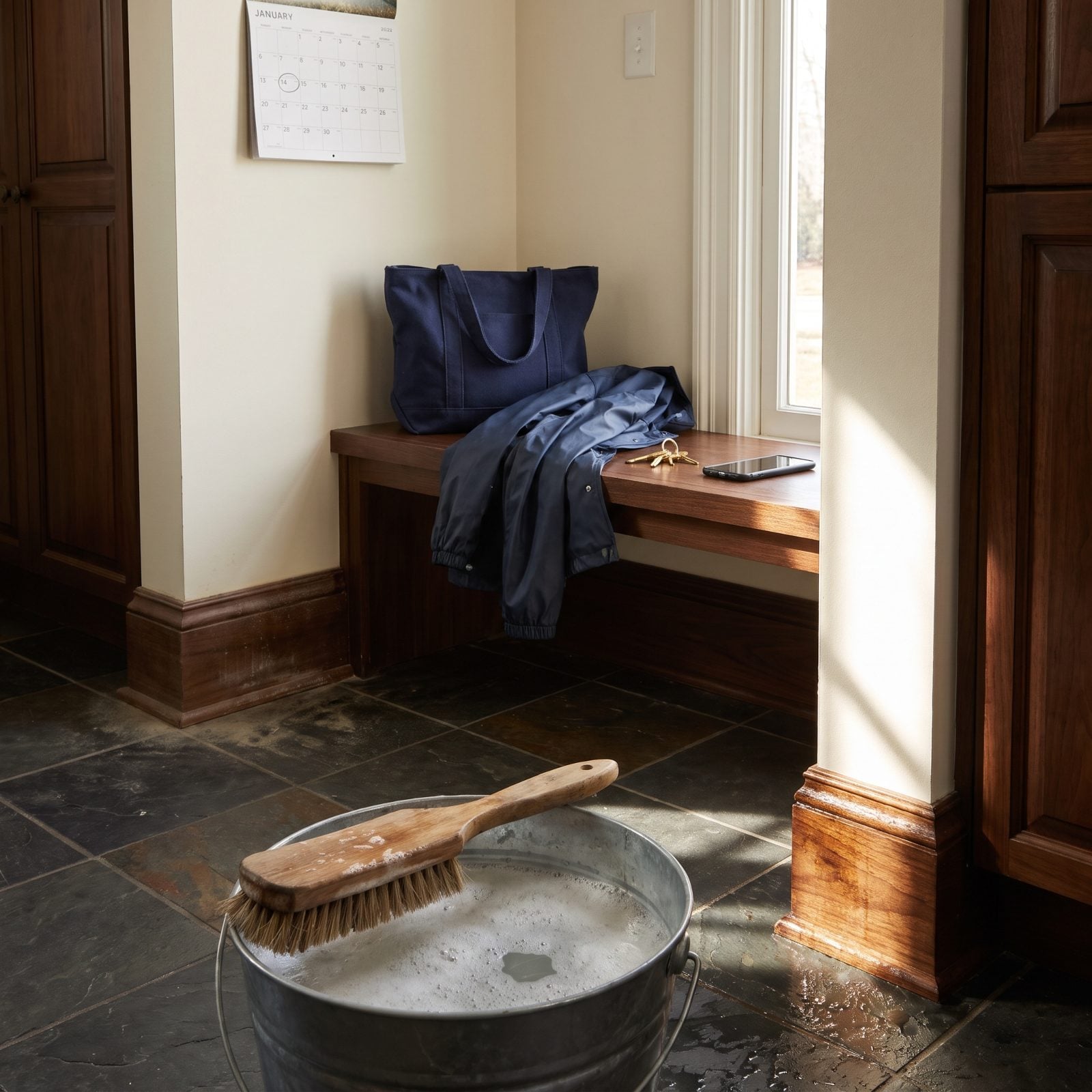
Twenty minutes before you need to leave, the baseboards become urgent. They’ve been grimy for a year. Today they cannot wait. Out comes the bucket, down goes the brush, and somehow the plans you half-dreaded fall away under the weight of a job that suddenly, conveniently, needs doing.
Cleaning is the respectable reason. Nobody argues with a house that needs you — a far more acceptable excuse than “I didn’t feel up to it,” which is usually the truth underneath.
Comfort shopping pulls the same trick the other way: the sudden errand, the thing that has to be bought today, that happens to eat the afternoon you were dreading. Both manufacture a legitimate obligation to dodge an uncomfortable one.
1. The Mess Returns, Along With the Same Old Feeling
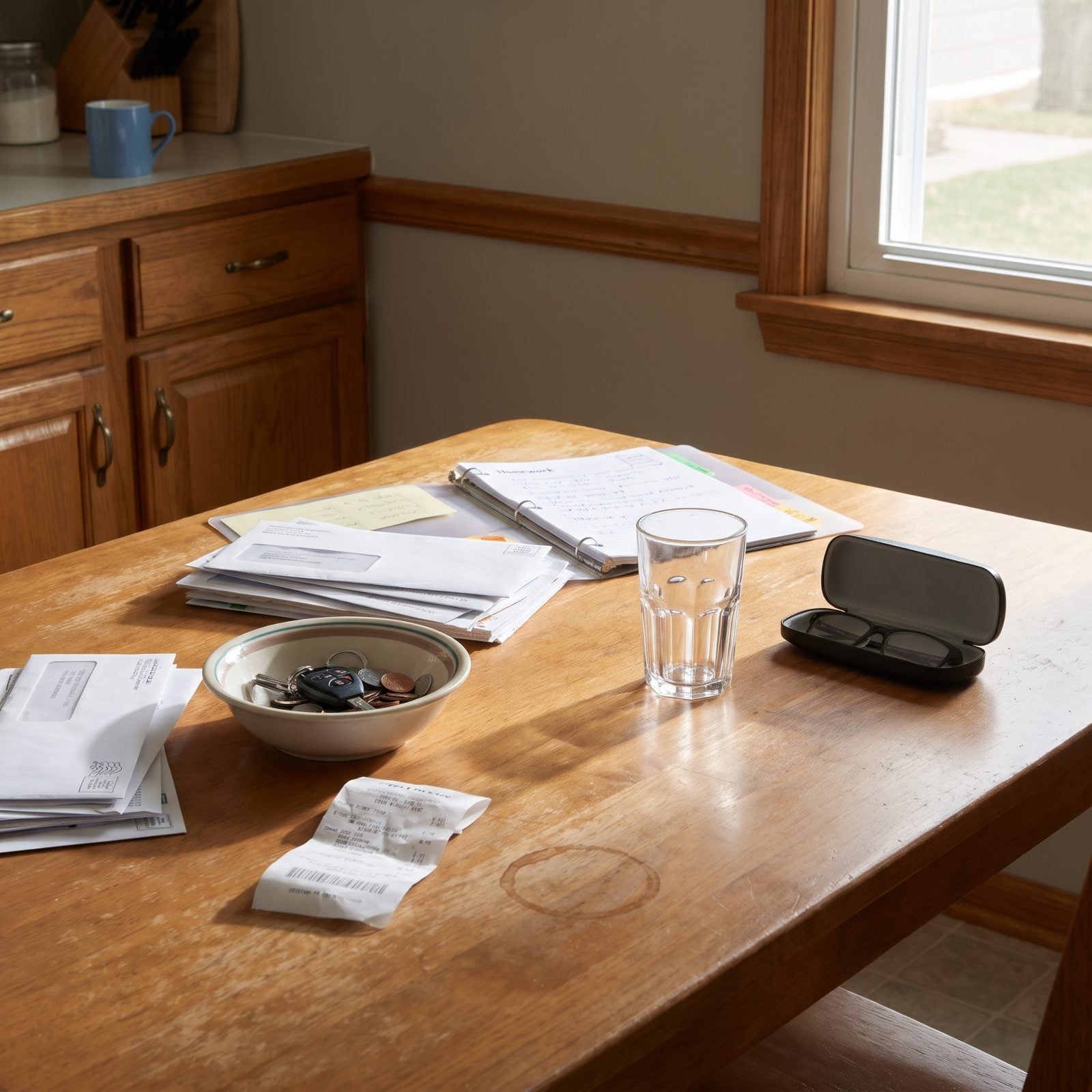
Give it three days. The mail stacks up again. The counter collects its usual migrants — keys, receipts, a single glove — and right there with the clutter, back on schedule, comes the exact feeling you cleaned to escape. It never left. It just waited.
Comfort shoppers know this part too well. The package arrives, the thrill peaks, then it flattens, and the restlessness that sent you shopping is sitting right where you left it, waiting for the next cart.
Psychologists call it hedonic adaptation. We return to our baseline mood with stubborn reliability, no matter how clean the house or how good the purchase. The lift is real and the lift is temporary, every single time.
The counter was never the problem, which is why a clean counter was never the fix.
So clean, by all means. Nothing wrong with a soothing ritual and a tidy room. Just hold both things at once: the task genuinely helps, and the task is not the thing that needs doing. The feeling underneath wants your attention, not your sponge.