The crack comes around 2 a.m. during an ice storm, and by morning half the tree is lying across the driveway. Every February in the North Carolina Piedmont, somebody wakes up to exactly that scene. We dug into NC State Extension’s county offices, the Forest Service, and the Plant Toolbox to figure out which trees keep causing this grief, and why. Some are invasive, some rot from the inside out, and some drop fruit that stains your patio or lifts your sidewalk clean off the ground. A few are perfectly good natives that simply need more room than a suburban lot will ever give them. Here’s the honest list.
Please note that some of the images in this article were created with the assistance of AI.
18. Bradford (Callery) Pear: The Tree That Splits Itself in Half
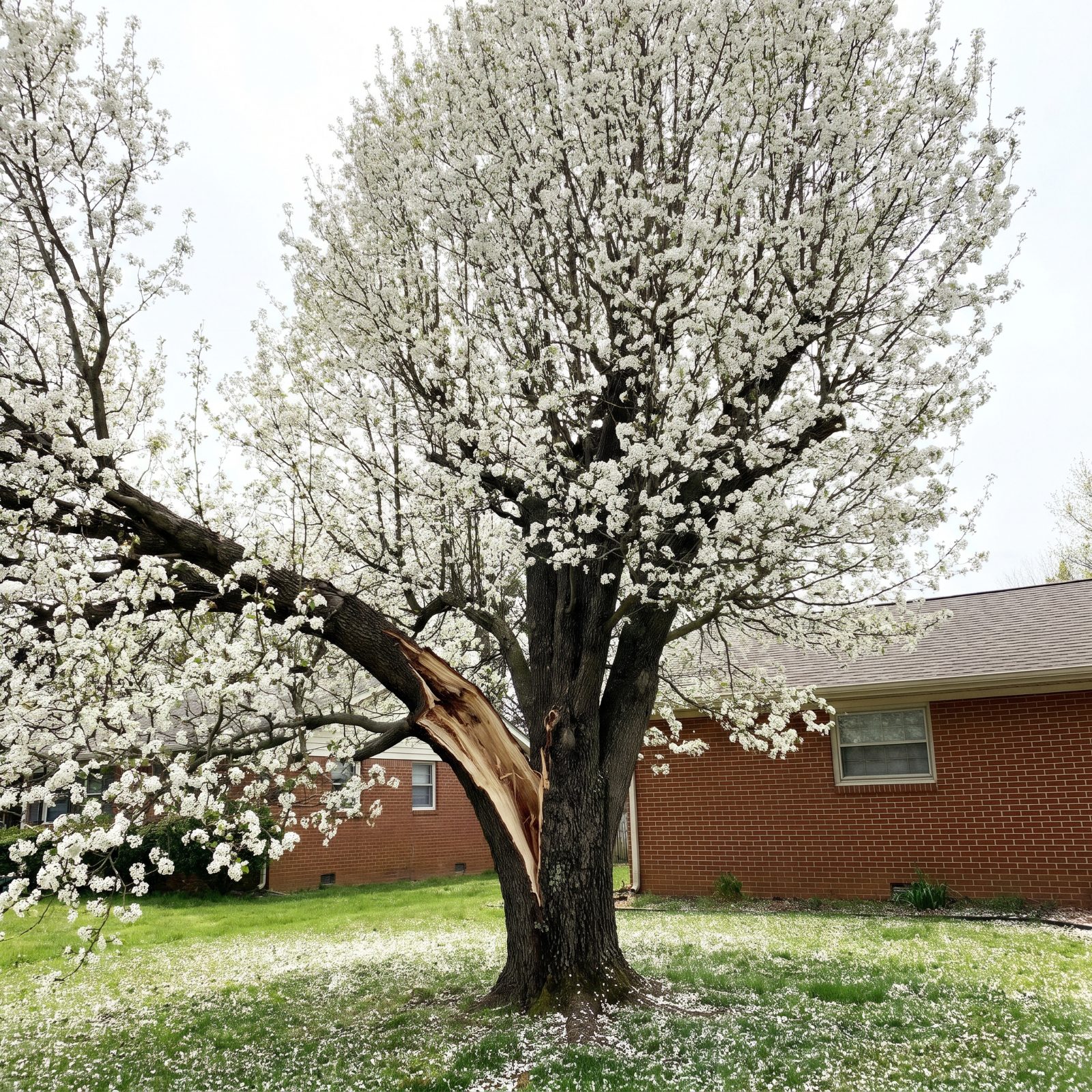
You can smell these before you see them. That wall of white bloom every March along NC roadsides is the Bradford pear, and NC State Extension’s Plant Toolbox flat-out lists Callery pear as invasive here.
The real problem is the wood. Lee County Extension warns it’s weak and tends to break and split in high winds and hurricanes, which is why you see so many sheared in half after a storm. They’re short-lived too, so you never even get the payoff. And the wild offspring? They grow thorns up to four inches long that make removal pure misery.
The good news: since 2022, the NC Bradford Pear Bounty (a partnership including NC State Extension and the NC Forest Service) will give you a free native tree if you cut one down.
17. Silver Maple: The Root System That Eats Your Driveway
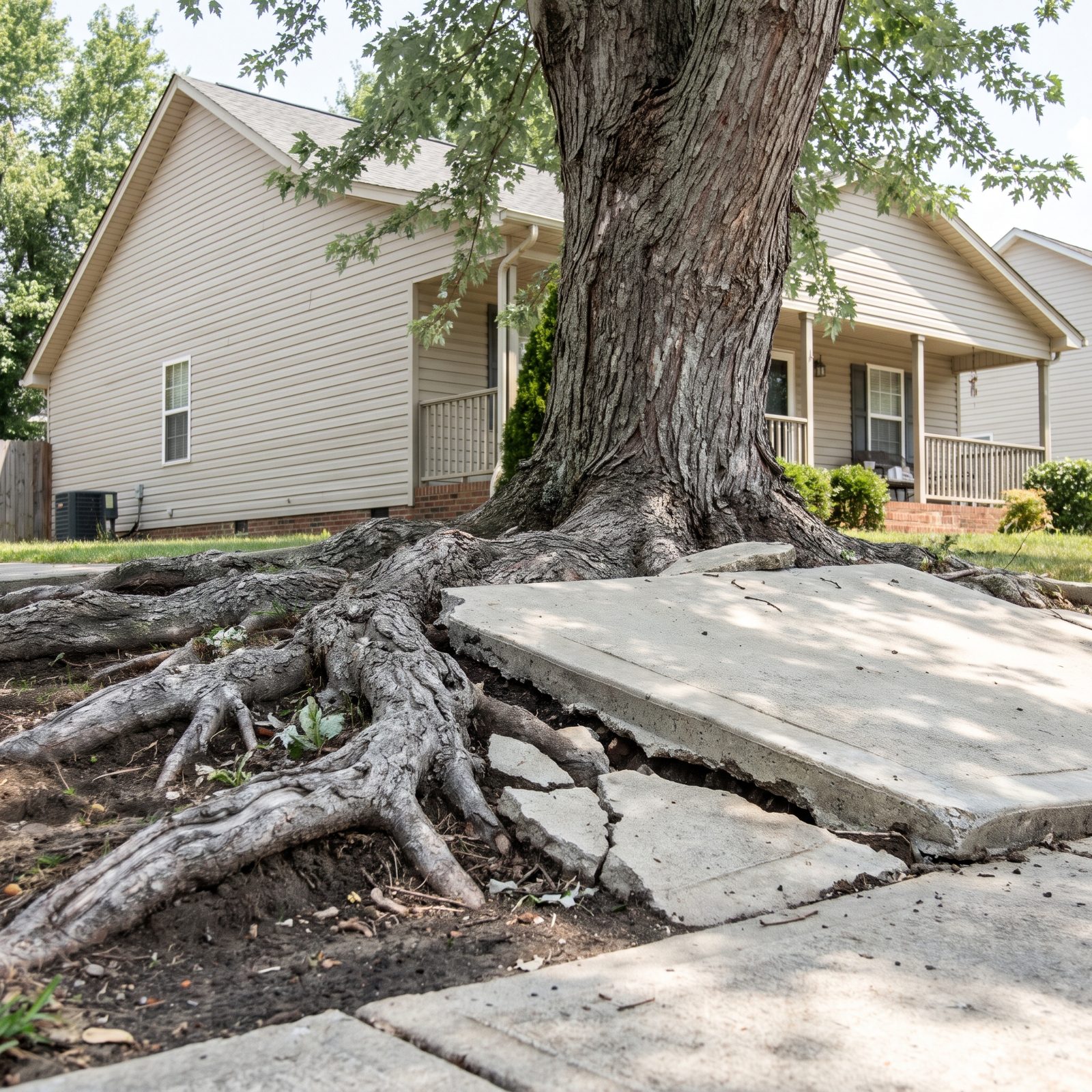
Fast is not the same as good. Silver maple grows quick, which is exactly why so many got planted close to houses decades ago, and homeowners are still paying for it.
NC State Extension says the roots run shallow, disturb driveways and sidewalks, and work their way into drains. The wood breaks easily in storms and under snow load. Want the speed without the regret? Extension points to Freeman maple, a silver-by-red-maple hybrid that grows fast but with stronger wood and tamer roots. We’d plant the Freeman every time.
16. Weeping Willow: Beautiful by the Pond, Trouble by the Pipes
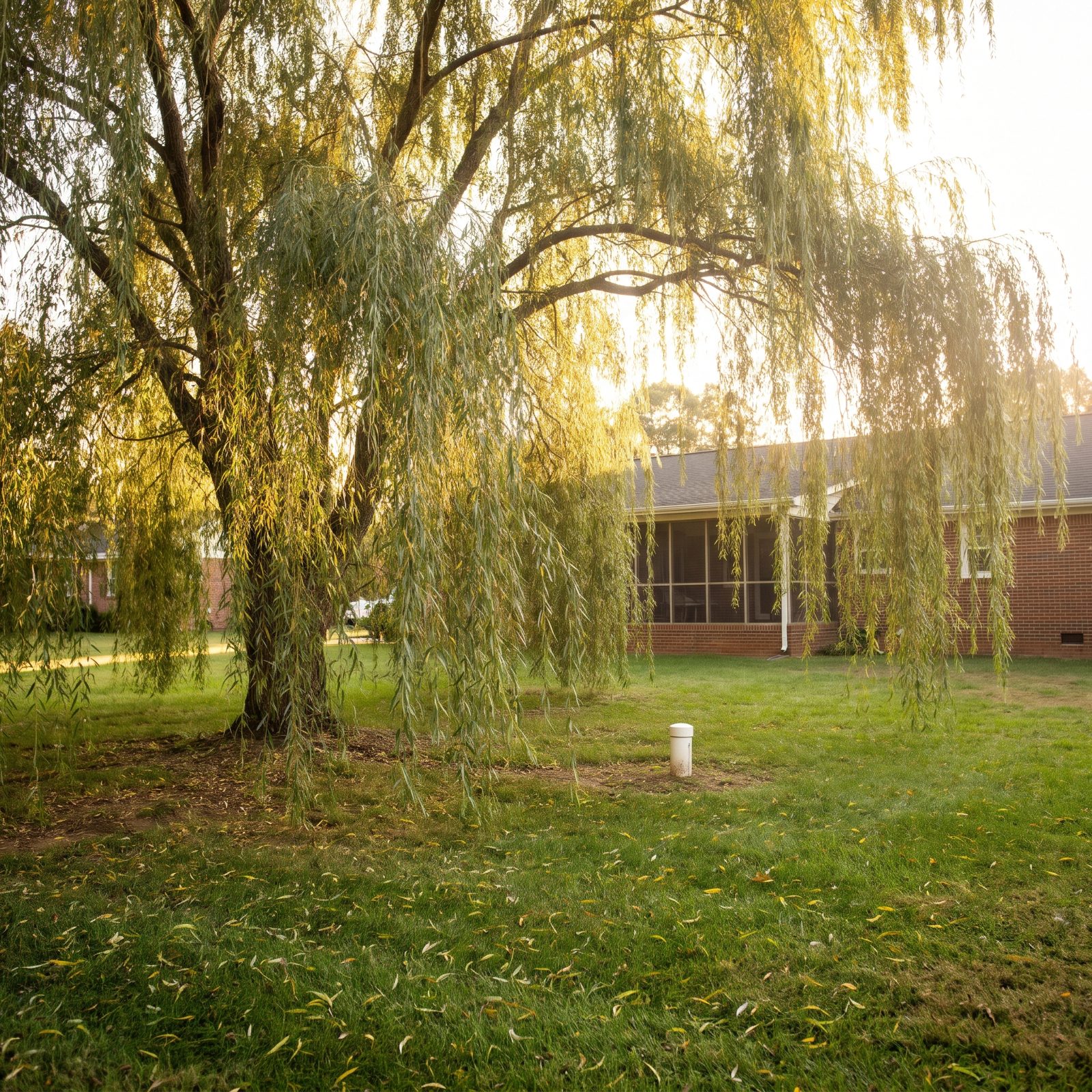
Everyone wants one, almost nobody has room for one. The weeping willow is the tree people plant for the romance and remove for the plumbing bill.
NC State Extension says it’s not typically recommended for home landscapes. Litter, breakage, disease, insects, and roots that naturally grow toward water and sewer lines. It shoots up to 30 to 40 feet tall and wide, and all that speed leaves weak wood that cracks under ice.
Worth being fair here: Union County Extension notes roots can’t crack a sound pipe, they only exploit cracks that already exist. But why hand an aggressive root system the opportunity? Got a pond and an acre? Go for it. Thirty feet from your laundry room, don’t.
15. Leyland Cypress: The Instant Privacy Screen That Topples Over
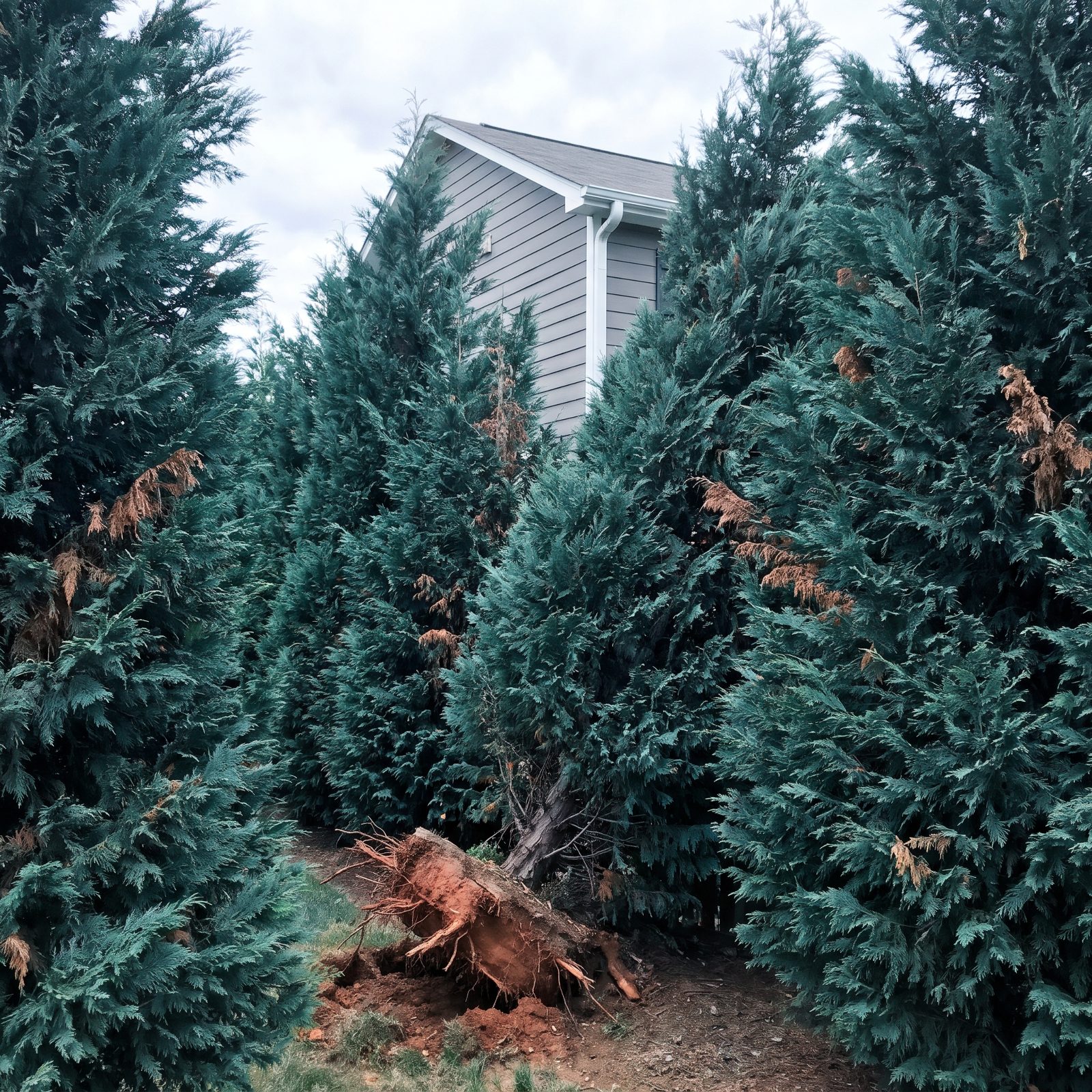
Planted as a quick green wall, remembered as a slow-motion disaster. Leyland cypress can put on three feet a year and hit 50 feet in 15 years, which is why people line them up for privacy.
NC State lists the mature size at 60 to 70 feet, and the roots sit fairly shallow, so big trees topple. Alexander County Extension calls it very prone to Armillaria and Phytophthora root rots plus Seiridium and Botryosphaeria cankers, and labels those diseases untreatable. Once one browns out, it’s coming down.
Then there’s spacing. Lee County Extension says plant them at least 12 to 15 feet apart. People jam them in at six, the trees crowd, and disease rips through the whole row like dominoes.
14. Sweetgum: The Native With the Ankle-Rolling Gumballs
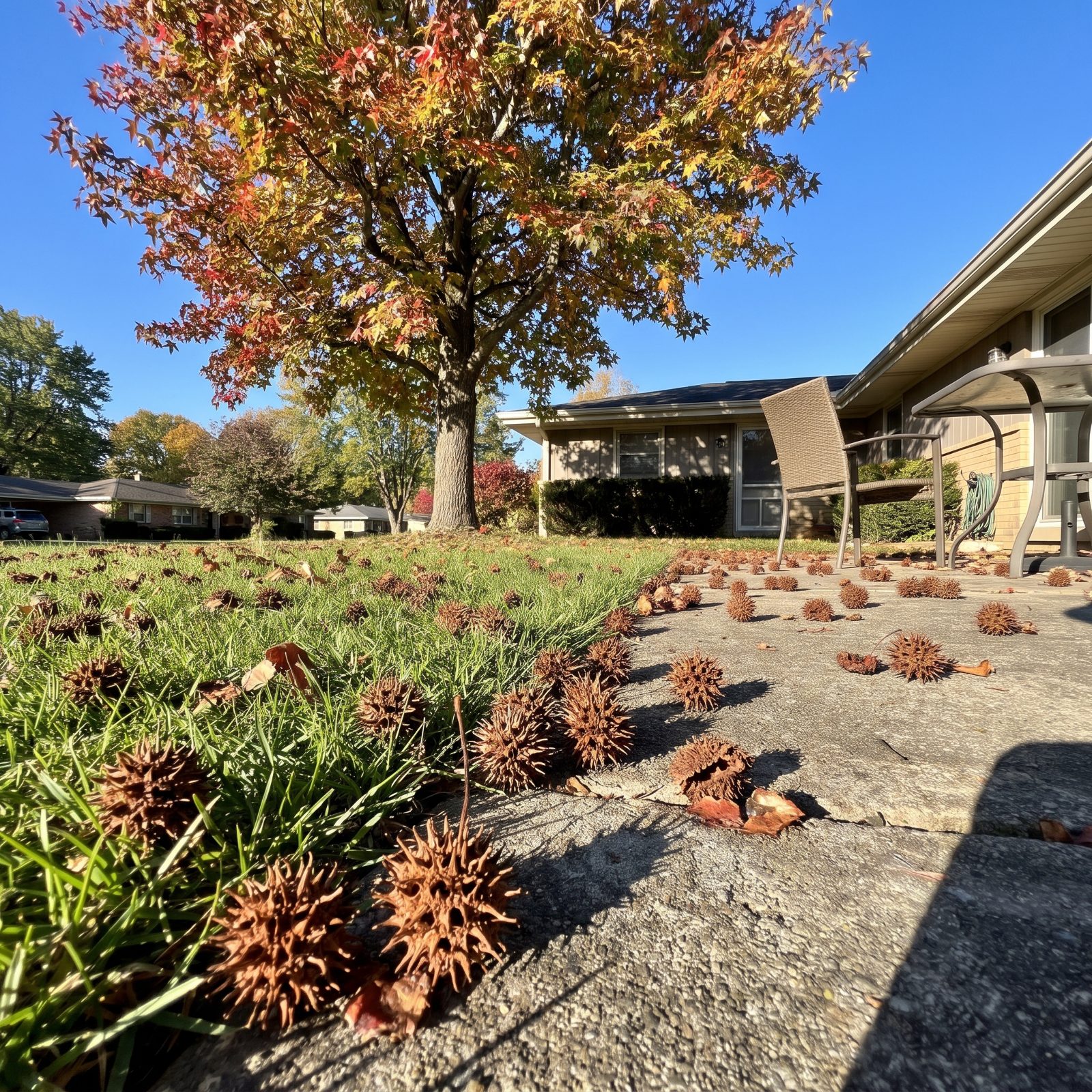
Step on one barefoot and you’ll never forget which tree it was. The sweetgum’s spiny gumball is, in NC State Extension’s own words, “the bane of some homeowners’ existence.”
This is a true NC native, one of the most common trees in the Piedmont and Coastal Plain, and it earns its keep in natural areas. It just gets big: 60 to 100 feet tall with a shallow root system. Give it room at the back of the lot, not next to the deck where every gumball becomes a rake-up chore.
Want the fall color without the mess? Plant the fruitless cultivar ‘Rotundiloba,’ introduced by the late J.C. Raulston. Same blazing autumn leaves, no ankle-rolling bombs.
13. Mimosa (Silk Tree): Pink Powderpuffs With a Nasty Streak
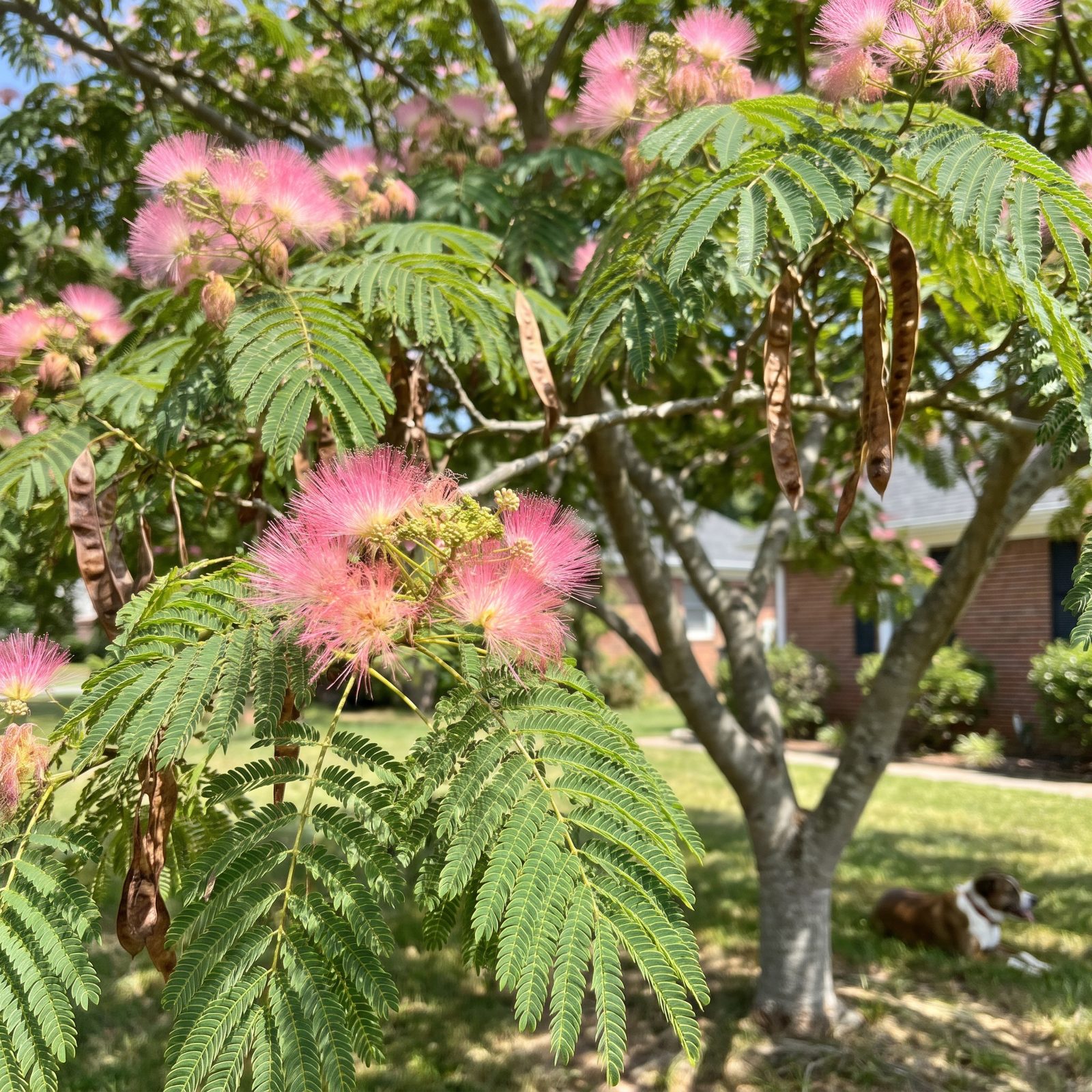
Those pink powderpuff blooms are the sales pitch. The rest is the fine print.
NC State Extension describes mimosa as invasive in North Carolina, highly flammable, aggressive, high-maintenance, messy, weak-wooded, and short-lived, averaging about 30 years. It grows 20 to 40 feet tall and sprawls 20 to 50 feet wide. The NC Forest Service says it forms dense colonies from root sprouts, and the seeds stay viable for years.
Here’s the part dog owners need to hear. Madison County Extension warns the seeds contain a neurotoxin dangerous to pets and livestock. A pretty tree dropping poison pods near where the dog naps? Not worth it.
12. Princess Tree (Paulownia): A Foot a Month of Future Regret
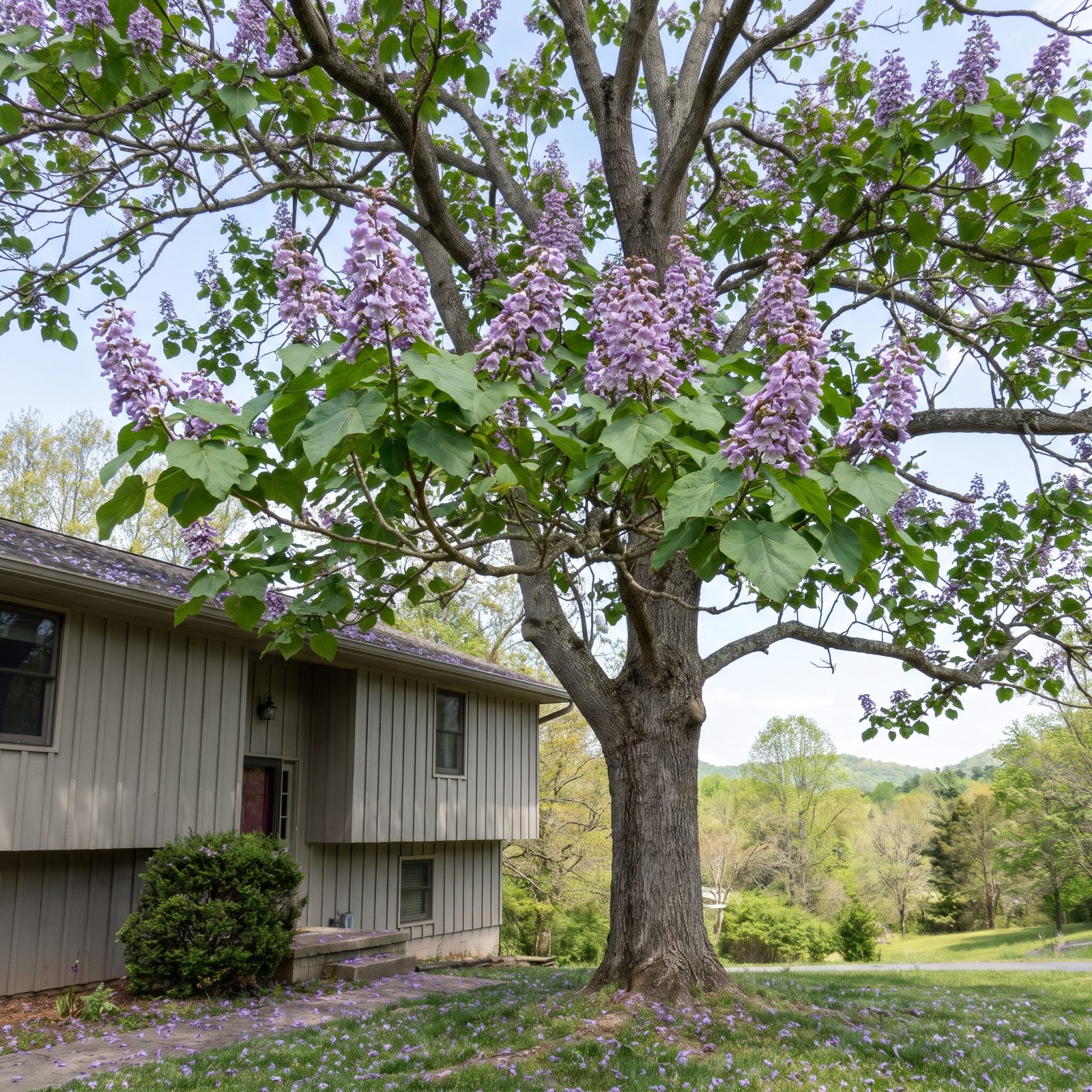
Fifteen feet. In one year. That’s what Madison County Extension says the princess tree can do, reaching its full 50 feet tall and 30 feet wide in about a decade.
That speed is the whole problem. NC State calls it weedy, messy, and weak-wooded, and when you cut it down it resprouts right back at you. The NC Forest Service flags it as a particular headache in the foothills and mountains.
The purple spring bloom is genuinely pretty, we won’t pretend otherwise. But a tree packing on this much growth this fast is building nothing but brittle wood, and you’ll spend years chasing its sprouts around the yard.
11. Water Oak: A Native Oak That Drops Limbs When You Least Expect It
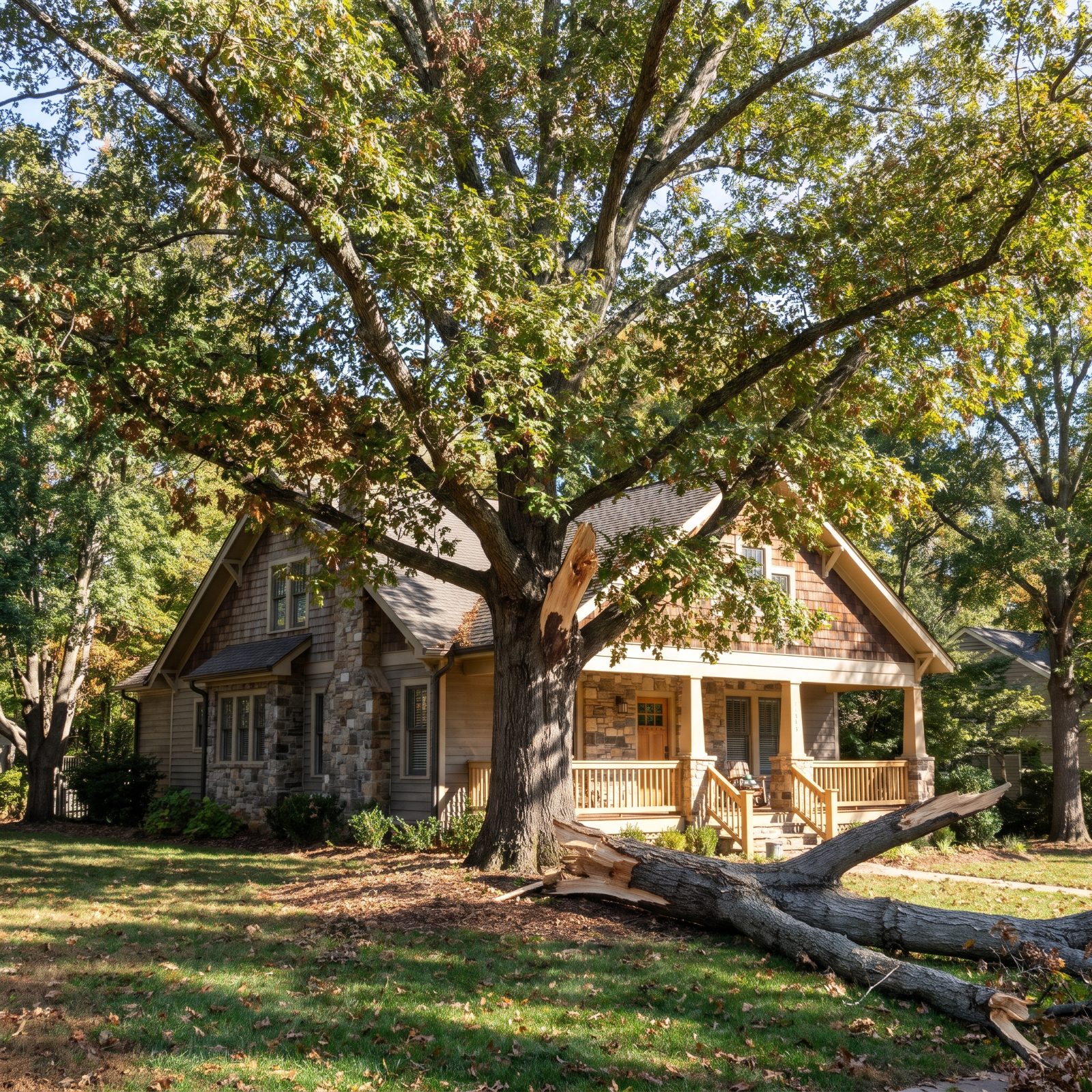
Not all oaks are built the same. The water oak is a true NC native and a fine shade tree with room, but it keeps a secret most people learn the hard way.
It grows 50 to 80 feet tall and 50 to 70 feet wide. NC State Extension says the wood runs weaker than most oaks’, it may only live 30 to 50 years, and the limbs break in high wind, snow, and ice. A sudden limb drop over a parked car or a bedroom roof is the classic water-oak surprise.
This is a “give it room” tree, not a “never plant it” tree. Set it far from the house and keep an eye on dead wood as it ages.
10. Black Walnut: The Native That Quietly Poisons Your Tomatoes
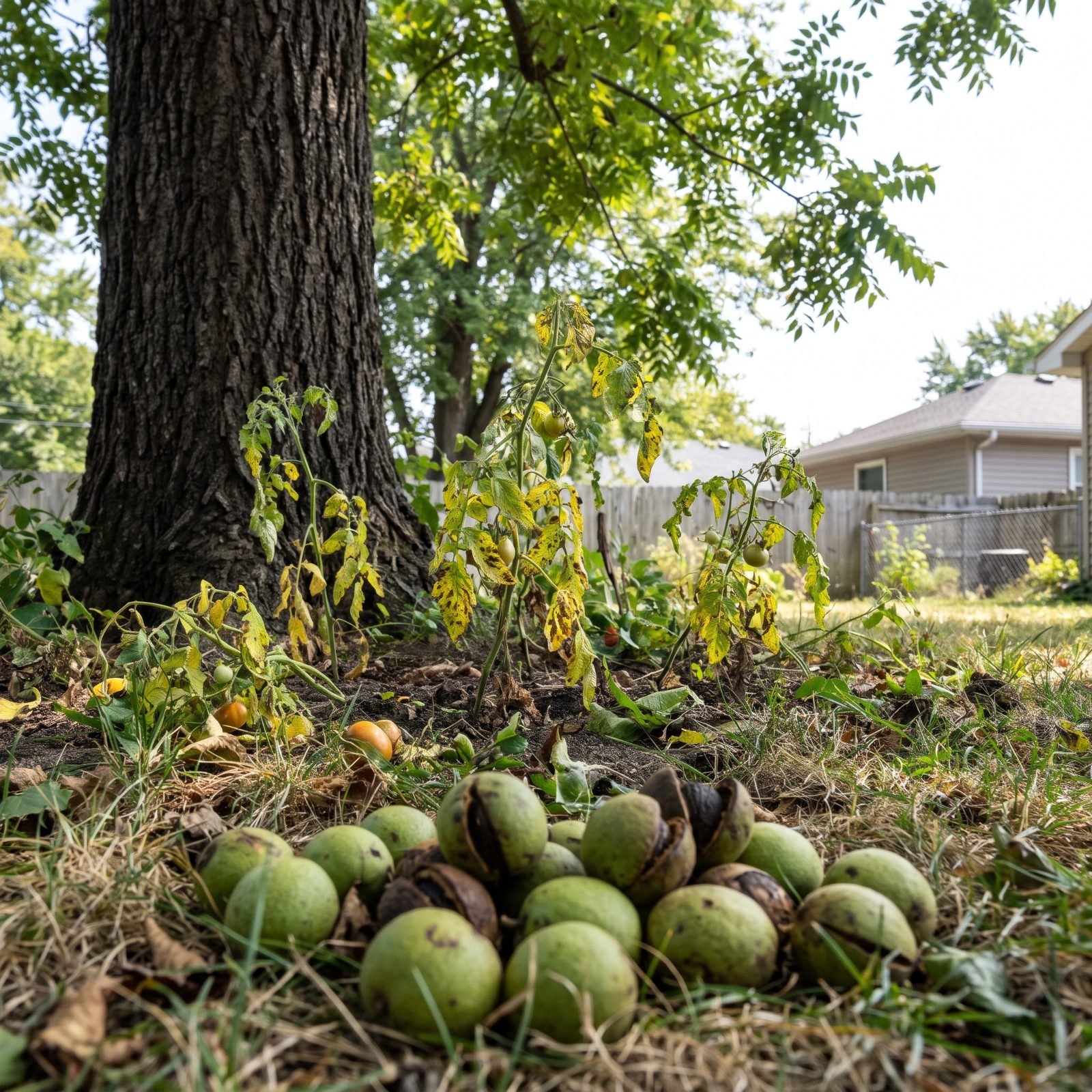
The damage here stays invisible until your tomatoes start wilting for no reason. Black walnut produces juglone, a chemical that stunts sensitive plants.
NC State lists azaleas, peonies, tomatoes, apples, and blueberries among the casualties. Carvers Creek State Park notes that tomatoes, potatoes, and cabbage may struggle within 50 feet of the trunk. Clay County Extension explains juglone comes from the roots, leaves, and hulls, and recommends clearing fallen debris and sticking to tolerant plants like daylilies.
This is a valuable native that feeds wildlife and makes beautiful lumber. It’s just a terrible neighbor for a vegetable bed. Got one? Plant your tomatoes elsewhere and let the walnut have its corner.
9. Chinese Tallow (Popcorn Tree): The Eastern NC Invader You Should Cut, Not Plant
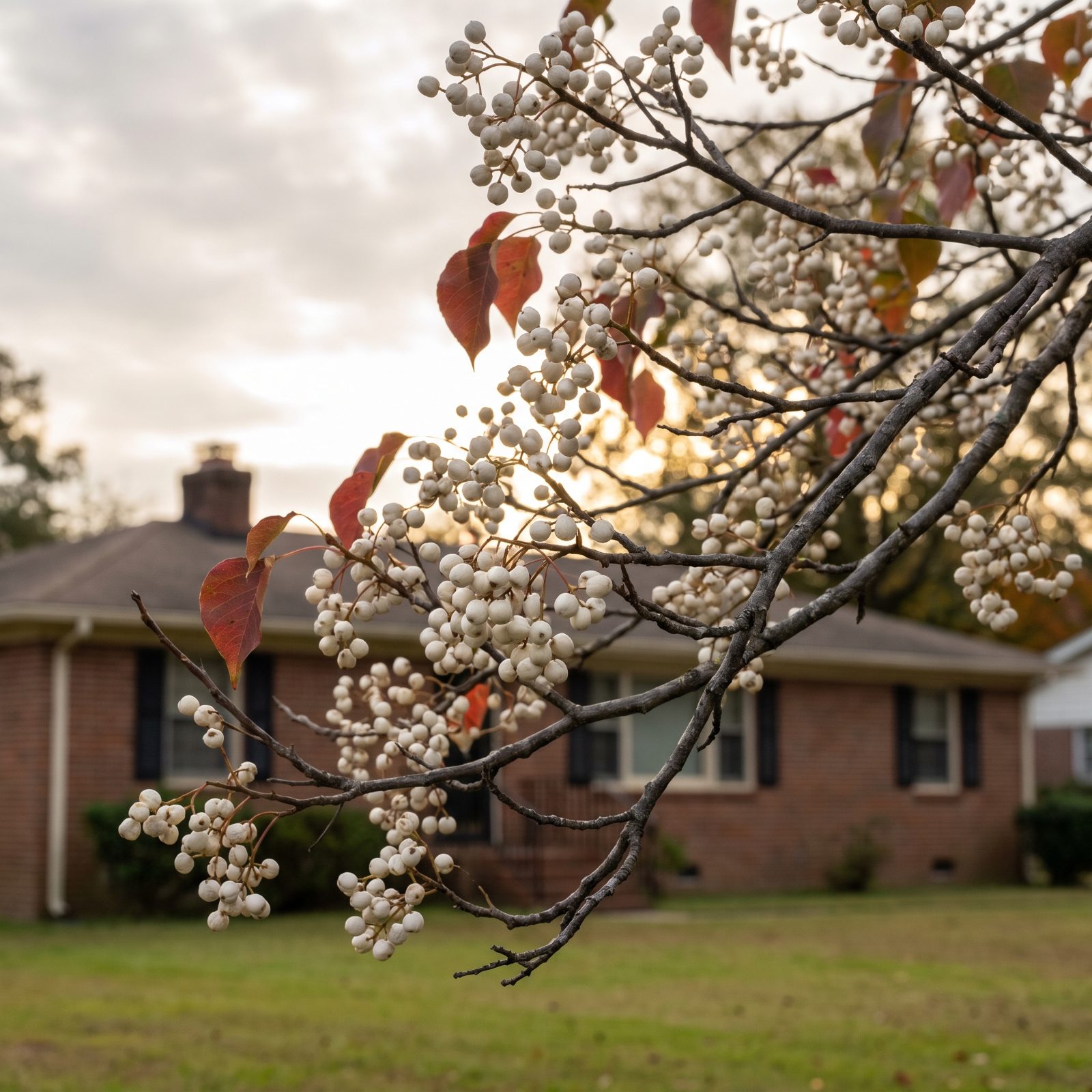
Craven County Extension doesn’t mince words: Chinese tallow is an invasive plant of significant concern, and every single one is a high-priority removal. It earned the name popcorn tree from those white, wax-coated seeds that scatter like spilled kettle corn.
For a long time it stayed penned in the southern Coastal Plain and Sandhills. Not anymore. NC Parks records it pushing north to Wake and Durham and west all the way to Mecklenburg. If one turns up near your house, the kindest thing you can do for your yard and your county is take it down.
8. Chinaberry: Pretty Berries, Serious Poison, and a Weedy Streak
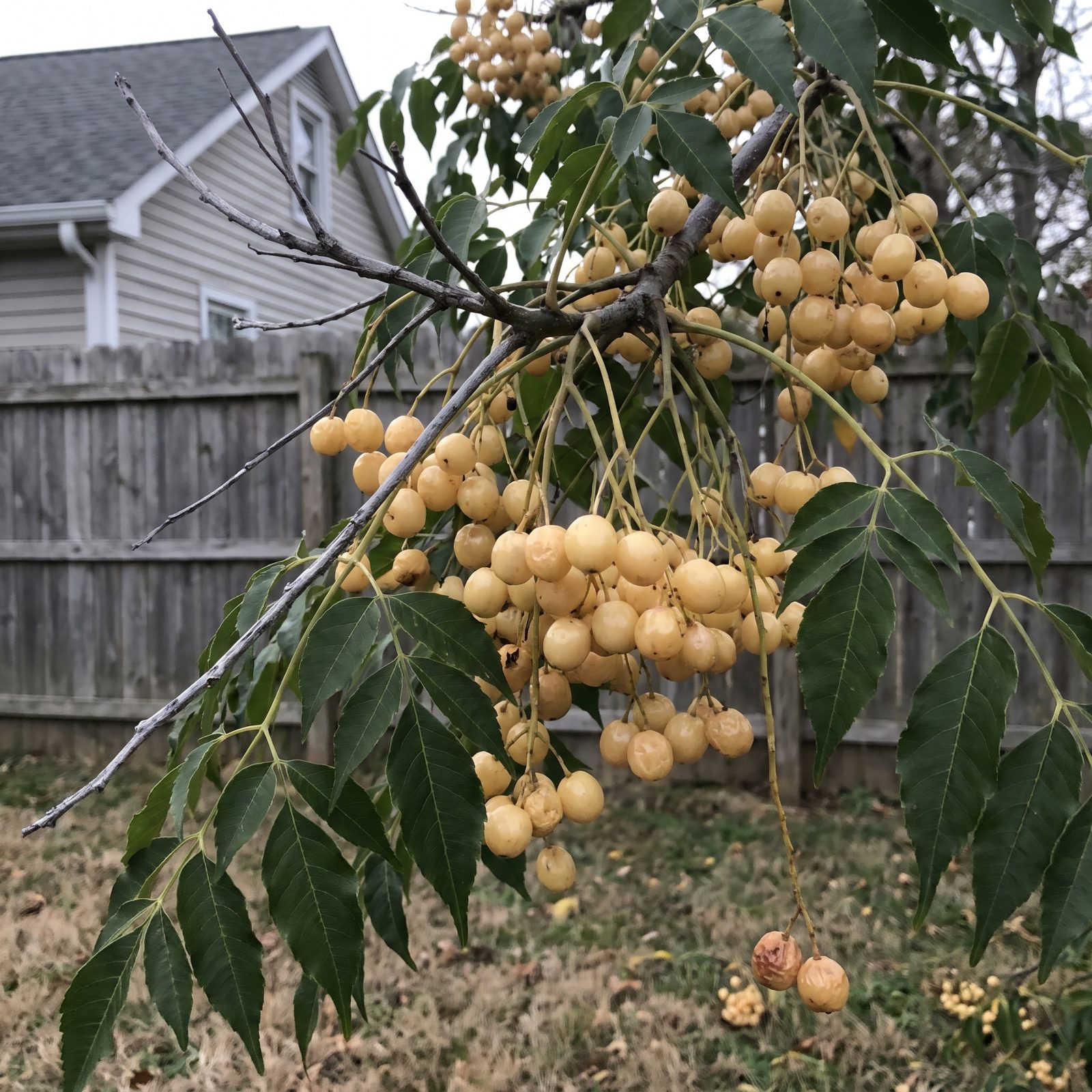
Those soft yellow berries look almost ornamental, and they’re the most toxic part of a tree Poison Control warns can poison you if any part is eaten. NC State Extension lists chinaberry as invasive and found nearly everywhere in the state except the far west.
Don’t go hunting for a tamer cultivar either. Extension says the named varieties keep all the weedy, aggressive habits of the species and aren’t recommended for any garden. Plant something else and spare yourself the cleanup and the worry.
7. White Mulberry: Sweet Fruit, Stained Concrete, and Roots Near the Surface
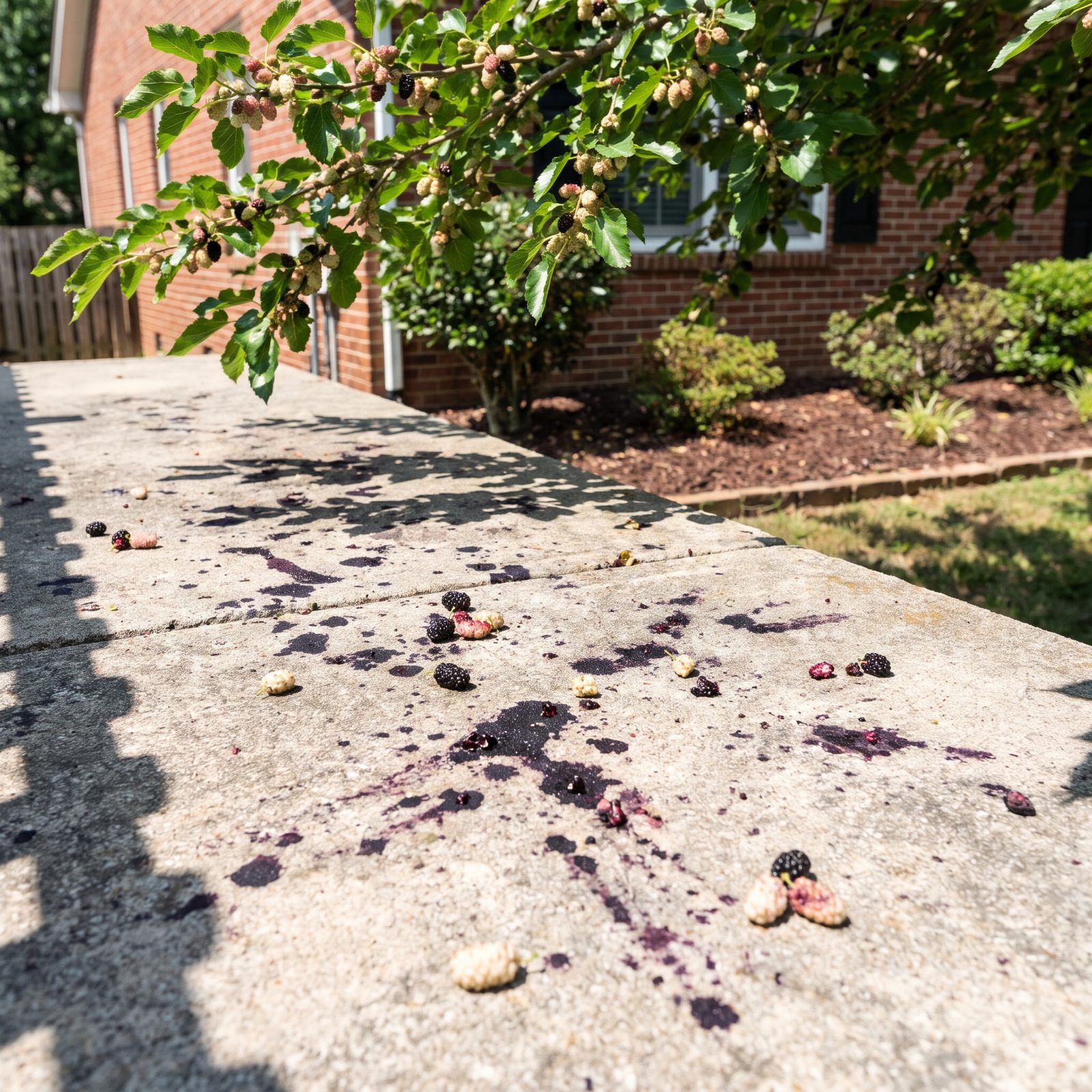
The fruit is the whole problem. White mulberry drops ripe berries that stain concrete walkways, patios, and the hood of whatever car you parked underneath. NC State Extension’s advice is blunt and practical: think hard about where that canopy will hang before you plant.
The root system sits shallow, too. And only female trees fruit, so if you already own a quiet, mess-free mulberry, you’ve probably got a male. Worth knowing before you blame the tree for something it can’t do.
6. Eastern Cottonwood: The Riverbank Native That Snows in June
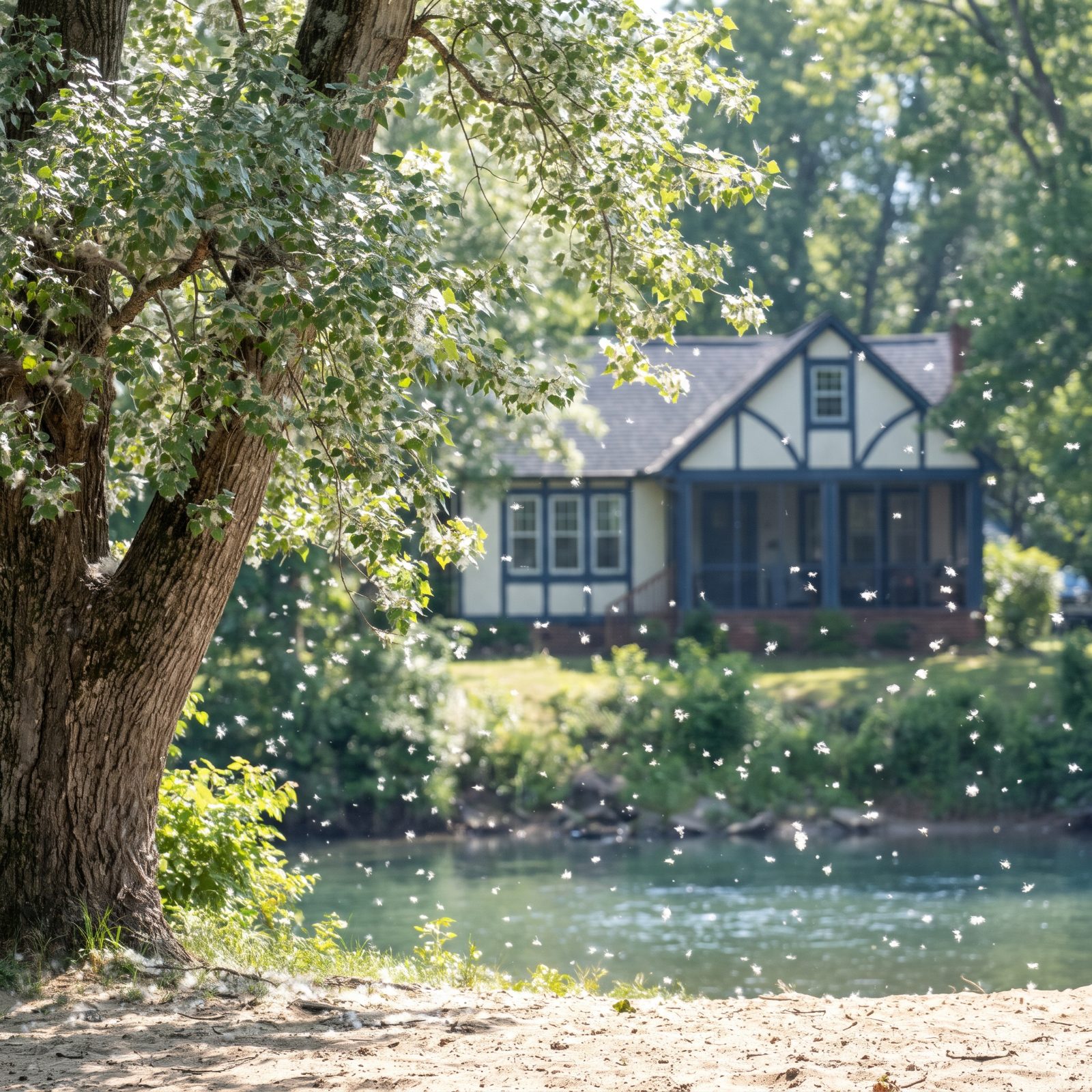
In early summer a cottonwood turns your yard into a snow globe. The name comes from the cotton-like hairs on its seeds, which drift everywhere and clog screens and gutters.
NC State Extension calls it messy and weedy with brittle wood, and it throws up root sprouts like it’s trying to colonize the block. In North Carolina it grows wild along sandy riverbanks and in bottomlands, which is exactly where it belongs. Give it room out there, not ten feet from the porch.
5. American Sycamore: A Native Giant That Needs an Acre, Not a Lot
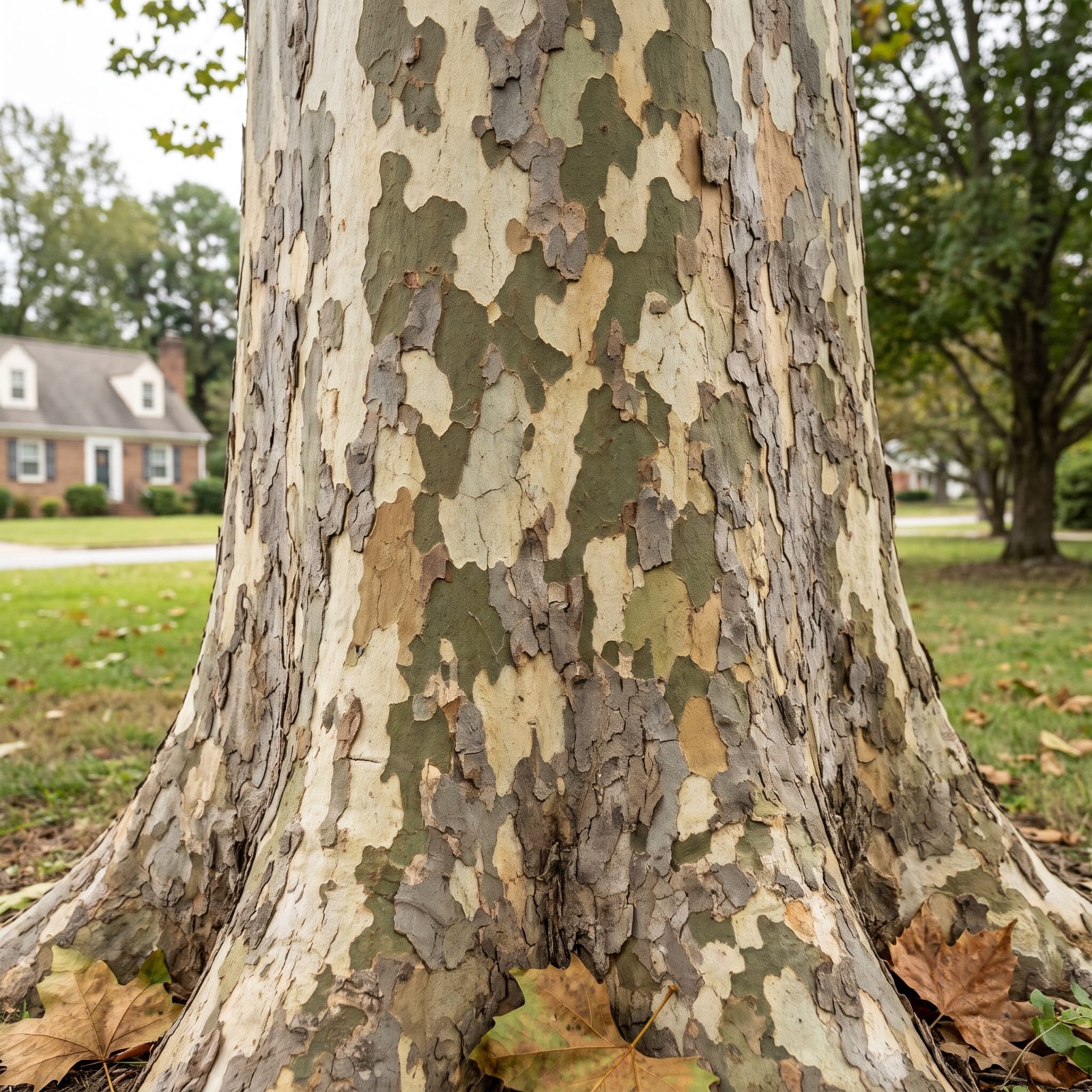
That camouflage bark, cream and olive and tan peeling away in puzzle pieces, is one of the most recognizable sights in a North Carolina bottomland. Up close, a sycamore is a thing of beauty.
It’s also enormous. NC State Extension says it can reach 75 to 100 feet tall and just as wide, with a trunk ten feet or more across. Sycamore anthracnose hammers the leaves and twigs, dropping them early, and the tree takes wind damage on top of that. A great native. Give it an acre and a view, not a corner by the garage.
4. Female Ginkgo: The Tree You Love Until Autumn Smells Like Vomit
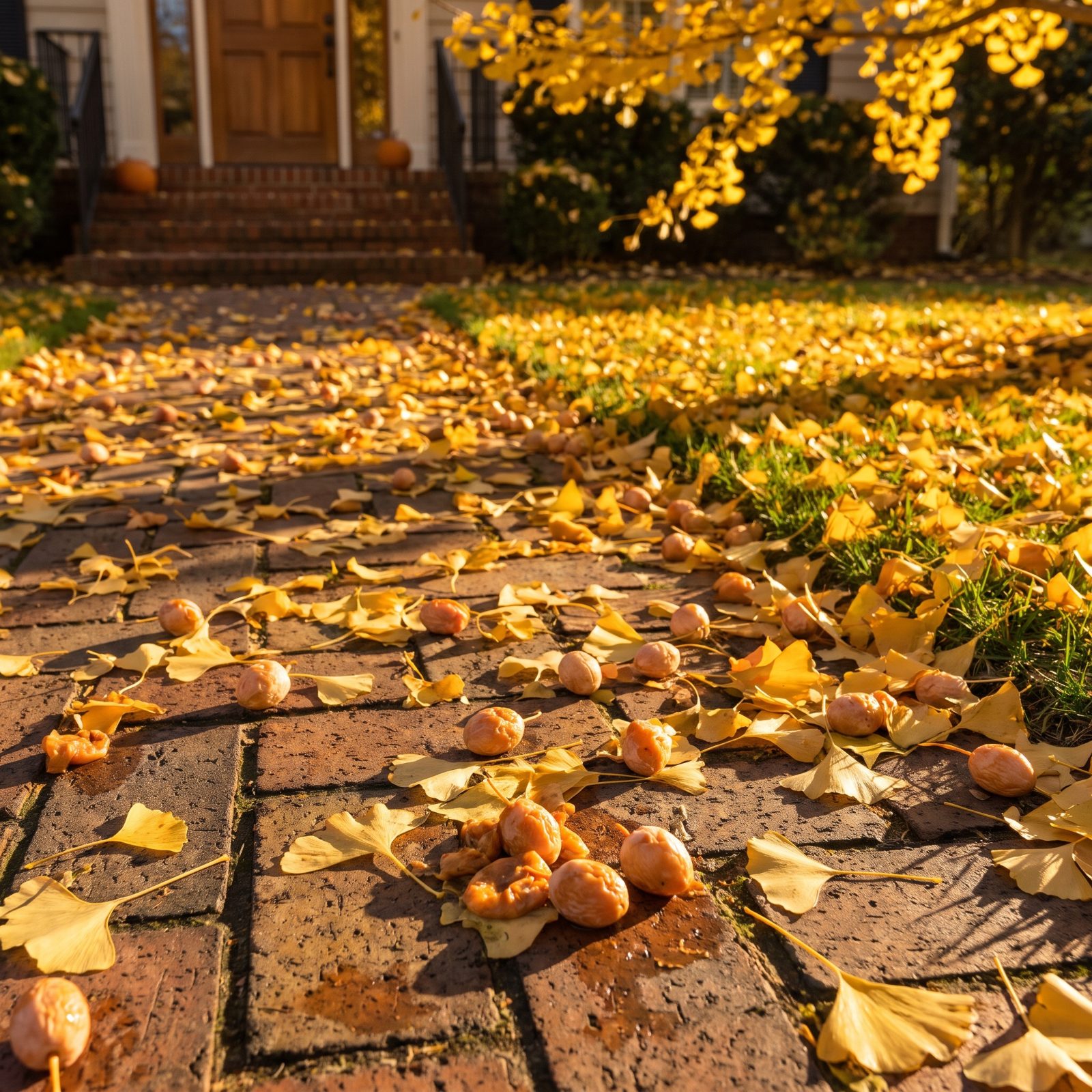
A ginkgo in gold is one of fall’s genuine pleasures. Then you meet a female one in fruit, and the smell changes your whole opinion.
Craven County Extension explains those fruit-like structures are seeds wrapped in a fleshy outer layer famous for its foul odor. Clemson Extension notes that most nurseries sell male trees to help buyers avoid the smelly mess. Before you plant a ginkgo near a patio or front door, confirm it’s male. A mislabeled tree is the kind of problem that surfaces years later, right when you’ve stopped thinking about it.
3. Loblolly Pine: Fast, Tall, and First to Snap in an Ice Storm
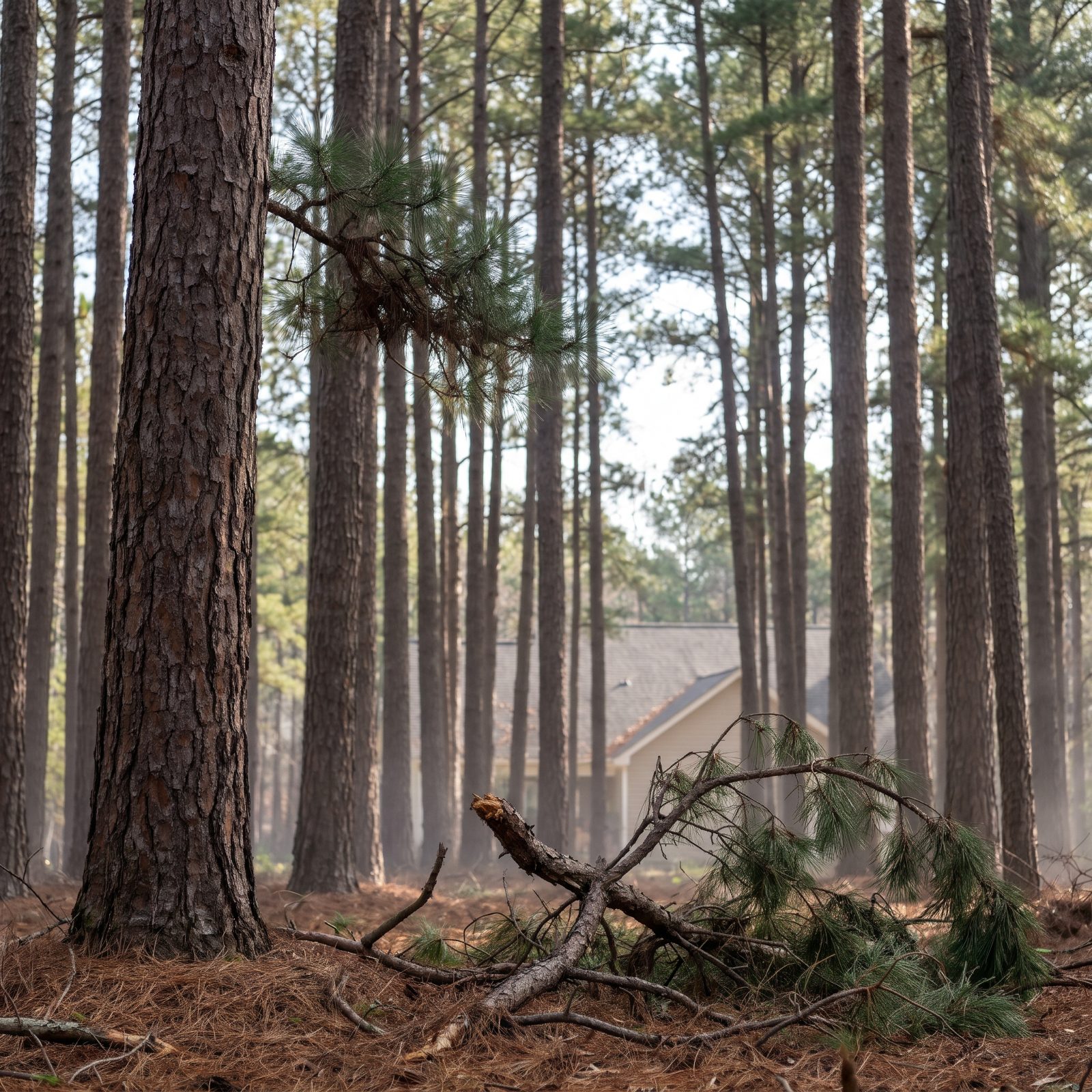
Loblolly is the fastest-growing pine around, racing to 60 or 90 feet. That speed is exactly why it’s risky overhead. The NC Native Plant Society says its straight branches make it prone to breaking under ice and snow, and flatly calls it best for natural areas.
The field data backs that up. An NC Forest Service publication cites a hurricane study where loblolly mortality ran far higher than longleaf pine, with snapped trunks causing most of those losses.
2. Tulip Poplar: A Tall Native With Weak Wood and a Sticky Secret
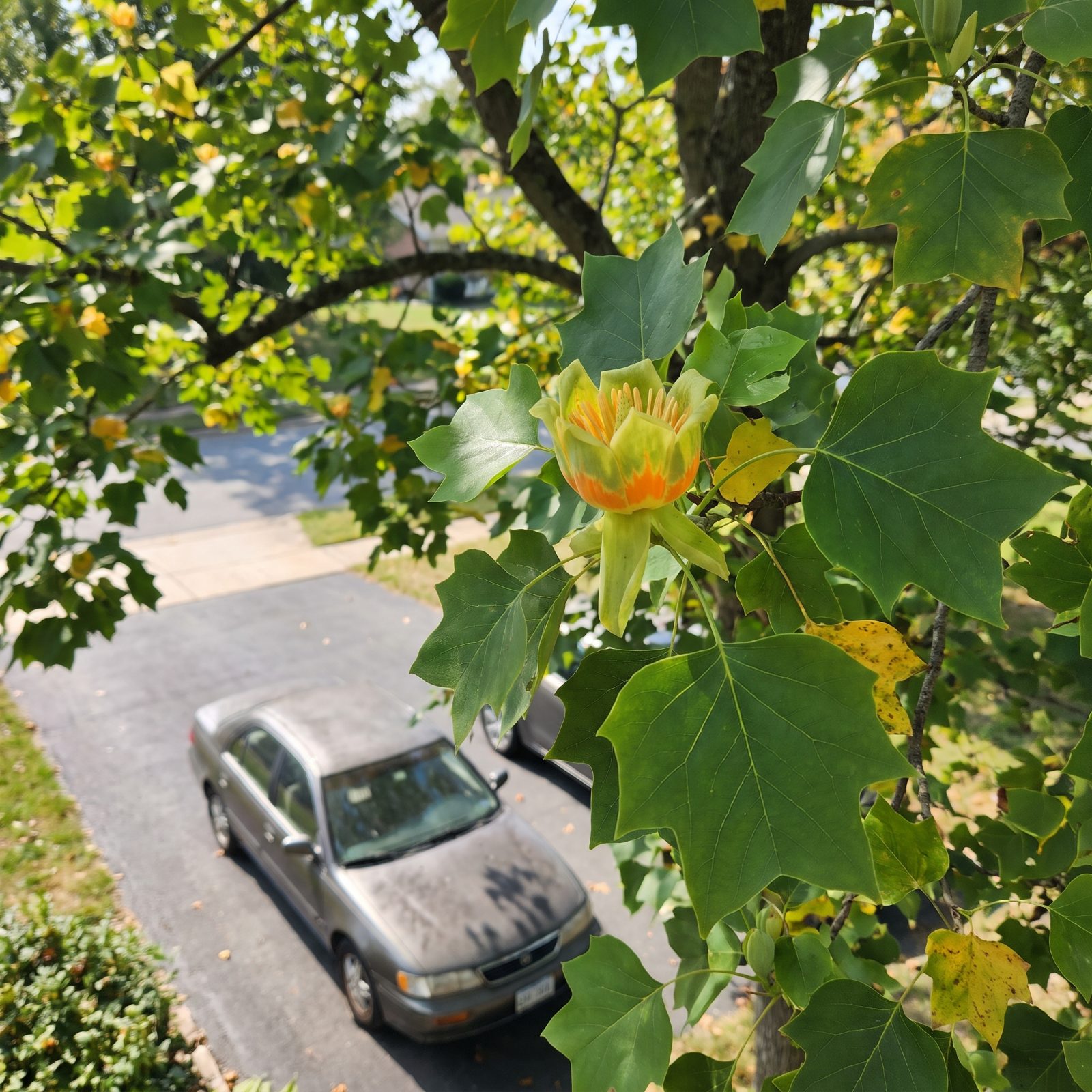
The flower is a quiet marvel, a tulip-shaped bloom of green and orange sitting high in the canopy. The habits below are less charming. NC State Extension lists it as messy, weak-wooded, and prone to insect and disease trouble.
And here’s the detail nobody mentions until it’s on their car. NC State Entomology notes tulip tree aphids pump out heavy honeydew, so leaves, decks, and whatever you park underneath turn black with sooty mold. The shallow roots make it tough to grow much beneath the tree, too. Lovely native. Just keep it away from where you park and sit.
1. Southern Magnolia: Glossy and Grand, With Roots That Run Four Times the Canopy
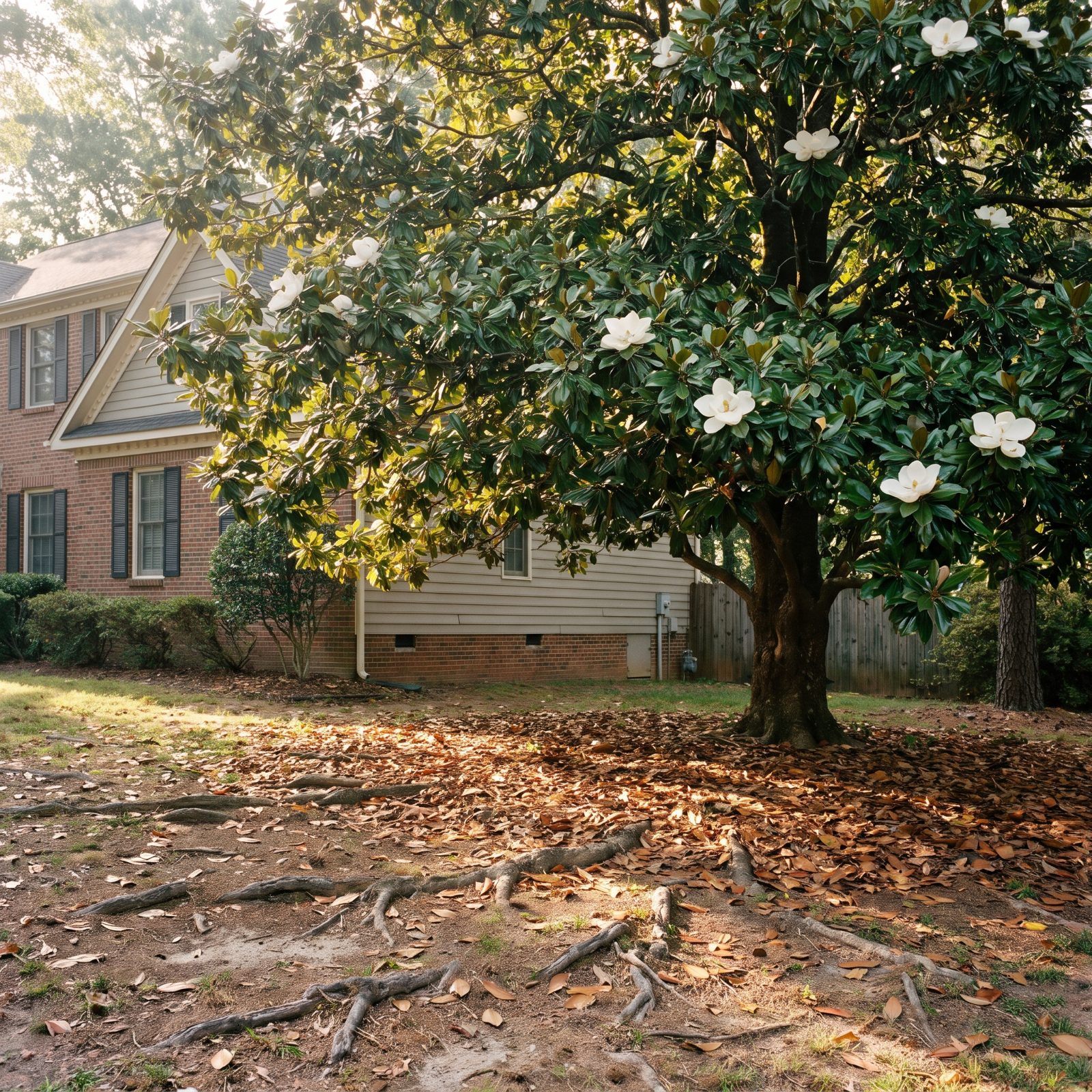
Big white blooms, leathery evergreen leaves with that polished shine, the Southern magnolia looks like the South itself. It’s a wonderful tree with a wide reach, and that reach is the catch.
NC State’s notes on the ‘Hasse’ cultivar say the spreading root system can reach four times the size of the canopy, and University of Florida extension notes this makes existing magnolias very hard to save on construction sites. Dense shade plus shallow roots make growing lawn grass under a mature one nearly hopeless, and compact types like ‘Little Gem’ still drop a steady mess of leaves spring and fall.
Give it open space away from the foundation and the driveway, let the ground beneath go to mulch or shade groundcover, and it’ll reward you for decades.